1:1 - Sarah Scott

Posted on: January 28, 2016

Interviewed by Mark Killian
Welcome back to another edition of 1:1. Mark Killian here, standing next to a phone attached to a cement wall somewhere between America and Canada. I should be stirring maple syrup into piping hot tea and chatting with Sarah Scott at the moment, but instead, this interview will be coming to you live from a Canadian holding cell.

While I try to find her number, you take a gander some of my favorite Sarah Scott stories including Anderson Ridge, Someone Once Loved, Junum the Young, and her most recent piece, The Treaty of Niagara, 2015.


--Ringing--

SARAH SCOTT: Hello?

1:1000: Hi Sarah! It’s me, Mark. Thanks for answering.

SARAH SCOTT: Is everything okay? I waited at the coffee shop for two hours, but you never showed.

1:1000: Funny story, I’m in a holding cell on the US/Canada border, but don’t be alarmed. The Mounties have been characteristically polite, and best part is, there will now be a recording of our interview!

SS: What!?

1:1000: Oh it’s nothing. Just a little misunderstanding. Long story short, if your passport is expired, you shouldn’t borrow your friend’s and try to sneak into Canada–especially if said friend has a history drug-related offenses.

SS: Shouldn’t you call a lawyer or something?

1:1000: Lawyer, schmawywer! I promised you a 1:1 interview and that’s exactly what I’m going to do. So, without further adieu, what is it that you do for a living? Please say defense attorney.

SS: I’m afraid not. I work as a Senior Advisor–Major Project for a Canadian university which is basically a whole bunch of words that when strung together nobody ever understands at all. Basically I work with health researchers who are applying for large institutionally supported funding opportunities. I review and edit some sections of these grants and some sections I write.

1:1000: Have you ever helped someone raise their bail funding?

SS: I can’t say that I have.

1:1000: Shucks. Well, I'm not going to lie, that's not the easiest job description to understand, but it sounds important, which is important. Can you speak to some of the research you've helped push forward? If so, are there any projects in particular you felt really attached to? If not, I'll leave it at that.

SS: There is always such interesting stuff going on that sometimes the grants I'm involved with are more mind blowing incredible than any science fiction I have ever read, but the research isn't mine and not mine to talk about. What I love about my job is that it involves constant learning, constant exposure to new things. I could spend four months working on grants dealing with juvenile diabetes and then I spend the next four months discovering cryo-electron microscopy. To be playing a part in helping these amazing people secure funds for their research, to watch them go on and work towards changing the world–it's very rewarding, even if my contribution is microscopically small. I'm very lucky to have a job I love so much.

1:1000: Okay, I officially have career envy. That sounds INCREDIBLE, and meaningful. How often does the subject matter of these grants work their way into your stories?

SS: All the time. Never any specifics or anything, but the amazing science I am exposed to at work never stops inspiring me.

1:1000: Is that where your story Arcadia came from? This thirst for exploration?

SS: Yes probably in part. I wrote that when the Internet was buzzing with talk of KIC 8462852, the star they said was surrounded by alien megastructures. I guess I had space on the brain.

1:1000: That story piqued my imagination as well, but I didn't have the discipline to write something down (whomp whomp). So how did you find yourself in this career? Assuming I didn't sell my soul for the marketing industry, what would I need to do to find myself in your position?

SS: It wasn't a career I went looking for really. I think that is my style, I just get swept along and fall into whatever is waiting for me. I'm not a planner. I studied Anthropology and English literature. When I graduated I had no idea what I wanted to do, but I knew I wanted something different before venturing back into academia. I wanted to travel and explore the world and explore myself, but I had a little sister that I couldn't bring myself to be far from. I was 19 years old when she was born and I loved her so damn much, so I couldn't travel too far while she was young. I got a job at the university and did well so it led to another job, and another one after that, and so on and so forth until I ended up in my current position. At one point I contemplated leaving and moving to Italy, but I met my husband and then suddenly here I am...married, two kids, mortgage. My whole life is a happy accident, it is actually how I started writing fiction too.

1:1000: Emphasis on the happy! You've traveled, you've explored career options, and you ended up in a job you love, surrounded by loved ones. Makes me question life choices–present circumstances included. Speaking of family, I LOVE your stories on the matter. Anderson Ridge is a real standout for me. The way you handled the son's overactive imagination and the family hierarchy was just lovely. And your latest, Treaty of Niagara, is just downright hilarious! When you take a child's perspective in a story, is that you thinking back on your childhood, or more you trying to put yourself into your children's shoes? Additionally, how do other family members inspire your stories?

SS: It's interesting to me that you mention Anderson Ridge first. That story is way more connected to family, specifically my family, than is probably obvious. The story was inspired by my Grandmother and her brother. She grew up quite wealthy in North Vancouver. Her family had a logging business and she spent part of the year living a life of decadence in the city and part of the year in the bush. She was the lady who could teach you perfect table manners for having tea with the queen and how to bait a hook to catch lake trout all in the same breath. She was amazing. When she died, her brother told a story about watching his mother and sister in a log cabin in the bush. His story was beautiful and it stuck with me. I am a lot like my grandmother in many ways, and many of my fondest memories were with her. That story is for her.

1:1000: Your grandmother sounds film worthy, and your story does your ancestors proud. Is Treaty of Niagara equally biographical?

SS: She was the best grandmother I could have asked for and an amazing woman. And no, Treaty of Niagara couldn't be farther from my family. I wrote it while at Great Wolf Lodge with my kids. None of us like attention very much. Me, my husband, the kids, we are all shy, but you see people filming themselves and taking a bajillion selfies and the whole thing is so foreign to me. The quest for fame seems like such a strange thing, but we have these platforms like YouTube where anybody can have some shred of celebrity. The family in that story was nothing like my own, but I wanted to try to put myself in the minds of those people. I think maybe that is what I am always doing when I write, I'm trying to understand some perspective other than my own. It's the unsatisfied anthropologist in me trying to get out.

1:1000: Well, I’m relieved to hear your children are nothing like the little monster in Treaty. I too am a little baffled by the families who care so much about their view count and social impressions. I also think it's funny that you made the children in Treaty more social media savvy than your own, but you left the parent kind of disinterested/burdened by it. I often wonder who is to blame in those situations, the children or the parents? Who is really asking for the recordings?

SS: Yeah that's a good question. I think I chose to present the parent child relationship the way I did because the other version of that story has been told. I guess I tried to imagine what I would do if one of my kids wanted to do things like that. Your kids have their own personalities and expose you to things you don't always have any interest in yourself, but you do it for them.

1:1000: Were you concerned at all that readers would think you were writing about your own family?

SS: I am ALWAYS concerned about that. I guess it's a hazard of writing. I worry that people will think the opinions of my characters are my own. I also worry that my family may think things I have written are about them. I think most writers borrow from real life at times. I have incorporated scenes that were inspired by an interaction with people in my real life into a larger story because I thought it fit, but that doesn't mean the story has anything to do with that scene from real life. I gave one of my characters my best friend’s name, because she has this crazy middle name, but the character had nothing else in common with my friend.

1:1000: Well, I think your anthropological approach to writing is brilliant. I try to do the same, but I sometimes fear the characters I create in the process are shaped by stereotypes. How do you keep that in check?

SS: I try to be empathetic. I think empathy is the thing which is most missing from the world. It is the role of the anthropologist to try and leave your bias at the door–to try to understand someone else's motivations from their perspective, and I try very hard to do that. I imagine that there are times when I do this better than others. We are only ever capable of truly seeing through our own eyes, so I try to be aware of what my perspective brings to an assessment of people and situations and I think the challenge of understanding others is a good challenge to engage in, not just for the sake of art, but for the sake of humanity.

1:1000: Agreed. Empathy seems to be in dwindling supplies these days, especially amongst BORDER AGENTS. Speaking of nations, are you a Canadian national?

SS: Born and raised!

1:1000: How does Canada influence your writing? Writers are often identified by the part of the world where they write, so what makes a "Canadian" writer?

SS: I grew up in Toronto and spent all my childhood summers in Vancouver with the aforementioned Grannie. I now live in Hamilton. I think all these places and lots of other amazing parts of Canada have influenced my writing. I want to write stories that capture the beauty of these places and the people who live in them. I also read a ton of Canadian authors, so that influences my writing as well. I started reading Margaret Atwood at 12 and have gobbled up every drop of her work since.

1:1000: Canadians always seem to be so happy with their motherland. Lucky! Assuming this little legal matter doesn’t get me permanently barred me from your wonderful country, what’s the one city I HAVE to visit?

SS: One city in all of Canada is hard to pick...It would depend what you are looking for, but since I miss the place so much right now, I will say Vancouver. Spend the day on white rock beach for me.

1:1000: That sounds much more pleasant than where I’ve spent this day. Anyway, of all the countries you've traveled to, which have inspired you the most?

SS: I have traveled most frequently to Italy since I have family in Tuscany. The beauty of Tuscany is breathtaking. It makes you want to write–to find the words that are strong enough to take a piece of that beauty home with you. But, I think visiting Paris has influenced my writing more than any other place I have travelled to. It was the first city in Europe I visited. I was 11 my first time there and I didn't have any words that were big enough to capture the awe I felt. I think that trip did so much to shape me in ways I may not even fully realize.

1:1000: Parlez vous francais?

SS: Oui. bien sure je parle Francais.

1:1000: Once again, I’m stricken with life envy. So, Carmen Sandiego, what's a the top of your travel bucket list?

SS: The top of my bucket list would definitely be traveling from one end of Canada to the other, from Victoria, British Columbia all the way out to St. John's Newfoundland I would take the train wherever possible.

1:1000: Enough with the patriotism already!

SS: I would also love to see Petra in Jordan.

1:1000: Thank you! Have you been on any America escapades?

SS: A few trips down to Florida and into Oregon but that's about it.

1:1000: Well that’s a few more ventures than I’ve taken to your turf, but enough about travel. Let’s talk about your audience. Every writer writes with someone or some group of people in mind. Who are the readers that fuel you? Your husband? Your sister? Your best friend? Do you ever share your stories with your children?

SS: I never really write for the kids. I make up bedtime stories for them, but I don't write them down. I started writing to entertain myself. I had a three-week-old baby and a broken knee and I would have gone stir crazy without something to do, so I started writing. Before finding 1:1000, pretty much all of the writing I had done was for HitRECord, an online community that I accidentally became a part of, and that inspired me to start writing. Recently though, I have taken my writing to new places and that causes me to consider audience more than I had in the past. I suppose I don't really know who my audience is, and maybe that is missing from my writing? But maybe I like it that way? Maybe I want whoever stumbles across a story of mine and reads it to take away whatever they choose? Maybe I don't want to orchestrate their response too much and just hope that they have one?

1:1000: Well, and I mean this in the best way possible, thank goodness you broker your knee, and I hope the only thing that lingers from that injury is your passion for writing.

SS: Let’s just say I won't be running any time soon, but I am glad I discovered writing. I can't imagine my life without it, and it's only been 2 years.

1:1000: You could've fooled us.

SS: Ahh shucks...thanks.

1:1000: Any final things you'd like the world to know about you or your writing?

SS: Nope. Just thanks for reading.

1:1000: Lovely. Well in that case, I'll let you get back to your family and whatever you are currently writing at the moment.

SS: Good timing...I now have a two-year-old and a five-year-old climbing on my head.

1:1000: Now I kind of wish you were more into social media so I could see this adorable scene.

SS: It's half adorable and half torture...they have all these sharp angles...tiny little elbows and knees...

1:1000: Speaking of torture, there’s a man in a Mountie hat heading my way, and it’s not Pharrell Williams. Wish me luck!

--Click--

1:1 - Kayla King

Posted on: December 31, 2015

Interviewed by Mark Killian
Welcome back to another edition of 1:1. I’m at Mountain View Grand Resort & Spa in New Hampshire, seething with envy as I wait for Kayla King’s graduation ceremony to conclude. I’m surrounded by golf courses, spas, mountains, and even freaking dog sleds!

But most importantly, this is where Kayla has been attending writing residencies as an MFA candidate at Southern New Hampshire University. Today, she becomes an MFA recipient, and she’s agreed to put off her celebratory spa treatment for a few minutes to tell us what inspired beautiful stories like Penumbra, Calculations, Exulansis, and the Gray and Shaw series. Here she comes now. Better douse my jealousy with this final finger of whiskey.


1:1000: Hi KAYLA!

--Hugs--

KAYLA KING: Hi, Mark! What’s up?

1:1000: My blood alcohol level. JUST KIDDING! But seriously, let's start from the beginning. When did you realize you want to dedicate your life to writing?

KK: When I was in middle school I wrote quite a bit of poetry, but it wasn't until my senior year of high school that I realized I wanted to be a writer. I took an Experimental Writing class and fell in love with fiction! Then I went to college for 1/2 a semester for interior design before finding a writing program at Buffalo State College.

1:1000: What was it about this class that made you realize how much fun writing can be?

KK: Up until that point I'd never tried anything other than poetry, but finding the right story made me realize how exciting it could be to create characters and worlds from my own head. Though it was only 14 pages, that story gave me more inspiration than anything that year. Also my teacher was oh so encouraging. I think I was the only one who actually cared about the class, and he saw that. Also my best friend was in the same class so that made a huge difference.

1:1000: What was this awe inspiring story about?

KK: It was a fairytale retelling called THROUGH. I've since taken the idea and created an entire world that will (hopefully) span a series of 5 books. The first two are completed, but are in dire need of revisions. It took all of my favorite characters from childhood and changed them into new people. I guess it was my way of figuring out what would happen post-high school...

1:1000: So when you say “characters” from high school, are we talking fresh takes on established fables, or real people with notable personalities?

KK: The latter.

1:1000: Is this best friend of yours one of the characters?

KK: He often pops up in the strangest of places--something another character might say or do that reminds me of him after I go back and reread what I've written.

1:1000: Is he still writing?

KK: He is! It's strange. I don't think ten years ago when we became friends that either of us imagined we'd be writers. He's written a few short stories and poems and great letters from his time abroad in Spain this past summer.

1:1000: Then why is he not writing for us?

KK: I’ll have to ask him, but I think he’s scared of Pinterest.

1:1000: Yes you will. This can be off the record if you'd like, but does this friend of yours inspire the Gray and Shaw stories?

KK: Actually, no. I've never had this question before, because I think people just assume we're dating. We definitely say we're soulmates, just not in a romantic way. He is actually the inspiration for EXULANSIS. I think there is a line in that story where it says you don't have to be IN love with a person to love them. And I think this kind of platonic love doesn't always make for the kind of heartbreak I give Gray and Shaw--spoiler alert.

1:1000: Why did you decide to go against Cupid’s wishes and kill Gray and Shaw’s relationship? Do you feel any of the pain you imposed on you readers?

KK: Strangely, because I began with the end of their relationship in a non-1:1000 story called Valhalla, it was not as emotional as another I've been working on, which is the actual day Shaw leaves. In Valhalla, there is some time since they've been apart. The wounds are starting to heal, but are ripped open when Grayson buys Shaw's published book. I read a snippet at my last residency and a few people did tear up, and they didn't even know Gray and Shaw. I think the more you know about them, the more heartbreaking it becomes.

1:1000: And where can your Grayson and Shaw fans read this, Valhalla?

KK: Hopefully, in the publication of the contest I submitted it to, but win or lose, I will be posting it on my site in the not-so-distant future. Follow me on Twitter for updates.

1:1000: Let's talk a little bit about your residency. As someone who sold their soul for a steady paycheck, I’m interested to know what it’s like to throw caution to the wind and focus solely on fiction?

KK: It's great! And a little bit scary, too. I love getting together with other writers and talking about writing and books and words. It's beautiful, but residency puts you in such a vulnerable position. You give away your work and listen to others discuss it in front of you. Good and bad. It's not always easy to stay in the "cone of silence." Ultimately, feedback makes us better writers, and there are times I've had to remind myself that while sitting and waiting ALL week for my peer workshop day.

1:1000: It's amazing how much other people’s opinion can help.

KK: Too often, I think we're blinded by the fact that WE wrote the stories to see their flaws.

1:1000: Amen. Too close to the canvas. So are residencies part of a grad program, or are they separate things?

KK: My MFA is low residency, so for the past two years I've gone to NH for two residencies a year. They last a week and have peer workshops, craft workshops, readings, etc. And then when we return we have deadlines each month to send work.

1:1000: That sounds like the academic experience of my dreams!

KK: It was great!

1:1000: If I wasn't already buried in student loans from advertising school, I would give it a shot. Alas, maybe in another life.

KK: Yes, student loans. Those will kick in about six months after the new year begins.

1:1000: Then let's not dwell on that sobering reality. Outside of academia, what shapes your writing? Books? Movies? Television? Music? Dance? Alcohol?

KK: Definitely books and movies! I've been obsessed with the movie Comet. It feels like what I'm trying to accomplish with my Gray and Shaw stories. And I do believe it was Hemingway who said "write drunk, edit sober."

1:1000: I always get that backwards.

KK: As far as inspiring books as of late, I loved The Bell Jar and am currently reading 10:04 by Ben Lerner. If I'm struggling while working on my upcoming novel, Dream Catchers, I often read Neil Gaiman or Scott Westerfeld. I'm most definitely classified as a bibliophile.

1:1000: That's a good classification for someone in your line of work. Back to the writer behind the words, what life events have shaped your writing? What's your family makeup? Have you ever used writing to get over a hard time?

KK: I have an amazing mom and stepdad who give me endless support, plus a younger sister and brother. In my writing I often focus on the idea of leaving and I'm sure this has some psychological roots grounded in my past. So I guess I would say my writing has always helped me get through the difficult times in my life. 

1:1000: If it's not cutting too deep, can you vaguely share some of these difficult times?

KK: Sure. I've never had the best relationship with my father, and much of my writing about tough relationships comes from this. The novel I'm working on has an aspect that deals with difficult familial relationships. While Camryn's father is not exactly like mine, much of what Camryn feels comes from my own feelings. Another event that still comes through in my writing is from high school. In tenth grade I had a large group of friends, about six girls who I'd pretty much survived high school with, and one day they all got up from the lunch table, and left me to eat by myself.

1:1000: Oh Kayla! I would offer you a sip of my third Bulleit, but I’m afraid I just finished it.

KK: That’s quite alright. I'm just so happy I didn't have a Facebook at the time, because this was right when cyberbullying was becoming a big deal and it was difficult enough dealing with them in person, let alone on the Internet.

1:1000: People always talk about how writing about the things that trouble us makes it better, but does it ever make it worse for you?

KK: When I go back and read my writing and see the scars from those wounds still present--that's when it hurts. Thinking I'm over it, but knowing I'm not, that's when the writing hurts.

1:1000: That is a painfully beautiful realization. Getting back to a happier topic, romance seems to also play a big role in your writing. How have your personal romantic relationships shaped stories like Gray and Shaw?

KK: I haven't experienced anything as heartbreaking or long-term as Grayson and Shaw's relationship, but that's what is so fun about their stories. There actually might be more truth in Calculations than any Gray and Shaw story. Their stories started because of a creative writing class I took at Buffalo State College. There was a guy who wrote these beautiful stories about women he'd loved. And I was in love with his writing. Sometimes Shaw reminds me of him. Also the song that Shaw plays for Grayson on the train the first time they meet is by his favorite band.

1:1000: Did the man match his writing?

KK: We parted ways after that class and I haven't seen him since. So I think often the Gray/Shaw stories might be my imagination still running wild with something that never came to fruition. I think at our core, writers are wonderers, and sometimes I wonder about the “what if” and that inspires me more.
1:1000: It's a blessing and a curse. On the one hand, we get so many stories out of "what ifs." On the other hand, it makes us constantly question our actual life. No wonder I … so many writers drink. It’s like, "SHUT UP, VOICES!"

KK: I think it is interesting that so many people assume writers are always writing about themselves--as in every word is truth--When maybe we're just writing about our shadow selves, the people we might've been.

1:1000: I know I prefer my shadow self. He's a hell of a guy.

KK: My shadow self doesn't watch nearly as much Netflix

1:1000: HA! Same. My shadow self was probably in one of your residencies, so you've got that over me.

KK: I think I remember your shadow self from one of those interesting dinner chats.

1:1000: Not likely. I’d be too busy stuffing my face with all the New England shellfish my student loans could afford. Anywho, I know you’ve got a big evening of celebrating ahead of you, and dogsledding is on my bucket list, so let’s wraps this up with a final question. Aside from continuing to be a part of 1:1000, what does post-grad life look like for Kayla King? Both your real and shadow self.

KK: Right now I'm applying to fellowships, hoping I can continue in academia. I would love to teach creative writing. Long-term I'm hoping to one day get my novel published. I'm hoping to travel more. But I definitely know I'll be writing every day. And maybe complete a Gray/Shaw novel.

1:1000 For dummies like me, what all does a fellowship entail?

KK: It depends on the fellowship. Most often it is funding for a year (maybe more) for your writing. Some of them require you teach. Some don't. I would love to land one that gets me some teaching experience so I can get a permanent teaching job. I think they're trying to help artists focus on their art.

1:1000: What a beautiful world it would be if more artists could do such a thing.

KK: What a world indeed.

1:1000: Well, Kayla, your fellows at 1:1000 are rooting for you. However, we cannot yet pay you. Whatever you do, don't sacrifice your art for a marketing job. Stay the course!

KK: That's the goal!

1:1 - Jennifer Stevens

Posted on: May 28, 2015

Interviewed by Dot Dannenberg
Jennifer Stevens rocks. 

This week, 1:1000 chats with the photographer behind "The Jam Times", "Living the Dream", and "Silent Treatment" about art, skulking around abandoned buildings, and her work as a community organizer with the nonprofit Girls Rock Charleston.

1:1000: When did you first get into photography?

JENNIFER STEVENS: I’ve been taking photographs since I was a kid. My parents were always proponents for traveling, and we made sure to document EVERY trip we took. I remember cranking up my disposable camera, snapping shots every chance I had--at least, until I ran out of exposures. I still enjoy shooting with disposable cameras from time to time. I’d say that I started taking photography more seriously once I was finished with college. My undergraduate degree is in Visual Communication, and the program combined photojournalism with graphic design. I wouldn’t say that I felt prepared to make a living off of photography once I graduated. It’s a passion of mine, so I’ve always found ways to incorporate it in my life. Even now, I work full-time in an unrelated field but continue taking photographs, because it’s a form of creative expression that I strongly relate to.

1:1000: I could not be trusted with those disposable cameras as a kid--I’d end up with a roll of 24 photos of my thumb. Disposable cameras seem like a lot of work now, though. What are your thoughts on the Instagram age we live in, where every 16-year-old with an iPhone is calling themselves a photographer?

JS: There’s a quote that says the best camera is the one you have with you. I have mixed feelings about this particular question. Generally, I think it’s really great that more and more people are able to document their lives and experiences. I mean, I love being able to see what my friends are seeing/experiencing all over the world. What makes one person’s image on Instagram any less valuable than a photograph hanging up in a museum?

1:1000: That quote resonates with me so much. I know tons of people who have fancy DSLRs that never leave the camera bag. What's your favorite photo you've taken so far?

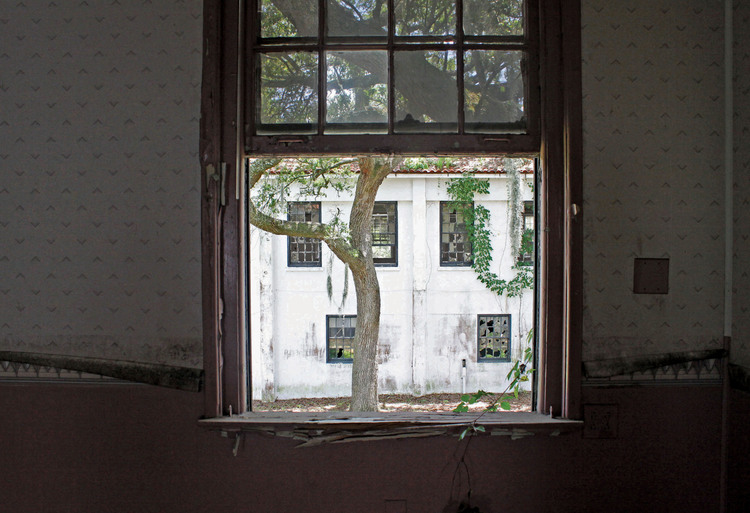
JS: My current favorite photograph is one I took inside an abandoned Navy building in 2013--it’s titled Abandoned I. The former Navy shipyard has now become a mixed-use area for the city of North Charleston called The Navy Yard at Noisette. There are still remnants of the old shipyard, including a handful of abandoned military facilities. I have a favorite building there, and I have gone back a couple of times to document the interior and exterior of the facility.

Abandoned I
1:1000: What do you think draws you to these subjects that have such an unconventional beauty--abandoned buildings, chipped paint, rust?

JS: I’ve always been drawn to things that display unconventional beauty. I mean, beauty is so subjective anyway. Abandoned, dilapidated, and sometimes forgotten spaces appeal to me in a way that more modern, well-kept, and well-known spaces don’t. It’s fascinating to think about the story behind these spaces, these things - how did they get to be in the condition they’re in? Who occupied the space? These are questions I often ask myself when documenting buildings.

1:1000: And that, I think, is where the fun really starts for the writers who work from your photos.

JS: I definitely see my work relating to issues like gentrification and also sustainability. Some of my work was recently featured in Synergies--a regional sustainability publication put out by the College of Charleston Office of Sustainability.

1:1000: Who are your favorite photographers right now?

JS: Two of my favorite photographers are Kate Wichlinski and Chloe Gilstrap. Kate is a dear friend of mine whom I met in Charleston a few years ago. She has since moved to New York...When you view her work, you really feel a connection to Kate and her subjects (she also makes these wonderful self-portraits). Chloe is another photographer that I really admire. I also met her in Charleston a few years ago. Similar to Kate, Chloe has since moved away from Charleston (she’s living in Seattle now)...She’s extremely talented and uses various printing techniques.

1:1000: What's the process been like watching writers interpret your photos for 1:1000? It’s jarring for me, even now, learning that the photo that served as a setting for Morgan Ira James’s “The Jam Times” was actually a military facility.

JS: I think it’s quite fascinating, really. It’s interesting to see how my work is being interpreted. I try to put myself in the shoes of the writer and realize that I would probably interpret the photographs in a completely different way. But that’s what makes it truly interesting--how we each have our own interpretation of things. It’s also flattering to have someone create a story based on a certain emotion or emotions that were provoked when viewing one of my photographs. I appreciate being featured!

1:1000: What else should we know about Jen Stevens?

JS: Besides travel and photography, I’m really passionate about volunteering and non-profit work. I’m an organizer with a grassroots, social justice organization called Girls Rock Charleston. Our mission is to empower girls and transgender youth through music education, DIY media, and creative collaboration. We offer a one-week day camp for girls and transgender youth ages 9 to 17. At camp, participants take instrument instruction in drums, guitar, keys, or bass, form bands, and write and rehearse original songs that are played live at an end-of-camp showcase event. In addition to music education, the campers attend workshops that range from topics such as art and resistance and DIY media, to DJing and self-defense. While our programs involve music, we focus less on instruction and more on music as a means for personal and social change.

1:1000: That sounds awesome. What kind of change do you see in the kids?

JS: We have campers who show up on day one of camp week with little or no experience playing music. We help provide the tools and space to enable them--it's really remarkable to see how much confidence they gain throughout the week. They end up doing things they didn't know were possible--especially when they rock out with their bands on showcase day. Our campers are so great, and I feel so inspired by them to continue doing this work. I think it's much needed in the Charleston community.

1:1000: What mantras are you living by lately?

JS: Excellent question! I have a few mantras that I am living by lately:
Travel as much as possible. Some of the most enjoyable experiences in my life have been because of travel - the people I’ve met, the things I have seen, the activities I have been able to experience.

Only do what only you can do. This is especially true for me since I tend to say “yes” to most things.

Be open to change.
We are all unique and view/approach situations in a different way. I feel
like it’s best to be open to different viewpoints, open to new experiences, and open to changing our own perspective on things.

1:1 - Daniel Vidal

Posted on: March 12, 2015

Interviewed by Mark Killian
Oh, hello there. You’re just in time. We were about to interview VSCO photographer, social media expert, and occasional writer, Daniel Vidal, but then he caught a glimpse of a grackle fluttering ever so delicately around the top of a recently constructed Austin skyscraper, and he just had to capture the moment with his iPhone.

Then he’ll have to filter it, caption it, hashtag it, share it--you know the drill. Anywho, Danny’s work is all over the 1:1000 Archive, so we’ll give him all the damn time he needs. Ah, here he comes now. He’s smirking. He must have a bunch of likes already.


1:1000: Daniel, Danny, Dan, what sparked your #instadope VSCO photography hobby?

DANIEL VIDAL: I've been playing with a camera off and on since high school. My grandfather loves taking photos and documenting moments. It's to the point now where he sends us Year in Review DVDs with all the photos he took and collected. I love it and am inspired by it. I love a photograph's ability to capture a memory. A very specific time, place, and mood that might not continue to exist otherwise.

1:1000: DVDs? I think it's time to get that man an Instagram account. So, what are your favorite things to filter: people, landscapes, architecture, objects, etc?

DV: This is hard, as it changes often, but I try to capture photos of the ordinary. I think there's inspiration to be found in those things that you see everyday but might not think twice about. Whether it's just taking a moment to look up at the skyscraper towering above you or a sliver of light dancing on the wall, it would feel great to know a photograph I took has someone looking twice the next time they walk down the street or into their kitchen.

1:1000: Well then feel great, sir, because you’ve completely changed the way I see window washers. What's your favorite photograph you've taken so far, and why?

DV: My answer changes every day, but it mainly depends on the feeling I get when taking the photo. There are sometimes when you just know it’s going to be special before you even trigger the shutter.. It doesn't always happen, but right now it's this one…


I think chance and timing play a big role in creating a "good" photo. The symmetry in this image, and just having the guy walk by at the right time, was perfect. I honestly just stumbled across this shot. It all happened in under a minute.

1:1000: Dang! That’s faster than most selfies. Speaking of, what’s your stance on the selfie? Under what circumstances is a selfie acceptable?

DV: Meh. I guess maybe in a volcano or maybe when travelling the world.

1:1000: Have you fooled around with a camera outside of your smartphone (don't worry, I won't tell it)?

DV: Yeah, I have. Like I mentioned early I've been playing with a camera since high school when I bought my first DSLR before a family trip to Colorado. The hobby dropped off a bit after college and it wasn't until I joined Instagram (yes, really) that I felt inspired to pick it up again. I liked the accessibility of mobile photography and the fact that there are some pretty powerful editing tools out there, too. After messing around a bit on my iPhone, I collected a few of my grandfather's old 35mm camera, bought a new DSLR of my own and have been working on my collection since. I honestly shoot a lot of film now and really enjoy it. Mainly, because it really forces you to think about what you are shooting and to take your time in capturing the photo. It can also be unpredictable which is fun. Everything on my website is film actually.

1:1000: Hey, there is no shame in rekindling your love for photography through Instagram. Switching gears, you were also kind enough to share your writing chops with us. What was it like being on the "1000" side of 1:1000?

DV: I really enjoyed it. I like writing a lot and it's a good challenge for me. I think it's good to do things that make your head hurt or require effort, and writing 1,000 words is that for me. I hope to give it another shot sometime soon.

1:1000: We hope you do, too. That is, whenever you’re not busy. According to LinkedIn, Social Content is your profession. Does that mean you pretty much Tweet, Instagram and Snapchat all day?

DV: Kinda. I actually write a lot, believe it or not. Most of my day is spent pushing out content for some of our clients. I also help drive strategies, wrangle designers and concept our photography shoots. Although, all of the content I work on is for social. It's fun and a little stressful, but it keeps me on my toes and I learn a lot.

1:1000: You ain’t lyin! The social space is an ever-evolving landscape, much like downtown Austin. If you could push a magical button and rid the planet of one form of social media, which would it be and why?

DV: As a user, I say Facebook, but the marketer in me says you can't do that. I don't like Facebook at all, and rarely use it. Proactively, at least. It helps me stay in touch with family in Colombia, but email and WhatsApp work just as well.

1:1000: Facebook Followers, don’t listen to him. Keep your eyes on your news feeds, especially Tuesdays and Thursdays. What is your white buffalo; that one thing you want to VSCO more than anything else in the world?

DV: Hmm, that's a tough one. I think spending a day photographing my grandparents sometime in their 20's would be awesome. No particular time or event. Just a random day. That'd be fun.

1:1000: I don’t recall saying you had a time machine at your disposal, but that answer is too adorable not to accept. Anything else you'd like the world to know about Daniel "VSCO" Vidal?

DV: I feel like Ron Swanson said it best, "I'm a simple man. I love pretty, dark-haired women and breakfast food." Also, my spirit animals is the wolf.

1:1000: So you’re saying you’re a Stark?

DV: Wait, is that a Game of Thrones reference? I think I’ve only watched 3 episodes of that show.

1:1000: Well, Danny, thanks for taking the time to speak with us today. Get going before you miss that sunset over Town Lake. Bonus points if you capture someone falling off their paddleboard.

1:1 - Erin Notarthomas

Posted on: October 9, 2014

Interviewed by Dot Dannenberg
Today on 1:1, Dot Dannenberg chats with Erin Notarthomas, the multitalented photographer behind “Brothers” and “Hands.” In addition to photography, Erin performs as Wrenn, her musical alter-ego. Her first album, “HI,” comes out this November.

1:1000: What's your favorite photo you've ever taken?

ERIN NOTARTHOMAS: Oh man… I am always the worst when it comes to picking favorites. I feel like my favorite photograph that I have ever taken is constantly changing. I don't even have a favorite color. I suppose it is a toss up between three of my more current photographs: the portrait of Chris & Ella Pitzgerald in their kitchen, the portrait of my friend Jordana with a large piece of fabric wrapped around her head, or the picture of my sister Maddie under a glossy shroud with the wind blowing and two tiny clouds in a dark sky serving as the background. When I think of all the pictures I have ever taken (which is probably up in the thousands), these three stand out the most to me.

1:1000: Your photography, to me, seems to capture these sometimes ghostly, small moments of stillness: sheets in a heap, a dog perched at the top of a staircase. In contrast, the music I've heard of yours feels a lot faster--quicker. You've got beatboxing in there! Do you think you have two different artistic personas with your photos and music? Or is there a connection?

EN: I don't feel like I have two different artistic personas… but then again, maybe I do. Who knows. All I know is that everything I make is a part of me and a part of how I am feeling. If you took bits of my photography and bits of my songs and put them together, it would become pretty easy to figure out the type of person I am and the things I am constantly thinking about. There are so many layers to a person. Each work of art, each song… they just reveal another one of the many layers that make me who I am.

1:1000: Know thyself, they say. How, exactly, does one get into beatboxing, by the way?

EN: Not too long ago I was in an a cappella group called Noteworthy. There were the "go to" girls that did the beat boxing for most of the songs, so I never really bothered giving it a shot until we had this gig around Christmas time. Both of our beat boxers were not able to make the gig, so we were just going to do it without the VP (vocal percussion). Beatboxing didn't seem like a difficult thing to me, so I just decided to do it during one of our songs at this Christmas gig. Turns out I was pretty good at it. And that was that.

1:1000: What's your favorite song you've written, and what's it about?

EN: Haha, another favorite question. This is constantly changing as well. But today I am very fond of my song "Sunrise". It's about a suicide note sung by the person who has written said note and who has already committed suicide. I wanted to write a song that could maybe explain the reasoning behind suicide in a beautiful way. It seems morbid, but when I listen back to this song I don't feel like it is depressing or scary. It has something sad, yet beautiful in it. After the death of Robin Williams and of a family friend's brother, this song means even more to me today than it did when I was writing it. I wanted the words to bring some sort of comfort to anyone who has suffered from this kind of loss. Suicide is a difficult thing to swallow.

1:1000: It really is--and it’s great that you don’t shy away from the tough stuff. I think we need more of that and fewer albums full of breakup songs (sorry, T. Swift). But from the tracks of yours I’ve heard, your work is anything but conventional. Especially in songs like "Wild Card," I'm reminded of Ani Difranco on her Educated Guess album--who would you claim as your musical influences?

EN: The only person that I am consciously aware of being influenced by is Paul McCartney. I am sure that there are hundreds of artists that have subconsciously inspired me or crept into my songs… it's inevitable. We are influenced by everything around us every day. But I try my best not to focus on being like anyone else. I just want to be me.

1:1000: You mentioned in a conversation with Pastel that your songwriting process is pretty organic and "sometimes a song just happens and you go with it"--how does that compare with your artistic process for photography?

EN: It's pretty much the same… any time I have ever tried to plan out a picture, it doesn't turn out the way I wanted it to. My best photographs are the ones that just happened. The lighting and the subject and the moment just come together perfectly, and it happens. Inspiration hits you out of the blue, and you just have to follow your instincts and go with it.

1:1000: At 1:1000, we're obviously very interested in collaboration--what's it been like collaborating with your boyfriend Chris Padgett on your album?

EN: Chris and I have had some struggles trying to work together, but there is absolutely no way I would be doing what I am doing now without him. Chris and I play two different styles of music and have different ways of working on music. This has caused us to bump heads now and then. But when it works, it is extremely rewarding. Chris is one of the most talented guitarists I have ever had the pleasure of knowing, and I am so blessed to have his experiences to help guide me through this process. We haven't written any songs together yet, but I am hopeful that one day we will be able to. I am pretty shy with my writing process. I usually go into hiding until I have a song. I play it for him. He tries out some stuff on guitar, and I tell him which riffs I like and which ones I don't, and that's how we work currently.

1:1000: You turned to Kickstarter to fund your first album, HI--what was that experience like?

EN: To be honest, the idea of it really made me uncomfortable at first, but it ended up being great. I just finished school… there was no way I was going to make enough money to get an album out at the rate I wanted to do it on my own. So my good friend suggested Kickstarter (something I had never heard of before). I was shocked when we reached the 5,000 dollar goal… I was even more shocked when we went 3,000 dollars over that goal with a few donations outside of the Kickstarter website. The best part about it was that people weren't just donating to my project, but they were also reaching out to me. My Facebook inbox exploded with encouraging messages from close friends as well as from people I hadn't spoken to in years. Kickstarter was and still is a humbling experience. These people didn't have to give me money, but they chose to support my dream. I will never be able to thank them enough.

1:1000: What has the recording process been like so far?

EN: This is my first time in a real studio. It almost feels like I am on a movie set or something. All the buttons and knobs and colored lights and instruments… it's a dream. I am soaking up all that I can from this experience. Recording is so much fun, but it's also a full time job. We go into the studio around 9:30 in the morning. Sometimes we take a 30 minute break to grab food, and we usually don't get home till past midnight. But I wouldn't have it any other way. I love working this hard. Every now and then, we have a couple of bad hours where it feels like nothing is getting accomplished and we keep doing the same take over and over again. But then there are days where we can cross so much off the list. The album has violins, cello, piano, trombone, trumpets, drums, guitar, etc… so just getting the instrumental tracks laid down has been a huge task. Now we are at a point where the only thing left to do is lay down the master vocals. I couldn't have asked for a better first-time experience. I love the people I am working with. I love the atmosphere. I love everything about it. I really am living a dream right now.

1:1000: Well, I for one couldn’t be more excited to hear what this dream produces. To close us out, give us a little dream-life philosophy. What mantras are you living by lately?

EN: Be limitless.

Wrenn’s album “HI” comes out November 7. Hear more songs and follow all the latest on her website. To see more of her photographs, view her portfolio here.

1:1 - Sam Chow

Posted on: September 4, 2014

Interviewed by Logan Theissen
Over the next few weeks, 1:1000 will take you behind the scenes with our core writing and editorial team. We'll show you more about what makes these writers tick (or maybe twitch).

In our latest interview, Logan Theissen talks with Sam Chow. Pardon me, the indefatigable Sam Chow. Writer of excellent stories such as "Tithonous" and "After The Storm." Lover of Murakami, and Raymond Carver. Master of law. Simply put, a Renaissance man for the ages.


1:1000: What are you currently reading?

SAM CHOW: I'm just finishing up The Goldfinch by Donna Tartt. I wasn't a huge fan of The Secret History, which was her super popular novel from 1992. But I really liked her writing style and after she won the Pulitzer, I decided to give her new book a chance. I'm really glad I did, because so far it's fantastic. It's really a perfect amalgamation of her writing, her seemingly unlimited knowledge of the art world, and classic mystery - the mystery element being the big draw for me.

1:1000: Tell me about your first experience writing or being a writer. How old were you? What were the circumstances?

SC: I've always written, we all have. In school, for work, I usually only ever wrote when it was demanded of from me. Most of my early writing attempts were stop-and-go, and I never really put together a full piece. My first and only full piece prior to 1:1000 was a short story I wrote out of sheer boredom. I was at work - I was a host at my parent's restaurant - it was spring break in Myrtle Beach, and lunch rush had just ended. Everyone was out having fun, and I was miserable, bored out of my mind. And in my misery, I wrote my first ever short story, "The All-American Grill."  I have no idea where that short story is now, lost in digital purgatory on one of my old laptops, but I distinctly recall my sense of accomplishment for having written my first story. Who knew that boredom could be such a creative muse. I think I was sixteen, maybe seventeen, at the time.

1:1000: What were some books and authors that you liked when you were younger? Do you still read them?

SC: Like a lot of growing boys (and girls), The Catcher in the Rye stands out as one of the first books that ever left a lasting impression on me. Since reading it for the first time, I've gone back to it several more times and it still reads brand new to me. I also read my first Haruki Murakami book when I was in high school, and I still eagerly wait for his new books to come out in the States, though I was a little disappointed in 1Q84. Another book that really stands out is The World According to Garp, which was a book introduced to me by my high school history teacher. I think that was the first book that made me realize how eye-opening literature could be and that there was a world outside of the school curriculum. It's one of the few books I've read more than twice.

1:1000: Writers love to talk about habit. What is your writing habit like? Daily? Morning or night? That sort of thing.

SC: I wish I had a writing habit, it would make scheduling it into my day a lot easier. Writing is incredibly sporadic for me, and I tend to write during lulls throughout the day. A little in the morning, maybe some at lunch, or when I just need a break. Having a full-time job that demands a lot of my time makes my writing "routine" incredibly difficult to maintain, which is why I haven't been able to contribute as much as I would like in recent months. But I'm not the type of writer that can set aside a block of time to write.

1:1000: Do you have a particular genre or type of reading and writing that you like? Do you find that going outside of that genre (fiction to non-fiction, etc.) can help influence your writing? For example, when writing a piece of fiction, do you usually read other pieces of fiction in the same vein? Non-fiction? Where do some of your everyday influences in writing come from?

SC: I love reading everything. Classics like Frankenstein and Huckleberry Finn, non-fiction like Homage to Catalonia, science fiction like Kazuo Ishiguro and Ray Bradbury, westerns like Cormac McCarthy, magical realism, short stories...I could go on. I don't really prefer one over the other. As far as writing, I try to explore genres, but really enjoy writing mystery-esque stories (e.g. "The Outer Borough"). My writing does tend to be influenced by what I am reading at that moment, so I try and go back to my regular fixtures for inspiration if I need it. My go-to muses are usually The Great Gatsby and Hemingway and Raymond Carver's short stories. Though, I love flipping through whatever I have available to me too, just thumbing through and reading random passages from a book without context is a great exercise for writing. And of course I find most of my influence from the brilliant photographers that have lent their talents to 1:1000.

1:1000: How did you get started with 1:1000?

SC: Well, my buddy and fellow writer, Mark Killian, is always coming up with kooky ideas. I remember him bouncing the idea of what would become 1:1000 several years before its actual inception. It's great working with Mark because he has a mind for these projects that really force you to exercise your creative muscles. It's really given me an incredible opportunity to work with an amazing collective of writers and like-minds.

1:1000: I'm pretty new to flash fiction. What do you think of it? Do you like it more or less than more long-form writing?

SC: I'm not sure I am capable of long-form writing, given my sporadic writing habit. I would love to write a novel or something at some point, but flash fiction is the perfect medium for me at this particular stage in my life. It's a creative outlet that I crave and I get to work with a group of peers that help me improve as a writer.

1:1000: How do movies/film and music influence your writing? Do you listen to music when you write?

SC: I love music, but I can't listen to music when I write. It's too distracting, my mind tends to wander as it is. When I listen to music, it's because I want to listen to music. Movies, on the other hand, are an endless source inspiration. In fact, I think a lot of my writing is dictated by how it would appear on the big screen. What would this scene look like if it was happening in front of me? I visualize a lot, and it's usually in movie-form.

1:1000: Some people think this is an unanswerable question, but I think it's a good one, so I'm going to finish on it. Why do you write?

SC: Writing has always been in the background for me, it's always been there, even if not always on the forefront. As I kid, I was a huge doodler...still am to be honest. No matter what I'm doing, if I have a pen and paper in front of me, I'm compelled to draw something. And I think it was because I am constantly looking for a creative outlet. 1:1000 is perfect, it's like doodling, but with words.

1:1 - Mark Killian

Posted on: August 28, 2014

Interviewed by Sam Chow
Over the next few weeks, 1:1000 will take you behind the scenes with our core writing and editorial team. We'll show you more about what makes these writers tick (or maybe twitch).

This week we sit down with Mark Killian, a copywriter by trade who not only writes for a living, but spends his free time gracing us with his eclectic collection of stories, such as “Go Deep,” “Golfonomics," and his most recent addition, "Put a Blue Ribbon on My Brain," which are as likely to make you laugh as they are to make you cry.


1:1000: Why writing?

MARK KILLIAN: There are many reasons, but I think Roger Federer summed it up best when he spoke to a bunch of bankers at the Credit Suisse headquarters. To paraphrase, he said the key to success is focusing on your strengths, not trying to overcome your weaknesses. Scholastically (and in other areas of my life) I have many weaknesses, but I've never had a problem completing a writing assignment. Damn the SATs for implementing the written portion AFTER my graduation.

1:1000: You clearly draw a great deal of inspiration from Roger Federer and Stephen Colbert, what is it about them that inspires you? Do you have any writer idols?

MK: Roger and Stephen (we're on a first name basis (in my dreams)) are blueprints for the man I hope to become. I'm not foolish enough to think I will ever come anywhere near their personal or professional successes, but as the 4th Earl of Chesterfield Philip Stanhope (thanks Google) once said, "Aim at perfection in everything, though in most things it is unattainable. However, they who aim at it, and persevere, will come much nearer to it than those whose laziness and despondency make them give it up as unattainable." I think Rog and Steph are about as close to perfection as humans can get. They love their jobs, their wives, their families, and they're surprisingly humble for people who have accomplished such greatness in their fields. Plus, Colbert's from coastal South Carolina. Before him, the only famous person I could relate to (geographically) was Vanna White. As far as writers are concerned, many of the greats have horrible personal lives. All of them seem to be divorced or mentally tormented or struggling to overcome some kind of addiction. There are many writers I admire for their style and accomplishments, but I reserve the word "idol" for people who embody the total package.

1:1000: In addition to 1:1000, you make a living as a copywriter. Writing clearly takes up a lot of your time and your mind, so what inspires your writing? How do you avoid writer’s block?

MK: Talking to myself. I don't have "voices in my head" in a The Shining sense of the word, but my brain can sometimes feel like a crowded coffee shop. I hear all of my thoughts bouncing off one another as if I were reading my own mind, especially when I give my brain a topic to ruminate on. That's the beauty of the 1:1000 concept. I'll look at a picture, the "voices" will start chattering, and I'll follow the "voice" that I feel is saying the most interesting things. The same goes for a work assignment. As long as my head is talking, I'll continue to write down what it has to say. (Disclaimer: I've never been psychoanalyzed, so there is a chance that was just the rantings of a mad man.)

1:1000: Um…so what are the voices telling you now Mark?

MK: They are telling me I have the right to remain silent.

1:1000: You’ve written stories ranging from social commentary (e.g., “Roses”) to more humor-heavy tales (like “Pissed”), how would you describe your writing?

MK: Once again, it's the voices. Sometimes the funny ones are the loudest (“Pissed”), sometimes it's the sincere ones (“Roses”), and sometimes it's a mixture of both (“Hokey Pokey”). I'm just their stenographer.

1:1000: How do you choose the photographs for your stories?

MK: For the most part, I leave it up to the voices. And yes, I'm aware the voices thing is getting old, but I can't help it. It's the truth. Anyways, I usually go to our Stories to Be Pinterest board or Flickr and scroll through until the voices see something they like. However, there have been a few occasions (like with “Pissed”), when the story came first.

1:1000: What's a day in the life of Mark Killian look like?

MK: Monday through Friday, a day in the life of Mark Killian would bore you to tears. I am extremely dull and regimented. I eat the same three meals at the same times every day. I wake up, I go to work, I exercise, I Hangout (virtually) with my Lady, and I go to sleep. I am the personification of my favorite quote from The Picture of Dorian Gray, "Good artists exist in what they make, and consequently are perfectly uninteresting in what they are." On the weekends, I'm a little more willy nilly. I hang out (physically) with my girlfriend, watch movies, and eat nitrates. I'm a real daredevil.

1:1000: The protagonist of "Finding Faith at 10,000 Feet" also seems like he would be the type to avoid nitrates. Is that story, or are any of your stories, autobiographical?

MK: The most autobiographical story I've ever written was either “Pissed” or “Put a Blue Ribbon on My Brain," although, they were slightly embellished for comedic effect. “Finding Faith” was close, minus the decision to fly to New York for a second opinion. I find that humorous stories are easiest to draw from real-life experiences, because I've had a pretty plush life. The hardships I've faced would make anyone with real problems laugh, so I laugh along with them.

1:1000: What does a hypochondriac do for fun?

MK: What DOESN'T a hypochondriac do for fun!? (Most things.) Lately, I've been having a blast on this website/app called GoodGuide. They've taken over 200,000 consumer goods and rated them according to their impact on your health, the environment, and society. As a hypochondriac, I mostly use it for health. Fun fact: pretty much all hand soaps want to give you cancer. Don't believe me? Go to GoodGuide. Then, of course, there's always the WebMD Symptoms Checker. HOURS of fun. And by "fun" I mean crippling anxiety, but it's the kind of rush I used to get from haunted houses.

1:1000: Other than listening to voices inside their heads, do you have any advice for those out there who want to write, but are too afraid to take the plunge?

MK: Do it. Seriously. It's that simple. Writing, like all art, is subjective. I have read books that make me think, "How in the hell did this get published!?" But that's just one man's opinion. There's always going to be someone who thinks you suck. Like Federer said, focus on your strengths. Don't try to win over the people who think you suck. Just try to please the people who think you're talented, even if it's just one guy named Sam Chow who has read every piece of grammatically incorrect and misspelled crap you've typed since high school.

Sam: Aww! I get a shout out?

Mark: Of course! Anyone who read the "poetry" that came out of my first "heartbreak" deserves a humanitarian award.

Sam: You were painfully emo.

Mark: I will cause you pain the next time I see you.

Sam: Nothing can hurt worse than those poems.

Mark: Valid point.

1:1 - Ben Cook

Posted on: August 21, 2014

interviewed by Mark Killian
Over the next few weeks, 1:1000 will take you behind the scenes with our core writing and editorial team. We'll show you more about what makes these writers tick (or maybe twitch).

This week we learn a little more about a relative newcomer with a newborn, Ben Cook. Ben is a veteran of the airline industry who was tired of keeping his writing aspirations grounded, so he joined our little site to let his prose take flight. Thank goodness he did! Otherwise, we’d never have wonderful stories like “Tending to What Matters,” “Arbor Day,” “Some Dreams,” and his latest, “Like There’s No Tomorrow.”

Mark Killian sat down with Ben at their individual computing machines, thousands of miles apart from each other, to interview him via G-chat. Although Mark's never met this man in person, they soon found a kinship through notes on their writing styles and movie preferences.


1:1000: Benjamin. How art thou?

BEN COOK: Tired. Very tired. Our newborn, Bryson, didn't feel much like sleeping last night, which means no one felt much like sleeping.

1:1000: Oye. I have heard of this unfavorable aspect of parenting. On a good night, how much sleep do you get with a newborn? Same question for a bad night.

BC: On a good night he will sleep for about six hours in between feedings (which I am not biologically capable of, but you end up waking up anyway). On a bad night he is up every two or so, crying. I probably average about five hours a night, my amazing wife gets by on even less.

1:1000: That's reassuring. That's about what I currently get due to my own psychosis/insomnia.

BC: Ha! The good thing about children is in a way they cure insomnia, you become so exhausted that you go directly to sleep when you do get a chance to lie down.

1:1000: That's also what I've heard. I have seen many a picture on The Facebook of a passed-out parent with a child sleeping on top of them.

BC: Yep, those are the best naps!

1:1000: And photo opps. How many kids do you have again?

BC: Two. Liam will be five in two months, and Bryson is one month.

1:1000: Does the thought that they may find your writings one day ever cross your mind? And if so, does it affect the things you say?

BC: Yes it does. I think that's one reason that I can be somewhat reserved in my writing.

1:1000: Speaking of writing, what say we launch into this interview? (Although, there is a chance those previous questions/answers will weasel their way into the final draft.)

BC: Fire away.

1:1000: Let's start things off the standard way and see if we can't make it a little weird down the road. First, when did you know you wanted to become a writer?

BC: Strangely enough, it was a movie that first inspired me to write. I was always a voracious reader growing up (thanks Mom and Pop for making us read everyday), but I never gave writing much of a thought until my senior year of high school when I saw Clerks. The fact that a dude could write and direct his own movie was incredible to me. Around the same time I got my first job in a bookstore and read Nick Hornby’s High Fidelity. Between those two, writing became something that seemed accessible to me for the first time. I started writing but never really showed anyone.

1:1000: That is AWESOME! I too consider myself a movie-inspired writer, and High Fidelity is such a great book/movie! Probably one of the only times I feel the movie is better than the book. Any who, what was the first thing you wrote after watching Clerks. Was it a story or a movie? Also, why did you decide not to show it to anyone?

BC: I tried my hand at screenplays, but gave up fairly quickly. I didn't know any of the mechanics of it, and back in those days ('95 or so) we didn't have nearly the resources there are now. After that I switched to short stories. I guess I never showed anybody, because I didn't have much confidence in myself or my writing, which is sometimes still a problem for me.

1:1000: Ugh! Confidence. It is our greatest strength and/or weakness. So how did you work up the courage to put your work in front of 1:1000's ZILLION (joking, of course) readers?

BC: One night I was reading bedtime stories to my four year old and he asked if he could be an astronaut when he grew up. I told him that he could be anything he wanted to be. Later that night when I went to bed I felt like a hypocrite. Here I was telling my son he can be whatever he wants to be, when I'm not doing what I want to do with my life. I started writing again a couple of days after that.

1:1000: That is freaking BEAUTIFUL! I imagine the "Top 5 Jobs" list from High Fidelity really resonates with you. I love that scene when he realizes owning a record store is actually above architect and he IS doing one of his dream jobs.

BC: Ha! Owning a record store would actually be in my top five too.

1:1000: Then does music have an impact on your writing?

BC: Music has a huge impact on my writing. Definitely more than movies nowadays. Being a parent of little kids, you don't have much time for anything other than family fare, and there is only so much inspiration you can draw from Thomas the Tank Engine. I still try to read, but again I don't have much time to myself. But I have music on all of the time, when I driving, when I am writing, and even most of the time at home our TV is off and there is either music or NPR playing. When I am writing, I will generally stick to a certain genre for each piece that I write.

1:1000: Who are some of your go-to artists when seeking inspiration and how do they affect your writing?

BC: I have found that in life, and writing, you can never go wrong with Pink Floyd or Willie Nelson. Aside from them, I guess I tend to use the setting of the story to guide what music I listen to as I write. For example, when I was writing "Arbor Day" I played a lot of Bow Thayer, who is a Vermont musician, and Janis Joplin, because growing up whenever we drove across Nebraska my mom always played Janis. And sometimes the music inspires a change of direction. For "Like There's no Tomorrow" I was listening to an Icelandic band called Solstafir. Their music literally transformed what started as a tale about unrequited love into an apocalyptic love story.

1:1000: How important is setting to your writing, both in the story and where you physically are when composing the story?

BC: I do most of my writing at work, on my downtime, honestly, so for composition it doesn’t matter much, but setting is very important in my writing. I try to make the environment almost its own character, or at least have it drive the story in some way. I think it comes from moving around a lot, and from travelling. I love going to different places and seeing how they can transform my state of being.

1:1000: Is the airline industry the reason why you've traveled a bunch, or have you always hopped around the world?

BC: I wasn't much of a traveler before I started working for an airline, but once you have access to free flights, you tend to take advantage of that. It was especially true when I was younger. If I had nothing better to do, I would just hop on plane and go check out someplace I had never been. But having that freedom, combined with the fact that I was living in Las Vegas and in my early twenties, pretty much doomed my college career.

1:1000: Ha! I can imagine. What were you studying in college?

BC: I was a History major up until I dropped out of UNLV. I went back in 2005 and took a couple of creative writing classes. In 2006 I moved back to Colorado, where I am from originally, and I planned on transferring to a small liberal arts that has a great English program, but I couldn't afford it. That was last time I did much writing.

1:1000: Which had a greater impact on your writing, the classes you took or Clerks, books, and other real-world writing samples?

BC: Honestly I would have to say, even though I don’t watch them much anymore, movies taught me a lot. Kevin Smith, Richard Linklater, and Quentin Tarantino taught me dialogue. The Coen Brother’s movies taught me how much the setting can propel a story. I still take a lot of inspiration from books when I can, too. I reread To Kill a Mockingbird at least once a year, because to me, it’s perfect. I keep hoping that some of Harper Lee’s genius will rub off on me. Writing classes were great for peer-to-peer feedback, but I think I learned more from reading Stephen King's On Writing than I did from any professor.

1:1000: That's what I was hoping to hear. I have never taken a formal writing class myself, and have always felt it limited my ability to become a real writer. I'm starting to think that's a farce.

BC: I think it probably depends on where you go. The UNLV English department wasn't great. If I would have gone to Naropa (the little school in Colorado), who knows, I could have had a teacher that changed my world.

1:1000: Do you plan on sticking with short stories or will you attempt to tackle a novel at some point? Or, will you try a screenplay again?

BC: Now that I am getting back into the swing of things, I would love to try and write a novel, or at least something longer than a thousand words. A screenplay would be fun, but since I don't have a whole lot of time for writing, I am going to stick to what is working for now.

1:1000: Well, we fully support and anxiously await whatever it is you do next, as long as it doesn’t result in you leaving 1:1000.

1:1 - Natasha Akery

Posted on: August 14, 2014

interviewed by Ben Cook
Over the next few weeks, 1:1000 will take you behind the scenes with our core writing and editorial team. We'll show you more about what makes these writers tick (or maybe twitch).

This week we learn a little more about the ultimate multi-tasker Natasha Akery. She is a wife, mother, blogger, entrepreneur, and musician. Somehow she still finds time to weave some beautifully intricate tales like “The Extractor,” “Taboo,” and “The Wisest of All” for us here at 1:1000.


1:1000: When did you first know that you wanted to be a writer?

NATASHA AKERY: I've been making up and writing stories from the age of eight, but I think I knew when I was a freshman in high school. I'd been working on an exhausting piece of science fiction that exceeded three hundred pages, but never went anywhere. What was important about working on that story was that I needed to work on it every single day after school. The compulsion, the drive - it was intoxicating. I love to write. More so, I love to write about things that scare people and about the worlds that sometimes appear in my head.

1:1000: What projects, writing or otherwise, are you working on right now?

NA: Sometimes, I think I'm working on too much and it really overwhelms me. Currently, I have a faith-based blog where I share some of my unconventional ideas about Christianity. I started it mostly because I really needed to unload all of these fears and thoughts that I'd been bottling up because of growing up in the bible belt. As I've been writing, I've discovered this whole group of progressive, liberal Christians that I never knew existed, which was surprising and encouraging. I've also started a small business called Lumenkind, which serves women struggling with stress-related symptoms, illnesses, and disorders through the practice of yoga and writing. My first workshop is in September and I can't even believe it! My husband and I also have a musical project called Lockout/Tagout, and recently we've realized that we need a renaissance of sorts. I think we're going to spend the next few months writing and experimenting with a different sound.

1:1000: That sounds like an incredibly full plate. Any secrets you can share on how to find balance when living such a hectic life?

NA: Balance is so important for me as a Libra, but I honestly feel off kilter these days. The refrain in my journal entries as of late: "Who am I? What do I want?" I would say what's helped me most is observing a true sabbath: not the go-to-church-on-Sunday kind, but a day when I steer clear of my usual activities and connect with my husband and daughter. I had my first sabbath this past weekend. I turned off my phone and put it away. I didn't open up the computer once. I didn't make a move for the television. I think what pleased me most was my husband's response at the end of the day, that he really enjoyed how connected I was, and it encouraged him to ignore social media as well. So, I'm trying to integrate little sabbaths into my day. I've turned off the notifications on my phone and I try to have a purpose for opening up my laptop. Setting these limitations has helped me foster a deeper connection with my daughter, and I think it's helping my husband feel precious.

1:1000: When do you do most of your writing? Do you have a routine?

NA: As of now, the majority of my writing happens when my daughter Eleanor takes naps. My husband has been sweet enough to make sure I get an uninterrupted 3-hour block of writing on the weekends, which has made a huge difference. Do I have a routine? No, not really. I take what I can get. But I've never been one for routines really, at least, not ones that require I get up before the sun does.

1:1000: Has becoming a mother changed the focus of your writing?

NA: Eleanor has made me an honest writer, and by that I mean she has pushed me to tell the stories I want to tell. For a long time, I was so afraid of sharing what was inside of my head and heart, particularly because I've been immersed in an evangelical Christian context where people are hyper-involved in your "walk with the Lord." I think some of my narcissism comes from that because I've been taught to be paranoid. I've hidden a lot of myself, my creativity, and my convictions because I really didn't want to end up being someone's subject matter for their prayer time. Eleanor is truly my muse. She demands truth with every diaper, tear, and squeal.

1:1000: Besides your family, who or what inspires you?

NA: I'm currently reading a lot about minimalism, which is kind of a bare-bones approach to life. The less clutter and possessions I have, the more room I feel to create. People like Courtney Carver and Leo Babauta inspire me because they have businesses based on minimalism and a passion for helping people. I'm inspired by the transgender community and their battle for equality and social justice. I have a few friends who are transgender, and watching their transition has really opened my eyes to what prejudice looks like and how subtle it can be. I'm inspired by women who tell their stories, particularly of sexual assault, harassment, and abuse. I think a lot of people hear them and think, "Ugh, just get over it." But they keep talking, they keep telling their stories, and it's changing society. As for texts, I could read the Gospel of Mark, the Epistle of James, and the Bhagavad Gita every single day. The Gospel of Mark reveals a very human and mortal Jesus, which I think gets glossed over in Christianity because everybody treats him like a unicorn. The Epistle of James is all about how important it is to be in control of what you say because the tongue is like a wild fire. And the Bhagavad Gita? Just...all the feels. It's about God manifesting as a man and speaking to a prince about life lessons, and it's seriously just the most beautiful thing I've ever read.

1:1000: When working on a story for 1:1000, which comes first, the idea for the story or the photograph?

NA: My most recent story "The Wisest of All" is the first time I looked for a photograph to fit what I wanted to write. Usually, I pick a photograph and insert myself into the image, waiting for something to happen. It's peculiar because I really feel like I'm waiting for someone to show up so I can observe. And I just type as I follow them around the image.

1:1000: Readers have been captivated by your ‘Anna the Extractor’ series. Where did the idea for Anna come from?

NA: Call me clinical, but ‘Anna the Extractor’ is based on personal experiences. I grew up hearing voices, seeing spirits, and sensing presences. Each and every story pulls from an aspect of my life, or a memory. The development of the stories are inspired by research I've done on Jewish exorcism and the gospel accounts of Jesus casting out demons. The most recent installment, "Calling," is actually my mother's memory. She grew up on an island with her grandmother and developed a "spirit sickness," indicating that she was meant to become a shaman. But my mother didn't want to. Later, when I developed certain symptoms and were having supernatural experiences, she shared that memory with me. It's really fascinating. I'm hoping that Anna will eventually be novel-worthy, but we'll see. I don't want to pressure her too much.

1:1000: What are some recent things that blew your mind?

NA: Umm, this is embarrassing, but...I'm a narcissist. I didn't realize it until recently, but it's not the kind of narcissism that you'd expect. I'm not running around wanting people to look at me all the time, but my anxieties and the things I stress about are a clear indicator that I have a self-centered perspective of life. I'm always worried about what people think of me and my decisions. If people don't respond quickly to my text messages or emails, I assume that they're mad at me or don't like me. I quickly abandon projects when they aren't "successful," which is determined usually by someone else's level of success. I'm appalled when a blog post that I thought was brilliant doesn't have many views. Just yesterday, I was discouraged that only 11 women are signed up for my workshop in September and figured I should just forget about continuing with my small business. People have only known about the workshop for two weeks! That's a great number! But I'm constantly battling this child inside of me who is starving for attention and affirmation. So, yeah, narcissism blew my mind.

1:1000: What sage advice do you have for any would-be writers out there?

NA: Don't be afraid. Don't judge what you write. Don't edit while you're writing. What you write isn't stupid, and you're writing only improves if you stop criticizing yourself. Imagine that your inner writer is a child, is you as a child. Parent that child in the way you find most ideal. Encourage her. Motivate her. Ask her engaging questions. Listen to what she has to say. If you keep interrupting her, calling her names, and erasing what she says, she'll shut down. She'll die. The world is so much better if you keep her alive and flourishing.

Creative Commons License This work is licensed under a Creative Commons Attribution-NonCommercial-NoDerivs 3.0 Unported License
1:1000 The Design of this Blog is All rights reserved © Blog Milk Powered by Blogger