Empty

Posted on: May 27, 2013


Leigh and Tara sit on a white seersucker blanket with rainbow stripes spread across the lawn of their Aunt Mary’s backyard. Leigh wrinkles her nose to push up the bridge of her thick, black-framed glasses as she chews on the last blackberry and leans back on her hands. She wears a black Macgregor hoodie and cut off shorts, the lining of her pockets peeking out across her thighs. Tara pulls her dress over bent knees and wraps her arms around her legs, glancing at her toenails and wondering if she should paint them gray. The wind rustles the canopy of leaves above, casting shadows that sway back and forth like seaweed underwater.

“Are you okay?” Leigh typically asks Tara once a week, often prompted by a sobering Facebook status or blog post.

Tara is both appreciative and annoyed by the inquiry, not understanding why something must be wrong in order to inspire serious reflection and discussion.

“Oh yea! Why?” She sounds overly chipper.

“I dunno.”

Leigh tugs at a few strands of denim. Just five feet and four inches, her long limbs and narrow face suggest a much taller frame than her sister. Tara is the same height, but her legs are thicker and her torso shorter. Even next to each other, she seems closer to the ground than her younger sister.

“Remember when you asked me if I had an eating disorder? We were on the swings and you were upset when I threw up after lunch.”

Leigh doesn’t say anything, but looks up at Tara and meets her gaze. Her posture straightens, conveying that she’s listening.

“It’s not that I think I’m fat. And I don’t count calories,” Tara continues. “I’m really not even aware that I’ve gone for a while without eating. I just get so hung up on my thoughts that I forget I need fuel to sustain them.”

She picks at the corner of a toenail, annoyed at its length.

“So, what about throwing up?” 

Leigh remembers listening to her sister regurgitate a super expensive meal and feeling confident that her concerns about Tara’s weight were officially justified.

“I make myself vomit when something doesn’t feel right, like if I eat too much or I feel like my stomach can’t digest whatever’s in there.”

Tara’s face feels really hot, not because she’s lying, but because she feels scrutinized.

“It’s not punishment. I promise. I do it because I feel like my body needs me to do it.”

A dove coos from a powerline, a sound Tara and Leigh always mistook for an owl until today, looking up and noticing the tail feathers press down as the soft murmurs tumble out.

With a sharp intake of breath, Leigh sings, “Ooookaaay-eee,” to signal her surrender.

This is a significant difference between them; Leigh has no problem dropping a discussion if it’s causing more harm than good. Tara, on the other hand, is mildly confrontational and likes to get to the root of a problem, even if it means stalking the opposite party and hounding her with questions until she’s reduced to tears. A couple years ago when the sisters were still in high school, Leigh walked in on Tara standing in the living room gaping with confusion just as their mother was slamming her bedroom door and weeping hysterically within.

“What the hell happened?” 

Leigh dropped her purse to the floor and threw her keys on a side table as she slipped off her Birkenstocks.

Tara turned to look at her and shook her head. 

“I don’t understand why Mom gets so upset when I want to talk to her about something serious. She gets all defensive and says her blood pressure is too high and she can’t listen to me anymore. How are we supposed to work on things if she can’t even talk about them?” 

She slumped onto the sofa, propped an elbow up on the armrest and cupped her cheek in one hand.

Leigh walked to the fireplace and sat on the cold stone hearth, sneering at her older sister. 

“There’s a huge difference between having a conversation and being interrogated, Tara. You’re really stubborn and don’t let up until you get answers.”

“Well, I didn’t get any answers outta Mom. She’s in there crying and I feel like a shithead. Why should I feel bad for wanting to know the truth?” 

Tara sat erect, her hands flat on top of her thighs, staring directly into Leigh’s eyes.

“Tara, you’re immune to pain or something and as much as you preach practicing empathy, you pretty much have none. You’re a bully. You want people to be able to process stuff the way you do and honestly a lot of us can’t because we’re too busy just trying to get through our own crap. Not everyone spends all friggin’ day trying to figure out the meaning of life.” 

She leaned back against the masonry, palms together between her thighs, eyes heavy with exasperation.

“Why doesn’t anyone give a damn?” Tara asked.

Leigh closed her eyes, careful not to sound pissed after forming her reply. 

“We do, Tara. The truth is, you’re the one who doesn’t give a damn about anything other than what you think is important. And while you spend all your time looking down on other people and accusing them of living shallow lives, you end up alone. Are your deep thoughts worth it?”

Leigh never found out what Tara was hounding their mother about. As she sits on the blanket across from her now, she notices the perpetual furrow between her sister’s brows and that her shoulders are rounded forward as if she might cry, but Tara’s face is blank and her gaze without purpose.

“Is it worth being sad all the time?”

Tara looks up, blinks. 

“What?”

“All that thinking and not eating. All your truth-seeking and isolation. Is it worth it?”

Tara’s eyes close as tears stream down her cheeks and drip onto the dress stretched over her knees.

“No.”


Photograph by: Whitney Ott
Written by: Natasha Akery

shriveled peach

Posted on: January 21, 2013

Beth’s virginity was plucked from her at the ripe age of fourteen. The plucker was a senior football star whose basket was already overflowing, but she was too green to see her place in the orchard of high school.
    
Beth became the plucker’s post-practice treat for the duration of football season. She would sit on the bleachers and watch him nurture his talents until the coach sounded his whistle. As sweat consumed the plucker’s jersey, Beth’s underwear became soaked in a different kind of fluid.
When practice ended Beth would dash to the plucker’s SUV and wait for him in the backseat. She would undress from the waist down and hang her dampened panties from his rearview mirror as if it were clothes hanger. When the plucker approached the door she would roll over on her knees and greet him with the fruits of her youth, but by the end of football season he had lost his appetite for her.
    
The plucker’s rejection poisoned Beth’s self-esteem. She tried to understand his change of heart, or whatever organ fueled his decision. Every conclusion planted a seed of insecurity deep within her psyche. The inklings eventually grew into a boundary that barricaded her from positive thoughts.
She tried various forms of self-mutilation to break through the fortress, but the resulting marks only strengthened her hatred for her own reflection. She attacked her malaise with the contents of her parents’ liquor cabinet, but her supply was cut off once they noticed the mysterious disappearance of their peach schnapps.
    
Beth continued her experimentation with alcohol at a party she was invited to by one of the plucker’s teammates. He spent the evening showering her with praise and booze in hopes of recreating the stories he had heard in the locker room. His advances were fruitless until the plucker arrived with another girl on his arm.
    
The teammate led Beth to his parents’ bedroom just as he had intended to do before inviting her to the unsupervised soiree. Aware of what the teammate expected, Beth flopped on the bed and undressed herself like she did in the back of the plucker’s SUV.
The teammate was pleasantly surprised by how easily his scheme was falling into place. He quickly kicked off his jeans and lucky boxers and clumsily climbed on top of Beth like she was a partially deflated raft.
    
As the teammate fumbled around for her entrance, Beth stared at the ceiling and replayed her rendezvous with the plucker on the dimmed plaster with the clarity of a film projector. She could picture the gleam of his perfectly aligned teeth when he opened the car door wearing an ear-to-ear grin. She could smell the excessive amount of body spray he used in lieu of a shower. And she could hear the way he’d call her name as their movements brought him closer to climax.
   
Lost in nostalgia, Beth wrapped her arms and legs around the teammate like a Venus Flytrap. Her tightened grip heightened his arousal, resulting in a premature ending to her fantasy. The teammate tried to pry himself free once he finished, but Beth refused to let go of the first happiness she’d felt since football season.
   
Unable to get a good hold on his shackles, the teammate took a handful of Beth’s tousled hair and pulled it with all of his might. She let out a knee-jerk shriek and thrashed wildly, allowing him to escape. The bedroom door burst open as the teammate tumbled to the floor. The room flooded with curious partygoers who had heard the commotion from downstairs, but Beth was in too much pain to notice their entrance.
   
When Beth regained her senses she found herself surrounded by familiar faces and flashing camera phones, but none of her peers were more recognizable than the plucker. She stared at him as if they were alone in his SUV, hoping to find a hint of remorse or jealousy in his eyes. Pity was the only response he offered.
    
The plucker ushered the others into the hallway in the same way he lead his team to the locker room after practice. He looked Beth in the eyes one last time and shook his head in disappointment as he closed the door. She turned and muffled her rampant sobs with a pillow until the plucker was out of earshot.
    
The teammate smiled as he slid each leg through his denim slacks. He imagined the hoots, hollers and high fives waiting for him downstairs.
   
Beth was on the unfortunate end of the double standard. She would be branded a “whore,” a “slut” or some other derogatory term her male classmates would wear like a badge of pride. Her reputation had finally plunged to the depths of her confidence.
   
By the time the teammate finished dressing, the only movement coming from his parent’s bed were the tears streaming down Beth’s cheeks.
    
“I’m gonna go downstairs now,” he announced to the back of her head. “Feel free to stay as long as you like, but only for like another hour or so. Is that cool?”

She didn’t acknowledge his generosity.

“Oh, and…thanks.”

Or his gratitude.
   
Beth continued playing dead once the door closed. She laid still and reflected on her heartbreaking forays into womanhood. The expectations she cultivated from movies and magazines were a lie. She didn’t feel glamorous like Holly Golightly or empowered like Marilyn Monroe. She felt worthless.    She thought about her remaining three years of grade school. All of the whispers. All of the nicknames. All of the unwanted sexual advances. Then, she thought of a solution.
  
The teammate found Beth in his parent’s bathtub the following morning. She was nude and lying alongside a crimson stain that flowed from her left wrist to the drain. Sitting on a table next to the porcelain tub was his father’s straight razor, an empty cup that reeked of cheap vodka and a ceramic plate filled with dehydrated rosebuds, lavender stems and a lonely shriveled peach. 


Photograph by: Whitney Ott

Written by: Mark Killian

now for then

Posted on: January 14, 2013

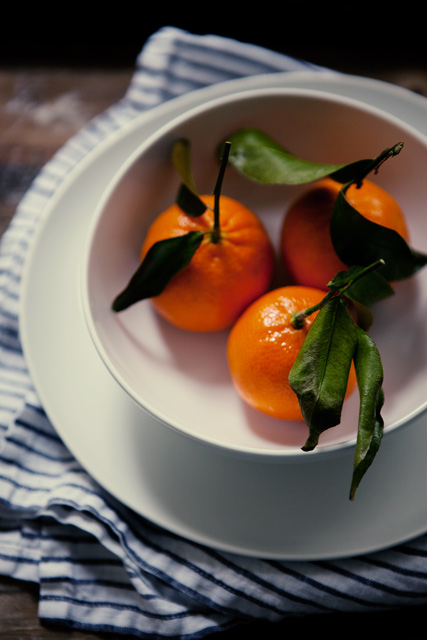
She was sobbing. It was otherwise quiet now that the yelling had stopped. I glanced up at her, but became distracted by the bowl of clementines set in front of me. I remember the nostalgia that used to overwhelm me at the sight or taste of clementines, but now they were just a bowl of clementines. I stood there staring and wondered how it had come to this.
           
I was aware my memory was flawed.  The first year was flawed by passion and its attendant haze typical in the first months of sex and shameless flirtations.  The banality of habit and ritual returned in the subsequent years, collapsing the months into what felt like a massless blur of days.  Yet, the summers always stood out vividly.

I, like generations of my family, was born and raised in Kings County.  I was a loyalist, and had never found occasion or desire to step outside the five boroughs.  My father was a shoe repairman or a cobbler, as he would have it, just like his father had been and his father before him and so on and so forth.  We would often have lengthy discourses about the propriety of using modern-day industrial glues on certain leathers and the lost art of cordwaining—these conversations were almost always soliloquies.  I began working part-time as a shoe salesman at an Allen Edmonds boutique store when I went off to college in the city, well aware that I had failed to escape the destiny of my predecessors.

She was the proverbial city girl, raised in a West Village brownstone by a Wall Street lawyer father and an art director mother.  Her family, and therefore she, was never wanting, which afforded them the luxury of sating a wanderlust she had caught early in her privileged life.  She was well-traveled by the time she went off to college, but ironically, she lacked the escapist urge characteristic of girls her age and settled with Columbia University.  She was a dancer and she was infinitely interesting.

She was the girl on my morning commute.  The girl I had admired at a distance and who had been a constant distraction from whatever book I happened to be reading at the time.  If she ever noticed me in those first few weeks, she gave no indication of it.  No, our love affair began as a solitary endeavor.  Reveries of our encounter played out in my mind, and my heart rate jumped at the thought.  My face would flush from embarrassment as I jostled from my daydreams.  Maybe it was the quiet romance of The Great Gatsby, which I was rereading, but I became convinced that we were fated to be together. 

The reality was far less literary, but only in hindsight.  We chatted that first time, about what I can’t recall, until the train pulled into her stop in Morningside Heights.  We had passed my stop twenty minutes prior, but it didn’t matter.  It went on like that for several weeks before I gathered the courage to ask her on a proper date.  She smiled broadly and nodded.  Even Fitzgerald couldn’t have written a narrative more beautiful. 

I was invited to her family’s ancestral home in Florida that first summer.  There were no beaches or theme parks, only a citrus grove.  The grove, which had been in the family since the turn of the twentieth century, was once famed for producing the sweetest clementines in Florida and was a wellspring for the family fortune.  That fortune, along with most of the property, was largely lost in the Great Depression.  But the vestiges of the citrus grove and the plantation-style home remained in the family as a source of financial strain until her father was able to save it with the early success of his law practice.  The burden of maintaining an unsustainable grove persisted, but her father refused to relinquish his childhood memories for the sake of stability.  It became their summer home where they would spend six weeks every year.  It was their annual trip to Florida that she would anticipate the most—not Italy or Fiji or India, but Florida.

The idyllic greens and oranges and yellows were a startling contrast to the gray of the only city I had ever known and loved.  The first days were disconcerting, but I soon became enthralled by the early morning walks through the grove, a fresh cup of coffee in one hand, her in the other.  There were late afternoon picnics with wine and a basket full of freshly-picked clementines, when she would reminisce about her childhood.  Though she had spent the majority of her life in the city, the setting of her stories was almost always Florida and I remember realizing that I knew very little about her childhood in any other context.  We made love, isolated among the trees and we would doze off in the shade, her face pressed against my chest with only a layer of sweat separating us.  Eventually, the prickling of the Florida heat would get the best of us, and we would meander back to the house and join her parents for dinner.  And so it went for six weeks every summer at that clichéd pace that often accompanies pastoral life.  Back in the city, we carried on our individual and sometimes joint existences.

She was yelling again.  I was still too distracted by the bowl of clementines to listen to the content of, what I presume was a verbal assault of anger, sorrow, and regret.  I deliberated on the appropriateness of eating a clementine at that moment.  I looked at her, then beyond her through the window I was facing and at the rooftop landing on the neighboring building.  A view of the skyline was visible and the early evening lights were flickering on and I was reminded why I loved the city so much.  Clementines would be my only reminder of Florida and those summers.  I wondered when I had stopped caring.


Photograph by: Whitney Ott
Written by: James Mo

Creative Commons License This work is licensed under a Creative Commons Attribution-NonCommercial-NoDerivs 3.0 Unported License
1:1000 The Design of this Blog is All rights reserved © Blog Milk Powered by Blogger