Lord Guan's Altar

Posted on: August 5, 2013


“Detective Li, I just got a domestic violence call over at Redemption Towers. The patrol officer in the area is busy following up on an armed robbery. Do you mind watching the front desk while I look into it?”

It was 3:00 AM. It’d been months since Li had requested the shift change, but he was still unaccustomed to his new hours. He was restless, the prospect of manning the intake desk was unappealing. “I’ll take care of it,” he replied.

The Towers were a pair of government-subsidized residential buildings in Western. They were colloquially called Redemption Towers because the aggregate criminal record of its inhabitants rivaled that of Hong Kong island’s entire population. Naturally, the Towers were a hive for triad activity, so domestic violence calls were not unusual. The sidewalks leading to the Towers were swollen and cracked with age—damaged and neglected with no prospect for repair. Li sidestepped the disrepair and ignored the wary glances he received from residents as he made his way up Tower East.

The door to apartment 5B was askew and opened into a small kitchen, where the cabinets had been emptied. A doorway on the right led to the apartment’s sole bedroom. Alice was alone, sitting hunched on a twin-sized bed amidst a sea of debris from what appeared to have been dinner plates. She stared blankly at Li as he tiptoed his way towards her. A fresh bruise was forming on the left side of her swollen face and a streak of dried blood was smeared across her upper lip. She wasn’t crying, nor was there any indication that she had been.

“Let’s get you to the hospital,” Li said. She grabbed her purse and followed him out without a word.

The drive to the hospital was a hushed one and it wasn’t until she came out of the doctor’s office, cleaned and bandaged, that she finally broke her silence in the waiting room where Li was sipping lukewarm coffee.

“Thank you,” she whispered.

Back at the precinct, Alice was cautious in her narrative. Her boyfriend, a low-ranking member of the Three Brothers Triad, had beaten her. He’d discovered that she’d been stealing from him. But that’s where her story stopped—she refused to give up his identity and had no desire to press charges. The silence that Li had previously managed to dispel now persisted.

Alice was staring at a small desktop altar that sat above an old, dusty television in Li’s office.

“Do you believe he protects you?” She was referring to the ceramic icon of Lord Guan, angry and red-faced.

After a pause, Li replied, “No, I’d given up on gods a long time ago. After losing a wife and son to the triads, there’s not much energy left over for faith. That’s why you shouldn’t protect your boyfriend.”

She ignored his admonition. “Ironic isn’t it, Lord Guan, god of war, patron saint to cops and crooks alike. My boyfriend burns incense to him every morning. I’m sure your officers do the same.”

Alice continued, “How’d they die?”

“Who?”

“Your wife and son.”

Li was silent.

“I’m sorry, I shouldn’t pry,” Alice said.

“No, it’s alright. It’s supposed to be healthy to talk about one’s tragedies. My wife was kidnapped and shot—the price she paid for being married to a cop. And my son, well, death isn’t the only way you can lose a loved one to the triads…”

When Li realized he wasn’t going to coax any more out of her about her boyfriend, he drove her home.

It was early afternoon by the time Li’s shift ended. He stopped for dinner at Ang’s House of Curry and a cup of tea at Harmony’s before heading home. He was a regular at both spots. Routine, the doctor said, would help.

At home, he went straight to bed but was unable to fall asleep despite his exhaustion. There was an umbra of stubborn daylight illuminating the heavy curtains he had installed in a futile effort to imitate darkness. As Li lay in the stifling heat of the Hong Kong summer, he wondered if he would ever sleep again. He had changed his work schedule because of sleeplessness, which he attributed to the unbearable silence of the night. He hoped the urban frenzy, which broadcasted itself through his walls, would comfort him by mimicking the sounds his home had lost. It did not.

In his most sleepless moments, his mind wandered. Today, it was Alice. For hours he couldn’t shake the image of her milk-white innocence and fragility and the dark bloodied stains her gangster boyfriend had defiled her with.

Soon, Li was outside Tower East, coffee in hand. It was late afternoon. Sunglasses shielded his bloodshot eyes, burning in the way fatigued eyes do, from the sun. Each time he blinked, Alice’s face flashed before him. Blink. She’s smiling at him teasingly as her loose t-shirt flutters in the breeze. Blink. She’s looking down coyly as she combs her hair back behind her left ear. Blink. Her bare legs move back and forth as she shuffles her feet. Blink.

The air in the stairwell was stagnant. Beads of sweat trickled down Li’s neck and into the collar of his shirt as he made his way up to apartment 5B. The door was unlocked. Alice’s boyfriend was in the kitchen with his back facing the front door. Li heard shuffling in the bedroom—Alice. Blink.

The pistol quivered in his trembling hands as his exhaustion began manifesting itself. He pulled the trigger, striking the boy in his lower back. Alice appeared from the bedroom, letting out a bloodcurdling scream, “NOOOOO!”

As the boy’s legs buckled beneath the weight of his distorting body, he turned, revealing himself to Li. Li’s heart shuddered as he leapt towards the boy, in Alice’s arms now.

Li cried, “Danny? Danny?!”

He had lost his son twice now and there was cold comfort in the fact that he would never lose him again.

Photograph By: Jaemin Riley
Written By: Sam Chow

Misty Morning

Posted on: May 30, 2013

At 5:23am, Helen resigned herself to the fact that she wasn’t going to go back to sleep. She sat up, swung her feet over the side of the bed, and put her hands in the air, arching her back to stretch. Through the transoms above the gauzy white curtains, she could see the purple sky promising sunrise.

Four minutes later, Helen was in shorts, a t-shirt and running shoes, striding down the pavement. She felt her limbs begin to warm, and as she crossed the street into the park she broke into a run. She was alert to every change in her body—the minute rate at which her breath quickened, the number of times her heart beat against her chest, and the mantra that always kept her rhythm:
Get there faster. Be tough. Get there faster. Be tough.

The mantra had been with her as long as she had been a runner—first as a pep talk, but now as a prayer so deeply embedded that she could repeat it in one compartment of her brain and still have plenty of thinking room left over.

She was particularly focused this morning. The mist that clung to the trees around her kept her from seeing more than fifteen yards ahead. Not that she needed to see any farther. She knew this trail by heart. Like her mantra, it was something she had cultivated to the point of automation. These morning runs were no longer something she did; they were something that happened. And while they happened, she did her best thinking.

Without missing a beat Helen lifted her shirt to wipe the sweat from her face. The morning’s humidity caused her perspiration to cling to her, rather than roll off. She began to go through her checklist, as she had on every run for the past two years. Pyramids? Check. Skydiving? Check. Studying at one of the world's most prestigious universities? Check. Incredible sex? Check. Seven-course meal? Check. Led Zeppelin reunion concert? Check. And completing all of Shakespeare's works? As of 4:47am, check.

Surely she had missed something. She was only 25! She had meant for the list to take much longer to complete, but now there was nothing left.

Get there faster. Be tough.


She had gotten here faster. And now, the tough thing to do was right in front of her, seemingly hidden in the mist ahead.

She rounded the pond and checked her watch. Right on time.

A prickly feeling in her sternum surprised her—was it fear? Doubt? Reluctance? Whatever it stemmed from, she could only view it as one thing: interference. To dissolve the prickles, she switched on a secondary mantra, which she always thought of as The Reason. Unlike the list, which had been in various stages of development for the better part of two years, The Reason was unchanging. I will never be happier than I am now. It really was remarkable, the inherent human desire for longevity. Sure, better times could be ahead, but why risk the possibility of sixty years of heartbreak, pain, and adversity? She had seen everything she wanted to see, felt everything she wanted to feel, tasted all that she wanted to taste. She wasn't smart enough to make any life-saving medical breakthroughs, patient enough to write the next Great American Novel, or maternal enough to get hitched and have a gaggle of offspring. She was amazed at the gall of most of humanity, to persist in the name of self-preservation when it made more sense to quit while the going was good. I have lived the life I wanted to live, she thought. Like any artist, Helen knew it was time to initial the bottom corner, dot the final sentence, call That's a wrap!

As that thought crossed her mind, a small smear of pink caught her eye, only a few strides ahead. As she passed over it, she saw that it was a dead baby bird, apparently flattened by some other inattentive runner. Feeling the prickles threaten to begin again, she picked up the pace.

Gettherefaster. Betough. She ran through the park's gate and started up the hill to her flat. Her t-shirt was completely soaked through, and her calves cried out for her to stop.

Gettherefasterbetoughgettherefasterbetough.


Finally, she turned into the gravel drive in front of her flat and trotted to a stop. She raised her arms over her head and walked in small circles, her chest heaving. She briefly thought of stretching to prevent soreness, but on second thought decided against it.

Inside, Helen disrobed and got in the shower. Under the water she whispered, "I will never be happier than I am now. I have lived the life I wanted to live." And it was true—she felt almost delirious with happiness. Happiness that was multiplied infinitely by the guarantee that nothing would ever dilute it.

Out of the shower, she stood wrapped in a towel in front of her closet. Black was too somber-- they'd surely think she was depressed. Floral would seem like she was taking the piss, that she wasn't taking this seriously. But her green dress, that was perfect. In the back of her mind she vaguely remembered someone telling her that geniuses pick green. It was the color of growth, of hope. While drying her hair, she looked around her room. For a moment she felt bad for the person who would discover her, but she quickly remembered the pains she'd gone to in order to make this whole ordeal as spic-and-span as possible. She curled her hair, put on her makeup, and debated whether or not to wear shoes. She turned off the thermostat and made sure the front door was unlocked, with the keys and next month's rent check on the entryway table.

It was now 7:42 am, and the sun was burning off the morning's mist. Helen sighed with satisfaction as she took one last look around. Finally, she lay down on her made bed, smoothed her hair on the pillow, folded her hands across her stomach, and closed her eyes.

And then, she waited.


Photography by: Jaemin Riley
Written by: Melody Rowell

Family Blood

Posted on: May 23, 2013

Freddie MacNamus sat in his truck and looked down at his hands. So many stains. Blood, sweat, and tears covered those hands. And black oil that would never come out from under his thick, yellow fingernails.

But mostly blood.

His boy once told him that blood ain’t red inside you. It ain’t red ‘til it hits the air.

Well now Freddie knew a secret. The pits of hell sure ain’t black. When you walk through those places where nightmares are born, all you see is red.

It’s mostly blood.

His boy was smart. They gave him a fancy name at birth. Kissed his wrinkled, old-man head and said, “Prescott, all we gots to give you is a name. It’s your leg up. Reach high, son. Maybe you’ll make it to some other family tree.”

But blood runs thick, and old habits are hard to break. Within a year, Prescott MacNamus was just Mac. Plain and simple. But boy, was he sharp.

It damn near stopped Freddie’s heart, the night he saw all that thick, red blood pouring out of Mac, staining the pine slats of their front porch.

Freddie knows deep down he done it.

He was so mad that night. So God damn mad. And the sad thing is, he didn’t have nothing to be mad about. His boy would sit at the supper table, making his wife laugh til’ she begged him to stop, tears rollin’ down her face, sayin’ her insides hurt. They were happy. But Freddie couldn’t be happy. Just livin’ made him mad back then.

Bein’ just a mechanic. Selling just tires. It wasn’t enough. He always thought he should be doing more. His family deserved more. He felt guilty every time he looked at ‘em. So he stayed mad. And he stayed away. Always sippin’ that awful, burnin’ drink.

And the night they were killed, he wasn’t there to help.

It hurts to think about it now.

He can’t take more than three breaths without prayin’ to God they died quickly. That they didn’t see it coming. That they weren’t scared.

Freddie figures, lookin’ back, that he got home about twenty minutes too late. ‘Cause Mac was still warm when Freddie scooped him up. He ran to the truck, piercing the still September air with his screams. Pleadin’, “God. Please God. Please.”

He thought his boy might have a chance. ‘Cause he could still smell the milk and cookies on his breath, see, and lil’ Mac had his dinosaur jammies on, and Freddie was pretty sure those were his favorites. They were the ones Mac was always wearing when Freddie tip-toed through the house late at night after another bender, to peek through Mac’s cracked bedroom door and love him from afar.

He layed his boy down across the seat of the truck. He’ll never forget the way those tires squealed as he ripped out of his driveway. Surplus stock from the shop. He’d put ‘em on a few weeks ago, shooin’ Mac away when he asked to help.

He drove like his own life depended on. And it did. But after a mile or so, he couldn’t see the road. He couldn’t see Mac.

It was all blood.

He opened the door and puked. Whiskey and snot came out between wails. The putrid mixture hit the dirt road only a few seconds before Freddie did. He lay there, heaving, sobbing, covered in family blood, til a State Trooper pulled up.

Somewhere along the line, they realized Freddie wasn’t a killer. Just a worthless piece of shit.

They let him go. His penance? That the world kept turning.

He had to keep showin’ up at the shop. Keep on sellin’ tires. Every day he stepped into that place, the smell of old rubber filled his nostrils, reminding him he ain’t got nothing left to work for. He made barely enough to keep his home, but not enough to sell it.

So at night he’d come home and lie on that porch. Put his head down on that dark brown stain. If he was still enough, he could feel heat comin’ off the planks of pine. It was because the porch soaked up the western light all afternoon, but Freddie liked to think that warm spot was Mac.

And this morning was no different. Until it was.

He got out of bed. Got in the shower. Smelled his wife’s shampoo. Gently closed its cap. Then he put on his blue coveralls and went to work.

But when he got there, he couldn’t walk in the door. He walked out back, tore an old piece of tarp in half, and wrote “Closed” in clumpy motor oil on it.

He stepped back and looked at it. The shame of everything he’d done–everything he was– hit him hard. He couldn’t keep nothin’ alive.

He threw it out and started over on the other half.

He thought for a second, and wrote:

Moved to 1897
Metropolitan Park
Flea Market Plaza

Freddie didn’t have enough room to finish the word “park.” It didn’t make no difference. Something he made would live on, even if it was just for a day. Even if it was just for an hour. Even it was a lie. Soon enough, somebody would find out the truth. But that shop, the one Freddie never thought was good enough, was the only shred of worth he had left.

Sitting in his old truck, Freddie finally felt some peace. He couldn’t wash his hands of what he’d done, but maybe God would clean his soul.

He looked out the driver’s side window one last time, then put the truck into drive.

He turned onto the dusty highway, and slowly pressed the gas. He didn’t let up as he watched the speedometer reach 60, 70, 80, 100.

The pedal ground against the metal floorboard. There was nowhere else to go. Freddie jerked the steering wheel to the right.

For a second, everything was quiet, and then the deafening sound of blood rushed into his ears. And right before everything went black, he saw his wife. And his Mac. But mostly blood.


Photograph by: Jaemin Riley
Written by: Sarah Gatling

Connect to Charger

Posted on: May 13, 2013


--100%--

This is the happiest moment of my night, and it will be ending any second now.

*Knock, knock, knock*

Speak of the Devil.

So long, chair. We will meet again.


--99%-- 

“Happy Birthday, muddahfuckah!”

It’s Brent, some of his college buddies and a group of girls who may or may not be above the age of consent.

“Brent, I told you in the text, my birthday is two weeks from now.”

“And I told YOU in the text, I don’t give a shit. It may not be your birthday, but we’re gonna party like it’s your birthday!”

Brent clearly didn’t know how I party on my birthday.

“Where do we put the keg?”

“You got a keg?”

“Hell yeah! I spare no expense for my best-work-buddy’s birthday!”

“It’s not my birthday.”

“Then why are you holding THIS?”

Brent tossed a plastic chalice, with “B-DAY PIMP” emblazoned around the rim, in my direction.

I didn’t catch it, and it cracked.

“DUDE. What the fuck? That thing cost me like, twenty bucks!”

“ONLY twenty bucks?”


--68%-- 

The number of people in my apartment has quadrupled since Brent and his entourage invaded my personal space, which is why I’m surprised William, our colleague, has decided to cling to me like the stench of fried food on my corporate-mandated apron.

“This is an epic birthday party, dude.”

“Is it?”

“Yeah, man! You’ve got a keg and everything!”

“It’s not even my birthday.”

“But Brent said…”

“Brent’s an idiot. He just needed an excuse to get wasted and I was foolish enough to let him know it’s my birth month.”

“Oh.”

“Yeah.”


--59%-- 

Will and I broke our awkward silence by taking a sip of our drinks. As I peered down the ribs of my red-plastic cup, Angela passed through my sights. What was she doing here? If my stalker-ish calculations were correct, she should be visiting her boyfriend this weekend.

“Will, it’s been a pleasure, but I need a refill.”

“Want me to get it for you, Birthday Boy?”

“No. No I don’t.”

“Alright, man. I’ll be here.”

“Good to know.”

Note to self, avoid that area for the rest of the night.


--51%-- 

“Angela?”

“Hey!”

Oh, God. She’s going in for the hug.

“Happy Birthday!”

It feels like it.

Oh, man. She gives good hugs.

“I didn’t think I’d see you here.”

“Yeah, well, Blake had something to do this weekend, and I didn’t want to just stay home alone on a Saturday night like some kind of a loser.”

“Totally.”

Liar. 

“This is a great party!”

“I spare no expense for my birthday.”

“I can see that. You got a keg and everything.”

“YOLO.”

“Totes!”

Kill me.

“I really like your apartment.”

“Thanks. Me too.”

Another uncomfortable silence and another sip from my cup. As I lowered my drink I heard a raised voice coming from the bathroom.


--44%-- 

“EWW! GROSS, DUDE!”

“Angela, it’s been a pleasure, but I need to see what that’s about.”

“No problem. I’ll be here.”

“Glad to hear it.”

Note to self, immediately return to that area.


--42%-- 

“Oh no.”

“Jake threw up EVERYWHERE.”

“I can see that, Brent. Jake. Jake. Come in, Jake.”

“He’s out, dude.”

“I can see that, Brent. Get him out of here so I can clean all this shit up.”

“I’m sorry, dude. I really am.”

“Yeah, well, you should be.”

And just like that, Brent was gone. So was Jake. It was just me, a bucket and the second coming of our “award winning” baked potato soup.

Through the door I hear Brent persuading William to give Jake a ride home. Will was the newest addition to the wait staff, thereby making him everybody’s bitch. His sheepish demeanor wasn’t doing him any favors. I guess that’s why he flocked to me. We wear a similar wool.


--27%-- 

Things were shaping up. The puke was gone. Will was gone. And as far as I could tell, everyone assumed I was gone. My insignificance was working in my favor. Now, to keep my presence unknown while I take these vomit cloths to the dumpster.


--22%-- 

“Oh.”

Shit. It’s Karen.

“HEY!”

She “discreetly” discards her cigarette and goes in for a hug.

“Happy Birthday!”

Even in the great outdoors, her breath smells like a bowling alley.

“Still smoking, huh?”

“Come on, it was just ONE. Give me a break.”

“Hey, I’m not your oncologist. Puff away.”

I used to be more vocal about her deadly habit. Then she started mistaking my general disapproval of self-destructive behavior for genuine interest in her well-being. And now, I’m her Angela.

“Need help with those?”

“No thanks.”

“Want me to walk with you?”

No thanks.

“Sure.”


--13%-- 

Karen talked from the dumpster to my doorstep. About what, I had no idea. I put my social skills on autopilot and let my mind drift off to a happier, lonelier place.

As we came in, Brent was on his way out.

“Hey, man! I was looking for you. I think me and some peeps are going to get pancakes. You down?”

“Nah. I think I’m going to stick around and tidy up a bit.”

“Want me to help?”

“Thanks Karen, but I’ll be fine by myself. You go enjoy some breakfast food.

“I’m not really hungry.” 

“Well, I’m pretty sure they have a smoking section.”

The light in Karen’s eyes extinguished like the cigarette she smashed into the pavement.


--9%- 

The door closed with Karen, Brent and Brent’s peeps on the other side. I checked to see if Angela was still lingering around the kitchen.

She wasn’t.

It would’ve been nice to take one more swing at wooing her from Blake, but beggars can’t be choosers. All I’ve wanted to do since Brent knocked on my door was return to my lonely throne and let the solitude rejuvenate my spirits like a cold compress.

Just let me step over a few empty beer cups and…

Oh, yeah.


--Charging-- 


Photograph by: Jaemin Riley
Written by: Mark Killian

Evangeline

Posted on: April 29, 2013

I keep dreaming about this impossible place. The geography expands in every direction and I feel some cosmic cartographer etching the map across my soul. It is desolate - there’s no one but me to explore the abandoned streets, to feel the heat radiate up my legs from the concrete, to push open the unlocked doors of antique storefronts. I feel like the only person left in the whole world and I get to peer into the lives of people I will never meet, to pass my hand over their furniture and sit on their empty porches. Sorrow shakes me when I wake, as the city fades away. Whenever sleep takes me back, I am grateful.

Since I was a little girl, I loved to describe my dreams to people. Most thought it endearing and fascinating, but as I grew up and entered adolescence, my parents became concerned and embarrassed if I elaborated for too long. I remember my father’s warning squeezes on my shoulder. I learned to trail off and allow him to change the subject with ease, but I never understood his restraint for he was also a dreamer. I found some of his journals in an old keepsake trunk he had in the garage. I hid them under my mattress and would read them by flashlight after everyone had gone to sleep.

When I could no longer speak freely to others about my dreams, I started to write. My mother noticed the growing callus on the outside of my right pinky and how much my hand would hurt after filling pages of lined loose-leaf paper. She found an old IBM computer that sported the iconic black screen and green type. It came with a dot matrix printer that used the never-ending paper spool with the holes on the sides. Everyday after school, I finished my homework and grabbed a Capri Sun out of the fridge before running to my room to spend the next two or three hours at the keyboard. My favorite part was the sound of my dream manifesting on paper, watching the print head move back and forth as it squealed.

I was twelve years old when I first dreamt about the abandoned city. I was wearing a sleeveless white Easter dress with navy blue pinstripes and matching sash around my waist. I stood in the middle of a two-way street, acutely aware of my childish ruffled socks spilling over saddle shoes. On the left side was a valley full of trees and a city skyline beyond it. On the right were tall glass buildings that seemed to disappear into the clouds. I followed the yellow lines to a bend around the block and kept walking until I noticed a large fountain with a statue of Athena rising out of the water holding a shield and a sword.

When I woke up I kept my eyes closed tight, wanting the dream to come back, wanting to go back to that place and take off my shoes so I could step into the water and walk up to the goddess. I wanted to touch her sandaled feet, to feel the grain of the stone with my fingertips. I wanted to feel the water soak the skirt of my dress and pull me down toward the coins littering the fountain floor with wishes. I stayed awake and reluctantly got out of bed, not expecting to ever go back and see more of that city.

I sat in front of my computer a few days later, staring at the screen with the green blinking dash that summoned me to write. Describing what I saw would be easy enough, but I didn’t know how to capture how I felt inside. Have you ever been somewhere or done something or been with someone and felt completely whole? Have you ever experienced a complete loneliness that did not make you sad, but brought you peace? Have you ever felt like you finally came to the end of yourself and the beginning of unadulterated existence? How was a twelve year old supposed to put any of that into words?

One day, my mother asked me if I was depressed. The question startled me; I’d never considered the notion before. I looked at her face and saw her eyes laced with wisdom and concern.

“No. I mean, I don’t think so.”

She flipped through a few pages of one of my notebooks, placing her chin in her cupped hand. “Your stories seem sad lately.”

I sat next to her, leaning over and looking at the pages as well, cocking my head to the side and pursing my lips as I reflected. “Well, sometimes I get sad, but I don’t really know why. I keep wishing I was somewhere else.”

My mother closed the notebook with care, folding her hands on top of the red cover and turned her head to face me. “I’m not like most mothers. I don’t say what you want to hear. I tell you the truth.”

“I know.”

“Your father has a wonderful imagination, but he began to resent it. He never learned that our dreams and our reality do not have to be separate. They are one.”

Whenever I started to forget about my dream place, sleep would take me there again. I would scale bridges, walk along railroad tracks, make tea in empty cafes, take naps in strange hammocks, and drive luxury cars. Over time, I recognized different parts of the city and could navigate my way back to a place I had not seen in years. It wasn’t until I was almost thirty years old that someone trespassed into my dreamscape, standing in Athena’s fountain. I would often gaze at the goddess in awe, but this woman looked upon her as an equal. I woke up before she turned around to face me, but I knew it was my mother.

There was a text message on my phone from her. “Call me. I love you.”


Photograph by: Jaemin Riley
Written by: Natasha Akery

From the Summer to the Fall

Posted on: April 8, 2013


“Do you know why they call me the Coward King?”

“Why is that?”

“Because, as it goes, to the victors go the past.”

“What do you mean?”

“The history books are wrong about me. It’s true, I’ve done terrible things, but what they don’t teach in schools is that I had to, I had to do those terrible things.”

“Why?”
 

“Why did I have to do them? Why do men do anything? As King I was forced to make difficult decisions I never chose to make, but it was my duty. And in times of war, those difficult decisions became impossible, but unceasingly necessary.”

“It’s been years since the last war.”

“Don’t be naïve, there’s always war. Men go to war because they must – it’s what makes us human, so it becomes part of our existence. Kings though, that’s different, the role of King shifts. There was a time when they built statues in my honor you know, statues that I lived long enough to see brought down – but war, war is constant.”

I’d never met the Coward King before. The last time I’d spoken to Pete, he was a shepherd that had lost his flock. The time before that, he barely spoke, trembling in fear at the red-eyed, goat-headed half-man that silently towered over him. And while I never knew who I would be speaking to during any particular visit, it was always Pete I was looking at. Aged, of course, but time had been outwardly kind to him. His strong, handsome features said little of his internal struggle. Only his eyes, often wide and vacant, gave him away.

I met Pete in the summer of ’67, after the riots, after the National Guard had been called in, when everything changed. They said that the violence had erupted because some white police officers had killed a black cabbie, but everyone knew it went beyond any one event. The black cabbie’s name was John Smith, though it could’ve been anyone, any number of John Smiths could’ve been the catalyst for what had been culminating for years. The riots lasted three days, three days was all it took to dismantle an entire city. In the weeks that followed, uncertainty hung in the air. Some people tried. They went about their days desperately clinging to routine, praying that maybe if they pretended hard enough, it would be so. But there was a mass exodus of, not just whites, but affluent blacks too, out of the city and suddenly, Newark had been altered. The possibility of healing, of revival, was never given a chance. Eventually, I would move on too, but at the time, Newark was my home.

For a long time after the last day of violence, the city was a ghost town, its people either having deserted it or who were still too afraid to face the aftermath. But many of Newark’s business owners who had built their lives in the city needed to see what remained, if anything remained. Folks like Pete and I were there on the streets immediately after the mayhem had ended, gauging, not whether we could afford to go on, but how much it would cost to do so. There was hope among us.
 

But, the harmony that existed between my past and my future ceased the moment I stepped through the cracked, wooden door frame where a glass pane once stood, kicking around the thoroughly looted remnants of Bendemann’s Grocery Store, of my grocery store – hopes of salvaging something, anything, dashed. There was little I could do, so I spent the rest of that day helping others where I could.
 

Pete and his ten-year-old son Charlie were standing outside his once popular diner on Broad Street, staring into the charred hole that stood in its place, when I approached.
 

“I’m sorry,” I remembered were my first words to Pete.
 

“Me too,” he replied as he turned to me. We spoke casually and openly about what we had lost, as strangers do in times of shared tragedy. Charlie had remained silent during our exchange, staring dispassionately at the destruction around him.

We turned off of Broad Street together and onto Central Avenue where a butcher friend of Pete’s owned a storefront. Pete became distracted by the remains of a fallen statue honoring a white police officer that once stood proudly, audaciously, on Central Avenue. When he noticed that he no longer had a grip on Charlie’s hand it was already too late. The official report was that Charlie had lost sight of his father for a split second and stepped onto the street into the path of a passing car, nothing more than a terrible tragedy. Pete and his wife, Sara, suspected otherwise, but it was too fantastic an idea that such a young child, not yet world-weary, could’ve suffered from depression, let alone be suicidal.

Soon after Charlie’s death, Pete’s headaches began. The doctors found a benign tumor on his parietal lobe, which they said was harmless. The most damage that it would cause, they said, was chronic discomfort, but that it could be safely removed. After the operation came the voices. The tumor had acted as a valve, its removal unleashing a torrent that had been crying out for decades, previously unheard and unheeded. Charlie’s death suddenly made sense to Sara, Pete’s madness being the missing link. The illness must’ve been imparted to Charlie, just as Pete’s blue eyes had been. It was an explanation for the otherwise inexplicable, and it was enough for Sara. Still reeling from Charlie’s death, she was unable to cope with Pete’s rapidly deteriorating state and left him.

I kept in touch over the years, as the world Pete once knew began collapsing in on him. Then one day, he disappeared. Nearly a decade passed before he emerged again, Newark had taken him, had swallowed him whole.

“You don’t understand do you?” Pete said to me tearfully, still as the Coward King. “Some choices are not choices at all.”


Photograph by: Jaemin Riley
Written by: James Mo

yellow

Posted on: March 18, 2013

Davy hadn’t smiled in three months. He hadn’t cried either. He showed no emotion since the night his parents sat him down and delicately announced that they were getting a divorce. It was a tough concept for a child to grasp, especially when that child was just starting to learn basic addition and subtraction. Soon, one parent would be subtracted from Davy’s household, adding one permanent hurdle to his emotional development.

But that was an issue Davy would have to overcome through several decades of therapy. For now, his only objective was to stay strong for his little brother; his little brother who happened to be eight inches tall, with moveable joints and a kung-fu grip.

Davy’s parents were never keen on giving him a sibling. Well, his mom wasn’t. If it were up to her, Davy would’ve been sacrificed in the name of stem cell research, but his dad had other plans. After many heated arguments, which Davy overheard through the walls of his mother’s uterus, his dad won the great baby debate. Who could’ve guessed that just six years later, Davy would hear the same raised voices through the walls of he and his parents’ adjoining bedrooms? Anyone who knew them, for starters, but it’s always easier to spot a car wreck from the sidewalk.

Those boisterous bedroom disputes were eventually brought before a judge, where, after dredging up the aforementioned debate and a few other defamatory tales, it was decided that Davy’s dad would remain his primary caretaker. The war was won, in Davy’s dad’s eyes, but the reconstruction was just beginning.

Try as he might, Davy’s dad couldn’t expel his ex-wife’s aura from the three-bed, two-bath battlefield where they fought for several years. The stains of fallen tears and echoes of shouted f-words haunted every room from the foyer to the attic. He had no choice but to put Fort Divorce up for sale.

The following Saturday, Davy’s dad signed a lease for a two-bedroom apartment on the other side of town. That Sunday, Davy, his dad and his little brother crammed into the cockpit of a yellow moving truck and headed toward their temporary residence.

“This is exciting, huh?” Davy’s dad asked in a futile attempt to solicit a smile.

Davy nodded his head in indifference.

“Hey, what do you say we stop for ice cream on the way?”

Davy nodded his head in indifference.

“I bet your little action guy is getting hungry?”

Davy stopped nodding his head.

“His name is Jacob,” he sternly responded.

“Well hi, Jacob! I’m Davy’s dad.”

“He knows.”

Aside from his ice cream order, Davy remained silent for the duration of the ride. He quietly licked away at his lemon sorbet, occasionally tapping Jacob’s face against the treat to give him a taste.

“This is it,” Davy’s dad announced as they pulled into the cookie-cutter apartment complex.

He grabbed a set of keys from the cup holder and dangled them outside of the driver-side window as they approached the sensor. The large iron slats slid out of their way like an elevator door.

“It’s safe, like a CASTLE,” he analogized, trying to pique Davy’s imagination.

They drove through the front entrance past a bean-shaped pool where bikini-clad coeds caught skin cancer as middle-age men stole glances.

“And look, a POOL,” he pointed out. “I can teach you and Jacob how to swim!”

“Cool.”

Davy’s dad stopped making observations for fear of being demoted back to apathetic nods. He optimistically guided their rental truck through the maze of identical buildings until he spotted their empty patio. He backed into a parking spot right beneath their balcony and searched for the words to keep Davy’s spirits at “cool” level.

“Home sweet home!”

Davy took a moment to assess his surroundings.

“This isn’t our home,” he answered.

“It can be.”

“No it can’t.”

“Why’s that?”

“There’s no mom.”

Of all the things Davy could’ve said, that verbal dagger cut the deepest. Davy’s dad hopped out of the truck and filled his nostrils with air before tears could breach the surface. He held his breath as he walked around the front bumper to help Davy and Jacob out of the truck. He continued holding Davy’s hand as they ascended the flight of stairs leading to their new abode. Davy took the same precaution with Jacob.

“Well, here it is,” Davy’s dad said as he ushered the brothers through the door, their faces illuminated by the yellow walls of the entryway.

Davy hesitantly lifted a foot over the door rail like a dog preparing to walk on sand for the first time.

“You stay up here and decide which room is yours,” instructed Davy’s dad. “I’m going to go downstairs and grab some of the lighter things before your uncle shows up, okay?”

Davy nodded his head in accordance.

The tears Davy’s dad had been restraining escaped as he descended the steps. Once he reached the truck he shut himself in the back and took a seat on their sofa until he regained composure.

Davy’s dad was too full of hate and determination to cry during the custody proceedings, but now, surrounded by relics of his failed marriage, he was formally introduced to the loneliness of single parenthood.

He sobbed until he realized he left Davy unattended, Jacob not included. He climbed out of the truck, grabbed a floor lamp and headed towards the apartment. When he reached the top of the stairs he heard a sound he hadn’t heard in months, laughter. He quietly approached the door and opened it with the caution of a teenager sneaking in past curfew.

As the apartment came into view, Davy’s dad saw streaks of yellow liquid flying through the kitchen like lightening bolts. He saw Davy standing in the middle of the living room with Jacob in one hand and an open canister of touch-up paint in the other. And for the first time in three months he saw a smile on his son’s face. 


Photograph by: Jaemin Riley
Written by: Mark Killian

tithonus

Posted on: March 11, 2013

I suppose I was lucky. I managed to scrape together enough money for rent just as the temperature dropped below zero. The apartment I found was just a room with a used mattress. There wasn’t a kitchen, but the last tenant left a portable gas burner and an unwashed pot, which I rinsed out in the communal bathroom. It was enough. The building itself was surrounded by the abandoned factory buildings emblematic of Red Hook. A clouded window faced two such factories, and I could make out a sliver of Upper New York Bay in between them. It was a room with a view.

The factories were changing though, just like the rest of Red Hook. What was founded as an active harbor became a neighborhood few chose to live, but for circumstance. Now, the factories were transformed into luxury apartments and businesses were opened by kids born during Clinton’s first presidency. They were called trailblazers, as if the shops that had survived the preceding decades were unworthy of being anointed forbearers of the neighborhood’s newfound popularity. But I’m not nostalgic. Things change, they always do. There wasn’t room for nostalgia. And anyways, I envied it—the idealism of youth. I envied the urgency of old age too, but I was blessed with neither.

It was my first morning back in Red Hook, and it was nice to wake up under a roof again. I went downstairs to Mr. Kim’s, a bodega that had been there since the late-70s. The eponymous proprietor was an amiable enough man if he accepted your company. A small bell rang as I entered, and Mr. Kim glanced up at me from behind the counter. It had been too many years, he didn’t recognize me. I ordered a coffee, my usual breakfast, and took a seat at a small table by the deli counter with my worn copy of The Idiot. It was the last book I owned from a former lifetime. Once I had accepted the fact that I could no longer afford a stationary existence, I packed what I could into a single canvas bag. I chose to bring a copy of The Idiot with me for no particular reason. It was a poor choice though—Russian authors were impossibly hard to read, let alone re-read.

After my coffee, I grab my canvas bag and make the journey to SoHo where I sell craft jewelry to tourists and the occasional local. I managed in this manner, selling my wares off of Spring Street. It was hard for people like me to find stable employment—people without a paper trail aren’t generally trusted, especially these days. Maybe if you’re charming or beautiful or both, you could get away with it, but if you’re reserved and plain, you’d be suspect. For a while, I put on airs and was successful, except I grew tired of the farce. But money was necessary, whether you were trying to sustain a single lifetime or infinite lifetimes, it just becomes much harder with the latter.

There are a lot of things they don’t tell you about immortality, but I’ve learned. I’ve learned that time won’t regrow the fingers I lost in 1898 blasting tunnels for the Ninth Avenue train. I’ve learned that I will never die from all the sicknesses, existing and extinct, I carry, but that I can never be intimate with someone I love. I’ve learned that everything that people come to accept as truths rarely ever are. Most importantly, I’ve learned that happiness is not inhibited by the possibility of death, that it’s in fact the supreme impetus of happiness. But I get by.

I still have friends, though I know one morning they’ll be gone too. Hopefully, I’ll have moved on before then, as I usually did. In this particular chapter of my life there’s Ed, a fellow Spring Street hawker.

He was already there with his faux leather goods. “Mornin’ Adam,” he said with his thick Bronx accent. He smiled widely, exposing white teeth that contrasted sharply with his dark, onyx skin. It was barely ten in the morning, but the sidewalks of the famous shopping district were slowly filling with people.

“Good morning Ed, how’s business so far?” I asked as I set up my own table.

“What business?” We laughed at the joke, acknowledging our misfortunes the best we could.

Ed became serious and asked, “Ya find a place to stay last night?”

I nodded.

“Good, I keep tellin’ ya dis, but mi casa es your casa if ya eva’ needit. This colda kill ya.”

I nodded again, and smiled, thanking him silently.

The day carried on as a blur of people. Aside from the occasional patron, Ed and I were just spectators, literally watching life pass us by. I manned Ed’s table around noon as he broke for lunch. He came back with two coffees, one which I gratefully accepted. We sat on our plastic crates, drinking, watching.

“Where d’ya think these people are goin’, always hurryin’ all the damn time?” Ed asked.

I shrugged and replied, “I don’t know, but it’s good.”

“How’s that?”

“It means they know they don’t have enough time, and that’s a beautiful thing.”

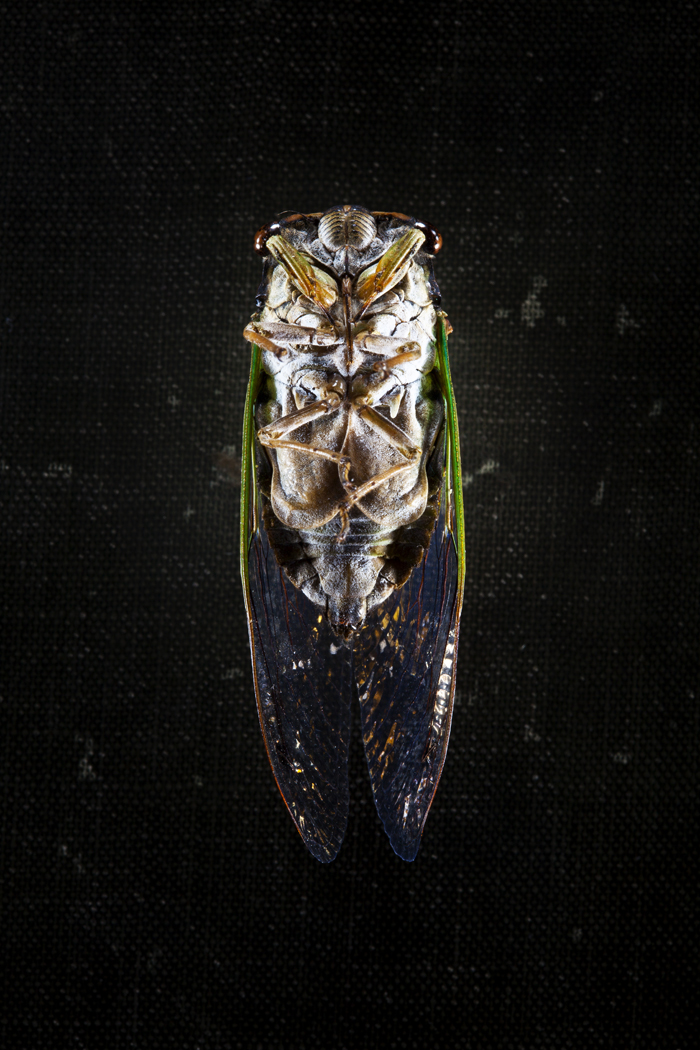
I’m home by eleven. Mr. Kim’s is still open. I buy a day-old baguette on sale for fifty cents and treat myself to some salami. The groceries should last a few days. Upstairs, I toast a piece of the baguette over the gas burner and have my first and last true meal of the day. The building’s heat is on, but the winter draft is too much for the small radiator and I keep my heavy coat on as I lay down to sleep. I’m on my side and as my eyes adjust to the dark, I see a dead cicada on top of my canvas bag, the moonlight creating a soft halo around it. I turn onto my back, mimicking the bug, wondering if the dead dream as the living do.


Photograph by: Jaemin Riley
Written by: James Mo

Creative Commons License This work is licensed under a Creative Commons Attribution-NonCommercial-NoDerivs 3.0 Unported License
1:1000 The Design of this Blog is All rights reserved © Blog Milk Powered by Blogger