I keep dreaming about this impossible place. The geography expands in every direction and I feel some cosmic cartographer etching the map across my soul. It is desolate - there’s no one but me to explore the abandoned streets, to feel the heat radiate up my legs from the concrete, to push open the unlocked doors of antique storefronts. I feel like the only person left in the whole world and I get to peer into the lives of people I will never meet, to pass my hand over their furniture and sit on their empty porches. Sorrow shakes me when I wake, as the city fades away. Whenever sleep takes me back, I am grateful.
Since I was a little girl, I loved to describe my dreams to people. Most thought it endearing and fascinating, but as I grew up and entered adolescence, my parents became concerned and embarrassed if I elaborated for too long. I remember my father’s warning squeezes on my shoulder. I learned to trail off and allow him to change the subject with ease, but I never understood his restraint for he was also a dreamer. I found some of his journals in an old keepsake trunk he had in the garage. I hid them under my mattress and would read them by flashlight after everyone had gone to sleep.
When I could no longer speak freely to others about my dreams, I started to write. My mother noticed the growing callus on the outside of my right pinky and how much my hand would hurt after filling pages of lined loose-leaf paper. She found an old IBM computer that sported the iconic black screen and green type. It came with a dot matrix printer that used the never-ending paper spool with the holes on the sides. Everyday after school, I finished my homework and grabbed a Capri Sun out of the fridge before running to my room to spend the next two or three hours at the keyboard. My favorite part was the sound of my dream manifesting on paper, watching the print head move back and forth as it squealed.
I was twelve years old when I first dreamt about the abandoned city. I was wearing a sleeveless white Easter dress with navy blue pinstripes and matching sash around my waist. I stood in the middle of a two-way street, acutely aware of my childish ruffled socks spilling over saddle shoes. On the left side was a valley full of trees and a city skyline beyond it. On the right were tall glass buildings that seemed to disappear into the clouds. I followed the yellow lines to a bend around the block and kept walking until I noticed a large fountain with a statue of Athena rising out of the water holding a shield and a sword.
When I woke up I kept my eyes closed tight, wanting the dream to come back, wanting to go back to that place and take off my shoes so I could step into the water and walk up to the goddess. I wanted to touch her sandaled feet, to feel the grain of the stone with my fingertips. I wanted to feel the water soak the skirt of my dress and pull me down toward the coins littering the fountain floor with wishes. I stayed awake and reluctantly got out of bed, not expecting to ever go back and see more of that city.
I sat in front of my computer a few days later, staring at the screen with the green blinking dash that summoned me to write. Describing what I saw would be easy enough, but I didn’t know how to capture how I felt inside. Have you ever been somewhere or done something or been with someone and felt completely whole? Have you ever experienced a complete loneliness that did not make you sad, but brought you peace? Have you ever felt like you finally came to the end of yourself and the beginning of unadulterated existence? How was a twelve year old supposed to put any of that into words?
One day, my mother asked me if I was depressed. The question startled me; I’d never considered the notion before. I looked at her face and saw her eyes laced with wisdom and concern.
“No. I mean, I don’t think so.”
She flipped through a few pages of one of my notebooks, placing her chin in her cupped hand. “Your stories seem sad lately.”
I sat next to her, leaning over and looking at the pages as well, cocking my head to the side and pursing my lips as I reflected. “Well, sometimes I get sad, but I don’t really know why. I keep wishing I was somewhere else.”
My mother closed the notebook with care, folding her hands on top of the red cover and turned her head to face me. “I’m not like most mothers. I don’t say what you want to hear. I tell you the truth.”
“I know.”
“Your father has a wonderful imagination, but he began to resent it. He never learned that our dreams and our reality do not have to be separate. They are one.”
Whenever I started to forget about my dream place, sleep would take me there again. I would scale bridges, walk along railroad tracks, make tea in empty cafes, take naps in strange hammocks, and drive luxury cars. Over time, I recognized different parts of the city and could navigate my way back to a place I had not seen in years. It wasn’t until I was almost thirty years old that someone trespassed into my dreamscape, standing in Athena’s fountain. I would often gaze at the goddess in awe, but this woman looked upon her as an equal. I woke up before she turned around to face me, but I knew it was my mother.
There was a text message on my phone from her. “Call me. I love you.”
Photograph by: Jaemin Riley
Written by: Natasha Akery
Leftovers
Posted on: April 22, 2013
He bought the chicken to make Kathy happy. It would be like
before. He’d make his special sauce from ketchup and brown sugar. It could be
the two of them together, watching the game. Or Bill and Meg could come over.
But when he got home from the store, Kath was mad again, scrubbing the bathroom
floor with her little frayed toothbrush.
“It never comes clean,” Kath muttered, her teeth clenched.
Jerry put the chicken in a bowl in the back of the
refrigerator. He could tell Kath had done a sweep of the kitchen again. His
eggs were gone; so was the seaweed salad he’d meant to have for lunch one day
this week.
Jerry trudged to the basement. He could hear Kath opening
and slamming the metal doors of the dryer. Best to keep out of her way.
The game. He dug the remote out of his recliner. There were
Frito’s around here somewhere, he knew. He found them. He chewed. Stale, but
good. The crunching echoed in his ear, drowning out the commentators on TV,
drowning out Kath’s movements upstairs. Jerry reached over for the stuffed
Tasmanian devil toy he had picked up at a yard sale a few months ago. Its crazy eyes looked past him. Its
tongue lolled in its fanged mouth. Jerry tugged at the tuft of fuzz on Taz’s
head. The day he’d brought it home Kath yelled at him, like she always did,
about junk. But this one wasn’t junk. He would save it for when Brice and
Caroline brought the baby over. He’d give it to the baby. It was perfect for
the baby.
Brice and Caroline never came over anymore. Kath would plead
on the phone.
“I’m working on cleaning the place up—the baby will be safe,”
she would say.
Brice always had an excuse. A work thing. Caroline’s
allergies. All the dust, you know; it’s not you; it’s the cat you used to have.
Caroline can’t handle any residual cat dander. And the baby was showing
symptoms of the same allergies.
Kath would wail at Jerry.
“Don’t you care that you never get to see your own grandson?”
Jerry did care. That’s why he’d buy things, just in case.
This week at the Salvation Army on MLK Jr. Drive he’d found a whole box of
those little baby sleepers, the tags still on.
“Brice’s baby—he’ll love these,” Jerry had said. “Keep his
feet warm at night, see? I used to have ones like this when I was a kid. Red,
though. With grippers on the bottom so you don’t slip?”
“The baby’s a boy, Jerry,” Kath said. “These are pink. And
they’re too small. Six months? The baby will be a year old soon. Take them
back.”
“Salvation Army doesn’t do returns,” Jerry said. “We should
save them. Brice and Caroline might have another baby. Maybe a girl.”
Jerry finished the Fritos. He tucked the bag down into the
crevices of the recliner. He was still hungry. There was that chicken upstairs.
But maybe he would surprise Kath with dinner tomorrow. She would come home from
work and he would have it all ready, served up on those new plates he had
picked up from where the people on Firth Street got evicted. Perfectly good
plates. The blue willow kind, each one a different picture. His favorite was
the one with an old house on it, trees, children dancing in a meadow. In an upstairs window, a ghost. It only
had three little chips. Still perfectly good. He would have to remember where
he stashed those plates. Not in the kitchen. No room. Maybe in the den, in one
of the crates. Maybe there.
Upstairs, the screen door slammed.
“Kath?” Jerry called.
No answer. She must be going out. Going to the store for
something. He turned the TV down, strained to listen for the sound of the truck
tires crunching on the gravel driveway.
The screen door slammed again. He heard Kath stomping
through the house, rustling things.
“Kath?” Jerry called again. “You’re not moving stuff around
up there, are you? I need to know where everything is.”
Kathy appeared at the top of the stairs.
“I’m out, Jerry,” she said.
“Out of what?” Jerry said.
“Out. I’m gone. I’m going. I didn’t touch any of your stuff.
I just got my clothes and some of the things from the bathroom. Nothing of
yours. I’m going to Meg’s tonight. Don’t try to talk me out of it, because this
is too much. I’ve decided.”
“What are you saying?”
“You can have the house. I don’t want it.”
“What about the truck? Are you taking the truck?”
“I’m not. Meg’s coming to get me. She’ll be here any minute.”
“How are you going to get to work without the truck?”
“I’ll figure it out,” Kath said. “I need you to let me be
for awhile.”
“If that’s what you want. Is that what you want?”
A car horn sounded outside, two sharp honks.
“That’ll be Meg,” Kathy said. She shut the door to the
basement, leaving Jerry alone. He was still clutching the Tasmanian devil. It
had a little rip under its arm. The polyester stuffing was starting to escape.
He pushed it back in. It was still a good toy. He’d bought it for the baby. The
baby would still like it.
When the city officials came with the citation stating that
the house violated city ordinances, Jerry vowed to be cooperative. He would
accept help. He would downsize. He
let them take the crates from the den. The baby clothes. The mountain of books
he’d purchased from the friends of the library sale.
The cleaners and organizers were shocked when Jerry wouldn’t
let them in the kitchen. They found him clutching a metal bowl of putrid
chicken legs, long rotten.
“At least let me keep the bones,” Jerry said, his face
ironed of any feeling. “They were for my wife.”
Photograph by: Whitney Ott
Written by: Dot Dannenberg
Roses
Posted on: April 15, 2013
“Mama?”
“Yes, child?”
“Can we move across the road?”
Brenda scowled at the newly constructed lofts across the street and closed the curtains.
“No, child. We can’t.”
She made her way across the cramped bedroom and took a seat at the foot of the twin-sized bed being shared by her two daughters. She sat quietly, trying her best not to disturb the sleeping sister
“Why not, Mama?”
“We ain’t got that kinda money.”
“What kinda money we got?”
“This kind.”
Brenda twirled her right hand above her head like a ceiling fan–one of the many amenities that were hard to find on their side of the asphalt. Her eyes remained on her daughters’ juice-stained comforter. She didn’t need to see the constellations of mold spores spanning the roof. She didn’t need to look at the cracks in the walls where pests fled with food crumbs held over their heads. She didn’t need to watch the AC unit convulse erratically in the window to keep the room below 90 degrees. She was painfully aware of their living conditions.
“Why don’t we got that kind of money?”
“That’s a matter of opinion.”
“What’s opinnin?”
“An opinion is something people say is true, even though they ain’t got no way of proving it.”
“What’s your opinnin?”
“It don’t matter.”
“Why not?”
“Because I ain’t got that kinda money.”
“Who does?”
“The people across the street.”
“What’s their opinnin?”
“I’m lazy.”
“Are you?”
Brenda laughed, looking down at her knuckles that were swollen from decades of clenching cleaning supplies.
“I guess that’s a matter of opinion, too.”
“How?”
“It depends on what you think is important.”
“What do they think is important?”
“Who?”
“The people that think you lazy.”
“School.”
“You was lazy in school?”
“That’s a matter of opinion.”
“Everything’s a matter of opinnin to you, Mama!”
Brenda and her daughter braced themselves as the sleeping sibling started to squirm. After a few furrows of her brow and nose, the toddler squeezed her raggedy plush turtle and settled back to sleep.
“You betta watch your tone.”
“Sorry, Mama. So why do people think you was lazy in school?”
“Because I didn’t do too good on my report cards.”
“Did your mama get mad at you like you do at me?”
“I didn’t have no mama growing up.”
“You didn’t have no mama!”
The daughter quickly grabbed her mouth to stop the outburst from spilling out, but it was too late. Her younger sister yawned, stretching her slender frame as if her arms and legs were being pulled in opposite directions by invisible forces.
Her ribs pressed against the caramel-mocha skin of her unclothed torso. Her elbows disrupted the smooth lines of her arms like knots in a length of rope. The thighs extending from her reusable diaper were the same width as her underdeveloped calves. And her sugar-rotted teeth protruding crookedly from her gums like a weathered picket fence. Her eyes opened as her lips closed.
“Come here, child.”
Brenda’s youngest daughter crawled into her mother’s outstretched arms and pressed herself against the right side of her body. Her tiny figure left plenty of space for her older sister.
“You too.”
Brenda beckoned her talkative child with her free arm. She bounded across the bed to Brenda’s left thigh in a single leap. The three of them sat bunched together at the foot of the narrow mattress.
“No, child, I didn’t have no mama.”
“Did you have a daddy?”
“Nope. I didn’t have no daddy either.”
“Where were they?”
“Jail? A grave? I don’t know? I just know they wasn’t there. I was raised in a foster home.”
“Did you have any sisters or brothers?”
“TOO many! They weren’t my real brothers and sisters, but we still had to share beds and food and all the things you two fight over. There must’ve been a hundred of us.”
“Did they keep you safe?”
“Safe? I haven’t felt safe my whole life.”
“Do you feel safe now?”
“Do you?”
“Yeah.”
“Then that’s all that matters.”
“Do the people across the street feel safe?”
“Not yet.”
“When will they?”
“When our side of the street looks like theirs.”
“Can we still live here then?”
“No, child.”
“Why not?”
“Because we ain’t like them.”
“What are they like?”
Brenda looked up from the sleeping toddler leaning against the right side of her body and stared at the floral-pattern curtains separating her eyes from the other side of the road.
“They‘re roses.”
“Roses?”
“Yes, child, roses. They’re soft and delicate and pretty to look at. They need a lot of food and water and a special place to live. They need lots of love and attention.
“Well if they’re roses, what are we?”
“We’re more like those.”
Brenda pointed to the tripling of succulents sitting on the girls’ nightstand, their durable petals illuminated by the leftover moonlight seeping in from behind the curtains.
“Cactuses?”
“Yes, child, cactuses.”
“How?”
“Because we’re tougher than roses. We survive on a lot less than they do. Most people don’t pay us no mind, but we stay alive.”
“But I don’t want to be a cactus, Mama.”
“Why not?”
“Because everybody likes roses more than cactuses.”
“Well, child, that’s not up to you. You’re either born a cactus or a rose, and you and your sister, you’re a couple of cactuses.”
The daughter pressed her face against Brenda’s chest. Brenda could feel her shirt moisten with tears.
“Quit your cryin, girl.”
Brenda gently slapped her daughter in the back of the head as if she were hitting an emergency-release button. Brenda’s daughter peeled her dampened eyes from her mother’s shirt.
“Let me finish. You and your sister were born cactuses and you will always be cactuses deep down in your souls, but if you make smarter decisions than your mama, you’ll be the strongest, fiercest, most beautiful flower of all.”
“What’s that?”
“A cactus rose.”
“Do they live across the road?”
“Child, there ain’t nowhere a cactus rose can’t grow.”
Labels:
1:1000.
Cactuses.
Gentrification.
literature.
mark killian.
photography.
Roses.
short stories.
short story.
Urbanization
From the Summer to the Fall
Posted on: April 8, 2013
“Do you know why they call me the Coward King?”
“Why is that?”
“Because, as it goes, to the victors go the past.”
“What do you mean?”
“The history books are wrong about me. It’s true, I’ve done terrible things, but what they don’t teach in schools is that I had to, I had to do those terrible things.”
“Why?”
“Why did I have to do them? Why do men do anything? As King I was forced to make difficult decisions I never chose to make, but it was my duty. And in times of war, those difficult decisions became impossible, but unceasingly necessary.”
“It’s been years since the last war.”
“Don’t be naïve, there’s always war. Men go to war because they must – it’s what makes us human, so it becomes part of our existence. Kings though, that’s different, the role of King shifts. There was a time when they built statues in my honor you know, statues that I lived long enough to see brought down – but war, war is constant.”
I’d never met the Coward King before. The last time I’d spoken to Pete, he was a shepherd that had lost his flock. The time before that, he barely spoke, trembling in fear at the red-eyed, goat-headed half-man that silently towered over him. And while I never knew who I would be speaking to during any particular visit, it was always Pete I was looking at. Aged, of course, but time had been outwardly kind to him. His strong, handsome features said little of his internal struggle. Only his eyes, often wide and vacant, gave him away.
I met Pete in the summer of ’67, after the riots, after the National Guard had been called in, when everything changed. They said that the violence had erupted because some white police officers had killed a black cabbie, but everyone knew it went beyond any one event. The black cabbie’s name was John Smith, though it could’ve been anyone, any number of John Smiths could’ve been the catalyst for what had been culminating for years. The riots lasted three days, three days was all it took to dismantle an entire city. In the weeks that followed, uncertainty hung in the air. Some people tried. They went about their days desperately clinging to routine, praying that maybe if they pretended hard enough, it would be so. But there was a mass exodus of, not just whites, but affluent blacks too, out of the city and suddenly, Newark had been altered. The possibility of healing, of revival, was never given a chance. Eventually, I would move on too, but at the time, Newark was my home.
For a long time after the last day of violence, the city was a ghost town, its people either having deserted it or who were still too afraid to face the aftermath. But many of Newark’s business owners who had built their lives in the city needed to see what remained, if anything remained. Folks like Pete and I were there on the streets immediately after the mayhem had ended, gauging, not whether we could afford to go on, but how much it would cost to do so. There was hope among us.
But, the harmony that existed between my past and my future ceased the moment I stepped through the cracked, wooden door frame where a glass pane once stood, kicking around the thoroughly looted remnants of Bendemann’s Grocery Store, of my grocery store – hopes of salvaging something, anything, dashed. There was little I could do, so I spent the rest of that day helping others where I could.
Pete and his ten-year-old son Charlie were standing outside his once popular diner on Broad Street, staring into the charred hole that stood in its place, when I approached.
“I’m sorry,” I remembered were my first words to Pete.
“Me too,” he replied as he turned to me. We spoke casually and openly about what we had lost, as strangers do in times of shared tragedy. Charlie had remained silent during our exchange, staring dispassionately at the destruction around him.
We turned off of Broad Street together and onto Central Avenue where a butcher friend of Pete’s owned a storefront. Pete became distracted by the remains of a fallen statue honoring a white police officer that once stood proudly, audaciously, on Central Avenue. When he noticed that he no longer had a grip on Charlie’s hand it was already too late. The official report was that Charlie had lost sight of his father for a split second and stepped onto the street into the path of a passing car, nothing more than a terrible tragedy. Pete and his wife, Sara, suspected otherwise, but it was too fantastic an idea that such a young child, not yet world-weary, could’ve suffered from depression, let alone be suicidal.
Soon after Charlie’s death, Pete’s headaches began. The doctors found a benign tumor on his parietal lobe, which they said was harmless. The most damage that it would cause, they said, was chronic discomfort, but that it could be safely removed. After the operation came the voices. The tumor had acted as a valve, its removal unleashing a torrent that had been crying out for decades, previously unheard and unheeded. Charlie’s death suddenly made sense to Sara, Pete’s madness being the missing link. The illness must’ve been imparted to Charlie, just as Pete’s blue eyes had been. It was an explanation for the otherwise inexplicable, and it was enough for Sara. Still reeling from Charlie’s death, she was unable to cope with Pete’s rapidly deteriorating state and left him.
I kept in touch over the years, as the world Pete once knew began collapsing in on him. Then one day, he disappeared. Nearly a decade passed before he emerged again, Newark had taken him, had swallowed him whole.
“You don’t understand do you?” Pete said to me tearfully, still as the Coward King. “Some choices are not choices at all.”
The Extractor
Posted on: April 1, 2013
Anna lost both her parents at an early age, her mother of illness and her father of mortified suicide. Haunted by their sudden departure, she became a ward of the state, hopping from one foster home to the next until she pleaded her case before a judge at age seventeen with her GED in one hand and pay stubs in the other. He granted her early liberty and she was able to look after herself, work full-time washing dishes, and keeping her own apartment. She would brush past the pretty college girls on her way home from work late at night, smelling the perfume caught in their hair and listening to their laughter erupt across the sidewalk. Anna decided to go back to school.
She did not want to go to a four-year institution. Instead, she enrolled in an entrepreneurial certificate program at the community college that would only take three semesters for her to complete. Anna ordered her books and met each of her teachers before the first semester began in order to state her intentions for the program and explain that she has a hard time listening for extended periods of time, which is why she takes copious notes. They found her both odd and delightful.
The semesters flew by and Anna inhaled every bit of information from her courses. Her teachers were very impressed and encouraged her to pursue a business degree at the university level, but she staunchly disregarded their recommendations. One of her courses in the final semester required a research project on a topic regarding current business trends and what that means for small business owners. Anna presented the idea that in order to obtain business, you have to relieve pain, otherwise your product or service becomes obsolete. She received her certificate in the summer with a 4.0 GPA.
Anna put an ad in the paper for her business:
APPARITION EXTRACTION
When the ghost of someone you love
or someone you don’t even know
can’t seem to let go.
Call for an appointment.
The ad printed in the Sunday paper and she received a call at 8:30 AM. The woman was a widow named Shirley and she was both nervous and eager to meet with Anna regarding her services. They met an hour later at Shirley’s home in a suburb on the west side of town. They sat together at the kitchen table with only the sun filtering in through the window over the sink to illuminate the room.
“My husband died three years ago, “Shirley began. “He was a pastor with a congregation of over two thousand people. He had a heart attack and passed, but he is still here.”
Anna ran her thumb and index finger down the handle of the coffee mug in front of her as she watched Shirley’s face.
“I don’t mind him being around,” Shirley continued, “but it becomes quite difficult to distinguish reality and fantasy. I go on about my life as if he is still really here. I talk to him, read with him, go to the grocery store with him. Sometimes it slips into my conversations with others and they think I’m losing it.”
Anna took a sip of her coffee before stating, “And that bothers you.”
A look of shame flashed across Shirley’s face before she looked down at her hands in her lap and said, “I just need for him to go away. I don’t want to feel crazy anymore. He’s dead and it should seem that way.”
Anna nodded, trying to convey sympathy and understanding. “Shirley, if you could please ask your husband to reveal himself to me, then we can get started.” The widow looked up, a question on her wrinkled forehead before Anna explained, “A ghost chooses whom it haunts. Essentially, he has to haunt me in order for me to see him.”
Unsure of herself, Shirley turned to her right and asked, “Frank, dear. Would you please introduce yourself to Anna?”
His appearance was like wind blowing pollen off trees in the spring, a smokey arrival before full manifestation as a middle-aged man with a receding hairline and a pleasant smile. Anna smiled in return.
“Hi Frank. As you know, your wife is interested in carrying on her life in as normal a way as possible. I need to know if you’re okay with that.”
Frank nodded.
“Good. That makes this much easier. To tell you a little bit about me, I’ve had the pleasure of conversing with ghosts ever since my parents died. It was easy because I was always looking for them. I’m not special really. I think anyone can see ghosts. I’m just a little more open to it than others. So, this is how it works. I want you to tell me the name of a place you’ve always wanted to visit, but never could.”
Frank twiddled his thumbs a moment, examining a table leg. “India. There is a shrine there that is claimed to be the burial place of Jesus after he rose from the dead.”
“What city?” asked Anna as she leaned back in her seat and reached into her coat pocket, pulling out a handful of stamps.
“Kashmir.”
Anna leaned forward, picking through the stamps with the tip of her index finger before selecting one. “Even ghosts need a mode of transportation.” She placed the stamp on the table and looked up at Frank, smiling. “Take a look at that and then close your eyes.”
Shirley gasped, reaching for the space that Frank once occupied. “Oh, my God. Did you send him to India?”
“Good grief, no. He’s haunting the stamp. I’ll write a letter to the shrine in India, put this stamp on it, and he’ll be on his way.”
“I didn’t get to say goodbye,” Shirley whimpered.
Anna pulled out an invoice and filled in the necessary information before sliding it across the table. “You didn’t get to when he died. Some things should stay as they are.”
You're Invited to a Country Club Birthday
Posted on: March 25, 2013
Style’s tricky. My Daria boots are okay. But there's no way I can blame McKenna when she tells me that wearing my beige cardigan with only the top button fastened looks like a cape. It does. I’m no Superman. Even still, I'm not sure how else to wear it that will cover my chest, and Mom says it's fine, so I button it over my corduroy dress for Chelsea’s party. I fiddle with my hair.
"Nobody's going to be looking at you," Mom reminds me.
She's not saying it to be mean. This is a mom-catchphrase. She means, "Stop stressing about superficial crap that doesn't matter." She means, "To me, you’re beautiful, and anyone who thinks otherwise isn’t worth it." She means, "We don't have time for primping because your brother has scouts at eight, so hurry up." I have known my mother for twelve years now, and we are practically telepathic.
The party's at the country club. Mom drives McKenna and me in our family’s awful conversion van with its scratchy gray curtains. McKenna lets me use her body glitter on the ride over.
The country club is the only place to have a party. It's classy. Adult. People's dads play golf here, and if you eat in the dining room, the chicken fingers come with secret-recipe honey mustard. We enter the social hall and set our gifts in the pile. I got Chelsea a lotion set that smells like Juniper Breeze. I think I got it right, this time. I learned my lesson the hard way last month when hand sanitizers started getting big. Mom took me to Bath & Body Works, and I picked Mountain Air because I thought it smelled nice. Audrey, who is popular, looked sorry for me when I took it out of my anorak pocket at break.
"That’s a boy scent," Audrey said. "You should go back and get Kitchen Lemon or Cucumber Melon."
I tried to give Mountain Air to my dad, but he said it smelled like Lysol and teen angst. But tonight, I'm in the clear. Juniper Breeze just came out last month, and it’s definitely girly.
The room is dark, and Chelsea’s parents are tucked out of sight in a corner while the rest of us mill around. Everyone in the grade is invited. This is an unspoken rule at our school, since our grade only has forty-two people in it. That’s why I’m here even though Chelsea exists in a remote social stratosphere.
McKenna and I are on the same social level, the bottom, because we both have glasses and weird hair, but McKenna is slightly higher up than me because she’s skinny. McKenna doesn’t eat anything and is always double-checking her skinniness by seeing if she can wrap her arms around her stomach to grab her elbows. McKenna is also a step up because she’s not wearing a cape cardigan. She’s wearing an embroidered peasant top from Limited Too, so I guess it makes sense that Christopher asks her to dance.
At country club birthdays, they only play slow songs. Except for the Macarena, we have no idea what to do when the fast ones come on. The slow ones, we know the rules. The boy puts his hands on your waist and you put your arms around his neck. Then you step-touch from one foot to the other until the song ends.
I have slow danced exactly one time, in fifth grade with Danny Dalton. We were going out at that point, which basically consisted of him holding doors open for me. Sometimes passing notes. He got me a Beanie Baby for my birthday, but then he started to like Audrey, so he had his friend tell me we were breaking up.
I’m always queasy when I get invitations to dance birthdays. If I don’t go, I’ll miss everything. But if I go, I know I’ll spend the whole time sitting in a folding chair, like now, waiting on no one to ask me to dance.
Out in the middle of the floor, Chelsea basks in birthday girl glory. She is slow dancing with Nick much closer than the rules allow, but no one says anything because they are in love. McKenna and Christopher are on the edge of the group, looking everywhere but at each other. I’m swinging my feet back and forth, buttoning and unbuttoning my stupid cardigan, sipping Hi-C mixed with ginger ale.
Just then, I see Audrey whispering to John Canneto over by the cake table. She’s gesturing towards me. John isn’t in our grade—he’s older—and he is fine. He’s invited because Chelsea has a crush on him whenever Nick is getting on her nerves. And now he’s walking towards me. Me.
“Hey,” says John Canneto.
“Hey, John,” I say.
“So…you want to dance?”
Aerosmith’s “I Don’t Wanna Miss a Thing” is playing. I’d be a complete idiot to say no, even though I know he’s only asking because Audrey is trying to follow the advice on her What Would Jesus Do bracelet. All night, people will note her virtue.
“Okay,” I say.
We step-touch. I lock eyes with McKenna and mouth “JOHN CANNETO CAN YOU BELIEVE THIS” and she mouths “WHAT’S GOING ON” until Christopher looks at her funny.
At the end of the song, Chelsea comes up to me and John Canneto and hands him a cup of punch, which accidentally spills on my sweater. Maybe not accidentally. I spend the rest of the night waiting for John to ask me for a second dance, but he doesn’t. No one else asks either. McKenna wants to know what John’s hands felt like on my waist, and I tell her they weren’t really touching anything but the fabric of my sweater, but it was totally magical.
Mom picks us up after the party, and we giggle the whole way home. Back at the house, I throw my cardigan into the laundry. I hope the punch stain never comes out.
Photograph by: Whitney Ott
Written by: Dot Dannenberg
yellow
Posted on: March 18, 2013
Davy hadn’t smiled in three months. He hadn’t cried either. He showed no emotion since the night his parents sat him down and delicately announced that they were getting a divorce. It was a tough concept for a child to grasp, especially when that child was just starting to learn basic addition and subtraction. Soon, one parent would be subtracted from Davy’s household, adding one permanent hurdle to his emotional development.
But that was an issue Davy would have to overcome through several decades of therapy. For now, his only objective was to stay strong for his little brother; his little brother who happened to be eight inches tall, with moveable joints and a kung-fu grip.
Davy’s parents were never keen on giving him a sibling. Well, his mom wasn’t. If it were up to her, Davy would’ve been sacrificed in the name of stem cell research, but his dad had other plans. After many heated arguments, which Davy overheard through the walls of his mother’s uterus, his dad won the great baby debate. Who could’ve guessed that just six years later, Davy would hear the same raised voices through the walls of he and his parents’ adjoining bedrooms? Anyone who knew them, for starters, but it’s always easier to spot a car wreck from the sidewalk.
Those boisterous bedroom disputes were eventually brought before a judge, where, after dredging up the aforementioned debate and a few other defamatory tales, it was decided that Davy’s dad would remain his primary caretaker. The war was won, in Davy’s dad’s eyes, but the reconstruction was just beginning.
Try as he might, Davy’s dad couldn’t expel his ex-wife’s aura from the three-bed, two-bath battlefield where they fought for several years. The stains of fallen tears and echoes of shouted f-words haunted every room from the foyer to the attic. He had no choice but to put Fort Divorce up for sale.
The following Saturday, Davy’s dad signed a lease for a two-bedroom apartment on the other side of town. That Sunday, Davy, his dad and his little brother crammed into the cockpit of a yellow moving truck and headed toward their temporary residence.
“This is exciting, huh?” Davy’s dad asked in a futile attempt to solicit a smile.
Davy nodded his head in indifference.
“Hey, what do you say we stop for ice cream on the way?”
Davy nodded his head in indifference.
“I bet your little action guy is getting hungry?”
Davy stopped nodding his head.
“His name is Jacob,” he sternly responded.
“Well hi, Jacob! I’m Davy’s dad.”
“He knows.”
Aside from his ice cream order, Davy remained silent for the duration of the ride. He quietly licked away at his lemon sorbet, occasionally tapping Jacob’s face against the treat to give him a taste.
“This is it,” Davy’s dad announced as they pulled into the cookie-cutter apartment complex.
He grabbed a set of keys from the cup holder and dangled them outside of the driver-side window as they approached the sensor. The large iron slats slid out of their way like an elevator door.
“It’s safe, like a CASTLE,” he analogized, trying to pique Davy’s imagination.
They drove through the front entrance past a bean-shaped pool where bikini-clad coeds caught skin cancer as middle-age men stole glances.
“And look, a POOL,” he pointed out. “I can teach you and Jacob how to swim!”
“Cool.”
Davy’s dad stopped making observations for fear of being demoted back to apathetic nods. He optimistically guided their rental truck through the maze of identical buildings until he spotted their empty patio. He backed into a parking spot right beneath their balcony and searched for the words to keep Davy’s spirits at “cool” level.
“Home sweet home!”
Davy took a moment to assess his surroundings.
“This isn’t our home,” he answered.
“It can be.”
“No it can’t.”
“Why’s that?”
“There’s no mom.”
Of all the things Davy could’ve said, that verbal dagger cut the deepest. Davy’s dad hopped out of the truck and filled his nostrils with air before tears could breach the surface. He held his breath as he walked around the front bumper to help Davy and Jacob out of the truck. He continued holding Davy’s hand as they ascended the flight of stairs leading to their new abode. Davy took the same precaution with Jacob.
“Well, here it is,” Davy’s dad said as he ushered the brothers through the door, their faces illuminated by the yellow walls of the entryway.
Davy hesitantly lifted a foot over the door rail like a dog preparing to walk on sand for the first time.
“You stay up here and decide which room is yours,” instructed Davy’s dad. “I’m going to go downstairs and grab some of the lighter things before your uncle shows up, okay?”
Davy nodded his head in accordance.
The tears Davy’s dad had been restraining escaped as he descended the steps. Once he reached the truck he shut himself in the back and took a seat on their sofa until he regained composure.
Davy’s dad was too full of hate and determination to cry during the custody proceedings, but now, surrounded by relics of his failed marriage, he was formally introduced to the loneliness of single parenthood.
He sobbed until he realized he left Davy unattended, Jacob not included. He climbed out of the truck, grabbed a floor lamp and headed towards the apartment. When he reached the top of the stairs he heard a sound he hadn’t heard in months, laughter. He quietly approached the door and opened it with the caution of a teenager sneaking in past curfew.
As the apartment came into view, Davy’s dad saw streaks of yellow liquid flying through the kitchen like lightening bolts. He saw Davy standing in the middle of the living room with Jacob in one hand and an open canister of touch-up paint in the other. And for the first time in three months he saw a smile on his son’s face.
Photograph by: Jaemin Riley
Written by: Mark Killian
tithonus
Posted on: March 11, 2013
I suppose I was lucky. I managed to scrape together enough money for rent just as the temperature dropped below zero. The apartment I found was just a room with a used mattress. There wasn’t a kitchen, but the last tenant left a portable gas burner and an unwashed pot, which I rinsed out in the communal bathroom. It was enough. The building itself was surrounded by the abandoned factory buildings emblematic of Red Hook. A clouded window faced two such factories, and I could make out a sliver of Upper New York Bay in between them. It was a room with a view.
The factories were changing though, just like the rest of Red Hook. What was founded as an active harbor became a neighborhood few chose to live, but for circumstance. Now, the factories were transformed into luxury apartments and businesses were opened by kids born during Clinton’s first presidency. They were called trailblazers, as if the shops that had survived the preceding decades were unworthy of being anointed forbearers of the neighborhood’s newfound popularity. But I’m not nostalgic. Things change, they always do. There wasn’t room for nostalgia. And anyways, I envied it—the idealism of youth. I envied the urgency of old age too, but I was blessed with neither.
It was my first morning back in Red Hook, and it was nice to wake up under a roof again. I went downstairs to Mr. Kim’s, a bodega that had been there since the late-70s. The eponymous proprietor was an amiable enough man if he accepted your company. A small bell rang as I entered, and Mr. Kim glanced up at me from behind the counter. It had been too many years, he didn’t recognize me. I ordered a coffee, my usual breakfast, and took a seat at a small table by the deli counter with my worn copy of The Idiot. It was the last book I owned from a former lifetime. Once I had accepted the fact that I could no longer afford a stationary existence, I packed what I could into a single canvas bag. I chose to bring a copy of The Idiot with me for no particular reason. It was a poor choice though—Russian authors were impossibly hard to read, let alone re-read.
After my coffee, I grab my canvas bag and make the journey to SoHo where I sell craft jewelry to tourists and the occasional local. I managed in this manner, selling my wares off of Spring Street. It was hard for people like me to find stable employment—people without a paper trail aren’t generally trusted, especially these days. Maybe if you’re charming or beautiful or both, you could get away with it, but if you’re reserved and plain, you’d be suspect. For a while, I put on airs and was successful, except I grew tired of the farce. But money was necessary, whether you were trying to sustain a single lifetime or infinite lifetimes, it just becomes much harder with the latter.
There are a lot of things they don’t tell you about immortality, but I’ve learned. I’ve learned that time won’t regrow the fingers I lost in 1898 blasting tunnels for the Ninth Avenue train. I’ve learned that I will never die from all the sicknesses, existing and extinct, I carry, but that I can never be intimate with someone I love. I’ve learned that everything that people come to accept as truths rarely ever are. Most importantly, I’ve learned that happiness is not inhibited by the possibility of death, that it’s in fact the supreme impetus of happiness. But I get by.
I still have friends, though I know one morning they’ll be gone too. Hopefully, I’ll have moved on before then, as I usually did. In this particular chapter of my life there’s Ed, a fellow Spring Street hawker.
He was already there with his faux leather goods. “Mornin’ Adam,” he said with his thick Bronx accent. He smiled widely, exposing white teeth that contrasted sharply with his dark, onyx skin. It was barely ten in the morning, but the sidewalks of the famous shopping district were slowly filling with people.
“Good morning Ed, how’s business so far?” I asked as I set up my own table.
“What business?” We laughed at the joke, acknowledging our misfortunes the best we could.
Ed became serious and asked, “Ya find a place to stay last night?”
I nodded.
“Good, I keep tellin’ ya dis, but mi casa es your casa if ya eva’ needit. This colda kill ya.”
I nodded again, and smiled, thanking him silently.
The day carried on as a blur of people. Aside from the occasional patron, Ed and I were just spectators, literally watching life pass us by. I manned Ed’s table around noon as he broke for lunch. He came back with two coffees, one which I gratefully accepted. We sat on our plastic crates, drinking, watching.
“Where d’ya think these people are goin’, always hurryin’ all the damn time?” Ed asked.
I shrugged and replied, “I don’t know, but it’s good.”
“How’s that?”
“It means they know they don’t have enough time, and that’s a beautiful thing.”
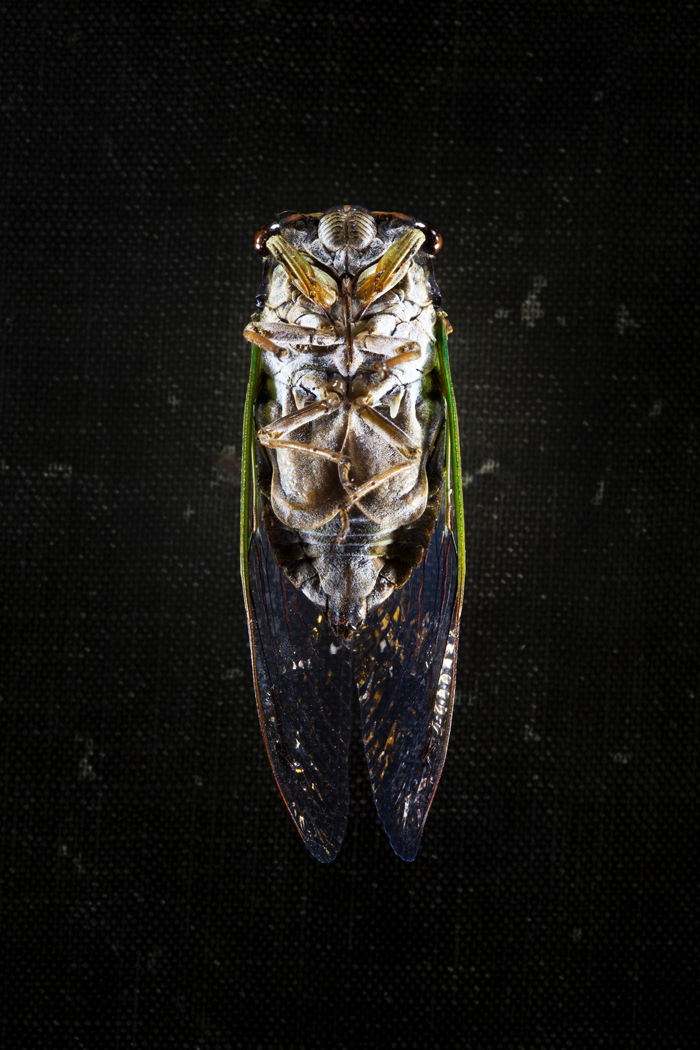
I’m home by eleven. Mr. Kim’s is still open. I buy a day-old baguette on sale for fifty cents and treat myself to some salami. The groceries should last a few days. Upstairs, I toast a piece of the baguette over the gas burner and have my first and last true meal of the day. The building’s heat is on, but the winter draft is too much for the small radiator and I keep my heavy coat on as I lay down to sleep. I’m on my side and as my eyes adjust to the dark, I see a dead cicada on top of my canvas bag, the moonlight creating a soft halo around it. I turn onto my back, mimicking the bug, wondering if the dead dream as the living do.
Photograph by: Jaemin Riley
Written by: James Mo
death and awe
Posted on: March 4, 2013
One of my husband’s co-workers passed away. I’m sitting in the pew, holding David’s hand and staring at the mourning family’s tear-stained faces. I’ve never had someone close to me die. I’ve imagined it a few times, just to see if it would make me upset, but it really doesn’t. I know if David died, I’d probably throw up and join a convent, but I don’t know if I could deal with hundreds of people telling me how sorry they are. I feel like their condolences would offend his existence and I’d choke someone out.
The dead guy’s name is Henry and his wife is Melissa. She’s wearing black and some fancy old-school veil over her face. She’s standing at a lectern, trying to talk about how Henry was a great husband and a super father, that he will be dearly missed. She’s blubbering so much that spit and snot are pouring from her orifices. Her mother-in-law finally gets up to escort her away as Henry’s dad takes over with red-rimmed eyes. He clears his throat like a thousand times.
The only black dress I have has yellow flowers on it and I kind of feel like it might be a little too festive for the occasion. I keep smoothing it out over my lap and David leans over to ask me if I’m okay. I nod, not making eye contact, hoping that makes me seem more sad. All I want to do is stand up and tell everyone to get over it because people die and that’s just the way it is. Instead, I just count my little yellow flowers and wait for the service to finish so I can eat some pigs-in-a-blanket.
At the reception, everyone is walking up to Melissa, holding both of her hands in theirs and looking deep into her puffy blue eyes as they say sorry. Is she enjoying this? Does she want to be here? I feel like I should walk over there and say, “Look, chick. I know you hate this just as much as I do. Why don’t I take you out for a few drinks until you blackout?” I’m practically stuffing my face with cheese cubes and crackers, trying not to laugh because I’m imagining Melissa drunk and twirling her black cardigan above her head like a lasso.
David touches my right hip and when I turn to look at him, he’s got that look in his eye. No, not the sexy one. The stop-acting-like-a-jackass look and I nearly choke on the pepperjack. He says we don’t have to stay too much longer, he just wants to be polite. I tell him that I understand and watch him make his way over to the punch bowl. Henry’s dad is over there and David pats him on the back. Maybe I should try to be comforting. Maybe I should stop being so weird and act like everybody else.
I refill my plate before disappearing into a small study away from the bustle, leaving the door open just a crack. I turn around to behold a beautiful, red, wingback armchair on the right and a small window to the left, facing the garden. Most of the walls are bookshelves, packed tight with old-looking volumes and antique trinkets. I take a seat and make myself a little cracker, salami, cheese sammy. The room is silent except for the dull hum of those talking just outside.
I chew heartily, reminding myself that cheddar is why I could never be vegan. Suddenly, Melissa barges in, shutting the door behind her. My mouth is half open and she’s looking at me like she’s embarrassed to interrupt, but also mad that I found her hiding spot before she did. She sighs, walking over to the window with her arms folded over her chest. I’m willing her with my mind not to start weeping so I don’t feel like a dumbass. Of course, a bird decides to chirp a cheery little tune outside and Melissa turns on the waterworks.
Her back is to me when I roll my eyes, setting my plate on the desk next to me. I interlace my fingers in my lap and tilt back my head, eyes wandering over to a crinkly-looking white vase holding a few spindly sprigs with tiny leaves. It sits on a side table next to the window and to Melissa’s right. I notice that she’s looking at it too, sniffling and whimpering like a little girl. She wipes her nose with a tissue crumpled in her hand.
“It looks dead,” she whispers. Her brow furrows and she pulls her lips in between her teeth, stifling a sob.
I clear my throat and scratch my head. “You should eat something.” Melissa turns to look at me before I grab my plate and lean forward to hand it to her. She stares at the cheese and crackers like they’re fire ants, but accepts.
I listen to her nibble as I look back at the weird decorative piece, taking note of the droopy leaves and the vase looks like a paper bag that’s been crushed by impatient hands. “My grandma loved fake plants. They were all over her house and I always thought they were so stupid,” I say.
Melissa wipes a few crumbs from her mouth and asks, “Is she still around?”
I’m staring now, tracing the veins of each and every leaf with my eyes as I shake my head. “No, she’s not.”
“I’m so sorry,” Melissa says. She places the empty plate next to the vase on the table.
I look her in the eyes and stand to face her. “No, I’m sorry. I’m kind of a jerk at funerals and I’m sure it’s obvious. I just don’t like how sad people get because it makes it seem like death could have been prevented. That makes people feel guilty. I don’t want you to feel like that.”
Melissa smiles as the right corner of her mouth trembles. “Thank you.”
Photograph by: Whitney Ott
Written by: Natasha Akery
light of the world
Posted on: February 25, 2013
Ryan is on fire for the Lord. We’re sixteen, and it's the
dawn of the new millennium. We meet in our community theatre's production of The
King and I. Ryan is tall and gels the front
of his hair. He used to be home schooled, but now he goes to public school,
which is full of sin but is also a good place for spreading the Word. Ryan
carries around two books with him at all times: a pocket-sized NIV New
Testament and a graph paper notebook where he writes memory verses and
inspiring song lyrics. He plays the guitar. I, as it happens, love boys who
play the guitar.
Doing community theatre isn't really about acting. It isn't
about lights in your eyes or the thrill of applause. It's about the secret
space that surrounds the play: unsupervised downtime. We spend most of this
downtime in the parking lot behind the theatre. No one is up to anything, and
yet, we are up to everything.
Where else, in a town like ours, can you wear a ball gown and sit in the
dark with the boy you like, hoping his knee will touch yours and he'll tell you
the sensitive secrets of his soul? It’s a misplaced prom dream for the meek and
lowly.
In real life, I am chubby and awkward with the requisite
braces and glasses and hair that really shouldn't have been cut into "the
Rachel." But when we perform, I’m wearing contacts and mascara. Surely
Ryan has noticed. Two weeks ago after practice he called me his "sister in
Christ" and kissed my forehead. I can't let go of the feeling of his
Chapstick-perfect lips on my skin.
On the night of dress rehearsal I follow Ryan to the hill
behind the parking lot. It used to be a dirt pile where the law firm next door
was going to expand, but they changed plans and grass grew over the dirt.
Tonight, I can feel the universe pulsing. The night sky spreads out overhead,
full of promise.
"Look at all those stars," Ryan says.
"I know. They're so bright."
"Jesus said, 'I am the light of the world. Whoever
follows me will never walk in darkness, but will have the light of life.' Isn't
that comforting? If we follow Christ, we can have that light."
"Mmm..."
I scoot a little closer to him on the hill. He leans back,
staring up at the sky.
"Jesus makes it sound so easy, following him,"
Ryan says. "But it's not. It's really hard."
"I think you do a good job."
"You don't know that. You're so pure. I wish I could be
like you."
"Can I help?" I inch my hand closer to his, but he
raises his arms behind his head.
"Pray for me. That’ll help."
"I will,” I promise.
Then the stage manager throws the backstage door open and
hisses into the darkness for all the chorus members to hurry the hell up or
we’ll miss our cue.
Before opening night, Ryan leads the cast in prayer. I try
to stand beside him as we all join hands, but I end up beside weird Mark with
his sweaty palms.
"Dear God, I just thank you for bringing us here today.
We give you all the glory, God. We just pray that everyone tonight remembers
their lines, God. That you bless us, God, and be with us as we share your love
with this audience. In your Son's holy name we pray, Amen."
"Amen."
The show goes awesomely. At intermission, I try to get
Ryan’s attention, but he’s deep in conversation with his friend Brandon. I sit
in the backstage hallway and pretend to read a book Ryan lent me called I
Kissed Dating Goodbye. When Mark comes and
asks me what's wrong, I sigh and say,
"Nothing. I just feel like being alone."
The next night, Ryan asks me if I want to go to Bible study
with him after the show.
"This group is like my family," Ryan says.
"They're spiritual warriors."
I call my mom to ask. This is practically my first
date.
Ryan drives a bright yellow 4Runner because his mom wants
him visible to reckless drivers. It is the best car I've ever seen, and now I'm
in the front seat as we pull up to the house where the Bible study is in full
swing.
We slip in as a skinny guy is giving his testimony. Tears
stain his face and his body quivers as he shouts at us to banish impure
thoughts from our minds. Every time we lust after a member of the opposite sex,
every time we wish to do things only meant for holy matrimony, we are letting
the devil tighten his grip on us. We are letting the devil in.
Ryan is nodding his head. When the skinny guy sits down,
Ryan pulls out his guitar and leads everyone in song. "Over the mountains
and the sea, your river runs with love for me, and I will open up my heart and
let the healer set me free. I could sing of your love forever...I could sing of
your love forever..."
Soon everyone is crying and repeating the lines of the
chorus. The guitar music stops, and it's just our tortured voices, singing to
the God who loves us and hates our sin.
As the group disperses for the night, a blonde girl in
lowrise jeans and a pink American Eagle polo approaches Ryan and compliments
him on his guitar playing.
"You were just, like, so full of the spirit," she
says.
"Thanks, Abby. You're my sister in Christ," he
says. He kisses her on the forehead and asks if she needs a ride home.
I sit in the back seat of the 4Runner. Abby is chatting
about the latest Newsboys album. I lean against the car window. The night sky
is foggy and polluted with the light of the world. I can't see a single star, but I keep looking.
Photograph by: Jaemin Riley
Written by: Dot Dannenberg
Labels:
1:1000.
light.
literature.
photography.
short stories.
still life.
still life photography.
words
Presidential Baggage
Posted on: February 18, 2013
“And to my eldest son, John,” read the attorney, “I leave the keys to the family business. May it bring you the same success and happiness it brought me over the years.”
Either my dad was being facetious or his death was as surprising to him as it was the rest of our family. Regardless, I am now the proud owner of the same failing bookstores that probably led to his heart attack. Correction, “bookstore.” He was down to one.
“I also leave you the keys to my 1961 Porsche 365. I told you I’d let you drive it one of these days.”
Wrong again, you old bastard. The bank took your beloved ego booster four years ago.
“Sorry,” the attorney apologized, breaking character. “This will is a little out of date.”
“Yeah. I kind of gathered that.”
“Well, there may not be a car, but I do have the keys to your new office.”
“Joy.”
The attorney grabbed my dad’s keys from his desk. He jingled them between his thumb and pointer finger like I was a house cat.
“For the record, I urged him to sell the stores ten years ago,” claimed the attorney.
“You’re not the only one.”
I examined my dad’s keys as I walked to my shit-box of a car. He always told me that the lottery would be a better investment than an English degree. God I hate proving him right.
“Son, it’s not the people who write books that make the money,” he would say when he caught me scribbling short stories in my journal. “It’s the people who sell them.”
Oh, is it, dad? I think the IRS would beg to differ.
There were four keys on his key ring. The first one went to the depressing one-bedroom apartment he moved into after the divorce. The next opened the sole survivor of the Words for the Wise bookstore franchise. After that came the key to the dingy office in the back where they found his body. The last one was a mystery to me, a mystery that intrigued me enough to blow off lunch with my mom and beeline to the abandoned bookstore.
I left my dying Toyota Tercel sprawled across the three parking spots in front of the entrance and headed toward the door. Next to the hours sign on the door was a freshly applied eviction notice. I had until tomorrow to raid the shelves before the repo men did the same.
I put the door key in the lock and entered the prison of my adolescence for the first time since I left for college. That was also the last time my dad and I ever spoke.
“YOU’RE DEAD TO ME,” he shouted from the sidewalk as I got into the passenger side of my mom’s over-packed SUV and headed off to my future alma mater. Oh the irony.
I don’t remember exactly what was said before those heart-wrenching last words, but I know it revolved around his ongoing disapproval of my literary pursuits and my lack of interest in taking over his antiquated business.
I blame Amazon.com for the deterioration of our relationship. Their endless catalog of titles and unbeatable prices trumped my paternal loyalty. I’ll never forget the look of betrayal on his face when my first purchase arrived on our doorstep.
That was back in the days when “our” included my dad, mom and little brother. That was back when he must’ve written his will. That was when everything started going downhill.
Now, my stomach is churning from the familiar smell of aging paper and binding glue. I bypassed the Harry Potter display, that remained unchanged since the release of the seventh book, and headed to the back of the store.
The scent of my dad’s office was drastically different from the rest of the building. It reeked like a freshly Febrezed bowel movement. The odor seemed to be emanating from the clean patch of carpet beneath his desk where his intestines expelled their last meal.
I braved further nasal damage and approached said desk, kicking his wheelie chair across the room to avoid accidentally sitting in his death seat. I started pulling on all the drawers to see which one, if any, required the tiny key.
His lap drawer opened effortlessly and contained a boring mix of pens, paper clips and promotional bookmarks. The three equally sized drawers on the left didn’t have locks, so I didn’t even bother checking them. All my excitement hinged on the double-decker cabinet to my right.
I warily put my left knee down on the clean spot and tugged on the first handle. It didn’t move. I inserted the tiny key into the cylinder on the top right of the cabinet and twisted. It turned.
I tried opening the top drawer again. Success. Unfortunately, it held exactly what it was intended to, files. An auditor would’ve loved this, but I couldn’t give a shit. I pushed the drawer closed and tried the bottom bunk.
I thought it was empty until I noticed the contours of a briefcase hiding in the shadows. I pulled it out and laid it on top of the giant desk calendar he won’t be needing anymore.
Hanging from the handle was the luggage tag I bought him before his first business trip to the Big Apple. “TRIP OF THE PRESIDENT,” it read. I bought it to remind him that he shouldn’t be intimidated by the other head honchos at BookExpo America. I guess he should’ve.
I unbuckled the clasps on the briefcase and slowly opened the lid. What treasure did this slender chest contain? Business cards? Brochures? EVEN MORE BOOKMARKS?
Well shit. Sitting in the mouth of the leather clam was a stack of journals I hadn’t seen since I moved in with my mom. They were the same journals he ridiculed me for writing in throughout grade school. And now they’re safely locked inside his desk? Where’s a Ouija board when you need it?
Photograph by: Whitney Ott
Written by: Mark Killian
Labels:
1:1000.
literature.
photography.
short stories.
short story.
still life.
still life photography.
words
no reward
Posted on: February 11, 2013
The pretty coffee shop girl looked at me with horror. “You know dogs are allergic to chocolate right?” she said. She was reading the poster I asked her to put up.
Lost dog, answers to Daisy, loves chocolate. No reward.
A photograph of my ugly pug accompanied the short message.
“Sure, but only in large quantities. I only give them to her as a rare treat.”
I always kept a handful of bite-sized chocolate bars in my coat pocket for her, but with Daisy missing I’d been eating them instead. The only problem is now I couldn’t stop. I blame it on the stress—I really missed Daisy. This is it, this is the last one, I would say to myself. Before I knew it, my pocket would be full of empty wrappers.
The pretty coffee shop girl was still looking at the poster with doubt, skeptical of my explanation. Her dark hair was pulled back in a loose bun exposing her lightly freckled face, her brow furrowed as she studied the poster. Small coffee stains were liberally splattered on her white t-shirt—a poor choice for her line of work. Her trimmed, unpainted fingernails drew my attention as they lightly gripped the poster. I’m not sure a girl’s hands had ever drawn my attention before. Anyway, she was charmingly unkempt and I couldn’t stop staring at her.
The next day I met with Harry for coffee, as I did every week.
“I’m in love,” I proclaimed.
Without even looking up from his cup, Harry replied, “Again?”
I wasn’t sure if he meant to offend me with the offhand response. He was aimlessly stirring his coffee, which he took black.
“I don’t know what you’re talking about. But listen, I can’t stop thinking about this girl. It’s distracting. I can’t write.”
Harry set his spoon down and looked up at me.
After he took a sip of his coffee, he said, “Well that’s dramatic. Who is this woman you’ve fallen so mightily for?” He said this with a smirk I didn’t much appreciate. I nodded, and Harry turned around. Angela, the pretty coffee shop girl, was behind the counter preparing an espresso drink for a Wall Street suit.
Harry turned back around and said, “Didn’t that girl start here two weeks ago? How could you have fallen love with her already?”
I shrugged. Harry shook his head and said “I don’t even know why I bother asking you these questions anymore.”
I admit, we’d had similar conversations before, at that very same table. Harry’s look of dismay was so predictable at this point that it should not have irritated me anymore—and yet, I continued to feebly justify myself to him.
“I’m an artist Harry, it’s in my nature to see the beauty in everything, including women. I’m an unapologetic romantic.” I tried to say this with as little irony as possible, realizing I probably sounded pretentious.
Harry rolled his eyes. “That’s the problem, isn’t it? Romantics desperately hope that love is fleeting because there’s no poetry in linear relationships. And what you want is poetry, so you go from woman-to-woman looking for your next poetic moment. There’s another word for people like that, addicts. You’re an addict.”
Harry was right, but I didn’t agree with his characterization. That’s how I felt about most of his opinions. “Why is that a problem? I say it makes love worthwhile. To say that love’s raison d’etre is permanence is old-fashioned—permanence is only a side effect. Just because it has a long shelf life doesn’t meant it’s love.”
“Your vice isn’t love, my friend. That wouldn’t be a problem. Your vice is the promise of love.”
Harry was a lawyer—a litigator to be exact. He was an expert at parsing words and usually ended up having the last one in any conversation. As infuriating as it was, there were few people I enjoyed chatting with more. It had always been that way.
Harry added, “You’re too much of an artist for your own good.”
I replied, “And you’ve forgotten how to disengage from your lawyer’s objectivity.” We silently agreed with each other’s assessments.
I finished off the rest of my coffee in a single, deep swallow. It was gritty and bitter— I must’ve gotten the last of the pot. I contemplated going up to the counter for a second cup, but my conversation with Harry made me tentative about approaching Angela. I reached into my pocket for a chocolate bar instead. This one had bits of puffed rice in it. I preferred the ones with the chopped almonds, but the variety suited me. I stuffed the empty wrapper back into my pocket.
Angela came around from behind the counter and began clearing off the table opposite ours. She smiled with acknowledgment as we made eye contact. Her casual affection reminded me why I had brought her up with Harry to begin with. Any uncertainty he had infected me with melted away.
Harry looked at me wide-eyed, teasing me for my fatuous expression. “Maybe it is love after all,” he said, laughing. I ignored him.
I went for another chocolate. It was one with almonds.
“No, maybe you’re right about me,” I said with my mouth full. “But, I just don’t see anything wrong with pursuing a woman, or women, if what I’m looking for is love. It’s not like I’m just in it for the sex. Love isn’t a zero-sum game. Just because you fall in love once doesn’t mean you become incapable of loving someone else.”
Harry sighed, “It’s not a matter of being incapable. In any case, most addicts can’t see their own follies.”
In a typical fashion, Harry grew bored of our endless debate on romance, so he changed the subject. “Any luck finding Daisy?”
I shook my head, really wishing I had more coffee, “Not yet.”
I reached into my pocket again, rummaging around for one last piece of chocolate, but only pulled out an empty wrapper.
Photograph by: Whitney Ott
Written by: James Mo
safe place
Posted on: February 4, 2013
Brit sits on the carpet in the living room, an elbow propped up on the glass coffee table and its corresponding hand cupping her forehead, pushing back her sandy blonde hair. The fingers of her other hand trace the fingerprints streaked across the glass. They remind her of the sticky hands of small children who scream and whine until they get what they want from tired parents. She wastes time and avoids packing up to visit her mother who lives four hours away, her mother who never visits, but always calls. The relationship is strange, as if Brit’s mother never quite understood her role as a parent, but ascertained that food and unwelcome criticism were part of it.
A basket of laundry. An oversized purse. Cell phone charger. Brit slides into the driver’s seat of her old black Jeep and dreads the price tag her gas tank will yield in the hours to come. Making eye contact with herself in the rearview mirror, she pulls back her hair into a loose bun and slides on her sunglasses before cutting on the engine and pulling out of her apartment complex onto the highway. She didn’t eat breakfast and she didn’t call work to say she would be gone for a few days. Brit busses tables at a fancy restaurant downtown and lives mostly off of tips and leftovers. Her father calls every once in a while to ask if she needs money, but she always says no and he always sends a check.
Driving always makes Brit so sleepy. She prepared a high energy playlist for this, but it only seems to lull her faster. The only remedies are impromptu phone calls to various people that she really doesn’t want to talk to, but knows that conversation will keep her from falling asleep at the wheel. One of her friends, Rachel, likes to complain about her boyfriend and say that he doesn’t understand her needs. She talks about how he doesn’t fulfill her emotionally and she kind of wonders if being a lesbian is the answer. Brit says, “Why not give it a shot? You might find your soulmate.” Rachel chastises her with, “Unh! Brit! Like, I’m not that serious about it. God, you sound like you’ve done that. You’re probably gay.” Brit is suddenly wondering why she called, why she gets coffee with this chick once a week, and why she hasn’t hung up yet.
The only redeeming aspect of the drive to her mother’s house is the landscape. Right now it is autumn and the grasses are gold, the trees touting red, yellow, and orange leaves. The lyrics to “Fields of Gold” by Sting are coursing through her mind as she smiles to herself, leaning forward and setting her chin at noon on the steering wheel. Miles of road roll beneath her, making her eyelids flutter every so often. She remembers the long drives of childhood when she would sleep in the backseat with her sister as her father listened to Madonna’s newest cassette. Dreamily, she would say to him, “Hey Dad, I know all the words. Do you want to hear me sing them?” He says yes and she sings until she drifts away once more.
Brit turns onto the long dirt driveway that leads up to the house settled on a vast plain. The Jeep takes the bumps and gravel in stride as it approaches the ranch style home with blue shutters and a large live oak that sprawls its canopy above the roof. There’s a garden in the back, rich with lettuce, mint, and zucchini sure to be on the table this evening. The kitchen window is open and Brit can see her mother standing at the sink, probably washing dishes or fresh produce. Her mother looks up, smiles, and disappears to come to the front door.
They don’t hug or kiss. They probably don’t even say hello. Brit’s mother immediately grabs the laundry basket in the backseat as Brit collects some trash and her purse from the passenger’s side. She slides her sunglasses on top of her head and follows her mother into the house where it smells like rest. Brit takes off her shoes and makes a beeline for the sunroom where her favorite futon is already prepared for her arrival: a blanket, a pillow, and her childhood teddy bear. Her mother starts the first load of laundry and says, “You always forget to empty the pockets.” Brit replies, “I know.”
“Come to the kitchen,” her mother says. Brit complies and sits down on the floor with her back against the refrigerator door. Her mother peels carrots and asks her to fill her in on what’s been going on. Brit talks a little bit about the guy she’s been hanging out with who is really sweet and plays baseball.
“It’s nothing serious, but I like him. He opens doors for me and stuff.”
“That’s good,” says her mother before interjecting, “But don’t get serious so fast. You’ll scare him away.”
“Okay, Mom,” Brit replies as she stands up and makes her way over to the kitchen table.
A blueberry pie sits in the middle and all she wants to do is stick each of her fingertips into the spaces between the braids. She begins to pick at the edges of the crust and slip the tiny pieces between her lips, nibbling as she contemplates the strange coexistence of love and hate for one’s parents. Brit considers the dread she felt as she sat on her living room floor, anticipating her mother’s supreme dissatisfaction with the world, which is constant like the invisible sound of a television that is turned on and muted. What upsets Brit most is that she is also dissatisfied. Try as she might to meet society’s norms and fit in with others her age, she wants nothing more than to disappear as her mother has into the countryside. She wants to turn off her phone and never have to answer again.
Photograph by: Whitney Ott
Written by: Natasha Akery
Labels:
1:1000.
food.
food photography.
literature.
photography.
pie.
short stories.
short story.
still life.
still life photography.
words
This work is licensed under a Creative Commons Attribution-NonCommercial-NoDerivs 3.0 Unported License
1:1000
The Design of this Blog is All rights reserved © Blog Milk Powered by Blogger