The Ghosts of Santa Fe

Posted on: March 31, 2015


Porfirio Soriano lowered the brim of his hat and did his best to straighten up in the saddle. Jutting up from the desert floor in front of him was a series of sandstone ridges. Mostly shaded, their jagged peaks still caught the late afternoon sun, making the pink rocks look like serrated, bloodstained knife blades.

“El Espinazo del Diablo,” Porfirio said aloud, the rasp in his voice startling both himself and his horse.

He first heard about this place from Miguel, a salty old vaquero who was well travelled on both sides of the border, and both sides of the law.

“Down in Mexico, south of Agua Prieta, there’s a maze of red rocks that sits between the Sonoran Desert and the foothills of the Sierra Madres off to the west. The Devil’s Backbone they call it.”

He cast a knowing glance Porfirio’s way.

“It’s a good place if you ever need to hide out.”


A good hideout is exactly what Porfirio needed right now. He glanced over his shoulder at the barren expanse of chaparral that he had been riding across all day. As he twisted, pain lanced through his body, radiating from the festering bullet hole in his side. He didn’t see anything behind him but the tall spires of saguaro cactus and scrub brush, but whoever shot him in that dark alleyway last night could still be out there.Porfirio turned his attention back to the rock formation in front of him. He could see why Miguel called it a maze. What looked like a solid wall of rock from afar was riddled with breaks. And according to his old friend, only one of these offered an escape.

“There’s only one way through, and you’ll never find it, unless you know what you’re looking for. The entrance looks like a cave at first, but it’s really more like a tunnel. The Spaniards called it La Puerta del Infierno. It’s a rough trail, for the most part, and it’s narrow as all hell. But then all of sudden the canyon opens up and there’s a spring fed pool, sparkling like a gem. You’ve never seen anything like it.”

Porfirio had to stifle a painful laugh. Here he was, once again following the advice of Miguel, a man who brought him nothing but trouble during their years of friendship. And he was following through a place called the Gateway to Hell, no less. But desperate times call for desperate measures.

Porfirio found the entrance to the trail just as the sun dipped behind the horizon. He sucked in his breath as he ducked under the low overhanging rocks, the pain like someone pressing a branding iron into his ribs. The last remnants of daylight faded, blanketing the canyon in utter darkness. He knew the temperature had dropped, but sweat poured from his head. He let his horse guide them through tight, labyrinthine path as it twisted and turned, praying to a God he didn’t believe in that around the next bend would be something to quench his thirst. Porfirio lost track of time. How long had it been? How many miles had he gone? At last, he caught a glimmer of moonlight reflected on water. He dropped from the saddle and tried to run, but his legs failed him. He crawled to the edge of the pool and managed a few gulps of the cool water before he collapsed into a fevered heap.

When he awoke, he was startled to see a small fire burning. A man sat across the fire from him, his young face vaguely familiar. Porfirio’s hand flashed for his gun but he found his holster empty.

“Not very trusting are you?” said the stranger. He motioned at Porfirio’s ribcage. “Guess you have your reasons, though.”

“You took a gun off an injured man, what’s that say about you?”

The stranger chuckled.

“It says I’m cautious.” The stranger’s eyes narrowed. “You think I would let the legendary Porfirio Soriano get the drop on me?”

Porfirio flinched at the way this youngster said his name. Once you get the reputation of a gunfighter, valid or not, there was a line of people willing to take you on just to build up their own name.

“Are you the one who shot me?” he asked.

Porfirio took the stranger’s silence as a yes.

“Only a coward would shoot a man from ambush.”

The stranger wasn’t fazed by Porfirio’s taunt.

“Tell me about Santa Fe,” he replied.

“Santa Fe?” Porfirio had only been to Santa Fe once.

“You’re nothing but damn cheaters,” Miguel roared as he shoved the card table and stumbled to his feet. Porfirio tried to calm his friend.

“Come on Miguel, let’s go outside, you’re drunk.”

“Don’t tell me what to do, kid. These no good…”

Miguel spun back towards the two gamblers. They were spread out, hands wavering over their pistols. Porfirio saw the one on the left drop his hand. He drew his own gun and fired twice. Miguel stood there, empty-handed, and stared at the two dead men on the floor. He shifted his gaze to Porfirio.

“Thanks, kid.”

Porfirio began to quiver, shocked at what he had just done.

“I didn’t mean to kill them. It just happened so fast.”

“It was them or us, kid.”


Porfirio looked at the stranger again, his wide-set eyes, his narrow, hook-like nose, and it hit him. The gambler on the left, the one that went for his gun, had the same face, but older. Porfirio knew his fate was sealed; this wasn’t about some youngster out to make a name for himself, this was about revenge. He looked around him. Light from the fire danced on the water and bright stars shone overhead. Porfirio smiled. There were worse places to die.

“Well, once at poker game Santa Fe, I had the pleasure of shooting two gutless, cheating bastards.”


Written by: Ben Cook
Photograph by: Sophie Stuart

Fishing Lessons

Posted on: March 26, 2015


I went to live with Uncle Gil the summer before I turned seventeen. Ma and Dad had parted ways and then split for points somewhere east and west. Like God shoving apart sin, they had to get as far away from each other as possible. Nana ended up with me in the immediate fall-out, but she was moving into the local home for the elderly come September. So I was inducted into the world of fishing on a rickety boat in the Gulf covered in fish scales and fish guts and reeking to high heaven.

Gil was short for Virgil, and he wasn’t actually my uncle. I had lost track of how we were related—or even if we were. Nana’s version of our family tree snarled together like the yarn she sorted, running knotted strands through fingers spotted by time. I had half a mind to tell her that I was almost seventeen and didn’t need any looking after, but we were already at the bus station. Then she sent me off with a peck on the cheek and a squeeze that surrounded me with the lingering scent of dead roses and baby powder before the bus pulled away.

Gil was somewhere between my parents and Nana in age, with hair that might have been white or just bleached by the sun. It hung well past his shoulders, but when he pulled it back with an elastic band, the gesture was always masculine—unlike the smooth sweep-and-gather the girls in my high school had mastered. Even with a ponytail that would cause most women a pang of envy, no one could call Gil feminine. Maybe it was an aggressive act of self-defense against his name—which Nana said he thought was “a sissy name.” I later learned that while Nana paraphrased a lot of the things Uncle Gil said, she could never quite master the flair of his swears. They were downright Shakespearean sometimes. I’d never heard “fuck” used as every part of speech with such ease.

He was standing with his arms crossed and his feet spread wide when the bus pulled up, like he was on his boat instead of the parking lot and the asphalt was rolling beneath him. He didn’t shake my hand or try to take my beat-up duffel bag as we walked to the truck. I was tempted to hold my arm up next to his. His skin was the deep red-brown of dried blood after decades spent outside. Tattoos crawled up the back of his neck and covered his arms from shoulders to wrists. His worn yellow tank bore what looked like a naked woman wrestling a many-tentacled creature, but sun and salt had faded it to almost nothing.

“Know anything about boats, Cale?” he asked after half an hour of silence as we rode in his truck. We drove with the windows down. The air tasted like the inside of a grill—salt and hot metal.

“No.”

“Fish?” The skin around his eyes and mouth were webbed with white in the places where the sunlight didn’t reach when he squinted against the sun and spray.

I shook my head, unsure if he was asking if I fished or if I knew anything about them. Either way, the answer was no. The rest of the ride passed in silence. I’d come to consider myself something of an expert on silences. That’s how Dad and Ma fell apart—their silences started out as a few minutes at the dinner table and stretched into weeks of dead air. Silence could sometimes say more than shouting. Our whole house rang with it.

When we reached Gil’s ramshackle beach house, he showed me the spare room that would be mine. I was surprised to see a frame and a box spring rather than just a mattress huddled on the floor. There were even a few hangers in the closet. I dumped my duffle on the bed but didn’t have time to look around much. Gil told me to put on my swim trunks if I’d brought them. We were going out as soon as we’d had a bite to eat. I didn’t question filling my stomach with the cheeseburger I ordered from the roadside stand before setting sail, licking the rivulets of grease and pickle juice off the backs of my hands.

Gil’s boat was small and more than a little worn. I could barely make out the painted name peeling off the back – Jezebel – and wondered if I’d ever get the courage to ask about it. Gil jerked his head at me and gave terse instructions as we unmoored the boat from the dock and then backed it out of the marina. The water was steely gray, tinged by the muddy backwash from the Mississippi. As we motored farther out it turned a darker blue-gray and the sun turned the wave tops chrome. Gil told me what we’d be catching and how to use the gill nets, one brown hand on the steering wheel and the other tracing arcs in the air to match his descriptions. I thought about the sunscreen I’d forgotten to apply and wondered how many sunburns it took to turn my skin into the same rusty cowhide that encased Gil’s ropy muscles.

When we dumped the first catch of silver-sided fish into the boat, they cascaded around our ankles, fins twitching and big liquid eyes flat and staring. I wondered if they knew in their tiny brains that it was all over. If they felt fear or pain. If they felt torn from the ocean, their essence. When the day was done and we headed back towards shore, my hands were burning from hauling nets and my cheeks were sore from squinting against the sun. Gil hadn’t said more than a few hundred words all day but as the salt spray lashed our faces and the sun bronzed the waves behind us, it felt like the beginning of a hundred conversations.

Written by: Hannah Sears
Photograph by: Blake Bronstad

The Jam Times

Posted on: March 24, 2015


When I got back, Blue Louis had gotten jam everywhere, and I went and stared at it awhile because it was raspberry, full of little woody pips, and I had never in my life realized that jam was such a fine and interesting thing to look at up close. In my hand was the oil we were hoping would freak out the spiders colonizing our rooms, orange-legged little vent dwellers. Looked them up in a chart that said they were venomous so Louis was on to me like, ‘I found one of them in my bed sheets, they’ve got to fucking die.’ So I had a plastic tub full of lemon and lavender ready to spray the floor, 'cause spiders taste through their feet and they hate citrus and lavender most of all.

Toast was round later for some modeling with Lyndon, the skinny artist downstairs. Said he was going to transform her into Daphne; that chaste Laurel woman twisting and tree-faced in the clutches of lusty Apollo.

She wrinkled her nose. ‘Smells like a ponce in here.’

Louis had cleaned up the jam, was licking something off a knife. Peanut butter, I think. ‘You know, originally that meant someone who lives off the earnings of a loose woman.’

‘Like a pimp?’

He shrugged, lounging in his Harlem suit. ‘I guess.’

Louis was the lynchpin, like a black hole dragging us all in around him. Would have flown off in all directions otherwise, scooped up in the palm of God and flung into bleak space. He was a fine-boned dark man, chilli seeds and raw cacao and most definitely an Inca or Creole or something. Sometimes he’d go off on one of his expansive and ungraspable trips and stand out on the roof shouting crazy like ‘I’m the Sultan of Araby!’ until Toast and Lyndon and I grabbed at his jumper and pulled him backwards into the bare bulb light that we all lived by in St. Anthony’s.

The spiders didn’t die. Even when Toast put down black pepper over the thresholds, ‘cause they hate that too apparently. It was from her I learned that spiders have taste buds on the ends of their legs. From her I also learned how to correctly make love to a woman with my tongue, and I will always be thankful to her for both of these extraordinarily useful teachings. She was tight-hipped and sharp-jawed, like a whip ready to crack someone up. Lousy man magnet, more like a bullfighter caught up in her own red flag. Had a string of dumb cock wavers in her life, a steady assault of fat, shit-dragging bluebottles wiping their insect filth on her body.

I remember during the Jam Times, as I came to think of that collection of strange days, ‘cause during my long trip that morning I remember thinking - are those pips even real or is it actually someone’s job to make fake fruit pips for jam? – with a real intensity that completely coloured all of my thinking for a while afterward, when Louis and I were drinking coffee with Lyndon. Watching him sketch out classical atelier tits; and he suddenly chucks down his paper and charcoal and runs off back to the doss, yelling away. And that boy could have flights of fancy himself so we traipsed after him to make sure he wasn’t going to take a leap off the building or anything when he comes out of our rooms tugging on my only clean jeans, and I say, ‘You slum fuck! Those are my pants!’

And he says to me, ‘Yeah but I just remembered I got a job interview!’

‘What’s wrong with your own clothes?’

‘They got vomit on them.’

And he gestures through the hall door down to his. I don’t know why, but I head down there because I’ve got a sense of dread like lava rising up through the underground, and there is vomit crusting a lot of things; the sink, the carpet, the kitchen sides. It’s all purplish and I guess it’s red wine. Toast is face down on the futon with a slim bare ankle sticking out from under the green wool blanket, and I shake her a little to see if she’s okay.

Her breath is foul with spew and cigarettes and Lyndon. She struggles to sit up and I fetch her water and sugar like she is a sick bee, and we talk awhile about the time she was in Ireland and saved a deaf girl from being hit by a tram.

‘How do deaf people go into rooms?’

‘What in fuck’s name are you talking about now, Natty?’ Toast is concentrating on the floor as I drip-feed her Smarties.

‘Well, you know, if a deaf person knocks on a door, they can’t hear someone say, ‘Come in,’ so how do they know when to come in?’

We ponder this in silence for a while. ‘Maybe they don’t knock, maybe they just walk in,’ she says.

‘But then they might walk in on someone having a wank, or killing themselves or Spanish dancing in just socks or something like that. I don’t reckon they do that.’

She stops mainlining chocolate and stares hard at me. ‘Actually, how do deaf people enter rooms?’

‘I know, man. It’s a proper puzzler.’

‘It actually is.’

Louis is waiting for me in the hall, his hat spinning round in his hands.

‘My Grandmother said you gotta want to help yourself or The Good Lord can only stand by and watch, you gotta want to be lifted up.’

‘My Grandmother always said I wasn’t eating enough.’

‘Yeah but she was a Jew.’

‘No, the other one.’

‘Well I don’t know about that, then.’

I put out a hand to a dark spot on the wall. ‘Lou, the fucking walls are wet.’

‘It’s been raining.’

And that was that. There were long, loud nights and graves dug out of living bodies and when it rained the inside of the house got wet.

Written by: Natty Mancini
Photograph by: Jennifer Stevens

Living the Dream

Posted on: March 19, 2015

http://www.amazon.com/

                                   (Continued from West, This is It, and The Story of Everything.)

Jennifer closed the fence behind her and slipped into the alley, which was empty except for her neighbor’s trash can. She clapped her smokes against her grease-stained palm, then opened the pack and lit one.

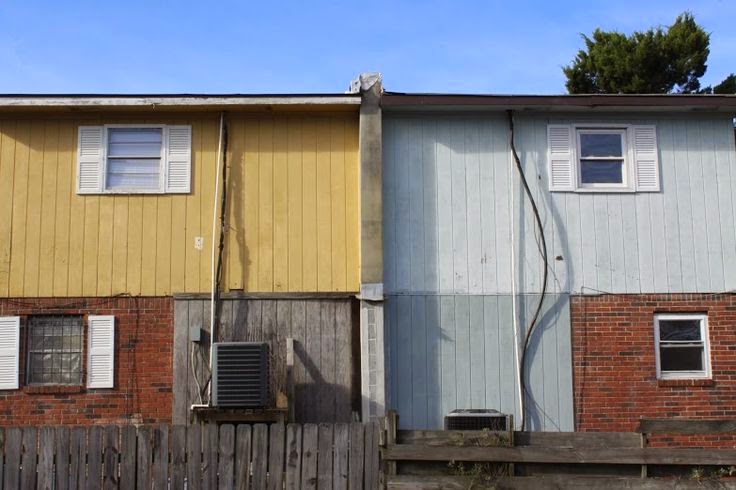
The trash can was overflowing, oily pizza boxes staging their escape. She looked up at the house with its worn yellow paint and under-performing AC unit. Underwhelming as all get out. A rat torpedoed out from under the can.

“Shit!”

She jolted back against the fence as the rat took off.

She wasn’t sure how much longer she could hide her smoking habit by skulking in alleys with rats. Brooklyn was almost three, and she was starting to develop what Jennifer’s brother called “spidey sense.”

“You can’t say shit around her, Jen!” he’d said. “Like, she knows which words are bad. She won’t repeat any nice stuff I teach her!”

“What, all those SAT vocabulary words?” she’d jabbed.

But her brother was right--Brooklyn absorbed everything. Jennifer didn’t need anyone else judging her, especially her daughter.

Her back pocket vibrated. Shelly.

Can you work 4 me tomorrow? Btw Dena’s fuel pump came in.

Jennifer visualized the tally she kept in her head.

Did she owe Shelly a favor? Shelly helped her study for their last test. But then Jennifer had bought Shelly a sub sandwich when she didn’t have cash two weeks ago. But Shelly had lent her a fake ID on Friday…

Jennifer hated her mind’s tendency towards transactions. But she couldn’t stop it. When the tally was complete, Jennifer texted her friend back:

Yeah, I got you.

She ground her cigarette out with the heel of her work boot and went back inside.

“I’ve got to fill in for somebody tomorrow. Can you keep Brooklyn?”

A timer beeped, and Jennifer’s mom bent to pull a casserole from the oven.

“What else would I be doing?”

“Mommy!” Brooklyn shrieked from the living room floor.

“You should go play with her now, at least. You’re gone all the damn time.”

“Mom, seriously? I’m in school literally every day, and I’m lucky Chuck can pay me for the extra time at the shop. I am trying as hard as I can to get out of your house and give Brooklyn a good life.”

“By being a mechanic,” her mom muttered, pouring an envelope of lemonade mix into a plastic pitcher.

“I am not having this fight again, Mom! Jesus.”

“Jesus!” Brooklyn said, swinging a My Little Pony around by its tail.

“Don’t throw that!” Jennifer said, at the same time as her mother spat, “Don’t say that!”

The pink pony flew over Brooklyn’s head in an impressive arc, then collided with a lamp, which rocked a few times before settling flat on its base, its shade askew.

“Brooklyn!” Jennifer scolded, scooping the child up on her hip. Brooklyn, knowing she was in trouble, began to wail.

“I just think you’re better than your current choices, that’s all,” Jennifer’s mother said, raising her voice. “You could have stayed in college. Gotten a real degree. A real job.”

“Do you see this dirt under my fingernails? It doesn’t get much more real than that.”

Jennifer swung Brooklyn around to her other hip and bounded through the front door.

Brooklyn cried louder.

“Will you just be quiet!?”

She set the toddler down on the dried-up grass of her mother’s front yard.

“I’m--hungry!” Brooklyn gulped between wails.

Jennifer threw her head back. She understood why all those people in movies screamed at the sky. Her brain reeled.

Better than her current choices! My current choices, she thought, are just what comes after my past choices! Sometimes you don’t exactly get a choice.

Jennifer had graduated from high school before getting pregnant. She would always give herself credit for that. She’d spent a semester at University of Texas at Austin, living in a dorm and everything. She took pottery and psychology and played intramural flag football. And she hadn’t been irresponsible. Which, she knew, maybe wasn’t the same thing as being responsible.

The rest of the scenario was so predictable it was embarrassing. She started puking over Christmas break. She did the shop-of-shame for a pregnancy test. Her boyfriend got spooked and peaced out. She moved back in with her mom. She dropped out. She craved Doritos and watermelon and maybe still smoked on the sly, even though she knew it was bad for the baby. She went into labor and cried because Brooklyn would never know her father. Her mom pushed her sweaty, pink hair back from her forehead and said, “This baby is going to have more love than it even knows what to do with.”

And she did love Brooklyn. Of course she did. But Brooklyn wasn’t going to make her drop out of the rest of her life.

Her phone rang.

“What?” Jennifer snapped.

“Oh, wow. Is this a bad time? Sorry. It’s Dena?”

Jennifer let go of a breath she didn’t realize she’d been holding.

“Dena! Sorry. No, it’s cool. Hey, the RV part came in.”

“Hell, yes. That’s awesome. When can you install it? Chris wants to make it to Santa Fe by day after tomorrow. If that’s possible, I mean.”

Santa fucking Fe. Dena had no idea how good she had it.

                                                                                                      ***

The Chinook whined for a second when Chris cranked the ignition, then heaved to life. Dena and Jennifer sprung into a spontaneous victory dance, swinging each other around like some sort of western do-si-do.

“You fixed it! It works!” Dena laughed.

“No big,” Jennifer said. “I better get an A in this course, is all I’m saying.”

Chuck, Jennifer’s instructor, just grinned and shook his head, pacing back into the garage.

Inside the RV, Chris was posing for an on-the-road-again Instagram selfie.

“Hey, can I ask you something?” Dena said.

“Shoot,” said Jennifer.

“I don’t mean to be all weird and serious, but like--how did you find this place? How did you know you wanted to be a mechanic? You and Shelly and everybody--you guys are kind of living the dream.”

Jennifer looked at Dena--Dena, who was everything she had set out to become. Educated and untethered and adored.

“I don’t know,” Jennifer said, fumbling in her pocket for her cigarettes. “I think it’s only a dream until it’s yours.”

Written by: Dot Dannenberg
Photograph by: Jennifer Stevens

A Feeling Like Freedom (Tales from the Academy)

Posted on: March 17, 2015

(Continued from Anatomy of the Inhuman Heart.)

The sun beats down hard and hot. Desh feels sweat drip down his neck and pool against the collar of his shirt. He is sure that he is minutes away from melting into a tepid puddle on the sidewalk leading to the Academy.

Kat walks beside him, platinum blonde hair dusting the tops of her ears. Kat rolls the sleeves of her blazer up just enough to see the edges of tattoos, unfinished and disconnected. Some of them are thick black line segments, like forgotten connect-the-dots. He wonders if that is the point: if something is never supposed to get finished, it can never be interrupted.

“I can’t believe they do drills outside in this,” Kat says, “I can barely walk.”

“Same,” Desh says. “Whose idea was this again?”

“It is a good story, Desh,” Kat flashes him a cheeky smile, “but maybe you could’ve suggested it in the spring.”

“Not with my allergies,” Desh replies.

“Do you know where we are supposed to go?” Kat gestures to the building in front of them, a squat concrete structure with dozens of onyx screens peppered onto the mottled surface. Green energy. Nice.

“We’re supposed to meet Lieutenant Colonel Chisholm — he’s the guy who runs this place — and Senator Nora Ness.”

“She’s the one who funds it?”

“Exactly.”

When they arrive at the front of the building they discover there aren’t any doors. A mechanical voice echoes over an intercom and, after a pause to confirm identities and schedules, a shiny panel slides back. Desh shivers when the blast of cool air hits him, and he and Kat skitter inside.

“This is great. We never get visitors,” the mechanical voice says.

Desh and Kat stare. The mechanical voice belongs to a boy floating in the wall next to them. Bottle green glass separates them, and a patchwork of icons flash on the surface. The boy taps a short sequence and his feet fall gently to the floor as the glass recedes. Rows of black, narrow barrels slide into the wall.

“Were those guns?” Kat whispers.

“I’m Tony,” the boy reaches out to shake hands. He wears a form-fitting white jumpsuit that contrasts with the darkness of his skin. He’s bald, and the top of his head shines in the florescent light. It is hard for Desh to look at him, to take in his toothy grin and the shaving wounds on his jawline, his skull.

“Pretty cool, huh?” Tony continues, gesturing to what would seem to be the reception desk.

“Marvels of modern technology,” Desh says. “I’d love to learn more about it, if you have time — but we seem to be a bit short on it, at the moment.”

“Don’t worry; Lieutenant Colonel Chisholm and Senator Ness are in a meeting that’s running long,” Tony says. “They also wanted to make sure you got the latest itinerary. Sent to the New New Republic office this morning.”

“Probably not, seeing as we don’t work out of the office. Just editors.” Kat sighs.

Tony steps back into the reception area and taps against a small panel. He asks for their email addresses and within seconds, their tablets and phones trill and chime notifications.

Kat is the first to react, pulling Desh aside. Presumably to avoid Tony overhearing, though Desh would like to point out the whole place is probably bugged.

“Only one of us in the Chisholm/Ness interview? That’s bullsh —”

“We say no, we’re out. You do their interview, I’ll cover the others.”

“You pitched it,” Kat argues.

“And you’re better at high profile. Come on, it’ll be fine.”

An hour later, Desh regrets his decision. He has a small break before his next round of interviews, a blend of older students about to graduate to the front lines and their faculty advisors.

“So, why are you at the Academy?” Desh attempts to make small talk with Tony.

“My parents gave me the choice between MegaChurch Youth Seminary or the Academy. The MCYS doesn’t have cool toys.”

Tony takes him down a long, blinding white hallway. Desh fights the urge to put on his scratched aviators and tries to ignore how his shoes squeak on the tile. It sounds like the dolphin show at OceanPlanet.

The room is little more than a closet. Desh and Tony squeeze in. Tony adjusts the settings on an unfamiliar machine and hands Desh a lightweight plastic headset.

“Put it on,” he says. “When I come in here, I have to use the SkySuit module. I’ve got most of this room memorized. You get the trainee experience today. SkyLite, if you will.”

The headset connects. Desh sees a warm, happy blue. Green and brown blurs rotate into view, and Desh recognizes the greige concrete of the Academy. The simulation spins and somersaults, flirting with clouds and the thick canopy of a forest.

When was the last time Desh felt like he was flying, fast and free? He remembers a bright, sunny day from his childhood, running up and down a beach whose name escapes him. He hears the waves, the caw of birds, and his own laughter.

The simulation cuts to black and Tony’s voice pulls him back to the present.

“Cool, right? Best part about this place.”

“One of the best sims I’ve ever seen,” Desh says.

“Oh, it’s not a sim. Those are the senior-level students in the flight track. I patched you into one of the live feeds during their air time.” Tony smiles. “That was Lady Danger. She’s our best.”

“Flight track?” Desh swallows. The room feels more cramped than it was before. Desh realizes the black screens on the outside of the Academy are not solar panels. The Academy is also a hangar.

“Most of us can choose which track we want to take depending on our Standardized Army Test scores, hands-on modules, and simulations. Flight’s where I want to be: in the air, no constraints, just the horizon ahead of me. That’s freedom, man.”

Desh nods, but he can’t shake the feeling that it’s still a simulation.

Written by: Erin Justice
Photograph by: Daniel Vidal

1:1 - Daniel Vidal

Posted on: March 12, 2015

Interviewed by Mark Killian
Oh, hello there. You’re just in time. We were about to interview VSCO photographer, social media expert, and occasional writer, Daniel Vidal, but then he caught a glimpse of a grackle fluttering ever so delicately around the top of a recently constructed Austin skyscraper, and he just had to capture the moment with his iPhone.

Then he’ll have to filter it, caption it, hashtag it, share it--you know the drill. Anywho, Danny’s work is all over the 1:1000 Archive, so we’ll give him all the damn time he needs. Ah, here he comes now. He’s smirking. He must have a bunch of likes already.


1:1000: Daniel, Danny, Dan, what sparked your #instadope VSCO photography hobby?

DANIEL VIDAL: I've been playing with a camera off and on since high school. My grandfather loves taking photos and documenting moments. It's to the point now where he sends us Year in Review DVDs with all the photos he took and collected. I love it and am inspired by it. I love a photograph's ability to capture a memory. A very specific time, place, and mood that might not continue to exist otherwise.

1:1000: DVDs? I think it's time to get that man an Instagram account. So, what are your favorite things to filter: people, landscapes, architecture, objects, etc?

DV: This is hard, as it changes often, but I try to capture photos of the ordinary. I think there's inspiration to be found in those things that you see everyday but might not think twice about. Whether it's just taking a moment to look up at the skyscraper towering above you or a sliver of light dancing on the wall, it would feel great to know a photograph I took has someone looking twice the next time they walk down the street or into their kitchen.

1:1000: Well then feel great, sir, because you’ve completely changed the way I see window washers. What's your favorite photograph you've taken so far, and why?

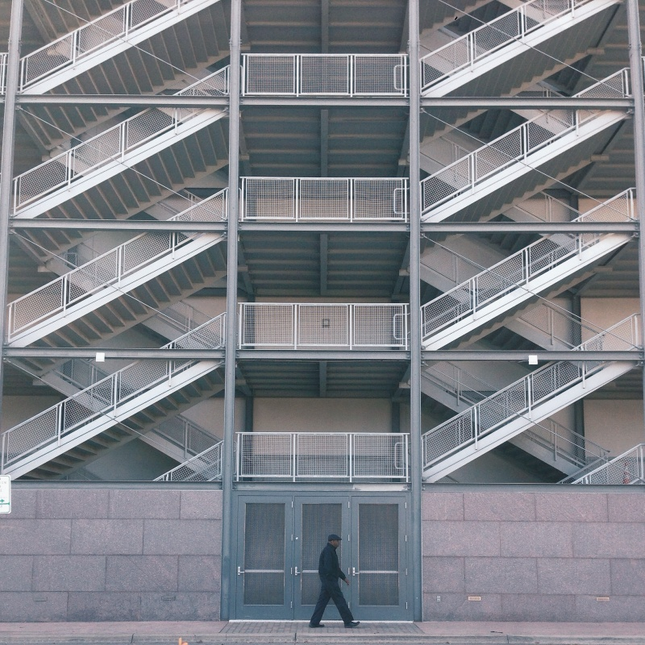
DV: My answer changes every day, but it mainly depends on the feeling I get when taking the photo. There are sometimes when you just know it’s going to be special before you even trigger the shutter.. It doesn't always happen, but right now it's this one…


I think chance and timing play a big role in creating a "good" photo. The symmetry in this image, and just having the guy walk by at the right time, was perfect. I honestly just stumbled across this shot. It all happened in under a minute.

1:1000: Dang! That’s faster than most selfies. Speaking of, what’s your stance on the selfie? Under what circumstances is a selfie acceptable?

DV: Meh. I guess maybe in a volcano or maybe when travelling the world.

1:1000: Have you fooled around with a camera outside of your smartphone (don't worry, I won't tell it)?

DV: Yeah, I have. Like I mentioned early I've been playing with a camera since high school when I bought my first DSLR before a family trip to Colorado. The hobby dropped off a bit after college and it wasn't until I joined Instagram (yes, really) that I felt inspired to pick it up again. I liked the accessibility of mobile photography and the fact that there are some pretty powerful editing tools out there, too. After messing around a bit on my iPhone, I collected a few of my grandfather's old 35mm camera, bought a new DSLR of my own and have been working on my collection since. I honestly shoot a lot of film now and really enjoy it. Mainly, because it really forces you to think about what you are shooting and to take your time in capturing the photo. It can also be unpredictable which is fun. Everything on my website is film actually.

1:1000: Hey, there is no shame in rekindling your love for photography through Instagram. Switching gears, you were also kind enough to share your writing chops with us. What was it like being on the "1000" side of 1:1000?

DV: I really enjoyed it. I like writing a lot and it's a good challenge for me. I think it's good to do things that make your head hurt or require effort, and writing 1,000 words is that for me. I hope to give it another shot sometime soon.

1:1000: We hope you do, too. That is, whenever you’re not busy. According to LinkedIn, Social Content is your profession. Does that mean you pretty much Tweet, Instagram and Snapchat all day?

DV: Kinda. I actually write a lot, believe it or not. Most of my day is spent pushing out content for some of our clients. I also help drive strategies, wrangle designers and concept our photography shoots. Although, all of the content I work on is for social. It's fun and a little stressful, but it keeps me on my toes and I learn a lot.

1:1000: You ain’t lyin! The social space is an ever-evolving landscape, much like downtown Austin. If you could push a magical button and rid the planet of one form of social media, which would it be and why?

DV: As a user, I say Facebook, but the marketer in me says you can't do that. I don't like Facebook at all, and rarely use it. Proactively, at least. It helps me stay in touch with family in Colombia, but email and WhatsApp work just as well.

1:1000: Facebook Followers, don’t listen to him. Keep your eyes on your news feeds, especially Tuesdays and Thursdays. What is your white buffalo; that one thing you want to VSCO more than anything else in the world?

DV: Hmm, that's a tough one. I think spending a day photographing my grandparents sometime in their 20's would be awesome. No particular time or event. Just a random day. That'd be fun.

1:1000: I don’t recall saying you had a time machine at your disposal, but that answer is too adorable not to accept. Anything else you'd like the world to know about Daniel "VSCO" Vidal?

DV: I feel like Ron Swanson said it best, "I'm a simple man. I love pretty, dark-haired women and breakfast food." Also, my spirit animals is the wolf.

1:1000: So you’re saying you’re a Stark?

DV: Wait, is that a Game of Thrones reference? I think I’ve only watched 3 episodes of that show.

1:1000: Well, Danny, thanks for taking the time to speak with us today. Get going before you miss that sunset over Town Lake. Bonus points if you capture someone falling off their paddleboard.

The Yellow Bicycle

Posted on: March 10, 2015


“I always want to remember from where I came,” Mr. Luo said, unzipping his dirty work coveralls. He looked like a new man, with a dark blue suit, white shirt, and yellow tie underneath.

With the wave of a hand and a few words in Chinese, he directed a subordinate of the little bicycle repair shop to bring forth his new acquisition; an aging English Midland bicycle.

I gaped in awe. The only time I had ever seen such a novelty was over forty years ago in the movie “Goodbye, Mr. Chips.” Bright yellow in color, it was in fabulous condition. I dared not touch it.

Now a billionaire, Mr. Luo ran an empire of fertilizer that stretched to all corners of the earth. At all hours of the day, conveyor belts heaved up thousands of tons of festering porridge from the bowels of large cargo vessels, spewing the dark mix upon huge mounds. His company processed, fortified, and packaged this muck for resale abroad. There was nowhere on the planet where his fertilizer was not used. The air that we breathe daily in this city along the coast, and its ghastly aromatic tint, was a never-ending witness to his success.

“Go ahead,” he encouraged. “Take it.”

I put my hands on the bars. Emboldened, I rang the bell. Studying the bicycle so as not to look him in the eye, “I asked, “Why did you name your company Sha Gua? Doesn’t that mean idiot?”

With a blank face, seemingly unable to place himself back in time from where the name originated, he answered without emotion.

“The name of my company? Again, I do not ever want to forget from where I came, nor do I want others to forget.”

I was puzzled, and it was evident to him.

“Many years ago, before the new development, times were hard in China. Perhaps you know of this time?” His face was still without emotion as he asked the question.

“The Cultural Revolution? Though American, Mr. Luo, I’m a professor at your university. Of course I know it.”

“This was my first shop, my first vocation, my happiness. Occasionally, I even traded in pig droppings so that they could fertilize their small fields.”

I mounted the yellow bicycle to gather a feel of the seat. “And Sha Gua, the idiot?”

“You are impatient, aren’t you?”

“No, I just woke up with Pink Eye this morning. I best be getting to the clinic before work.” I checked my watch for the time.

For the first time, he smiled. “Of course. It will be faster if you ride the bicycle.”

I turned my head once again to meet his eyes.

Expressionless, he continued, “Sha Gua, the name of my company, comes from the words on the high pointed hat that I was once made to wear as I was bound and dragged through the streets by the Red Guards. I was called a speculator, the most heinous of accusations, for selling dung. I was the idiot, and all were to know this.”

Now, it was my face that matched his blank maw.

“But, times have changed,” he added.

“Yes. I suppose they have,” I replied.

“Leave the bicycle with the doctor there. He will be only too glad to ride it back.”

I shrugged my shoulders. “You know the abominable Doctor Feng?”

“Abominable?”

“A jest. When I walked by yesterday he had a cigarette dangling from his lip. His lab coat was filthy as usual, and he was cleaning a used syringe with a handkerchief. Some old guy was sitting listless next to him. Not sure if he made it. Abominable seems fitting.”

“Ride the bicycle to him.”

I nodded. I pushed the yellow bicycle through the garage door of the shop and quickly made my way down the street to the clinic.

Once there, a small crowd of onlookers gathered. I thought they were curious as to the nature of the resident foreigner’s visit to the clinic. This was not so. They instead circled about the yellow bicycle, as if beholding a holy relic. I noticed Dr. Feng was there at the door of his clinic, looking at me as well. An intense individual, perhaps now in his late fifties, Dr. Feng was tall and strikingly handsome, despite his disheveled appearance. He immediately discerned the reason for my visit, looking at my red and swollen eye.

Fumbling through a cabinet, he produced a vial. He placed some drops in my eyes, letting me know with a few words and sign language to do the same every four hours. Then, he gathered a patch to place over my eye. Despite my hesitancy, I allowed him to put it on.

Adjusting my sight, I peered across the room. Standing, I lifted up the patch upon seeing my reflection in one particular picture. The image was of a long time ago. It was Chairman Mao Tse Tung smiling, seated upon a yellow English Midland.

A large, red Cadillac STS pulled up at the curb beyond the throng. The driver exited, opening the rear passenger door. It was Mr. Luo, the king of crap. I paid Dr. Feng, and then met the aging gentleman outside.

I uttered, “Dr. Feng was your tormenter, wasn’t he? He was the young man who dragged you through the streets with the dunce cap on your head.”

Mr. Luo feigned a smile. Then, he pointed at me and observed, “You look like a pirate. Perhaps now you have a Chinese name. We shall call you Jiang Hai Dao – The River Pirate.”

“Arrrgh!” I grumbled. Giving a two finger salute, I bid him a good day, and headed down the street into the city. At the corner, I stopped, something urging me to look back. As I did so, I saw Mr. Luo and Dr. Feng locked in embrace. My chest heaved, water from a river of emotion beyond sight filling my eyes.

Indeed, for everything there is a season.


Written by: Say Simba
Photograph by: Daniel Vidal


Me & My Alien

Posted on: March 5, 2015


“Hello, I would like a scotch.”

The bartender looks at me and doesn’t speak English, so I repeat myself.

“Hola. I. Would. Like. Some. Scotch.”

I take a blind stab at Spanish.

“Yo como Scotch?”

“Cotch?” he says back.

“Chevas,” I say.

“CHEE-VAS!” the bartender finally says because he recognizes it!

“Yes, sir!” I shout. “Chee-fucking-vas. Yes, I would like one double, please.”

“No Chee-Vas,” the bartender shakes his head.

In Costa Rica I will find a bartender who knows Chivas Regal. Yet does not serve it.

“No?” I say. “Bummer.”

“Boomer,” says the bartender.

“Sooner?” I ask. “OU? Oklahoma?”

The bartender looks...ah, well, he looks like…“Bro?”

“Oh, right,” I say, “Boo-mer. Like Bum-mer, but with the accent. Right. I getcha, man.”

“Boomer,” repeats the bartender.

This dude looks like a jolly guy, for sure. He’s smiling a smile that just makes your heart fill up like the Grinch, and he looks young but he’s probably not. These people are absolutely beautiful -- it’s incredible. They smile all the time, and they have great skin; skin that doesn’t stress, and she says it’s probably because they don’t have any. Stress. Not skin.

“It’s the island culture,” she keeps saying.

“We should totally move here, babe,” she keeps saying.

And what’s not to love?

We are on our honeymoon (ahhhh {chorus}). There’s good sex, but also a deep fear that you’re not going to have sex with anyone else ever again -- like chain smoking a pack or two the day before you quit for good. Also, palm trees and snorkeling. Excellent snorkeling. But, I mean, with the sex thing; it’s not like we were going around slutting it up before we got married. But now? Now, if I ever have sex with someone else, then something has fucked up. Something has fucked up for real.

“Goddamn,” my little brother and best man, Miles, kept muttering in the dressing room before the wedding.

You know, when it’s just the two of us? And he’s supposed to give me a hug and hold back tears and all that shit?

“Goddamn,” he just kept muttering.

His face was flushed because we’d been taking shots in our black and whites. He looked older than me even though he wasn’t.

“Goddamn, dude,” he said, shaking his head back and forth, sipping on scotch. “Man, I dunno, I just don’t want them tellin’ me what to do.”

“All right.”

“Bitches,” he whispered. “Just get off my fucking ass.”

I could hear the ice click against his teeth as he drank, and after, he took a deep breath and said, “Fuck it.”

And then I got married. It was a Saturday. It didn’t rain, which was cool.

My new wife saddles up to me and she is buoyant. It is the reason I married her. She is my life-vest. I will forever find it strange that she was, at the very least, once obsessed with me. Perhaps that sounds egotistical, but fuck you. It’s not. I’m obsessed with her too. Mutual fascination; like two aliens meeting each other.

“Hello, Missus.”

“Hallllooooo.”

She is drunk on love, sun, and tequila.

“Watcha doing?” she asks.

She’s already got her hand on the inside of my thigh. But it’s not gross - she’s not going to give me a handjob at the bar. It’s the inside of my thigh, but close to the knees, and her fingers slide underneath my leg and just sit there in a sort of...err... compacted comfortable let’s call it, between my leg and the seat. She leans her forehead against my cheek, and her left arm is around my neck as she pulls me toward her.

I am her wall. She will lean against me tired. I will hold her up silently. This is how we will be.

“In a stroke of good fortune,” I say, “the bartender has heard of Chivas.”

Her face lights up like my father with a Marlboro after a flight.

“However,” I continue, “they do not have Chivas.”

“That,” she stops. “Is unfortunate.”

“Indeed, my dear,” I reply. “Indeed.”

“What’s your name?” she asks the bartender.

“Franklin,” he replies in an island accent; vaguely British, vaguely Jamaican--a sort of Downton patois in constant flux. I love the way they speak here. Their vocabulary is somehow full of flavor and rum, even when they’re dead sober. Which is never.

“Franklin,” she says, “Franklin, I hear you have no scotch for my new husband, mi novia.”

“Novi-o.”

“Huh?” she replies to him.

Franklin circles an “o” in the air and says it’ again, “o.”

“Ohhhh,” she says. “Oh, right--‘o’. Novi...o.”

“Si,” says Franklin.

“Well, does he have anything else that is, I dunno, comparable, to your scotch?”

You know she’s drunk when she has to pump the breaks for certain words, like they’re speed bumps in our neighborhood back home.

Com. Pair. Able.

She is not in the slightest the sort of person that she appears to be when drunk. This is another reason why I love her, and it is in these sui generis of moments that I find her particularly irresistible. While normally she is kempt with notebooks and lists -- with schedules and iPhones that moonlight as alarm clocks -- she is a light drinker both night and day (especially during the day), and as she balances on the delicate edge of sobriety -- like Dionysus walking the tightrope -- she grins lovely, invades all sorts of personal space, and eventually, settles into a sort of afternoon delight that wafts…

“It smells like pot,” she says.

“It does,” I concur.

“The island’s potpourri,” she says.

“Okay,” I reply.

“Except,” she says very slowly, and then...well...hold on.

I have to explain this thing she does when she drinks. It’s not everytime, but it’s every time (if you know what I mean), and this thing that she does is this: She tells a joke, but in the process of telling said joke, she relies too heavily on the phrasing. She starts low like Cash but her voice just rises and rises, like she needs sherpas. Like she’s climbing a mountain. She over-enunciates, and surgically removes the humor. She renders the joke moot in no time at all. But there’s a charm, perhaps only if you’re in love with her, but a charm nonetheless. And in the end, don’t we do what we do for those that love us and for whom we love?

So, fuck the rest of them.

“Except, “ she says very slowly, “it tastes much BETTER.”

She has a cackle laugh and here she unleashes it. She falls to pieces against me. To my left is the ocean, the mysterious wonder; whose power is both real and imagined, and always bewildering.

To my right is she--my mysterious wonder, who’s power is both real and imagined; always bewildering.


Written by: Logan Theissen
Photograph by: Blake Bronstad

Thin Man

Posted on: March 3, 2015


“Thin Man, Thin Man, gonna eat your skin man.”

“Stop it, Fife, or I’ll tell Moma.”

“What’s the matter? Is Thin Man gonna getcha?”

Mira returned her focus to the seeds she was pulling from the pine cones, keeping her back to the skeletal, wooden man that glared at her from the top of the hill. The task was hard with Mira’s damaged fingers, twisted in an accident so long ago that she couldn't remember what she had been like before, when her hands worked, when her ears were still there to tuck her tangled hair behind.

Each nut needed to be pried from its woody husk, to be dried and stored safely away. They would be eaten through the winter, after the summer’s produce was gone. Moma Sups had some canned goods that she hoarded away like treasures, but mostly they ate what they could find in the woods and what they could pull from the sea.

The vagabond collection of kids had found their way to Moma one by one, and she fed them all, earning her the name Moma Sups.

“What’s for sups, Moma?” the little ones always chanted. Like baby birds, their gaping mouths begged for food, even when there was none to be had.

“What’s for sups?” they would sing, and Moma would shout for them to shut their yaps or Thin Man would get ‘em.

They lost three chicks last winter, and this year they had less to go around. Mira wondered which baby birds would be gone come spring.

Mira and her brother Fife were the first of Moma Sups’s kids. Mira didn’t remember, but she knew the story well. She was born in the belly of a beast as it tossed along the ocean waves. They had left the shores of their home; they were fleeing, trying to get somewhere new, somewhere safe, for when the rockets started to fly and the world ended.

The ferocity of the ocean on the night of her arrival matched that of her laboring Mother, and when Mira finally slipped from womb to world, she was wrapped in the intact waters of her birth. They called it a caul birth, a mermaid’s birth. When the bag popped and the waters spilled out across the swaying floor, Mira finally cried, and the ocean, hearing her mewling, quieted itself. The waves turned from jagged mountains to soft hills and rocked the baby mermaid to sleep.

That’s the way Moma tells the story. Fife tells it different. He tells Mira of their mother’s screams and the blood that spilled from her. He tells Mira of the body dropped over the side of the deck, into the waves. He doesn’t tell Mira their mother’s name; maybe he doesn't remember.

Moma had been the midwife, so she took the two little ones back to her berth, and they were hers from then on. When the boat finally came to shore, the world was quieter--broken, but quieter. They set up a shelter on the edge of a forest, and one by one, the others had gone away.

Moma stayed, and the lost chicks found their way to her. Fife brought most of them back. Abandoned, forgotten little souls--they followed him home. That was before, when he could still scavenge. Now Moma wouldn’t hear of him setting foot anywhere near the towns. In the last ten years they had seen smoke from time to time, but they knew the others were there now in greater numbers.

Thin Man had arrived in the night. There were no clues to explain his arrival, but Mira always wondered if he was a gift from the town people. Fife laughed and said he was Moma’s Thin Man, there to scare the kids. When they woke to him up on the ridge, blocking the view to the harbour, Moma had said, “Ya’ll better stay away from that thin man, there’s dark magic round him.”

“Thin Man, Thin Man, gonna eat your skin man,” Fife taunted as he ran down towards the water with his crab traps slung over his shoulder.

The sun slunk across the sky, and Mira’s fingers were dry and sore from her work. She was nearing the end of her pile of pine cones when she heard the voices. At first she thought it was Thin Man come to life. The kids were all in the lodge with Moma, and Fife was at the shore--who else could it be? Then she saw the dancing shadows. They fluttered around the long, still shadow of Thin Man. Mira stayed still and waited, listening to the voices, till their shapes appeared on the hill.

The first thought that came to Mira was how bright they were, so many colours, like bird feathers. The blues so sharp, the yellows so vivid, a crisp white visible under the collar of a deep purple jacket. A girl waved to Mira, and they started down the hill towards her. The easy swing of their arms stiffened as they came close to where she sat.

"Are you alright?" the oldest woman asked.

"Geez, what's wrong with her?" a young girl whispered into her protector’s shoulder. Mira could see the girl’s finger nails had been sculpted into perfect crescent moons, painted white at the tips.

"Do you need our help?" the older woman asked Mira.

"I don't get any cell service out here, should we go back to the truck and call for help? Would they even have a hospital back in that town?"

The tall boy, his hair combed smooth, looked past Mira to the lodge behind her, taking in the racks of drying fish and seal meat, the faded fabric that hung from the tree branches. He didn’t notice Moma taking aim.

"Do you live here?" he asked.

The staccato beats of the gunshots were softened by the dense forest to the West, swallowed by the waves to the East. One by one, the bright birds fell where they stood. Mira stayed seated, covered in the detritus of the pine cones as the singing children came out of the lodge and surrounded her. She watched the strangers, till they were still. She watched the children dance around the clearing. Fife dragged the strangers away, back to the chopping shack. When the last had been hauled from sight and the rhythmic sound of Fife's axe could be heard in the distance, Mira joined the children, raising her voice in song.

"Thin Man, Thin Man, gonna eat your skin man."


Written by: Sarah Scott 
Photograph by: Chris Boyles

Faith

Posted on: February 26, 2015


Nessa prays in the woods, without faith, without any sense of proximity to God the Father. She grew up hearing that when we don’t have words to pray, the Holy Spirit would intercede on our behalf, but she feels nothing and cannot fabricate a spiritual sensation. Sealing her prayer with Jesus’ name feels like sending email straight to a spam folder. Nessa sighs, tilting back her head and studying the canopy above. She breathes in wilderness, closing her eyes as she imagines rooting down into the earth, becoming a tree, becoming old, being still.

When she was sixteen years old, an older woman at church sat next to her and said that she had a word from the Lord for Nessa.

“God only hears the prayers of the repentant,” the woman began, smug.

Nessa felt a sense of grief and hatred. Suddenly, there was an image of a baby in her mind.

“God wants you to know you weren’t alone when you had the miscarriage,” Nessa blurted out.

The older woman’s lips parted as she stared, knuckles turning white.

“God wants you to know he heard your cries, even though you hated him.”

The woman stood up and walked away.

Nessa always knew too much about people she didn’t know at all. Youth pastors and mentors would try to convince her that it was a gift, but she found it to be a burden. It seemed rude that God would tell her other people’s secrets like a teenage gossip. What good was her gift when all it did was make people uncomfortable?

Nessa opens her eyes and unzips her backpack, pulling out dozens of journals, flipping through one or two of them and scanning her handwriting. Over a decade of prayers are scattered across these pages, prayers for other people and prayers for herself. But the most heartbreaking secret that they kept was self-hatred, the number one lesson she learned growing up an evangelical. We are sinners. We don’t have an ounce of goodness in us because we chose our will over God’s will in the Garden of Eden. When Nessa would write, “Please, speak to me, Lord,” and receive no answer, she assumed it was because of her wretchedness. There must be some sin that keeps God from hearing her prayer. There must be something wrong with her.


“Your pride keeps you from repenting of your sins,” a woman told her once in bible study, her voice seething with the sweet undertones of jealousy. “Because you have a gift, you forget that you are a sinner like everyone else.”

She tosses the journals within a ring of stones on the forest floor, and covers them with pine needles. Nessa pulls a matchbook and mini bottle of vodka from her jacket pocket, spilling the liquor over the pile, then lighting a match. She places the flame in a space underneath, and smells the chemicals leach from the paper. The smoke is very black. Like her sins? Like her shortcomings? Like the void that Jesus had so much trouble filling?

“A prophet is not without honor, except in his own hometown,” Jesus said to his disciples. In one story, he visits his home in Galilee, but everyone mocks him. He was just the son of a carpenter after all, with questionable parentage. Who was he to think he knew the secrets of the universe and the will of God? Who was he to strut around thinking he could heal the sick and raise the dead? And he couldn’t do much good there because no one believed in him. His own people did not believe in him.

But sometimes people will believe in you, then use you. Nessa remembers the meetings behind closed doors with men who should have given her guidance. Instead, she was the all too eager student devouring every word and directive. She let them kiss her, and tell her that their flesh was weak. She let them touch her, and tell her this is why women cannot lead. She let them shame her, and tell her that it was her fault. The victim is always the one to blame if she doesn’t cry out in time. She’s to blame even if no one ever teaches her what the red flags look like in the first place.

As her journals take to flame, she remembers the darker years when she shut people out. She remembers begging God to take away her gift, demanding that he speak to her, to show her why she never fit in. She remembers weeping, rocking back and forth in the corner of her closet on so many nights, feeling like Jesus, feeling like Joel and Elijah and all the prophets who had a message to tell, and no one to listen. She remembers disconnecting from the present, dissociating from her existence. She remembers asking for death, and eventually trying to take it for herself. In strips of red across her skin and fantasies behind her eyes as she looked in gun cases, Nessa danced around the act of suicide. Could she convince herself to do it? Could she seduce herself to cave in as she had unknowingly done to all those awful men with so many highlighted verses in their Bibles?

Then, one day, it was over. She stopped praying. She stopped reading her bible. She stopped looking for a church that would accept her. She stopped trying to fit in. When people ask her where she is going to church, she stops saying, “Nowhere right now,” and says, “Nowhere.” Nessa stopped listening to people who had a word from the Lord for her. But it wasn’t because she was angry. It was because she was tired of being in a relationship with something that made her feel like shit her whole life. Like the boyfriend you make up because everyone else has one; he won’t satisfy.

Nessa watches the pages curl in torment. She loses faith in God, and gains faith in herself.

Written by: Natasha Akery
Photograph by: Blake Bronstad

Mr. Memory

Posted on: February 24, 2015


I found him sitting in the sand, watching the waves bob and weave their way through the rickety timbers that held up the decrepit old pier. His top hat and tails, the clothes that made him an institution up and down Venice Beach, were thrown next to him on the ground, ragged and threadbare. Smoke from his cigarette curled around his bald head, noxious little ringlets that replaced hair long vanished. The years had not been kind.

I didn’t think he noticed me until he spoke.

“You know what the Mexicans say about the Pacific? They say it has no memory.”

Before he even finished talking, the images started to flash in my head. I saw a used bookstore I frequented during my teenage years, and Mindy, the older woman who owned it. I heard her voice, sweet and kind. “It’s different from anything Stephen King has ever written. It’s not scary at all. It’s so good, especially the first story, the Rita Hayworth one.” I saw the book, a dog-eared copy of Different Seasons with a slight tear on the left of the cover. Mentally, I flipped it open, scanning page by page, line by line, until I came to the part he quoted. The words unfurl across my subconscious like a banner towed behind a plane.

Other images popped into my mental slideshow, Tim Robbins and Morgan Freeman, conversing in the prison yard, and Tara Milner, who was gracious enough to let me touch her boobs that day in her parents’ darkened basement, the movie playing on her old TV. The same Tara Milner who, seventeen days later, would scratch the word virgin off my life’s resume and who, fifty-four days later, would break my heart and crush my ego by breaking up with me for Brian Rivers, because she had heard a rumor and wanted to know if “bigger was better.”

This rapid-fire flood of memories--nostalgic, mundane, painful--passed through my brain faster than the time it took him to take a drag of his cigarette. It is something I have long grown accustomed to. Hyperthymesia, the doctors call it, a superior autobiographical memory. Every detail of every day of my life, nestled snug and secure in my brain, to be thought about, again and again.

“The first time I met you it was Ray Bradbury, now it’s Stephen King,” I respond.

He turns and looks at me. And though many years have past, I see recognition creep into his eyes. A wave of relief washes over me, and I know that I have found somebody who will understand.

“So, how was Medieval Times?” he asked with a grin.

                                                                                                    ***

The waves crash onto the sand with a thunderous clap and mammoth storm clouds hang over the Pacific. It is the first time I have ever seen the ocean and I am surprised by the sour tang of the briny sea air. My parents shuffle us along, prodding us towards our next stop on our whirlwind vacation of California, the infamous Muscle Beach at Venice. My brother, full of raging teenage hormones, is ogling the bikini-clad woman rollerblading up and down the boardwalk. For me, at this point still a good six years away from my summer dalliance with Tara Milner, these wheeled beauties are more safety hazard than sexual titillation. I spy a street performer on the pier. Dapper and debonair in his full-dress tuxedo, he is standing on a small stage in front of a hand-painted canvas sign emblazoned with the words:

The Incredible--The Indisputable--The Omnipotent
Mr. Memory

I mix into the small crowd gathered around him. He hands a woman a three-year old calendar. He asks her husband to pick any date.

“February twelfth,” the husband says.

Mr. Memory puts his hands to his temples. An image flashes in my mind. The word Wednesday, neon pink against a black background.

“In 1992, the twelfth of February was,” he pauses for dramatic effect. “A Wednesday.”

The woman checks the calendar and gasps in awe. The crowd roars its approval. He picks up another calendar, this one from 1990, and hands it to a teenage girl. He asks her mother for a date.

“June thirtieth,” she responds.

Once again he puts his hands to his temples, and once again I see a vision of a word.

“In 1990, the thirtieth of June was…”

He looks directly at me. I silently mouth the word Saturday. I see the shock in his eyes. He clears his throat and regains his composure.

“The thirtieth of June was a Saturday.”

“My God, that’s amazing,” says the girl, as the group breaks into another round of applause.

“Now for my final act, I need a volunteer.” He points at me. “You, young sir, could you please come up here?”

He motions towards a trunk sitting on the corner of the stage.

“That trunk contains books, forty-nine of them to be exact. Would you please open it up, select one, and turn to a random page?”

I rummage through the trunk until I come across one with a burning man on the cover. I pull it out and flip open the cover.

“Ah, Fahrenheit 451, a great book, that one. What page did you open it to?”

“Sixty-seven,” I mutter.

“Sixty-seven,” he whispers to himself. He closes his eyes, and begins to nod his head.

“They read the long afternoon through, while the cold November rain fell from the sky upon the quiet house…”

As my eyes follow along with the words he is reciting, I feel a hand on my shoulder and hear my father’s voice.

“There you are, don’t wander off like that. Come on, we have to go, we have dinner reservations at Medieval Times.”


Written by: Ben Cook
Photograph by: Nathan Mansakahn

Needs

Posted on: February 19, 2015


“I needed that,” Jeff said, buttoning his boxer flap.

The woman crawling out from beneath his desk responded with a nod as she returned the hair tie to her wrist. She then fluffed her golden tresses until her previous volume was restored.

“Here,” Jeff said, flopping a wad of twenties on his desk.

“You already paid,” the woman said.

“I know. Consider it a tip.”

“We can’t accept tips.”

“I can keep a secret.”

“Clearly,” the woman said glancing at the family portrait on his desktop.

Jeff covered the screen with a new browser window.

“Take it or leave it,” he said, “I was just being nice.”

The woman grabbed the edge of the top twenty and shook it until the rest of the stack fell to the floor.

“Bus money,” she said, stuffing the bill into her bra.

“Suit yourself,” he said, opening his calendar.

The woman picked up her empty attaché case and headed towards the door.

“Oh, Jen, or whatever you call yourself,” Jeff said, “if anyone asks, you were interviewing me for the paper.”

“Don’t worry, I’ve interviewed plenty of men like you,” she said, exiting without another word.

Jeff minimized the browser once the door was closed. His eyes began to water as he looked into the digital pupils of his wife and children. The door handle began to turn again and he straightened his posture, wiped his face with his sleeve, and reopened his calendar.

“Who was that?” his secretary asked.

“Some reporter from the paper,” he said. “Apparently, I’m more interesting than I thought.”

“I could’ve told you that,” she said, closing the door and walking around his desk. “What’s this,” she asked, picking up the wad of twenties on the ground.

“Oh, must’ve fallen out of my coat,” Jeff said, fighting the urge to stare at the cleavage eclipsing his peripheral vision.

“We can use this tonight,” she said, hopping onto the corner of his desk with a seductive bounce.

“I’ve been meaning to speak to you about that,” Jeff said, eyes fixed on his calendar. “I’m afraid I have to cancel.”

“Oh poo,” she said. “Well, when do you want to reschedule?”

“Never.”

“Never?”

“No.”

“I knew it,” she said, sliding off his desk with no excess jiggling.

“Cheryl,” Jeff said, grabbing her hand before she could leave. “I’m sorry, but, I just can’t leave my family. Please, be professional about this.”

Cheryl looked down at him, mascara streaking her cheeks, teeth chattering like maracas.

“Don’t worry,” she said, “there will be a very professional resignation letter sitting on your desk first thing tomorrow, ASSHOLE.”

The last word erupted from Cheryl’s lips like thunder, showering Jeff with tears, spit and a mist of eyeliner and lipstick. She stormed back to the door, wiping her face and sniffing back the flood of tears before returning to the lobby.

Jeff minimized the browser and locked eyes with his wife. “We needed that,” he said.

                                                                                                ***

“One for the matinee,” Vicky said, grabbing a twenty from her bra and sliding it through the slot at the bottom of the ticket window.

A gust of wind from the street sent the bill fluttering around the kiosk. The usher grabbed at it like a money booth contestant.

Vicky apologized while taming her wavy blonde hair with the ponytail holder around her wrist.

“Theater three,” the usher said, pushing her change and her ticket stub back through the hole.

Vicky pounced on the bills before they could blow away, crumpling them in her fist until she reached the concession stand.

“I’ll take a small popcorn and a Coke,” she said, scattering the change above the Mike & Ikes and Milk Duds. “Diet. I meant to say Diet.”

The teenager behind the concession stand scoffed and emptied the cup into the trough beneath the sodas. He retraced his steps to the ice bucket, saving precious seconds by skipping the scoop and plunging the cup into the frozen cubes.

“Diet Coke, right?” he said before putting the cup back beneath the drink dispenser.

“Yes, positive,” Vicky said.

He set the Diet Coke nozzle to autofill and fixed her bag of popcorn.

“Butter?” he asked over his shoulder.

“Yes, please.” Vicky answered.

He turned around to make sure she wasn’t kidding

“I know, then why get a Diet Coke, right?” she said.

“I’m not here to judge,” he answered, setting the drink and the glistening bag of cholesterol in front of her. “That’ll be ten fifty.”

She slid him the wrinkled bills and gathered her snacks.

“You gave me too much,” he said, sliding two dollars back on her side of the counter.

“I know, consider it a tip.”

“We’re not allowed to take tips.”

“I can keep a secret.”

The teenager gave in and stuffed the money in his pocket.

“Straws are at the end of the counter,” he said.

“I don’t mix business with pleasure,” she mumbled, heading straight to theater three.

She sat down front and center, getting as close to Hollywood as she could. The lights dimmed and she took a giant swig of her drink, swishing it around her mouth until the carbonation ate away any lingering fluids on her teeth.

“I needed that,” she said.

                                                                                                ***

Frank stopped his wheelchair next to the pet adoption trailer parked in front of Uptown Cinemas and waved a handwritten sign that read, Feed Vets before pets.

“Here,” a woman said, handing him a half-eaten bag of buttered popcorn.

“Gee, thanks,” he said, tossing it over his head into a puppy pen.

The tiny dogs abandoned their chew toys and attacked the puffed treats like Hungry Hungry Hippos.

“Fuck you,” she said, ripping the sign from his hand and flinging it over the trailer.

He laughed until his howls gave way to a hacking cough.

“I needed that,” Frank said, turning to look at the ravenous canines.

He noticed a sign on the cage that said NO POPCORN.

“I can keep a secret,” he said, and rolled off down the sidewalk.

Written by: Mark Killian
Photograph by: Chris Boyles

Creative Commons License This work is licensed under a Creative Commons Attribution-NonCommercial-NoDerivs 3.0 Unported License
1:1000 The Design of this Blog is All rights reserved © Blog Milk Powered by Blogger