The Opposite of Fall

Posted on: May 19, 2016


Cara never got used to the uneven cobblestones. This city has been around since 753 BC, you’d think they would have mastered pavement by now. Her thoughts echoed in her mind as she navigated the narrow, sloped alley way. She couldn’t afford another fall. She gripped her messenger bag with one hand, while the other cradled the black knit scarf around her neck. The early morning chill in the March air already had soured her mood.

She emerged from between two brick buildings and noticed that the light above the Pastores’ door was on. I’ll have to remember to check on Signora Pastore tonight. Since moving to Rome eleven months ago, Cara and her husband had become close with their elderly neighbors, Signor and Signora Pastore. Signora Pastore joked that Cara was like the daughter she never had. Their two sons, now grown, had gone to live in America. Cara and Gregory’s presence balanced out their universe.

At the end of their vialetto, Cara exhaled as the sunlight touched her cheeks. Glancing at her watch, she realized that she could slow her pace—a rarity. Morning wasn’t her moment to shine. Though she loved her job, she had not adjusted to the schedule of nine-to-five work and doubted she ever would. Cara’s background in both art history and translation had made her the perfect candidate for her position. Her tiny office at the Galleria Nazionale d'Arte Antica was her sanctuary: by staring at documents related to old things, she could avoid thinking about new ones—or their absence.

                                                                                               ***

Gregory savored the smell of coffee in the morning. He carried a cup to his first class nearly every day and sipped it as his students meandered in. Though Rome reminded him of Manhattan in its aggression and masculinity, the eighteen-year-olds he taught did not carry the same frenzy in their bodies that their New York counterparts did.

Clapping his hands together once, he addressed today’s group of seventeen. The class reached capacity at twenty, but one thing Gregory’s Italian students did share with others around the world was the propensity of a few select people to be absent on days when quizzes were being given. “What did you think of the ending of The Dead? Was it satisfying? Did Joyce tie up the loose ends in the ways you expected?”

“Professore, what are these lose ends, as you say?” Alberto’s English was not as strong as that of the rest of the class. The class was to be taught in English, but Gregory often had to explain colloquial American phrases to the locals in their native tongue. Gregory sometimes marveled at his own situation—born and raised in New Jersey, but now teaching Irish literature to Italian undergrads.

“It is an expression, Alberto. Did Joyce give all of the information that you, as a reader, desired? This is something for you all to keep in mind, classe, as you do today’s quiz. In two pages, explore what Gabriel and Gretta can teach us about the nature of love. Begin now.”

                                                                                               ***

Cara’s cell rang just after lunch. The corner of the empty pizza box dangled over the edge of her desk, taking up more space than warranted by the single slice it had housed. Her notes were splayed in a fan-like pattern across her desk as Raphael’s La Fornarina eyed her curiously through her laptop screen. She hesitated just long enough before grabbing the phone. Only she would notice its multiple rings.

“Hey...” Her tone softened as she redirected her attention.

“So, I was thinking, how about I make that quinoa dish you like for dinner and we can catch a movie?” Gregory’s deep, calming voice had always had a slightly hypnotic effect.

“Uh. Yeah…that would be great. I won’t get home until seven though,” Cara responded.

“That’s fine. Your feast shall await,” he said with a laugh.

“Oh by the way, can you check in on Signora Pastore? I meant to see if she needed anything.” Cara’s mind drifted to their neighbor who recently had had surgery.

“Sure, see you tonight, love you,” Gregory replied.

“You too.”

He never asked why it took her an hour to get home when they lived ten minutes away and she finished at six. She never volunteered. Cara had been the nurturer until last fall, always giving and trying to please. Fate had reversed their roles. Grief is not an equalizer, but a reorganizer.

                                                                                               ***

At five after six, Cara left work and headed in the same trajectory as she did every day. At seven after six, Gregory knocked on Signora Pastore’s door. At six fifteen, Gregory’s phone rang. It was Cara’s number, but not her voice. Instead a woman said in broken English, “Signor, your wife has been injured. She promise she is okay, but we wait for you. Come to Chiesa degli Arcangeli.” Later, Gregory could not remember hanging up his phone, whether he said goodbye to Signora Pastore or running towards the church.

                                                                                               ***

Cara hadn’t seen the two teenage boys run up behind her. Their first meeting was one of physical connection. One slammed into her left side, knocking her to the ground. Her knees throbbed as she heard one of the boys laughing. Her palms stung. She remained frozen on the ground as they made their getaway. She began to weep, not only for this fall, but the one that came before, the one that took her future, their future.

Gregory dashed up to Cara and a middle-aged woman sitting beside her on a bench, handing her tissues. Cara started sobbing again when she saw him.

“Some kids pushed me and I fell. It caught me by surprise,” she explained. Gregory examined her wounds, and confident they weren’t serious, placed his arm around his wife. She rested her head on his chest, his chin nuzzling the back of her wavy hair. They sat wordlessly for an eternity of moments.

“She would have almost been here by now.” Cara’s whisper broke the silence. Michaela had been due on the first day of spring.

“I know, I know. . .” Gregory said softly, kissing the top her head. “Let’s go home.”

As they walked up the uneven cobblestone alley into the darkness, Cara noticed that Signora Pastore’s light was still on. A tiny green bud in the flower pot by her door stood like a sentinel, a harbinger of all that was yet to come.


Written by: Lauren Jonik
Photograph by: Jennifer Stevens

The Gum Wall

Posted on: May 3, 2016


An amusement park can collect a horrifying amount of chewed gum over the course of a season. Sure, the regular cleaning crew would scrape off whatever they saw, or more likely, whatever they felt like, during their early morning shifts, but there was always more. This realization hit Dan hard when he pulled the short straw and wound up on gum duty on his last day of work for the year. Dan’s manager handed him and Antwon two long handled metal scrapers and two buckets and ushered them out of the supply closet and into the weak September sun.

“We should start on the wall,” Antwon said as he took off towards the Thunderstorm.

Dan grimaced, “Why? That’ll take forever.”

“Exactly. Better now than three o’clock when the sun will be hitting us right in the face. I had gum duty last year, trust me.”

So Dan trusted him and they went to the edge of the park where the old wooden rollercoaster sat. They hopped over the railings that normally divided riders into a twisting line and went to the front. At some point in the now distant past someone decided to stick their chewing gum to the wall that divided the line and the loading zone, and it started a trend that was still going strong. When Dan rode the coaster for the first time as a scared ten-year-old, his older brother had told him it was like a wishing well. You made a wish and then stuck your gum on the wall. Dan eagerly complied, making a wish that he wouldn’t puke from fear. Now he felt like puking at the thought of all of the chewed gum he was about to get involved with.

“Well, dig in,” Antwon said, expertly scraping the pieces on the far end so that they dropped in his bucket with a tinny plunk.

Dan joined in, trying to mimic the technique, but still having to pick some off the ground with his gloved hand.

“You know these are people’s wishes we’re throwing away, don’t you?” he asked Antwon.

“Yeah, so I’ve heard.” Plunk, plunk, right into the bucket.

“Kind of makes you feel bad, doesn’t it?”

“Nope. If they’re making me work like this, I don’t care if they don’t come true.”

Dan stopped. “Do you think they won’t come true if we scrape them off?”

Antwon rolled his eyes. “No, I think they don’t come true because it’s gum.”

“So you’ve never wished on gum?”

“No.”

“What about on a penny in a fountain?”

“Nope.”

“A shooting star?”

“Listen man, I make my own luck.” Antwon continued scraping, each piece making less and less of a sound as it hit the growing pile in his bucket.

Dan scraped too, but with less enthusiasm. He looked down to the edge of the wall. A dab of neon orange stood out, right as the wall gave way to the platform. He had put it there three months ago. That night, he hung around the park after his shift with his friend Josh. Dan managed to talk him into riding the Thunderstorm three times in a row. Most of it had to do with Marissa, the girl who worked the control booth. On the first two rides he couldn’t catch her eye. But on the third time through the line, he stuck his gum to the wall. Sure enough, when he was loaded into his seat and looked her way, she had seen him. He smiled. She smiled back.

“This stuff isn’t going to fall off by itself,” Antwon said, staring at Dan.

“Right, sorry.” Dan renewed his efforts. His body removed gum, his mind replayed the summer. He had meant to talk to her, but all he managed was an occasional “Hi, how’s it going?” She was always on her way somewhere and he never had anything to say that could keep her in the same spot.

Now his time was almost up. This was the last day for the seasonal crew. As the gum piled up in his bucket he thought up things to say to her, but none of them sounded like they would lead anywhere. He could ask her about her fall semester, or music, or he could just up and ask her out. But then again, his one piece of luck was about to be scraped into a bucket. Dan tried to maneuver his way in front of Antwon, but as the hour wore on they ended up shoulder to shoulder at the edge of the wall. He eyed his orange piece.

“Hey Antwon, how exactly do you make your own luck?” He asked, nervously eyeing his scraper.

“I dunno. Whatever it is I really want, I go after it. Maybe I have to scrape gum to get there, but that’s the price you pay for having dreams, man.” He reached in front of Dan and dislodged the last of the pieces. Dan watched as the little blob of orange fell into the bucket and disappeared among the others. “Come on, I bet we can get Kiddy-Land before lunch.”

Although Kiddy-Land seemed like it would be worse, the regular cleaning crew had obviously paid it more attention, so Dan and Antwon arrived in the staff room early. As he grabbed his lunch bag from his locker, another crew came in. Dan looked up and saw Marissa. He fumbled around for a moment, giving her time to get her things. When she walked past him, he called out to her.

“Hey, Marissa?”

She turned. “Yeah? Dan, right?”

He smiled. “Right. Hey, are you busy after work today? I was going to go out and meet some friends downtown. Do you want to come?”

She hesitated, looking over at the girls waiting for her. “Uh, no, sorry. I’ve already got plans.”

“Oh. Another time, maybe?”

“Yeah, maybe.” She turned and left, faster than she normally moved.

Dan looked down at his lunch, feeling more like puking than eating. A hand clapped him on the back.

“That was rough,” Antwon said, in a laughing kind of condolence. “Come on, let’s eat.” Dan followed him back outside. They sat at the edge of the plaza, Dan keeping his back to the rest of the crew. He sighed a lot and Antwon worked to keep him cheered up. Maybe it was his jokes, or maybe it was just the crisp early fall air, but by the end of lunch he was ready to get back to work. Maybe one morning scraping gum wasn’t enough to get the kind of luck he wanted. But just in case, he got a piece of gum out of his pocket and stuck it in his mouth, chewing it into a perfect, sticky blob.


Written by: Leslie Martin
Photograph by: Jennifer Stevens

Clockwise

Posted on: March 29, 2016


Perry climbed over the garden wall. She never used the gate, loving the way the stone felt solid beneath her hands; always familiar. From her spot on the ledge, the tree seemed skeletal, almost bare. She found him there, surrounded by leaves the color of butter.

“They’re falling too fast,” Thatcher said when Perry waved from the wall. She’d been visiting this way since the early days of their friendship, and Thatcher’s house felt like home.

“I missed you at school today,” Perry said. She felt the handle of the half-broken teacup beneath her knee. Thatcher’s mom had added it to the other pieces plastered into the garden wall when they were little, and it remained Perry’s favorite spot.

“My mom doesn’t know I skipped,” he said, pointing to the backyard. Perry didn’t see her, but nodded. She swung her legs, careful not to disrupt the handle of the teacup beneath her.

“Ever wonder who we’ll be when we’re done with school?” Perry asked. “Like we’ll leave, we’ll love, we’ll become different people.”

Though the early September sun started to set, there was still enough light to see the way Thatcher squinted up at the tree, too much worry in the creases of his forehead. Leaves fell, seasons changed; it never bothered Thatcher.

But Perry understood. Sometime soon, there might be a full season in which everything changed.

“Would it help to pretend the future is a person? I always find talking to hypotheticals like real people much easier,” Thatcher said.

Perry jumped down from the wall to join him beneath the tree.

“Just imagine,” Thatcher said. He always seemed to be imagining other places, thinking about other people. And being friends with him meant dealing with the strange things he did or said, while everyone else just existed. “Future would say something like, Find someone you can share all your truths with. I think that might be love,” he said.

“Or maybe, Love is about being lost,” she said. “People seek happiness and think it’s love.”

Perry wondered if Thatcher would someday leave, and find something better; some place happier.

Maybe everyone tried much too hard to be happy in a world where they should be grateful. Or surprised. Or content.

Sitting here with Thatcher beneath the tree, she felt content.

“I don’t think I’ll be here,” Thatcher said, looking up at the tree like he saw something she couldn’t.

Thatcher’s words chilled Perry more than the wind turning the leaves inside out. She didn’t want him to talk about other places, even imaginary ones, because she couldn’t imagine Thatcher anywhere but here. Even his thoughts being elsewhere made her feel hollow.

She remembered the way Thatcher used to talk about a place he wanted to go, an address just as nonsensical as himself. And she imagined that 65 ½ now, a wrought-iron gate freckled from rust and old age, speaking in creaks.

“We should have tea,” Thatcher said.

Perry felt the future closing around her. She felt it in the way Thatcher needed to understand what might happen in a month or a year from now; seeking some distant happiness.

He walked back toward his house, but Perry didn’t follow. Instead, she stared at the pieces of glass on the garden wall, patterned with flowers and fine filigree. All of it had been whole once, broken by a past event Perry couldn’t remember. But knowing it already happened, that the pieces would remain where they were forever, made her feel better than anything else.

“Perry!” Thatcher called from the backyard minutes later. The way he said her name was nice; simple and honest and real.

“Do we have to?” Perry asked when Thatcher handed her a tea cup. He looked back at her with small eyes, pleading with her.

“Just one,” he said, and she knew it only took him one cup. He was better at reading tea leaves than skylines or wind patterns or even at reading her the past few months.

“No sugar?” Perry asked, sipping on the bitter black tea.

“It’ll ruin the reading. Now think of your question,” Thatcher said. He drank his tea and closed his eyes, savoring the liquid.

The way they talked about the future, finding their fate in tea cups, should’ve unsettled her. But such moments felt like worship: to the stars and their friendship; the profundity eclipsed by the simplicity of being here, now, with the promise of a hundred or so more moments spent just like this.

When she finished her tea, Thatcher took her cup, and swirled the remains three times clockwise, “For future events,” he said, but Perry already knew that. He tipped her cup back on the saucer without a sound, her future in practiced hands.

Perry focused on the way he stood, shifting from one foot to the other, as if the future were there waiting for him.

He dropped her cup without a whisper of what he’d seen, and then smashed his own against the tree.

“Thatcher?” she asked, too afraid to say anything else.

His voice creaked when he said her name, “Perry.”

He knelt to pick up the pieces of the cups before pulling her away from the tree, and she let him, because the ground smelled bitter like the tea. It caught in her throat and took her voice.

                                                                                                      ***

“The future scares me, too,” he said, brushing a leaf from the garden wall. He examined what was left of the cups, a bucket of mortar at his feet.

Together they pressed the pieces into an empty section of the wall. The small shards felt real in her hand. She knew they would exist one second, one moment from now. And that was enough.


Written by: Kayla King
Photograph by: Jennifer Stevens

Enough

Posted on: February 18, 2016


“Shot of Patron, gorgeous.” The man cups the back of her thigh with his hand and offers his best high roller smile.

She takes the crisp twenty, leaning in to reach it. He moves his hand up, almost a caress, and inquires when her shift ends. He smells like greasy hair and the sum of the bad decisions that led him to this Blackjack table — up, but not for long. She can see in his wide, gray eyes that he doesn’t have the spine or stomach or soul for this town. Vegas’ll take from him. Whatever he came to find, he won’t.

“Shift just started. Sorry, handsome,” she slides away from his hand, which has now hit the stretchy fabric of her miniskirt. Dangerous territory: that’s what the other women call these microminis, they’re so short.

She knows the man will stare at her ass, barely concealed in black, as she glides to the bar for his shot.

The bartender turns away from her as she walks up.

“Hey,” she says to him, looking at the mirror. Their eyes meet, frigid blue on warm brown. Hers say I’m sorry and his I don’t care.

“Go away,” he says.

It isn’t the response she expects, and he turns to her with rage in his eyes. Still frigid blue, still beautiful, still not enough.

“There are a dozen bars in this building. Go to one of the other eleven.”

“But this is closest — ”

“Figure it out.”

By the time she returns with the shot, the greasy man has multiplied into three more, a hydra of middle-aged douchebaggery.

Her shift lasts another eight hours. There is nothing special about it.

She narrowly avoids all three of the customers who got so shit-faced they puked on the slot machines.

A group of bachelorettes in silk rompers and pink sashes, red-rimmed lips gnawing at the air in search of their plastic phallus straws, call her a slut when she slips into the restroom to readjust her bra straps.

She loses count at the number of hands on her ass, the number of arms that just graze some part of her breasts.

Consent is keeping that goddamned coquettish smile plastered on her face.

She is grateful for the genuine moments, when her eyes grow bright and kind and her smile slips from flirty to friendly. It doesn’t take much.

The other bartender who makes her drinks before everyone else’s, knowing she’s got to hoof it back to her section. The men who say “please” instead of “gorgeous,” “honey,” or “darlin’.” The woman who warned her her shirt was caught on the Roulette table, sparing her a loud, painful rip of separation. When anyone says “thank you” and looks her in the eyes without judgment.

When her shift ends, she walks outside, the cold bite of wind wrapping her in an icy hug. She thinks of the frigid blue eyes, the permafrost that was once her best friend.

This isn’t the life they wanted. Or maybe it is for him. Maybe he wants her away from everyone else, dependent and sullen and broken.

He said he wanted to be a Blackjack dealer, but he was too handsome, too distracting. She didn’t understand, wouldn’t that be better? He had sighed, said she didn’t get it. She shrugged her shoulders and didn’t push. He liked being a bartender. Better hours, better tips. She could try being a cocktail waitress. Wouldn’t it be fun? Wouldn’t it? She refused to sink to that, kept pursuing a dream onstage, illuminated by the house lights.

Dance auditions were brutal, harder than she anticipated. No callbacks. At the last one, her bank account nearly depleted, her teeth clenched so hard her jaw ached, her feet bleeding in her own shoes, she pulled no punches.

“Why not me?”

The men looked at her.

“I know I’m not getting this. You’ll call in a day or week or not at all and I won’t get the job. I just want to know why not.”

“You want it too much. There’s nothing effortless about you. You are weighed down by hopes and dreams and expectations. It shows, and it is distracting.”

After that last audition, one of them approached her with a time and an address. A job that might help her. A strip club. Come in for an audition, you might be good at it. You might be great.

She got as far as the club’s front door, tried to justify it. On stage. House lights. Dancing. A sliver of her dream, just the inedible rind. She turned away. She swore the bouncer out front had given her a nod, permission to say no.

Back in their tiny shared apartment, she looked her best friend in the eye and asked if he thought the cocktail waitress thing could still work out for her, because the dancer thing never would.

She shivers but doesn’t head to the bus stop. The bright gold glimmer beckons her like so many others.

When she walks the Strip, she is not a failed performer, an almost exotic dancer, a cocktail waitress. She is like all of them, seeking something and out to take it. She can be a tourist, living in a vacation from her own life.

But tonight, the illusion doesn’t take. The last part of her is gone, her best friend cleaved from her after he pulled her to him despite the rigid protest of her hands against his chest. His breath, hot and heavy against her shoulder, her neck, her ear. His words, alcohol drowsy but sharp: I want you. Let’s do this, it will be fun.

She shoved him, a hard push. Her eyes, furious. Her words, unforgivable to him: Never. You are not enough for me.

She tilts her head up, an act eclipsing prayer. She will meet her god’s gaze in the heavens and demand an answer.

The casino lights flicker and it is there: bright neon lights that say “Go.”


Written by: Erin Justice
Photograph by: Jen Stevens

Bonus Time

Posted on: December 17, 2015


“Meredith. Over here.”

Meredith turned towards the sound of the voice and saw Catherine waving to her from the table in the corner. She shuffled her way across the busy cafe and flopped her weary body into the booth. Hot coffee sloshed over the top of her cup, singeing her hand and staining the sleeve of her sweatshirt.

“Shit.” As she reached for the napkin container she upended her purse, dumping the contents onto the floor.

“Double Shit.”

The two women scrambled to pick everything up and sop up the coffee. When they were done, Catherine took a sip of her herbal tea and smiled a perky smile.

“Mondays. They’ll get you every time,” she said.

“My entire life is a fucking Monday,” replied Meredith. She surveyed her friend. Baby weight gone. Hair styled. Clothes unwrinkled and unstained. Makeup. Who in the hell has time to put on makeup? It’s like she isn’t even a parent.

“I’m sorry,” said Catherine, her voice chipper and grating.

“Catherine, you know I love you, but seriously, some days I want to stab you. What is your secret? How in God’s name do you find the time to put on makeup when I can’t even manage to brush my hair?”

“Well, you know, you’ve got to manage your time.”

“Seriously? That’s it? I spent an hour today removing M&M’s from the heating vents and your answer is ‘to manage your time’?” Meredith’s voice seethed with frustration.

Catherine glanced around to see if anyone was eavesdropping. Her face got serious. She motioned for Meredith to lean in close and dropped her voice to a whisper.

“Do you really want to know? I use Bonus Time.”

                                                                                                       ***

Meredith glanced at her phone, double checking the address on the GPS against the piece of paper Catherine had given her. Everything seemed to be entered correctly, and Catherine had warned her about judging the place based on its appearance, but this still seemed like a mistake. She worked her way down the dilapidated white fence until she came to a gate. Behind the gate was a small overgrown yard and a house, rickety and paint-starved. Just as she was about to flee, a woman, young and comely and draped in a delicate gossamer dress, opened the door of the house.

“Meredith, please come in.” The woman’s voice was like a cold breeze, raising the little hairs on the back of Meredith’s neck and turning her exposed flesh into dimpled chicken skin. Meredith took a deep breath and thought of Catherine and how relaxed, how together, she always was. She wanted that. She needed that. She took another deep breath and stepped through the gate. Once inside the house the woman closed the door behind them.

“How did you know my name? Are you…” Meredith started to ask, before the woman cut her off.

“No. I am his assistant. He is in there.” She pointed towards a door. “He is expecting you.”

The man behind the desk looked to be in his early fifties. He wore a navy blazer with a crisp white shirt. His dark hair was beginning to gray on the sides. Neither ugly nor handsome, he was the type of guy you could see ten times a day and not remember.

“Not what you were expecting?” he asked, and once again Meredith’s skin turned to goosebumps. “Would it be easier if I had on a black hooded cloak, scythe in one hand, hourglass in the other? Or perhaps if I looked like Brad Pitt?” The man laughed, a throaty chuckle that almost made Meredith regret coming here. But she stood, silent and terrified yet firm in her resolve, staring Death in the face.

“I am assuming that Catherine filled you in on how this works?” he asked.

She thought back to their hushed conversation in the cafe.

“What is Bonus Time?” Meredith asked.

“This is going to sound crazy, but hear me out. You get this watch. And on this watch is a button, and when you press the button, everything stops. Like Zach used to do on
Saved By the Bell. But for real.

Everyone and everything is frozen in time. And you can use that time, Bonus Time, do whatever you want. But there’s a catch.”

“What catch?”

“For every twenty-four hours of Bonus Time you use, you lose one month at the end of your life.”

“An entire month? For using just one day? That’s seems like quite the markup.”

“Give up a month of sitting around a nursing home, drooling all over myself, for twenty-four glorious hours all to myself right now?” Catherine took a sip of her tea. “Doesn’t seem like such a bad deal to me. Just make sure you don’t go overboard.”

“Yes, she explained everything,” Meredith said.

“Good,” said Death. He pulled a silver pocket watch from the inner pocket of his blazer and dangled it by the fob. He pushed a contract across the desk. “Just sign here, and you’re all set.”

                                                                                                       ***

“My God, Meredith, you look fantastic,” said Catherine as she sat down at the their usual corner table.

Meredith smiled, and with a steady hand, raised her coffee in a mock toast.

“To Bonus Time,” she said.

“You haven’t been overdoing it, have you?”

“No, not at all. I only use a little at time, and I’ve been keeping track.” She pulled out her phone and looked at her notes. “I’ve used just under four days so far. And besides, I’ve got good genetics on my side. All my grandparents made it to their nineties.”

Meredith took a bite out of her scone just as she saw the two people enter the cafe. The man she wouldn’t have noticed right away, but the woman she would have known anywhere.

Meredith gasped.

“What is it?” asked Catherine.

Meredith tried to talk but fear gripped her throat. Frantic, she pointed towards the two people that were headed towards her, but Catherine didn’t seem to see them.

“It’s time to go Meredith.” The woman’s voice was frigid.

Catherine put her arms around Meredith’s mid-section and pulled up and in repeatedly, trying to dislodge the scone from Meredith’s throat.

“I’m sorry it had to be this way, Meredith,” said Death. “But if it’s any consolation, this is better than the car accident you were originally scheduled for.”


Written by: Ben Cook
Photograph by: Jennifer Stevens
1:1 - Jennifer Stevens

Posted on: May 28, 2015

Interviewed by Dot Dannenberg
Jennifer Stevens rocks. 

This week, 1:1000 chats with the photographer behind "The Jam Times", "Living the Dream", and "Silent Treatment" about art, skulking around abandoned buildings, and her work as a community organizer with the nonprofit Girls Rock Charleston.

1:1000: When did you first get into photography?

JENNIFER STEVENS: I’ve been taking photographs since I was a kid. My parents were always proponents for traveling, and we made sure to document EVERY trip we took. I remember cranking up my disposable camera, snapping shots every chance I had--at least, until I ran out of exposures. I still enjoy shooting with disposable cameras from time to time. I’d say that I started taking photography more seriously once I was finished with college. My undergraduate degree is in Visual Communication, and the program combined photojournalism with graphic design. I wouldn’t say that I felt prepared to make a living off of photography once I graduated. It’s a passion of mine, so I’ve always found ways to incorporate it in my life. Even now, I work full-time in an unrelated field but continue taking photographs, because it’s a form of creative expression that I strongly relate to.

1:1000: I could not be trusted with those disposable cameras as a kid--I’d end up with a roll of 24 photos of my thumb. Disposable cameras seem like a lot of work now, though. What are your thoughts on the Instagram age we live in, where every 16-year-old with an iPhone is calling themselves a photographer?

JS: There’s a quote that says the best camera is the one you have with you. I have mixed feelings about this particular question. Generally, I think it’s really great that more and more people are able to document their lives and experiences. I mean, I love being able to see what my friends are seeing/experiencing all over the world. What makes one person’s image on Instagram any less valuable than a photograph hanging up in a museum?

1:1000: That quote resonates with me so much. I know tons of people who have fancy DSLRs that never leave the camera bag. What's your favorite photo you've taken so far?

JS: My current favorite photograph is one I took inside an abandoned Navy building in 2013--it’s titled Abandoned I. The former Navy shipyard has now become a mixed-use area for the city of North Charleston called The Navy Yard at Noisette. There are still remnants of the old shipyard, including a handful of abandoned military facilities. I have a favorite building there, and I have gone back a couple of times to document the interior and exterior of the facility.

Abandoned I
1:1000: What do you think draws you to these subjects that have such an unconventional beauty--abandoned buildings, chipped paint, rust?

JS: I’ve always been drawn to things that display unconventional beauty. I mean, beauty is so subjective anyway. Abandoned, dilapidated, and sometimes forgotten spaces appeal to me in a way that more modern, well-kept, and well-known spaces don’t. It’s fascinating to think about the story behind these spaces, these things - how did they get to be in the condition they’re in? Who occupied the space? These are questions I often ask myself when documenting buildings.

1:1000: And that, I think, is where the fun really starts for the writers who work from your photos.

JS: I definitely see my work relating to issues like gentrification and also sustainability. Some of my work was recently featured in Synergies--a regional sustainability publication put out by the College of Charleston Office of Sustainability.

1:1000: Who are your favorite photographers right now?

JS: Two of my favorite photographers are Kate Wichlinski and Chloe Gilstrap. Kate is a dear friend of mine whom I met in Charleston a few years ago. She has since moved to New York...When you view her work, you really feel a connection to Kate and her subjects (she also makes these wonderful self-portraits). Chloe is another photographer that I really admire. I also met her in Charleston a few years ago. Similar to Kate, Chloe has since moved away from Charleston (she’s living in Seattle now)...She’s extremely talented and uses various printing techniques.

1:1000: What's the process been like watching writers interpret your photos for 1:1000? It’s jarring for me, even now, learning that the photo that served as a setting for Morgan Ira James’s “The Jam Times” was actually a military facility.

JS: I think it’s quite fascinating, really. It’s interesting to see how my work is being interpreted. I try to put myself in the shoes of the writer and realize that I would probably interpret the photographs in a completely different way. But that’s what makes it truly interesting--how we each have our own interpretation of things. It’s also flattering to have someone create a story based on a certain emotion or emotions that were provoked when viewing one of my photographs. I appreciate being featured!

1:1000: What else should we know about Jen Stevens?

JS: Besides travel and photography, I’m really passionate about volunteering and non-profit work. I’m an organizer with a grassroots, social justice organization called Girls Rock Charleston. Our mission is to empower girls and transgender youth through music education, DIY media, and creative collaboration. We offer a one-week day camp for girls and transgender youth ages 9 to 17. At camp, participants take instrument instruction in drums, guitar, keys, or bass, form bands, and write and rehearse original songs that are played live at an end-of-camp showcase event. In addition to music education, the campers attend workshops that range from topics such as art and resistance and DIY media, to DJing and self-defense. While our programs involve music, we focus less on instruction and more on music as a means for personal and social change.

1:1000: That sounds awesome. What kind of change do you see in the kids?

JS: We have campers who show up on day one of camp week with little or no experience playing music. We help provide the tools and space to enable them--it's really remarkable to see how much confidence they gain throughout the week. They end up doing things they didn't know were possible--especially when they rock out with their bands on showcase day. Our campers are so great, and I feel so inspired by them to continue doing this work. I think it's much needed in the Charleston community.

1:1000: What mantras are you living by lately?

JS: Excellent question! I have a few mantras that I am living by lately:
Travel as much as possible. Some of the most enjoyable experiences in my life have been because of travel - the people I’ve met, the things I have seen, the activities I have been able to experience.

Only do what only you can do. This is especially true for me since I tend to say “yes” to most things.

Be open to change.
We are all unique and view/approach situations in a different way. I feel
like it’s best to be open to different viewpoints, open to new experiences, and open to changing our own perspective on things.

Silent Treatment

Posted on: May 26, 2015


Read the rest of the "West" saga: Part 1 | Part 2 | Part 3 | Part 4 | Part 5

Outside Dena’s window, the desert flew past in a never-ending loop. Sandy ground. Scruffy shrub. Discarded tire. Sandy ground. Scruffy shrub. Discarded beer can. Sandy ground...

It was like watching one of the GIFs Chris loved so much. The cat swats the wine glass off the table, and then looks at the videographer and seems to grin. The video loops, re-sets, and the wine is back. The cat prepares its paw to swat.

“Would you be happier if I’d stayed in Austin?” Dena asked.

Chris’s gaze locked on the road, as focused as if he were navigating switchback mountain passes instead of keeping a straight line for hundreds of miles. Dena noticed his jaw clench.

“I just think if you’re never going to talk to me again--” she started.

“Jesus, Dena. Can you just give me some time? If I say what I’m thinking right now, I’m going to regret it.”

The first words in a six-hour silent treatment.

“Maybe I deserve it, though,” Dena said.

“Oh, you definitely do.”

Chris rummaged between his seat and the center console for his aviators.

Okay, so cry. And hide it, Dena thought. She tried to envision what she’d do if their roles were reversed--if she’d walked into a clearing expecting to find a party, and instead found her boyfriend half naked with some guy.

The problem was, she knew exactly what she’d do. She’d laugh.

Dena had felt so numb for so long. Her father’s death had shut off her normal reactions. When she’d climbed into the RV with Chris ten days ago, she’d felt almost inhuman. But in the field with Jennifer--she’d caught her breath, just for a second.

She fiddled with the radio.

--a Connecticut pastor drops dead in front of his congregation after confessing to an extramarital affair. More on this story when we come--

Dena punched the radio back off.

So she had cheated. So what. It wasn’t like they were engaged. And it wasn’t like she’d expected to stay in Austin to be with Jennifer. To don a jumpsuit and fix cars and play second mommy to Jennifer’s kid? Shit. Jennifer’s kid. That had thrown Dena for a loop. There was so much she hadn’t known. Everyone, herself included, was a stranger.

If only Chris hadn’t shown up. She could have gotten tipsy at the bonfire, kissed Jennifer one more time, and then gone with her boyfriend in the morning. She could have left town as Chris’s partner in crime and Jennifer’s mysterious what-might-have-been. Now, Dena could be neither.

“Explain this to me, though,” Chris said. “What is it, exactly, that you want?”

Now it was Dena’s turn to be silent. She tugged at the frayed hem of her shorts, twisting a thread until it broke off in her hand.

“I guess I wanted to feel something,” she said under her breath.

“What was that? You wanted to feel something?”

Chris took his eyes off the road and turned his face towards Dena. She could see her reflection in his sunglasses.

He jerked the wheel of the RV to the right, and they veered onto the road shoulder, before he jerked it left again. A red truck in the eastbound lane honked as they missed colliding by a few feet.

“What the fuck?” Dena said.

“Did you feel something? Did you? Did you get what you wanted?”

“Chris, don’t be a psychopath!”

“No, you don’t be a psychopath, Dena. You don’t. Because do you know what psychopaths even are? People who can’t feel anything. People who will hurt other people because to them, it feels like nothing.”

“Chris, that is not what I meant.”

“Do you even feel guilty at all?” he asked, his voice whining higher as he fought back tears.

“Yes, okay? I feel bad!”

“You feel bad you got caught,” Chris said, wiping his nose with the back of his hand.

“I shouldn’t have done it. Is that what you want me to say?” Dena said. “I don’t know what’s wrong with me. I’m going crazy or something. I don’t even like girls.”

“Yes you do, and that’s not what this is about.This isn’t some true awakening bullshit, and you know it. This is about choices, Dena.”

“Okay! Okay. It’s about choices! And right now, I am choosing to be with you. Even though you hate me more than anyone in America!”

“I don’t hate you.”

“You just tried to fucking run us off the road.”

“You tried to run us off the road. Like, metaphorically speaking.”

“You’re an idiot,” Dena said, cracking a smile.

Chris pushed his aviators up on his forehead and massaged the bridge of his nose where the glasses had pressed red, bean-shaped indentations.

“I’m starving,” Chris said. “I’m going to stop up here, and then can you maybe give me some space until we get to Santa Fe?”

“Okay.”

Chris drove onto the exit ramp and followed the signs towards McDonald’s. He parked on the far side of the lot and opened his door.

“Five piece or ten-piece?” he asked, not meeting Dena’s eye.

“Ten piece.”

Dena watched Chris cross the parking lot. His hands were jammed in his pockets. She rolled down her window and leaned out. The air was hot, but dry, and smelled of sage and oily french fries. She thought about calling out after him, but couldn’t think of anything to say.

When Chris returned, Dena took her chicken nuggets and climbed up into the bed above the RV’s cab. She took tiny bites, counting how many times she could chew before swallowing, turning the meat into mush.

Chris turned the radio up full blast and drove them away from the restaurant. Dena sprawled on the bed like a starfish. She felt like a stowaway. Below her, Chris sang along with broken-hearted Taylor Swift, periodically smacking the steering wheel to accentuate the beat of universal pain.

The RV coasted down the access ramp and back onto the interstate. Dena closed her eyes and let the rumble of the desert road lull her to sleep.

Written by: Dot Dannenberg
Photograph by: Jennifer Stevens

The Jam Times

Posted on: March 24, 2015


When I got back, Blue Louis had gotten jam everywhere, and I went and stared at it awhile because it was raspberry, full of little woody pips, and I had never in my life realized that jam was such a fine and interesting thing to look at up close. In my hand was the oil we were hoping would freak out the spiders colonizing our rooms, orange-legged little vent dwellers. Looked them up in a chart that said they were venomous so Louis was on to me like, ‘I found one of them in my bed sheets, they’ve got to fucking die.’ So I had a plastic tub full of lemon and lavender ready to spray the floor, 'cause spiders taste through their feet and they hate citrus and lavender most of all.

Toast was round later for some modeling with Lyndon, the skinny artist downstairs. Said he was going to transform her into Daphne; that chaste Laurel woman twisting and tree-faced in the clutches of lusty Apollo.

She wrinkled her nose. ‘Smells like a ponce in here.’

Louis had cleaned up the jam, was licking something off a knife. Peanut butter, I think. ‘You know, originally that meant someone who lives off the earnings of a loose woman.’

‘Like a pimp?’

He shrugged, lounging in his Harlem suit. ‘I guess.’

Louis was the lynchpin, like a black hole dragging us all in around him. Would have flown off in all directions otherwise, scooped up in the palm of God and flung into bleak space. He was a fine-boned dark man, chilli seeds and raw cacao and most definitely an Inca or Creole or something. Sometimes he’d go off on one of his expansive and ungraspable trips and stand out on the roof shouting crazy like ‘I’m the Sultan of Araby!’ until Toast and Lyndon and I grabbed at his jumper and pulled him backwards into the bare bulb light that we all lived by in St. Anthony’s.

The spiders didn’t die. Even when Toast put down black pepper over the thresholds, ‘cause they hate that too apparently. It was from her I learned that spiders have taste buds on the ends of their legs. From her I also learned how to correctly make love to a woman with my tongue, and I will always be thankful to her for both of these extraordinarily useful teachings. She was tight-hipped and sharp-jawed, like a whip ready to crack someone up. Lousy man magnet, more like a bullfighter caught up in her own red flag. Had a string of dumb cock wavers in her life, a steady assault of fat, shit-dragging bluebottles wiping their insect filth on her body.

I remember during the Jam Times, as I came to think of that collection of strange days, ‘cause during my long trip that morning I remember thinking - are those pips even real or is it actually someone’s job to make fake fruit pips for jam? – with a real intensity that completely coloured all of my thinking for a while afterward, when Louis and I were drinking coffee with Lyndon. Watching him sketch out classical atelier tits; and he suddenly chucks down his paper and charcoal and runs off back to the doss, yelling away. And that boy could have flights of fancy himself so we traipsed after him to make sure he wasn’t going to take a leap off the building or anything when he comes out of our rooms tugging on my only clean jeans, and I say, ‘You slum fuck! Those are my pants!’

And he says to me, ‘Yeah but I just remembered I got a job interview!’

‘What’s wrong with your own clothes?’

‘They got vomit on them.’

And he gestures through the hall door down to his. I don’t know why, but I head down there because I’ve got a sense of dread like lava rising up through the underground, and there is vomit crusting a lot of things; the sink, the carpet, the kitchen sides. It’s all purplish and I guess it’s red wine. Toast is face down on the futon with a slim bare ankle sticking out from under the green wool blanket, and I shake her a little to see if she’s okay.

Her breath is foul with spew and cigarettes and Lyndon. She struggles to sit up and I fetch her water and sugar like she is a sick bee, and we talk awhile about the time she was in Ireland and saved a deaf girl from being hit by a tram.

‘How do deaf people go into rooms?’

‘What in fuck’s name are you talking about now, Natty?’ Toast is concentrating on the floor as I drip-feed her Smarties.

‘Well, you know, if a deaf person knocks on a door, they can’t hear someone say, ‘Come in,’ so how do they know when to come in?’

We ponder this in silence for a while. ‘Maybe they don’t knock, maybe they just walk in,’ she says.

‘But then they might walk in on someone having a wank, or killing themselves or Spanish dancing in just socks or something like that. I don’t reckon they do that.’

She stops mainlining chocolate and stares hard at me. ‘Actually, how do deaf people enter rooms?’

‘I know, man. It’s a proper puzzler.’

‘It actually is.’

Louis is waiting for me in the hall, his hat spinning round in his hands.

‘My Grandmother said you gotta want to help yourself or The Good Lord can only stand by and watch, you gotta want to be lifted up.’

‘My Grandmother always said I wasn’t eating enough.’

‘Yeah but she was a Jew.’

‘No, the other one.’

‘Well I don’t know about that, then.’

I put out a hand to a dark spot on the wall. ‘Lou, the fucking walls are wet.’

‘It’s been raining.’

And that was that. There were long, loud nights and graves dug out of living bodies and when it rained the inside of the house got wet.

Written by: Natty Mancini
Photograph by: Jennifer Stevens

Living the Dream

Posted on: March 19, 2015

http://www.amazon.com/

                                   (Continued from West, This is It, and The Story of Everything.)

Jennifer closed the fence behind her and slipped into the alley, which was empty except for her neighbor’s trash can. She clapped her smokes against her grease-stained palm, then opened the pack and lit one.

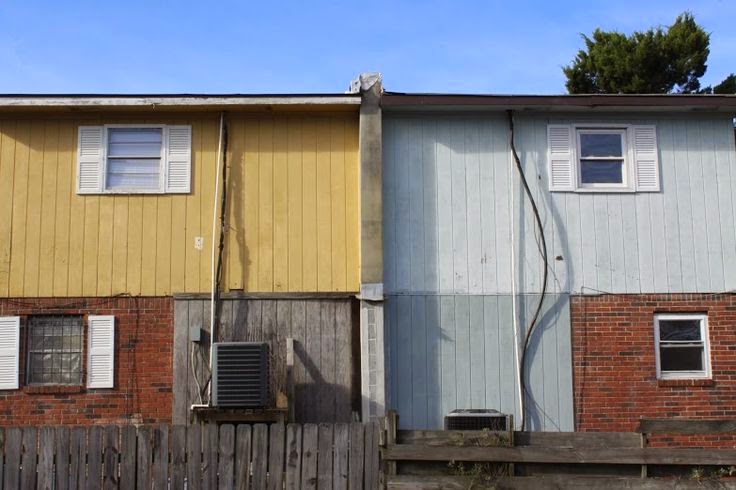
The trash can was overflowing, oily pizza boxes staging their escape. She looked up at the house with its worn yellow paint and under-performing AC unit. Underwhelming as all get out. A rat torpedoed out from under the can.

“Shit!”

She jolted back against the fence as the rat took off.

She wasn’t sure how much longer she could hide her smoking habit by skulking in alleys with rats. Brooklyn was almost three, and she was starting to develop what Jennifer’s brother called “spidey sense.”

“You can’t say shit around her, Jen!” he’d said. “Like, she knows which words are bad. She won’t repeat any nice stuff I teach her!”

“What, all those SAT vocabulary words?” she’d jabbed.

But her brother was right--Brooklyn absorbed everything. Jennifer didn’t need anyone else judging her, especially her daughter.

Her back pocket vibrated. Shelly.

Can you work 4 me tomorrow? Btw Dena’s fuel pump came in.

Jennifer visualized the tally she kept in her head.

Did she owe Shelly a favor? Shelly helped her study for their last test. But then Jennifer had bought Shelly a sub sandwich when she didn’t have cash two weeks ago. But Shelly had lent her a fake ID on Friday…

Jennifer hated her mind’s tendency towards transactions. But she couldn’t stop it. When the tally was complete, Jennifer texted her friend back:

Yeah, I got you.

She ground her cigarette out with the heel of her work boot and went back inside.

“I’ve got to fill in for somebody tomorrow. Can you keep Brooklyn?”

A timer beeped, and Jennifer’s mom bent to pull a casserole from the oven.

“What else would I be doing?”

“Mommy!” Brooklyn shrieked from the living room floor.

“You should go play with her now, at least. You’re gone all the damn time.”

“Mom, seriously? I’m in school literally every day, and I’m lucky Chuck can pay me for the extra time at the shop. I am trying as hard as I can to get out of your house and give Brooklyn a good life.”

“By being a mechanic,” her mom muttered, pouring an envelope of lemonade mix into a plastic pitcher.

“I am not having this fight again, Mom! Jesus.”

“Jesus!” Brooklyn said, swinging a My Little Pony around by its tail.

“Don’t throw that!” Jennifer said, at the same time as her mother spat, “Don’t say that!”

The pink pony flew over Brooklyn’s head in an impressive arc, then collided with a lamp, which rocked a few times before settling flat on its base, its shade askew.

“Brooklyn!” Jennifer scolded, scooping the child up on her hip. Brooklyn, knowing she was in trouble, began to wail.

“I just think you’re better than your current choices, that’s all,” Jennifer’s mother said, raising her voice. “You could have stayed in college. Gotten a real degree. A real job.”

“Do you see this dirt under my fingernails? It doesn’t get much more real than that.”

Jennifer swung Brooklyn around to her other hip and bounded through the front door.

Brooklyn cried louder.

“Will you just be quiet!?”

She set the toddler down on the dried-up grass of her mother’s front yard.

“I’m--hungry!” Brooklyn gulped between wails.

Jennifer threw her head back. She understood why all those people in movies screamed at the sky. Her brain reeled.

Better than her current choices! My current choices, she thought, are just what comes after my past choices! Sometimes you don’t exactly get a choice.

Jennifer had graduated from high school before getting pregnant. She would always give herself credit for that. She’d spent a semester at University of Texas at Austin, living in a dorm and everything. She took pottery and psychology and played intramural flag football. And she hadn’t been irresponsible. Which, she knew, maybe wasn’t the same thing as being responsible.

The rest of the scenario was so predictable it was embarrassing. She started puking over Christmas break. She did the shop-of-shame for a pregnancy test. Her boyfriend got spooked and peaced out. She moved back in with her mom. She dropped out. She craved Doritos and watermelon and maybe still smoked on the sly, even though she knew it was bad for the baby. She went into labor and cried because Brooklyn would never know her father. Her mom pushed her sweaty, pink hair back from her forehead and said, “This baby is going to have more love than it even knows what to do with.”

And she did love Brooklyn. Of course she did. But Brooklyn wasn’t going to make her drop out of the rest of her life.

Her phone rang.

“What?” Jennifer snapped.

“Oh, wow. Is this a bad time? Sorry. It’s Dena?”

Jennifer let go of a breath she didn’t realize she’d been holding.

“Dena! Sorry. No, it’s cool. Hey, the RV part came in.”

“Hell, yes. That’s awesome. When can you install it? Chris wants to make it to Santa Fe by day after tomorrow. If that’s possible, I mean.”

Santa fucking Fe. Dena had no idea how good she had it.

                                                                                                      ***

The Chinook whined for a second when Chris cranked the ignition, then heaved to life. Dena and Jennifer sprung into a spontaneous victory dance, swinging each other around like some sort of western do-si-do.

“You fixed it! It works!” Dena laughed.

“No big,” Jennifer said. “I better get an A in this course, is all I’m saying.”

Chuck, Jennifer’s instructor, just grinned and shook his head, pacing back into the garage.

Inside the RV, Chris was posing for an on-the-road-again Instagram selfie.

“Hey, can I ask you something?” Dena said.

“Shoot,” said Jennifer.

“I don’t mean to be all weird and serious, but like--how did you find this place? How did you know you wanted to be a mechanic? You and Shelly and everybody--you guys are kind of living the dream.”

Jennifer looked at Dena--Dena, who was everything she had set out to become. Educated and untethered and adored.

“I don’t know,” Jennifer said, fumbling in her pocket for her cigarettes. “I think it’s only a dream until it’s yours.”

Written by: Dot Dannenberg
Photograph by: Jennifer Stevens
Tell Satan Be Patient

Posted on: January 1, 2015


Keaton D’Amato once asked me if I’d heard of Robert Johnson. Sure, I replied. Old blues man. That’s right, replied D’Amato. Went to the crossroads, sold his soul to the Devil so he could play the blues. Hmm, I said.

Years later I’m staring down the crossroads. I’ve come to sell my soul to the Devil so I can play my own type of blues, an endeavor that might prove useful thanks to my precarious position on God’s existence. There are however some hiccups in this logic, the old chicken or the egg question of the Godly folk. Can you have the Devil without God?

The blind gypsy man that sent me here said, sure. He said, I don’t know much ‘bout God but me n’ the Devil is real close. He had a cackle laugh and wore a bracelet made of turtle bones. He who’d spent too much time in the Louisiana bayou, too much time with his handmade-dolls whom he called his kiddies, one too many fried gator tongues for breakfast, lunch, and dinner. After I meet the Devil and make the soul-transaction, I plan on writing a short story about the gypsy man -- Wallace was his name.

So like some southern gothic Odysseus signpost, old blind Wallace pointed me west further into the swamp. Out there innit! He pointed and cackled and we both disappeared into the darkness going opposite directions.

As I sludged deeper I thought of my mother. She was dead but once she’d been grand, beautiful like purple clouds spitting lightning during a summer storm, a chill in the air, a breeze on your cheek. She was a believer and a good person, but she died too young. Ain’t nobody say it’d be like this she wheezed, her last words on a bed with bad springs, in a room with yellow water stains on the ceilings and harsh light. Oh well. So it goes.

The surrounding sounds had a life of their own, given my imagination. The wind played tricks with my mind and my senses went spinning in all sorts of misshapen directions, like my inherent fear was dealing with a nasty bout of vertigo. After some time in the dark, as the sky got light and the day’s engine choked to life, I turned a corner and saw three lovelies.

Three, my favorite number. Rolls off the tongue like honey. Better than a pair and stronger than a group. An equal balance with one in the middle, the trio was tied to a whipping post, wearing black scraps that once looked like clothes. Help! they cried, so I went and took my knife, bent low and released them. I gave them water and they were grateful. My name is Mary Lou, said the most beautiful. She had ringlets of blonde hair matted with blood red mud, and in the morning light the swamp was like a church of crimson, a mysterious mist of burgundy that I had not encountered before nor since. The remaining pair were lookers as well with red hair like fire that stood out even from the scarlet swamp. They were named Suzy Q, and Jenny Boo. Respectively.

It’s a fine mornin’ for a rescue, said Suzy Q. We appreciate you kindly. I asked them what had them all tied up and they looked to the ground like little girls, and rubbed their toes in the mud like they was ballet pointing, and finally Jenny Boo - speaking like Nabakov’s Lolita - said, It’s the Devil that done us like this. I told them that was awful unjust, however, I had dealings with the Devil and if they could point me in the right direction I would forever be on bended knee in great appreciation. Mister, asked Suzy, What kinda business you got with that ol’ rascal? I told them of my plan to barter my soul, and they all three shrugged and said in a ghostly chorus, Ain’t no weight in a soul misplaced. I got the shivers right down to my little toe when they pointed me west, but I thanked them kindly and went on my way. I could hear them giggling for miles after that like they had been carried by the wind.

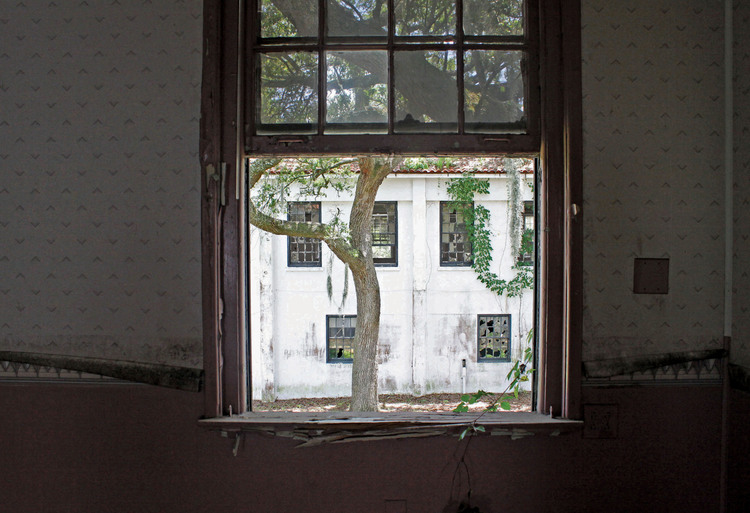
The sun hung up in the sky like a lightbulb, and it musta’ been damn near noon when I came across the building with the peeling paint walls. I came upon a long hallway feeling fine until I heard a noise of rustlin’ at the far end like a creature coming out of the brush, like when me and Daddy went pig hunting, and at that moment the sky went dark and the sun got all eaten up by the hungry sky. It was dark and chilly and that rustlin’ kept getting louder and I was truly afraid.

That darkness seeped into me, and from it came a voice like a thousand crying angels and it said, I’ve been waiting for you, boy! I couldn’t see nothing, but I could feel a presence on the other end of the hall moving slow and sure towards me, creeping and crawling like a rabid dog. There was breathing through a stopped up nose like after Momma used to get the allergies real bad, and a smell most akin to sulphur leaking from the bowels of the world.

I’ve come to make a proposition! I shouted. I’ve got one good soul for a life of fine art! It was then I could see the beast’s eyes floating in the dark. Of what use to me is a good soul? asked the Devil. Well, I replied, I s’pose it’s one less to worry about when the deal goes down. I suppose it is, said the Devil keenly. And what do you want in return for this one good soul? he continued. I want to create great works of art, I said. Works that espouse the human condition. Works that inspire and transcend the cages of the form in which they are binded by. I want to be an artist of great reverence, a genius of Einsteinian proportions. Recognized, is what I want to be.

The devil laughed a shrill laugh and said, I can’t give you that boy. But what about the others that came to the crossroads? I asked. Myths that romanticize - a human condition, answered the Devil. Only so many ways to escape all that drudgery. I nearly began to cry, but the Devil spoke, Neither madness nor lust can get you what you want, though they might have brought you here. Stalwarts of your humanity that they might be, they do you no good in your mission here today. But if you please, the Devil continued, I will tell you the secret of creation.

Awake! he bellowed and fire pierced the darkness and seemed to engulf me. But I felt no heat. I felt no fire. And when I opened my eyes the Devil was gone, the sky was bright and blue making love with the sun, and the crossroads was an empty hallway with peeling paint.

Nothing more, nothing less.

Written by: Logan Theissen
Photograph by: Jennifer Stevens

Creative Commons License This work is licensed under a Creative Commons Attribution-NonCommercial-NoDerivs 3.0 Unported License
1:1000 The Design of this Blog is All rights reserved © Blog Milk Powered by Blogger