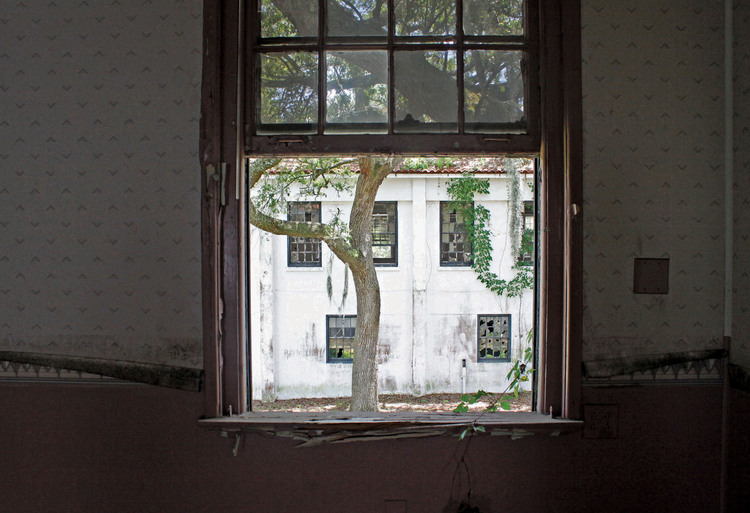
Megan’s Journey Through the Labyrinth

Posted on: December 7, 2016


She’d searched for Ford that day and met Benedikt instead; at the end of the afternoon they shook hands…

—It was nice meeting you—

…but it didn’t end as Megan had hoped, because the following week she met Benedikt again. She’d been on her way to a quiet, empty table at Café Nikotín. She’d held a small stack of post-cards: for Mom and Dad and for a whole gaggle of friends. One significant postcard was going to Chris: she loved him, but didn’t know if she wanted to go on with the relationship. A trip into the cockles of Europe, she’d thought, might have clarified something.

“Hi,” Ford had said smiling from his seat at a buffed aluminum table centered with the pole of a green umbrella. “Care to join us?”

“It is good to see you again,” Benedikt said.

“You’ve met?” Ford asked.

“Last weekend,” Benedikt offered.

“Then you should join us.” Ford smiled. “We’re old friends it seems.”

And later, midway through her white coffee, Ford had turned the course of their halting, polite small-talk. “Have you been to the Labyrinth?” he’d asked. “We were heading there in a bit.”

She’d never been to the old stone-work maze, but it stared up at her from the face of a postcard: it was as ancient as medieval bloodshed, and as dark as this city’s history of alchemists and syphilitic, absinthe-addled poets. Romantic and spooky: it was just the kind of place that might shadow her nightmares for any long stretch of future decades, but she liked Ford’s eyes and the way his skin made her think of buffed pecans, so when he’d asked if she wanted to come along, she’d said yes against every bone-deep desire to avoid that part of the city. But it couldn’t have been such a great risk—could it?—with Ford’s skin color, and Benedikt’s off-kilter jokes and the invitation to drink škóy with him and with Ford. Though she couldn’t fathom the depths of Benedikt’s uncanny glacial gaze, she’d considered the invitation, because it would be a chance to be with Ford, to watch the movement of his hands, and imagine them touching her. If the Labyrinth was in a dicey part of the city, neither of them seemed especially worried about going there.

“You know the story of the Labyrinth?” Ford had asked

“No.”

He’d shrugged. “It’s simple, really. Once you enter the Labyrinth, the only way back out is the way home.”

She’d scoffed the idea of stepping into that maze and stepping back out in Cincinnati.

But nothing was ever as simple as it seemed: reality and symbol were different things in this part of Europe.

The Labyrinth was ancient stone and mortar cemented in patterns that only a mason might have understood. Now, she picked her way—alone—through narrow, switchback corridors of stone-work walls and flagstone footpaths. Last week, Ford had told her it was best to walk through the Labyrinth with bare feet, but she’d kept her shoes on. She cringed through the memory of Benedikt stooping down and unstrapping his sandals. Though lean, there was something stocky in his manner, as if he spent his days at work, strangling bulls with his naked hands. His toes were blunt, rounded, and dusted with scant, bronze hairs. Ford, beside him, had kicked out of his shoes and pulled off his socks and for just an instant, she couldn’t tell them apart.

She was alone, now, following the path they’d taken—together—one weekend ago.

The walls of the Labyrinth were stone and mortar, but the square heart of the warren was heavy with grapevines and earwigs. Here, she saw last Saturday in her mind’s eye: Ford and Benedikt standing together and laughing at some small joke. Though they’d done their best to be nice and to include her, the Labyrinth—as Ford had said—showed her something else. And maybe the Labyrinth remembered her this evening, because it was showing her Benedikt’s gray gaze with shimmers of blue in it.

Benedikts’s eyes, last weekend, had been spooky and unreadable; she couldn’t find the personality at home in them. Now, some unnerving phantom of Benedikt held her attention with a subtle smile tugging the corners of his lips. A breeze fondled his ragamuffin hair and he raked it back with splayed, pale fingers. She flinched, glimpsing Ford at home inside of Benedikt’s eyes, staring out at her. Benedikt smiled and reached forward, touching her face with the warmth of his fingertips.

“Ford’s your boyfriend.” She felt the words spilling before she could bite them back. “And you followed me here to tell me that.”

Saddened understanding flared in Benedikt’s gaze. “I’m not here. I’m at home with Ford. But you’re here looking for something….”

“I’m not—” but she stopped.

“Home isn’t a place,” Benedikt said. “It’s the one right person who’ll miss you when you leave.”

“I don’t even know if I want to stay with Chris.”

Benedikt shrugged and touched her shoulder, softly. “I see how you look at Ford, but you can’t live in his eyes. You have no choice but to return to the one you sent that postcard to. You are not finished back there. An affair with Ford cannot make you happy, but Ford and I can be good memories for you, if you want us to be.”

She closed her eyes.

Benedikt leaned close and planted a kiss on her forehead. “It is nice that you came back to our Labyrinth, but now, you should leave. If you want company before you go, you can come to our apartment; we’re not so drunk yet. You know the way there and we’ll hear you at our buzzer.”

“I don’t want to intrude.”

“You won’t.” Benedikt smiled.

“Okay.” Megan blinked; Benedikt was gone.

As quietly as she came, she turned around and fumbled her way out of the silent, ancient maze.

All the way to Cincinnati, she thought, hesitating before stepping out of the Labyrinth completely. 


Written by: J.C. Howell
Photograph by: Victoria Ostrzenski

A Change of Plans

Posted on: February 11, 2016


Japan is her idea. A way to reconnect. A second honeymoon, even though we never really had a first. Only eighteen when we married, it wasn’t in the budget. Besides, in our situation, we had more pressing matters. A couple of kids having a kid. But then we didn’t. In a way I don’t think we really fell in love until we were comforting each other over the loss.

We didn’t try again for a couple of years. Happy years, the way I remember them. But the next time it happened the sorrow seemed to push us apart instead of bringing us closer together.

She joined the Church after miscarriage number three. She did her best to get me to go with her, but my attendance was spotty, my devotion even more so. It wasn’t the people, they seemed nice enough. I just didn’t find any answers there. Maybe I was asking the wrong questions, but the building felt as hollow and empty as her womb.

I sought solace in a different way. Long hours, weeks spent living out of a suitcase. The punishing grind of sales, rewarded with quarterly bonuses and awards banquets held in smoky barrooms that tend to turn ugly as the liquor flows into the night. My willingness to forfeit a personal life for a professional life does not go unnoticed. The youngest regional director of sales of in company history, I try to placate her, and maybe myself, that it will all be worth it in the end.

And then she proposes Japan.

The trip is organized by a group at her Church. Each year they go somewhere new. Italy. Greece. Israel. And each year her friends return and we listen to their stories and admire their pictures and purchases and she pretends to be so happy for them. They ask us to join them, but we tell them of the plan, our plan, that more hard work now means an earlier and better retirement later. Free and unencumbered, young enough to still enjoy it, we will have it all. But it eats at her. I know it does. So I relent.

We spend our first night in Tokyo. To me, the city is beautiful, a futuristic forest of metal and glass and neon. I understand its tempo, its pulse, the hurried existence of its citizens. I love how the city straddles the edge, teetering between ragged chaos and an ordered, almost military-like structure. I feel safe in its frenzied cocoon.

She does not.

She wants tradition, history. She wants cherry blossoms and wooden temples, tea ceremonies and tranquil gardens. She wants to feel the past. She doesn’t understand that the past is littered with pain and death.

Or maybe she understands it better than me.

The sun is barely up when we drive south and leave Tokyo behind. The trees glisten in the early morning light. When we arrive in Kamakura, the air is already hot and thick. Swarms of mosquitos buzz about, as do the crowds of people at the great Shinto shrine of Tsurugaoka Hachimangu. I find a place to sit in the shade as the rest of our group scales the stairs to the Senior Shrine. I long for the central air conditioning of our room. When they descend, I look at our itinerary. One more stop. The Daibutsu at Kotoku-in.

We round the corner and I see him. He sits nestled in the hills. Humble, yet profound. Open and ready for whatever the universe brings. He is not afraid. He is not happy, or sad, or angry. He just is. And in his shadow, just for a moment, I too, catch of glimmer of what lies beyond the mysteries. It changes everything.

The truth, in all of its simplicity, is laid bare before me. Everything I know is an illusion, the life I have created is nothing but a series of calculated distractions. The fancy clothes, the newest gadgets, the Best in Sales plaques that dot my walls, all are mere band-aids, failed attempts to cover the gaping wounds in my soul. The overtime I put in at work is not a sacrifice to get ahead, rather it is me trying to avoid the unavoidable. I know that now.

I cannot run from suffering, I cannot escape it. It is inevitable.

I see her standing a few feet away, studying the great statue with reverence. It hits me that someday I will lose her, and she will lose me. Instead of terrifying me, I realize that I am okay with this, that I have to be okay with this. That if you are not willing to let your heart be broken, you cannot love. And a life without love is worse than death.

I walk up behind her and put my arms around her. She’s startled by my sudden affection.

“Are you alright?” she asks.

I smile at her.

“Yes,” I say. I pull her closer to me and kiss her. I kiss her like I used to when we were eighteen. “As a matter of fact, I haven’t been this good, in a long, long time.”

“Wow,” she says, and she means it.

Together we stare up at the giant bronze Buddha. I feel an electricity between us that has been long absent.

“It’s amazing, isn’t it?” she says. “It’s hard to believe that it’s been here for over seven hundred and fifty years.”

I look at his face, calm and serene. I wonder how many others have stood in just this spot, how many others he has shown the truth to, how many others he has saved.

“It’s… It’s magical. I can’t really describe it.”

The tour guide announces our departure. Our group starts to shuffle away, back to the bus, back to the city that suddenly holds no appeal. We turn to go.

“Thank you,” I say, mostly to her, but also to him.

She looks at me.

“For what?”

“For everything. For not giving up on me, on us. For bringing me here.”

She squeezes my arm.

“You’re welcome.”


Written by: Ben Cook
Photograph by: Rob Gregory

1:1 - Sarah Scott

Posted on: January 28, 2016

Interviewed by Mark Killian
Welcome back to another edition of 1:1. Mark Killian here, standing next to a phone attached to a cement wall somewhere between America and Canada. I should be stirring maple syrup into piping hot tea and chatting with Sarah Scott at the moment, but instead, this interview will be coming to you live from a Canadian holding cell.

While I try to find her number, you take a gander some of my favorite Sarah Scott stories including Anderson Ridge, Someone Once Loved, Junum the Young, and her most recent piece, The Treaty of Niagara, 2015.


--Ringing--

SARAH SCOTT: Hello?

1:1000: Hi Sarah! It’s me, Mark. Thanks for answering.

SARAH SCOTT: Is everything okay? I waited at the coffee shop for two hours, but you never showed.

1:1000: Funny story, I’m in a holding cell on the US/Canada border, but don’t be alarmed. The Mounties have been characteristically polite, and best part is, there will now be a recording of our interview!

SS: What!?

1:1000: Oh it’s nothing. Just a little misunderstanding. Long story short, if your passport is expired, you shouldn’t borrow your friend’s and try to sneak into Canada–especially if said friend has a history drug-related offenses.

SS: Shouldn’t you call a lawyer or something?

1:1000: Lawyer, schmawywer! I promised you a 1:1 interview and that’s exactly what I’m going to do. So, without further adieu, what is it that you do for a living? Please say defense attorney.

SS: I’m afraid not. I work as a Senior Advisor–Major Project for a Canadian university which is basically a whole bunch of words that when strung together nobody ever understands at all. Basically I work with health researchers who are applying for large institutionally supported funding opportunities. I review and edit some sections of these grants and some sections I write.

1:1000: Have you ever helped someone raise their bail funding?

SS: I can’t say that I have.

1:1000: Shucks. Well, I'm not going to lie, that's not the easiest job description to understand, but it sounds important, which is important. Can you speak to some of the research you've helped push forward? If so, are there any projects in particular you felt really attached to? If not, I'll leave it at that.

SS: There is always such interesting stuff going on that sometimes the grants I'm involved with are more mind blowing incredible than any science fiction I have ever read, but the research isn't mine and not mine to talk about. What I love about my job is that it involves constant learning, constant exposure to new things. I could spend four months working on grants dealing with juvenile diabetes and then I spend the next four months discovering cryo-electron microscopy. To be playing a part in helping these amazing people secure funds for their research, to watch them go on and work towards changing the world–it's very rewarding, even if my contribution is microscopically small. I'm very lucky to have a job I love so much.

1:1000: Okay, I officially have career envy. That sounds INCREDIBLE, and meaningful. How often does the subject matter of these grants work their way into your stories?

SS: All the time. Never any specifics or anything, but the amazing science I am exposed to at work never stops inspiring me.

1:1000: Is that where your story Arcadia came from? This thirst for exploration?

SS: Yes probably in part. I wrote that when the Internet was buzzing with talk of KIC 8462852, the star they said was surrounded by alien megastructures. I guess I had space on the brain.

1:1000: That story piqued my imagination as well, but I didn't have the discipline to write something down (whomp whomp). So how did you find yourself in this career? Assuming I didn't sell my soul for the marketing industry, what would I need to do to find myself in your position?

SS: It wasn't a career I went looking for really. I think that is my style, I just get swept along and fall into whatever is waiting for me. I'm not a planner. I studied Anthropology and English literature. When I graduated I had no idea what I wanted to do, but I knew I wanted something different before venturing back into academia. I wanted to travel and explore the world and explore myself, but I had a little sister that I couldn't bring myself to be far from. I was 19 years old when she was born and I loved her so damn much, so I couldn't travel too far while she was young. I got a job at the university and did well so it led to another job, and another one after that, and so on and so forth until I ended up in my current position. At one point I contemplated leaving and moving to Italy, but I met my husband and then suddenly here I am...married, two kids, mortgage. My whole life is a happy accident, it is actually how I started writing fiction too.

1:1000: Emphasis on the happy! You've traveled, you've explored career options, and you ended up in a job you love, surrounded by loved ones. Makes me question life choices–present circumstances included. Speaking of family, I LOVE your stories on the matter. Anderson Ridge is a real standout for me. The way you handled the son's overactive imagination and the family hierarchy was just lovely. And your latest, Treaty of Niagara, is just downright hilarious! When you take a child's perspective in a story, is that you thinking back on your childhood, or more you trying to put yourself into your children's shoes? Additionally, how do other family members inspire your stories?

SS: It's interesting to me that you mention Anderson Ridge first. That story is way more connected to family, specifically my family, than is probably obvious. The story was inspired by my Grandmother and her brother. She grew up quite wealthy in North Vancouver. Her family had a logging business and she spent part of the year living a life of decadence in the city and part of the year in the bush. She was the lady who could teach you perfect table manners for having tea with the queen and how to bait a hook to catch lake trout all in the same breath. She was amazing. When she died, her brother told a story about watching his mother and sister in a log cabin in the bush. His story was beautiful and it stuck with me. I am a lot like my grandmother in many ways, and many of my fondest memories were with her. That story is for her.

1:1000: Your grandmother sounds film worthy, and your story does your ancestors proud. Is Treaty of Niagara equally biographical?

SS: She was the best grandmother I could have asked for and an amazing woman. And no, Treaty of Niagara couldn't be farther from my family. I wrote it while at Great Wolf Lodge with my kids. None of us like attention very much. Me, my husband, the kids, we are all shy, but you see people filming themselves and taking a bajillion selfies and the whole thing is so foreign to me. The quest for fame seems like such a strange thing, but we have these platforms like YouTube where anybody can have some shred of celebrity. The family in that story was nothing like my own, but I wanted to try to put myself in the minds of those people. I think maybe that is what I am always doing when I write, I'm trying to understand some perspective other than my own. It's the unsatisfied anthropologist in me trying to get out.

1:1000: Well, I’m relieved to hear your children are nothing like the little monster in Treaty. I too am a little baffled by the families who care so much about their view count and social impressions. I also think it's funny that you made the children in Treaty more social media savvy than your own, but you left the parent kind of disinterested/burdened by it. I often wonder who is to blame in those situations, the children or the parents? Who is really asking for the recordings?

SS: Yeah that's a good question. I think I chose to present the parent child relationship the way I did because the other version of that story has been told. I guess I tried to imagine what I would do if one of my kids wanted to do things like that. Your kids have their own personalities and expose you to things you don't always have any interest in yourself, but you do it for them.

1:1000: Were you concerned at all that readers would think you were writing about your own family?

SS: I am ALWAYS concerned about that. I guess it's a hazard of writing. I worry that people will think the opinions of my characters are my own. I also worry that my family may think things I have written are about them. I think most writers borrow from real life at times. I have incorporated scenes that were inspired by an interaction with people in my real life into a larger story because I thought it fit, but that doesn't mean the story has anything to do with that scene from real life. I gave one of my characters my best friend’s name, because she has this crazy middle name, but the character had nothing else in common with my friend.

1:1000: Well, I think your anthropological approach to writing is brilliant. I try to do the same, but I sometimes fear the characters I create in the process are shaped by stereotypes. How do you keep that in check?

SS: I try to be empathetic. I think empathy is the thing which is most missing from the world. It is the role of the anthropologist to try and leave your bias at the door–to try to understand someone else's motivations from their perspective, and I try very hard to do that. I imagine that there are times when I do this better than others. We are only ever capable of truly seeing through our own eyes, so I try to be aware of what my perspective brings to an assessment of people and situations and I think the challenge of understanding others is a good challenge to engage in, not just for the sake of art, but for the sake of humanity.

1:1000: Agreed. Empathy seems to be in dwindling supplies these days, especially amongst BORDER AGENTS. Speaking of nations, are you a Canadian national?

SS: Born and raised!

1:1000: How does Canada influence your writing? Writers are often identified by the part of the world where they write, so what makes a "Canadian" writer?

SS: I grew up in Toronto and spent all my childhood summers in Vancouver with the aforementioned Grannie. I now live in Hamilton. I think all these places and lots of other amazing parts of Canada have influenced my writing. I want to write stories that capture the beauty of these places and the people who live in them. I also read a ton of Canadian authors, so that influences my writing as well. I started reading Margaret Atwood at 12 and have gobbled up every drop of her work since.

1:1000: Canadians always seem to be so happy with their motherland. Lucky! Assuming this little legal matter doesn’t get me permanently barred me from your wonderful country, what’s the one city I HAVE to visit?

SS: One city in all of Canada is hard to pick...It would depend what you are looking for, but since I miss the place so much right now, I will say Vancouver. Spend the day on white rock beach for me.

1:1000: That sounds much more pleasant than where I’ve spent this day. Anyway, of all the countries you've traveled to, which have inspired you the most?

SS: I have traveled most frequently to Italy since I have family in Tuscany. The beauty of Tuscany is breathtaking. It makes you want to write–to find the words that are strong enough to take a piece of that beauty home with you. But, I think visiting Paris has influenced my writing more than any other place I have travelled to. It was the first city in Europe I visited. I was 11 my first time there and I didn't have any words that were big enough to capture the awe I felt. I think that trip did so much to shape me in ways I may not even fully realize.

1:1000: Parlez vous francais?

SS: Oui. bien sure je parle Francais.

1:1000: Once again, I’m stricken with life envy. So, Carmen Sandiego, what's a the top of your travel bucket list?

SS: The top of my bucket list would definitely be traveling from one end of Canada to the other, from Victoria, British Columbia all the way out to St. John's Newfoundland I would take the train wherever possible.

1:1000: Enough with the patriotism already!

SS: I would also love to see Petra in Jordan.

1:1000: Thank you! Have you been on any America escapades?

SS: A few trips down to Florida and into Oregon but that's about it.

1:1000: Well that’s a few more ventures than I’ve taken to your turf, but enough about travel. Let’s talk about your audience. Every writer writes with someone or some group of people in mind. Who are the readers that fuel you? Your husband? Your sister? Your best friend? Do you ever share your stories with your children?

SS: I never really write for the kids. I make up bedtime stories for them, but I don't write them down. I started writing to entertain myself. I had a three-week-old baby and a broken knee and I would have gone stir crazy without something to do, so I started writing. Before finding 1:1000, pretty much all of the writing I had done was for HitRECord, an online community that I accidentally became a part of, and that inspired me to start writing. Recently though, I have taken my writing to new places and that causes me to consider audience more than I had in the past. I suppose I don't really know who my audience is, and maybe that is missing from my writing? But maybe I like it that way? Maybe I want whoever stumbles across a story of mine and reads it to take away whatever they choose? Maybe I don't want to orchestrate their response too much and just hope that they have one?

1:1000: Well, and I mean this in the best way possible, thank goodness you broker your knee, and I hope the only thing that lingers from that injury is your passion for writing.

SS: Let’s just say I won't be running any time soon, but I am glad I discovered writing. I can't imagine my life without it, and it's only been 2 years.

1:1000: You could've fooled us.

SS: Ahh shucks...thanks.

1:1000: Any final things you'd like the world to know about you or your writing?

SS: Nope. Just thanks for reading.

1:1000: Lovely. Well in that case, I'll let you get back to your family and whatever you are currently writing at the moment.

SS: Good timing...I now have a two-year-old and a five-year-old climbing on my head.

1:1000: Now I kind of wish you were more into social media so I could see this adorable scene.

SS: It's half adorable and half torture...they have all these sharp angles...tiny little elbows and knees...

1:1000: Speaking of torture, there’s a man in a Mountie hat heading my way, and it’s not Pharrell Williams. Wish me luck!

--Click--

The Grey Forest

Posted on: December 15, 2015


It’s late fall, maybe even winter by now. I don’t know, I can’t even tell you the date. I only know the seasons by my surroundings. Most of the leaves have fallen off the trees, making it feel even more cold and barren than it already is.

Fortunately, the area is dry, which makes gathering firewood easier. In a few weeks, the cold will set in, and I’ll need all the warmth I can get. This is probably my last chance to hunt for food, too. Maybe I can get lucky and find a deer, or at least something larger than a squirrel. I could use the meat.

Let me give you the grand tour of my little forest camp. Behind me is the makeshift shelter I built out of an oak tree that fell not too far from here. I used the thinner, flexible branches to tie everything together. The roof is made from mud and leaves. Not the prettiest, but it keeps me pretty dry, except in the harshest of storms.

On the other side of camp is my fire ring. Fire is both the life giver and the protector of my area. Larger predators, mostly wolves, shy away from my camp because I always keep a roaring fire at night. I don’t know whether it’s the heat or the light that keeps them at bay, and frankly, I don’t care.

And finally, we have my food locker. Again, made of wood, I store my smoked meat in it. I know the smell of food will bring in more animals than I care to deal with, so I do my best to cover the smell with ground up plants and such. Lichens do a fine job, as do pine branches. In the weeks, months, however long I’ve been out here, it seems to work – sort of.

This is a good spot, as we’re close to the river. Nothing says survival quite like fresh water and a good supply of fish. If you don’t like fish, you’ll get used to it. Just avoid eating the pike, they taste awful. As for the rest, just make sure you give them a thorough cooking over the fire; it gets the fish taste out.

You look like you have some questions again. Hold off on them for the time being and let me tell you a little about me. Years ago, an earthquake devastated my home town, shaking everything to the ground. I’d just gotten out of college--I’m an engineer--and had found my dream job when everything was taken away.

No shame in leaving a place devastated by disaster, right? Well, I thought so too, that is until I received word that my brother died. The fool didn’t know what he was doing and ended up dying when a steel beam fell on him. He was helping in the rebuild, you see. You might call it survivor’s guilt, or whatever fancy term they teach in Psych 101, but I know it should’ve been me. He didn’t have the experience, the training that I had.

Shortly after, I left America and went overseas for a bit, living from hostel to hostel, like a drifter. My favorite place was Ireland. The people there were full of life and understanding. Some saw the pain, deep down again, yet never try to coax more out of me than I was willing.

Another good stop was New Zealand. I stowed away on a cargo ship to get there. The ride was terrible, but the island itself was amazing. The punchline of that story was I intended to go to Australia and mixed up the ships. Either way, it was well worth it. Just don’t call the locals Kiwis. It turns out they really hate it.

My last stop was to return home, to face up to everything I was running from. When I got there, I saw the community had been rebuilt. I had an overwhelming sense of pride, but a great deal more shame. I should’ve stayed and helped, not run away. If I had, my brother might still be alive.

All of that, it’s in the past. I’m doing my best out here, trying to make peace with what I’ve done and how I lived my life. Can’t say it was the best way to live, but at the time I always made the choices I felt were right. I’m sure, since you’re here with me, you’ve been faced with a lot of those times too.

That brings us back to where we are today. Everyone who ends up here did so because they couldn’t accept that guilt they had. Think of this forest as a crossing, the roaring river below my camp the final hurdle if you will. No one knows for sure when the time will come to take the plunge and swim across, but I have it on good authority you’ll know. As me for, I’m not ready yet, far from it.

Tell you what, it’s getting late and there’s not enough food for both of us here. If you’d be so kind as to grab that rifle over there, I’ll teach you how to survive in this place, I call it The Grey Forest.

You want to know my name? My name’s not important, not anymore, but I’ll be your guide. Stick close to me and you’ll be okay. And one day, in the future, maybe you’ll be ready to take a swim to the other side.

What’s on the other side? I couldn’t rightfully tell you, but I’m sure it’s a place better than here. Now, enough questions. Night’s coming, and we have a lot to do. Let’s go.


Written by: Jeremy Croston
Photograph by: Garrett Carroll

1:1 - Jennifer Stevens

Posted on: May 28, 2015

Interviewed by Dot Dannenberg
Jennifer Stevens rocks. 

This week, 1:1000 chats with the photographer behind "The Jam Times", "Living the Dream", and "Silent Treatment" about art, skulking around abandoned buildings, and her work as a community organizer with the nonprofit Girls Rock Charleston.

1:1000: When did you first get into photography?

JENNIFER STEVENS: I’ve been taking photographs since I was a kid. My parents were always proponents for traveling, and we made sure to document EVERY trip we took. I remember cranking up my disposable camera, snapping shots every chance I had--at least, until I ran out of exposures. I still enjoy shooting with disposable cameras from time to time. I’d say that I started taking photography more seriously once I was finished with college. My undergraduate degree is in Visual Communication, and the program combined photojournalism with graphic design. I wouldn’t say that I felt prepared to make a living off of photography once I graduated. It’s a passion of mine, so I’ve always found ways to incorporate it in my life. Even now, I work full-time in an unrelated field but continue taking photographs, because it’s a form of creative expression that I strongly relate to.

1:1000: I could not be trusted with those disposable cameras as a kid--I’d end up with a roll of 24 photos of my thumb. Disposable cameras seem like a lot of work now, though. What are your thoughts on the Instagram age we live in, where every 16-year-old with an iPhone is calling themselves a photographer?

JS: There’s a quote that says the best camera is the one you have with you. I have mixed feelings about this particular question. Generally, I think it’s really great that more and more people are able to document their lives and experiences. I mean, I love being able to see what my friends are seeing/experiencing all over the world. What makes one person’s image on Instagram any less valuable than a photograph hanging up in a museum?

1:1000: That quote resonates with me so much. I know tons of people who have fancy DSLRs that never leave the camera bag. What's your favorite photo you've taken so far?

JS: My current favorite photograph is one I took inside an abandoned Navy building in 2013--it’s titled Abandoned I. The former Navy shipyard has now become a mixed-use area for the city of North Charleston called The Navy Yard at Noisette. There are still remnants of the old shipyard, including a handful of abandoned military facilities. I have a favorite building there, and I have gone back a couple of times to document the interior and exterior of the facility.

Abandoned I
1:1000: What do you think draws you to these subjects that have such an unconventional beauty--abandoned buildings, chipped paint, rust?

JS: I’ve always been drawn to things that display unconventional beauty. I mean, beauty is so subjective anyway. Abandoned, dilapidated, and sometimes forgotten spaces appeal to me in a way that more modern, well-kept, and well-known spaces don’t. It’s fascinating to think about the story behind these spaces, these things - how did they get to be in the condition they’re in? Who occupied the space? These are questions I often ask myself when documenting buildings.

1:1000: And that, I think, is where the fun really starts for the writers who work from your photos.

JS: I definitely see my work relating to issues like gentrification and also sustainability. Some of my work was recently featured in Synergies--a regional sustainability publication put out by the College of Charleston Office of Sustainability.

1:1000: Who are your favorite photographers right now?

JS: Two of my favorite photographers are Kate Wichlinski and Chloe Gilstrap. Kate is a dear friend of mine whom I met in Charleston a few years ago. She has since moved to New York...When you view her work, you really feel a connection to Kate and her subjects (she also makes these wonderful self-portraits). Chloe is another photographer that I really admire. I also met her in Charleston a few years ago. Similar to Kate, Chloe has since moved away from Charleston (she’s living in Seattle now)...She’s extremely talented and uses various printing techniques.

1:1000: What's the process been like watching writers interpret your photos for 1:1000? It’s jarring for me, even now, learning that the photo that served as a setting for Morgan Ira James’s “The Jam Times” was actually a military facility.

JS: I think it’s quite fascinating, really. It’s interesting to see how my work is being interpreted. I try to put myself in the shoes of the writer and realize that I would probably interpret the photographs in a completely different way. But that’s what makes it truly interesting--how we each have our own interpretation of things. It’s also flattering to have someone create a story based on a certain emotion or emotions that were provoked when viewing one of my photographs. I appreciate being featured!

1:1000: What else should we know about Jen Stevens?

JS: Besides travel and photography, I’m really passionate about volunteering and non-profit work. I’m an organizer with a grassroots, social justice organization called Girls Rock Charleston. Our mission is to empower girls and transgender youth through music education, DIY media, and creative collaboration. We offer a one-week day camp for girls and transgender youth ages 9 to 17. At camp, participants take instrument instruction in drums, guitar, keys, or bass, form bands, and write and rehearse original songs that are played live at an end-of-camp showcase event. In addition to music education, the campers attend workshops that range from topics such as art and resistance and DIY media, to DJing and self-defense. While our programs involve music, we focus less on instruction and more on music as a means for personal and social change.

1:1000: That sounds awesome. What kind of change do you see in the kids?

JS: We have campers who show up on day one of camp week with little or no experience playing music. We help provide the tools and space to enable them--it's really remarkable to see how much confidence they gain throughout the week. They end up doing things they didn't know were possible--especially when they rock out with their bands on showcase day. Our campers are so great, and I feel so inspired by them to continue doing this work. I think it's much needed in the Charleston community.

1:1000: What mantras are you living by lately?

JS: Excellent question! I have a few mantras that I am living by lately:
Travel as much as possible. Some of the most enjoyable experiences in my life have been because of travel - the people I’ve met, the things I have seen, the activities I have been able to experience.

Only do what only you can do. This is especially true for me since I tend to say “yes” to most things.

Be open to change.
We are all unique and view/approach situations in a different way. I feel
like it’s best to be open to different viewpoints, open to new experiences, and open to changing our own perspective on things.

1:1 - Ben Cook

Posted on: August 21, 2014

interviewed by Mark Killian
Over the next few weeks, 1:1000 will take you behind the scenes with our core writing and editorial team. We'll show you more about what makes these writers tick (or maybe twitch).

This week we learn a little more about a relative newcomer with a newborn, Ben Cook. Ben is a veteran of the airline industry who was tired of keeping his writing aspirations grounded, so he joined our little site to let his prose take flight. Thank goodness he did! Otherwise, we’d never have wonderful stories like “Tending to What Matters,” “Arbor Day,” “Some Dreams,” and his latest, “Like There’s No Tomorrow.”

Mark Killian sat down with Ben at their individual computing machines, thousands of miles apart from each other, to interview him via G-chat. Although Mark's never met this man in person, they soon found a kinship through notes on their writing styles and movie preferences.


1:1000: Benjamin. How art thou?

BEN COOK: Tired. Very tired. Our newborn, Bryson, didn't feel much like sleeping last night, which means no one felt much like sleeping.

1:1000: Oye. I have heard of this unfavorable aspect of parenting. On a good night, how much sleep do you get with a newborn? Same question for a bad night.

BC: On a good night he will sleep for about six hours in between feedings (which I am not biologically capable of, but you end up waking up anyway). On a bad night he is up every two or so, crying. I probably average about five hours a night, my amazing wife gets by on even less.

1:1000: That's reassuring. That's about what I currently get due to my own psychosis/insomnia.

BC: Ha! The good thing about children is in a way they cure insomnia, you become so exhausted that you go directly to sleep when you do get a chance to lie down.

1:1000: That's also what I've heard. I have seen many a picture on The Facebook of a passed-out parent with a child sleeping on top of them.

BC: Yep, those are the best naps!

1:1000: And photo opps. How many kids do you have again?

BC: Two. Liam will be five in two months, and Bryson is one month.

1:1000: Does the thought that they may find your writings one day ever cross your mind? And if so, does it affect the things you say?

BC: Yes it does. I think that's one reason that I can be somewhat reserved in my writing.

1:1000: Speaking of writing, what say we launch into this interview? (Although, there is a chance those previous questions/answers will weasel their way into the final draft.)

BC: Fire away.

1:1000: Let's start things off the standard way and see if we can't make it a little weird down the road. First, when did you know you wanted to become a writer?

BC: Strangely enough, it was a movie that first inspired me to write. I was always a voracious reader growing up (thanks Mom and Pop for making us read everyday), but I never gave writing much of a thought until my senior year of high school when I saw Clerks. The fact that a dude could write and direct his own movie was incredible to me. Around the same time I got my first job in a bookstore and read Nick Hornby’s High Fidelity. Between those two, writing became something that seemed accessible to me for the first time. I started writing but never really showed anyone.

1:1000: That is AWESOME! I too consider myself a movie-inspired writer, and High Fidelity is such a great book/movie! Probably one of the only times I feel the movie is better than the book. Any who, what was the first thing you wrote after watching Clerks. Was it a story or a movie? Also, why did you decide not to show it to anyone?

BC: I tried my hand at screenplays, but gave up fairly quickly. I didn't know any of the mechanics of it, and back in those days ('95 or so) we didn't have nearly the resources there are now. After that I switched to short stories. I guess I never showed anybody, because I didn't have much confidence in myself or my writing, which is sometimes still a problem for me.

1:1000: Ugh! Confidence. It is our greatest strength and/or weakness. So how did you work up the courage to put your work in front of 1:1000's ZILLION (joking, of course) readers?

BC: One night I was reading bedtime stories to my four year old and he asked if he could be an astronaut when he grew up. I told him that he could be anything he wanted to be. Later that night when I went to bed I felt like a hypocrite. Here I was telling my son he can be whatever he wants to be, when I'm not doing what I want to do with my life. I started writing again a couple of days after that.

1:1000: That is freaking BEAUTIFUL! I imagine the "Top 5 Jobs" list from High Fidelity really resonates with you. I love that scene when he realizes owning a record store is actually above architect and he IS doing one of his dream jobs.

BC: Ha! Owning a record store would actually be in my top five too.

1:1000: Then does music have an impact on your writing?

BC: Music has a huge impact on my writing. Definitely more than movies nowadays. Being a parent of little kids, you don't have much time for anything other than family fare, and there is only so much inspiration you can draw from Thomas the Tank Engine. I still try to read, but again I don't have much time to myself. But I have music on all of the time, when I driving, when I am writing, and even most of the time at home our TV is off and there is either music or NPR playing. When I am writing, I will generally stick to a certain genre for each piece that I write.

1:1000: Who are some of your go-to artists when seeking inspiration and how do they affect your writing?

BC: I have found that in life, and writing, you can never go wrong with Pink Floyd or Willie Nelson. Aside from them, I guess I tend to use the setting of the story to guide what music I listen to as I write. For example, when I was writing "Arbor Day" I played a lot of Bow Thayer, who is a Vermont musician, and Janis Joplin, because growing up whenever we drove across Nebraska my mom always played Janis. And sometimes the music inspires a change of direction. For "Like There's no Tomorrow" I was listening to an Icelandic band called Solstafir. Their music literally transformed what started as a tale about unrequited love into an apocalyptic love story.

1:1000: How important is setting to your writing, both in the story and where you physically are when composing the story?

BC: I do most of my writing at work, on my downtime, honestly, so for composition it doesn’t matter much, but setting is very important in my writing. I try to make the environment almost its own character, or at least have it drive the story in some way. I think it comes from moving around a lot, and from travelling. I love going to different places and seeing how they can transform my state of being.

1:1000: Is the airline industry the reason why you've traveled a bunch, or have you always hopped around the world?

BC: I wasn't much of a traveler before I started working for an airline, but once you have access to free flights, you tend to take advantage of that. It was especially true when I was younger. If I had nothing better to do, I would just hop on plane and go check out someplace I had never been. But having that freedom, combined with the fact that I was living in Las Vegas and in my early twenties, pretty much doomed my college career.

1:1000: Ha! I can imagine. What were you studying in college?

BC: I was a History major up until I dropped out of UNLV. I went back in 2005 and took a couple of creative writing classes. In 2006 I moved back to Colorado, where I am from originally, and I planned on transferring to a small liberal arts that has a great English program, but I couldn't afford it. That was last time I did much writing.

1:1000: Which had a greater impact on your writing, the classes you took or Clerks, books, and other real-world writing samples?

BC: Honestly I would have to say, even though I don’t watch them much anymore, movies taught me a lot. Kevin Smith, Richard Linklater, and Quentin Tarantino taught me dialogue. The Coen Brother’s movies taught me how much the setting can propel a story. I still take a lot of inspiration from books when I can, too. I reread To Kill a Mockingbird at least once a year, because to me, it’s perfect. I keep hoping that some of Harper Lee’s genius will rub off on me. Writing classes were great for peer-to-peer feedback, but I think I learned more from reading Stephen King's On Writing than I did from any professor.

1:1000: That's what I was hoping to hear. I have never taken a formal writing class myself, and have always felt it limited my ability to become a real writer. I'm starting to think that's a farce.

BC: I think it probably depends on where you go. The UNLV English department wasn't great. If I would have gone to Naropa (the little school in Colorado), who knows, I could have had a teacher that changed my world.

1:1000: Do you plan on sticking with short stories or will you attempt to tackle a novel at some point? Or, will you try a screenplay again?

BC: Now that I am getting back into the swing of things, I would love to try and write a novel, or at least something longer than a thousand words. A screenplay would be fun, but since I don't have a whole lot of time for writing, I am going to stick to what is working for now.

1:1000: Well, we fully support and anxiously await whatever it is you do next, as long as it doesn’t result in you leaving 1:1000.

Clocks

Posted on: September 3, 2013


Walt was used to his mother’s itinerant habits. For the greater part of his childhood, he accompanied her as an additional bit of luggage. She was a devoted traveler – her sordid past, her illiteracy, and her general lack of an education were no barrier. She worked only enough to finance her next excursion. Each journey was more ambitious than the last, which made it more and more difficult for Walt to be a part of them. By the time his mother decided that she wanted to make a pilgrimage to a Buddhist temple in Tibet, he had long ceased to be her traveling companion.

But she always sent postcards, at least once a month, with messages scrawled in the shaky handwriting of someone who had learned to write late in life.

I met Walt almost five years ago now and we became fast friends. I was a young professor, eager to make a positive impression on the faculty. I spent my days in the university library, hoping to pad my academic credentials with research publications. Walt worked in the library re-shelving books, but his menial job was a poor reflection of his intelligence. He was brilliant and became the unofficial co-author of several of my articles. He was never afforded a formal education, but his mother always made sure there was a small library of books for him to read wherever they went. In India, he read translated buddhavacana, Siddhartha, and Rushdie. In Central America, he read Neruda, Garcia Marquez, and Cortazar. An education, she told him, was the key to a life she never had but always wanted. Walt was never sure what kind of life she meant by that.

Sometime in late August, Walt came to me at my usual carrel and slid a postcard towards me. “Algiers” was transposed in bright yellow text across an image of a coastal city. On the back, it read: “This is my view. Isn’t it beautiful? Egypt next?

“I have to find her.” Walt whispered.

“What do you mean?” I whispered back.

“My mother sent that six months ago. She never goes more than a few weeks without sending me a postcard. Something’s happened. I need to make sure she’s okay. I’m flying out tomorrow.”

“You’re going to try and find her? You can’t go over there now. It’s a mess.” I said in shock, still whispering. “Did she make it to Egypt? Where will you even start?”

“I’m flying into San Javier. Hopefully, I can pay my way onto a fishing vessel to Algiers from there. I’m going to start at the last place I know she was for sure.” He tapped his finger loudly on the postcard.

“Listen Walt, your mother is a seasoned globetrotter. I’m sure she’s been in trouble before, but she always finds her way home. You don’t even know that she’s in any trouble at all.”

“You don’t understand. Sure, she’s well-traveled, very well-traveled. But she's a dandelion puff. Her wanderlust is like a wind that carries her to these faraway places. At the end of the day it's my job to gather up all the little pieces to try and make her whole again, but it’s impossible. She's left part of herself in every one of the cities and towns she finds herself in. The irony is that she thinks of her journeys as a means to self-realization, to find herself. Yet, she loses more and more of herself each time she comes home. And she knows that. She knows that I know that, and she sends the postcards as a reassurance for my sake, as a sign that she hasn’t completely fallen apart.”

Walt was intent. All I could do was ask him to keep in touch, to let me know he was okay. Almost a full month later, I received a letter from him. He had arrived in Algiers safely and managed to find the small residential building his mother had stayed in.

“In spite of everything that’s happened in North Africa,” he wrote, “my mother was right. It’s beautiful here. The city is enchanting. The people are angry, but optimistic. And life goes on. My mother’s living quarters are Spartan, little more than a bed. The wallpaper is curling from the walls and the hardwood floor is rotting. I woke this morning to a breeze that brought in with it the acrid smell of the Bay, but it was refreshing anyway given the otherwise stagnant air of the room. As I lay in bed, listening to the sounds of routine as the fishermen prepped their boats by the marina, I realized that I could be content settling here. I also realized that that was a sentiment my mother never had the benefit of feeling herself. The landlord said my mother left several months ago. I’m not sure how I will find out where she’s gone.”

I wrote back, glibly sharing the banalities of my days and asking when he would return.

“When I find her,” he replied. I didn’t want to explore the possibility that that may never come to pass.

I didn’t hear from Walt for several months after that. Near the end of the term, I received a postcard from him. The picture was of the Great Pyramids and was sent in an envelope with some photographs he had taken. There was one of young children playing soccer in a sandlot, several candid portraits of Egyptian men and women, and one of him in front of a vibrant marketplace. He was smiling.

There was a short message on the back of the postcard. “She made it to Egypt, but left before the riots. I’m told she may have made her way back east, through Algeria. Tunisia next?”

That was the last I heard from Walt. In the years that have since passed, I realized that the irony of his mother’s life was an irony of self-preservation. We’re all just trying to live and to leave something behind before we die.

Written by: Sam Chow
Photograph by: Emily Blincoe

The Thing About Flying

Posted on: August 1, 2013


So where are you going? Are you going to New York? California? Asia? Africa? Are you going to float down the Seine? Did you just see Before Sunset and now you simply have to take a trip to the old world?

Are you ready for the food? Airplane food is awful unless you’re first class. Are you first class? If so, what’s it like up there? You can recline all the way back, right? Seriously? All the way? I heard they give you an iPad to watch movies on? Any movie you want? You’re not stuck watching the latest Channing Tatum movie with the rest of us?

Now be honest, are you nervous when you see someone of Arab descent on your plane? What does this say about you? Do you go out of your way to NOT feel anything about it? Is that even possible? Do you judge people that DO admit to being nervous about it? Do you think they’re close-minded, or racist, or hillbilly? All of the above? Do other Arab people get nervous when THEY see Arab people boarding their plane? Is it only the white person guilt? Or is it guilt at all? Maybe it’s just being cognizant of the situation. Maybe it’s just being aware. Maybe we can’t stop it even if we try because we watch CNN or MSNBC or FOX NEWS (But never all three) and we’ve all watched that footage, the footage you don’t talk about, footage that is the hardest footage to watch in the whole world. Every single time you see a plane you think about it. The two things are forever linked, stuck together by the cement glue of mankind’s wickedness.

But what are you going to do, right? You can’t drive to the Bahamas. Be realistic. You’re going to have to get on that plane. You’re going to have to get up around 3:30AM and sit through security and then you’ll probably be selected at one time or another and then you’ll be embarrassed and nervous as TSA Brenda gropes you and tells you to take off your belt. Nervous? Why? I don’t know! It’s not like you have anything to hide, right? But what about that little bit of weed you once carried in your backpack during a camping trip? The backpack Brenda is currently digging through. What if a little of that weed fell out of that shitty Tupperware container and it’s sitting in the bottom of your backpack, mixed among lint, a few coins and a broken pen? Goddamnit, they’re really digging through your bag. They’ve taken out your book. They’ve taken out your notebook. THEY’RE LEAFING THROUGH YOUR NOTEBOOK?!?! You make a joke that the only thing they’re going to find in there is poorly constructed short stories, but they look at you like you’re not supposed to speak and you just broke the golden goddamn rule, so they search more frantically and somehow through this whole thing you’ve decided that you do in fact have something to hide. They’ve turned you guilty.

So finally you put your shoes and belt and jacket and hat back on and you promise yourself you’ll never again wear cowboy boots to the airport regardless of how cool you think it makes you look. You take a deep breath and you find the departures board and you need food but FUCK ME THE PLANE IS DELAYED.

FUCK. ME. THE. PLANE. IS. THREE. FUCKING. HOURS. LATE.

You take another deep breath and tell yourself you’re going to get through this. Not for one moment do you forget that you’ve paid $500 for this experience. This is like riding the world’s worst and most expensive rollercoaster. You find your gate and then you learn your fate. You ask Rhonda at the desk why the plane is three hours behind. She tells you it’s actually five hours behind, they just haven’t updated the big board. So you ask why the flight is five hours late. Rhonda curtly tells you that the plane you’re flying on is coming from Seattle. From Seattle it will land here and then from here it will go to Miami and then of course down to the Bahamas. Then she says that the plane has not yet arrived in Seattle. Your face must be doing something strange because Rhonda kind of grimaces and then the bitch actually smiles. So Rhonda, you ask, when does the plane get to Seattle? She says she doesn’t know, the system doesn’t tell her that much. There’s a big fat fucking blind spot in the system and your plane is somewhere in that grey area, like the goddamn Bermuda triangle. You literally say the words, “This is not fair,” and of course there’s a tone because Rhonda looks at you like you’re a fucking child and that phrase means absolutely nothing in the adult English language. That phrase lost its power after your tenth birthday party at putt-putt. You try to remember the last time you had a good cry, just really let it out.

So after three hours and two ten-dollar tacos that are so bad you have to throw the second one out after one bite, you head to the bookstore. You end up buying the new Dan Brown book for a small fortune even though you loathe Dan Brown AND his buddy Robert Langdon. Something has happened to you in this airport, you’ve turned into this walking, crying, bearded baby that spends too much money and gives zero fucks. You believe you dodged a bullet by not walking out with 50 Shades of Grey. You’ve lost total control.

Finally, you’re up and waiting. Group 2. You foolishly think this means you’re the second group to board, however you quickly learn it’s actually eighth to board after first class, rewards members, military people, old people, disabled people, people with babies, people with only one bag, and then finally, Group 2. You have to beast through the loitering Group 3 and Group 4 people, bumping into them, and they look at you with angry eyes because they know and you know that you’re going to take their space in the overhead bins. You smile.

Now you’re in the plane, in your seat. You think you’re all set. You’ve got a phone that’s dead, you’ve got a computer that you can’t open, you’ve got a Dan Brown book that you’re going to have to hate-read to get through. Eventually, you’ll get to the Bahamas and the beach and the fruity drinks and the sunburn. But first, a woman sits next to you. A big woman. A woman that looks at you and smiles and then says exactly what you thought she was going to say. She tells you that you remind her of her son. You smile, put on your headphones that are connected to your dead cell, and lean back and close your eyes. You think you’re safe until she taps on you on the shoulder and kind of leans in and asks the stupidest fucking question anyone has ever asked on a plane, and it’s worse because you knew it was coming.

She smiles, she leans, and she asks, “So… where are you going?”


Photograph By: Emily Blincoe
Written By: Logan Theissen

After the Storm

Posted on: July 8, 2013


The first frost came early that year, hardening the alluvial mountain earth – with it, soon after, the first winter storm. That meant the main road that cut through the mountains and out of the town was closed early, though it was at some point every winter. So Arata waited.

Time’s forward progression no longer felt like a certainty as the harsh frost froze everything it touched. Arata waited without any assurance that waiting would bring her any closer to realizing her plans. She sat patiently in the quiet of her living room watching the smoke snake out of her neighbor’s detached kitchen. Now and again, a huddled mass could be seen rushing from the kitchen to its attendant house with an armful of steaming food. She thought how curious it was that a detached kitchen, an antiquated and inconvenient architectural design, should still exist. The days and weeks and months passed and Arata continued to sit and wait. There was nothing else left for her to do.

Then spring came.

The winter weather had finally broken and the heavy curtain of cold lifted. The transformation was sudden. In a matter of days, the accumulated snow gave way to a dramatic explosion of green.

Arata gathered her worn suitcase, one her father had given to her before she went off to university, which she had prepared months before that first winter storm. Bits of dried faux leather flaked at its corners, revealing a layer of thin foam intended to mimic the suppleness of real animal hide. Memories of her father soon occupied her mind and she thought of how she had always despised her name. She was older now, but still carried a harmless resentment towards her parents for having given her a boy’s name.

At her doorway, decrepit suitcase in hand, she turned to look at the house where she had raised her family. She had always been, first and foremost, a mother and the house was her domain. From where she stood, the living room to her right and the hallway leading to the two bedrooms to her left, she could see the small kitchen, gently illuminated by the early dawn sunlight, just beyond the foyer where she had spent so many hours of her life. The pots and pans were suspended over the narrow gas range from a rack now caked in hardened grease. The pantry adjacent to the range was stocked with a healthy quantity of dried and canned staples. Arata wondered if she had left any milk in her refrigerator and contemplated checking, but then decided that it didn’t matter.

Arata pictured her children’s bedroom and the bedroom she had shared with her husband, the closets storing decades’ worth of clothing. In the foyer itself, a family portrait sat atop a candlestand table, welcoming visitors as they entered the home. Arata checked her watch and closed the door behind her, leaving it unlocked as she left.

The virgin spring air was cool, a remnant of the long winter. Arata made her way slowly to the bus station on the other side of town, both to enjoy the fresh air and because the slight hitch in her gait forced her. It was early yet, so the shops were still shuttered. She smiled politely at the handful of proprietors getting ready for the day’s business.

“Good morning Mrs. Sato. Going on a trip?” Mr. Yoshida asked.

What was this?

Arata shared the bus into the city with just one other passenger, a young woman dressed in traditional Japanese garb. She regarded the young woman’s beauty and wondered why she was dressed so formally before turning to her own translucent reflection in the clouded glass. Vanity had once been her greatest weakness. Even now, having been humbled by the passage of time, she took quiet pride in her girlish appearance which so often fooled those who attempted to guess her age. Only her hands, with its deep folds and dark blemishes, gave any indication of a life long-lived.

Arata took the sleeve of her thin cotton sweater into her fist and wiped away the condensation on the bus window, leaving a trail of water droplets in her wake. For a brief moment, she could see the world outside with a level of clarity possible only in contrast, but the early morning air quickly shrouded the glass pane with a new layer of fog.

Her right arm was propped against her seat, her left rested atop her suitcase just lightly enough to ensure it was there. The bus was at an incline as it climbed the unpaved mountain roads, still soft and moist from newly melted snow, the trees a continuous blur of green. She wasn’t running away. No, that would imply a shirking of authority or obligation – but there was none of that left, her children and her husband having passed. Doubt was all that was left. This was something different. She wondered if her motivation was even relevant anymore.

There was a past and a future, maybe. But there was no present.

As the bus entered the city proper, the mountain clouds that had clung stubbornly to the bus and the dreamlike miasma that had encapsulated the vehicle, dissipated. The unruly ride of the rural roads gave way to a dull hum of paved highways. Arata wasn’t sure if she had fallen asleep during the bus ride, but when she opened her eyes the world had changed. She turned her body towards the bus’s panoramic windows with a childlike enthusiasm as she saw the urban landscape come into view. Her heart beat headily.

As Arata stepped off the bus, the urban din immediately flooded her head, but the discordance played like a wonderful orchestra to her. The grey of the city was a curious novelty – even the green of the trees were darkened by the shadow of the imposing skyscrapers. Perhaps here she could disappear. Perhaps here, her solitude would be a blessing. This was the present now.


Written By: James Mo
Photo By: Becky Lee

Creative Commons License This work is licensed under a Creative Commons Attribution-NonCommercial-NoDerivs 3.0 Unported License
1:1000 The Design of this Blog is All rights reserved © Blog Milk Powered by Blogger