light of the world

Posted on: February 25, 2013

Ryan is on fire for the Lord. We’re sixteen, and it's the dawn of the new millennium. We meet in our community theatre's production of The King and I. Ryan is tall and gels the front of his hair. He used to be home schooled, but now he goes to public school, which is full of sin but is also a good place for spreading the Word. Ryan carries around two books with him at all times: a pocket-sized NIV New Testament and a graph paper notebook where he writes memory verses and inspiring song lyrics. He plays the guitar. I, as it happens, love boys who play the guitar.

Doing community theatre isn't really about acting. It isn't about lights in your eyes or the thrill of applause. It's about the secret space that surrounds the play: unsupervised downtime. We spend most of this downtime in the parking lot behind the theatre. No one is up to anything, and yet, we are up to everything.  Where else, in a town like ours, can you wear a ball gown and sit in the dark with the boy you like, hoping his knee will touch yours and he'll tell you the sensitive secrets of his soul? It’s a misplaced prom dream for the meek and lowly.

In real life, I am chubby and awkward with the requisite braces and glasses and hair that really shouldn't have been cut into "the Rachel." But when we perform, I’m wearing contacts and mascara. Surely Ryan has noticed. Two weeks ago after practice he called me his "sister in Christ" and kissed my forehead. I can't let go of the feeling of his Chapstick-perfect lips on my skin.

On the night of dress rehearsal I follow Ryan to the hill behind the parking lot. It used to be a dirt pile where the law firm next door was going to expand, but they changed plans and grass grew over the dirt. Tonight, I can feel the universe pulsing. The night sky spreads out overhead, full of promise.

"Look at all those stars," Ryan says.

"I know. They're so bright."

"Jesus said, 'I am the light of the world. Whoever follows me will never walk in darkness, but will have the light of life.' Isn't that comforting? If we follow Christ, we can have that light."

"Mmm..."

I scoot a little closer to him on the hill. He leans back, staring up at the sky.

"Jesus makes it sound so easy, following him," Ryan says. "But it's not. It's really hard."

"I think you do a good job."

"You don't know that. You're so pure. I wish I could be like you."

"Can I help?" I inch my hand closer to his, but he raises his arms behind his head.

"Pray for me. That’ll help."

"I will,” I promise.

Then the stage manager throws the backstage door open and hisses into the darkness for all the chorus members to hurry the hell up or we’ll miss our cue.

Before opening night, Ryan leads the cast in prayer. I try to stand beside him as we all join hands, but I end up beside weird Mark with his sweaty palms.

"Dear God, I just thank you for bringing us here today. We give you all the glory, God. We just pray that everyone tonight remembers their lines, God. That you bless us, God, and be with us as we share your love with this audience. In your Son's holy name we pray, Amen."

"Amen."

The show goes awesomely. At intermission, I try to get Ryan’s attention, but he’s deep in conversation with his friend Brandon. I sit in the backstage hallway and pretend to read a book Ryan lent me called I Kissed Dating Goodbye. When Mark comes and asks me what's wrong, I sigh and say,  "Nothing. I just feel like being alone."

The next night, Ryan asks me if I want to go to Bible study with him after the show.

"This group is like my family," Ryan says. "They're spiritual warriors."

I call my mom to ask. This is practically my first date. 

Ryan drives a bright yellow 4Runner because his mom wants him visible to reckless drivers. It is the best car I've ever seen, and now I'm in the front seat as we pull up to the house where the Bible study is in full swing.

We slip in as a skinny guy is giving his testimony. Tears stain his face and his body quivers as he shouts at us to banish impure thoughts from our minds. Every time we lust after a member of the opposite sex, every time we wish to do things only meant for holy matrimony, we are letting the devil tighten his grip on us. We are letting the devil in.

Ryan is nodding his head. When the skinny guy sits down, Ryan pulls out his guitar and leads everyone in song. "Over the mountains and the sea, your river runs with love for me, and I will open up my heart and let the healer set me free. I could sing of your love forever...I could sing of your love forever..."

Soon everyone is crying and repeating the lines of the chorus. The guitar music stops, and it's just our tortured voices, singing to the God who loves us and hates our sin.

As the group disperses for the night, a blonde girl in lowrise jeans and a pink American Eagle polo approaches Ryan and compliments him on his guitar playing.

"You were just, like, so full of the spirit," she says.

"Thanks, Abby. You're my sister in Christ," he says. He kisses her on the forehead and asks if she needs a ride home.

I sit in the back seat of the 4Runner. Abby is chatting about the latest Newsboys album. I lean against the car window. The night sky is foggy and polluted with the light of the world.  I can't see a single star, but I keep looking.


Photograph by: Jaemin Riley
Written by: Dot Dannenberg

Presidential Baggage

Posted on: February 18, 2013

“And to my eldest son, John,” read the attorney, “I leave the keys to the family business. May it bring you the same success and happiness it brought me over the years.”

Either my dad was being facetious or his death was as surprising to him as it was the rest of our family. Regardless, I am now the proud owner of the same failing bookstores that probably led to his heart attack. Correction, “bookstore.” He was down to one.

“I also leave you the keys to my 1961 Porsche 365. I told you I’d let you drive it one of these days.”

Wrong again, you old bastard. The bank took your beloved ego booster four years ago.

“Sorry,” the attorney apologized, breaking character. “This will is a little out of date.”

“Yeah. I kind of gathered that.”

“Well, there may not be a car, but I do have the keys to your new office.”

“Joy.”

The attorney grabbed my dad’s keys from his desk. He jingled them between his thumb and pointer finger like I was a house cat.

“For the record, I urged him to sell the stores ten years ago,” claimed the attorney.

“You’re not the only one.”

I examined my dad’s keys as I walked to my shit-box of a car. He always told me that the lottery would be a better investment than an English degree. God I hate proving him right.

“Son, it’s not the people who write books that make the money,” he would say when he caught me scribbling short stories in my journal. “It’s the people who sell them.”

Oh, is it, dad? I think the IRS would beg to differ.

There were four keys on his key ring. The first one went to the depressing one-bedroom apartment he moved into after the divorce. The next opened the sole survivor of the Words for the Wise bookstore franchise. After that came the key to the dingy office in the back where they found his body. The last one was a mystery to me, a mystery that intrigued me enough to blow off lunch with my mom and beeline to the abandoned bookstore.

I left my dying Toyota Tercel sprawled across the three parking spots in front of the entrance and headed toward the door. Next to the hours sign on the door was a freshly applied eviction notice. I had until tomorrow to raid the shelves before the repo men did the same.

I put the door key in the lock and entered the prison of my adolescence for the first time since I left for college. That was also the last time my dad and I ever spoke.

“YOU’RE DEAD TO ME,” he shouted from the sidewalk as I got into the passenger side of my mom’s over-packed SUV and headed off to my future alma mater. Oh the irony.

I don’t remember exactly what was said before those heart-wrenching last words, but I know it revolved around his ongoing disapproval of my literary pursuits and my lack of interest in taking over his antiquated business.

I blame Amazon.com for the deterioration of our relationship. Their endless catalog of titles and unbeatable prices trumped my paternal loyalty. I’ll never forget the look of betrayal on his face when my first purchase arrived on our doorstep.

That was back in the days when “our” included my dad, mom and little brother. That was back when he must’ve written his will. That was when everything started going downhill.

Now, my stomach is churning from the familiar smell of aging paper and binding glue. I bypassed the Harry Potter display, that remained unchanged since the release of the seventh book, and headed to the back of the store.

The scent of my dad’s office was drastically different from the rest of the building. It reeked like a freshly Febrezed bowel movement. The odor seemed to be emanating from the clean patch of carpet beneath his desk where his intestines expelled their last meal.

I braved further nasal damage and approached said desk, kicking his wheelie chair across the room to avoid accidentally sitting in his death seat. I started pulling on all the drawers to see which one, if any, required the tiny key.

His lap drawer opened effortlessly and contained a boring mix of pens, paper clips and promotional bookmarks. The three equally sized drawers on the left didn’t have locks, so I didn’t even bother checking them. All my excitement hinged on the double-decker cabinet to my right.

I warily put my left knee down on the clean spot and tugged on the first handle. It didn’t move. I inserted the tiny key into the cylinder on the top right of the cabinet and twisted. It turned.

I tried opening the top drawer again. Success. Unfortunately, it held exactly what it was intended to, files. An auditor would’ve loved this, but I couldn’t give a shit. I pushed the drawer closed and tried the bottom bunk.

I thought it was empty until I noticed the contours of a briefcase hiding in the shadows. I pulled it out and laid it on top of the giant desk calendar he won’t be needing anymore.

Hanging from the handle was the luggage tag I bought him before his first business trip to the Big Apple. “TRIP OF THE PRESIDENT,” it read. I bought it to remind him that he shouldn’t be intimidated by the other head honchos at BookExpo America. I guess he should’ve.

I unbuckled the clasps on the briefcase and slowly opened the lid. What treasure did this slender chest contain? Business cards? Brochures? EVEN MORE BOOKMARKS?

Well shit. Sitting in the mouth of the leather clam was a stack of journals I hadn’t seen since I moved in with my mom. They were the same journals he ridiculed me for writing in throughout grade school. And now they’re safely locked inside his desk? Where’s a Ouija board when you need it?


Photograph by: Whitney Ott

Written by: Mark Killian

no reward

Posted on: February 11, 2013

The pretty coffee shop girl looked at me with horror. “You know dogs are allergic to chocolate right?” she said. She was reading the poster I asked her to put up.

          Lost dog, answers to Daisy, loves chocolate. No reward.

A photograph of my ugly pug accompanied the short message.

“Sure, but only in large quantities. I only give them to her as a rare treat.”

I always kept a handful of bite-sized chocolate bars in my coat pocket for her, but with Daisy missing I’d been eating them instead. The only problem is now I couldn’t stop. I blame it on the stress—I really missed Daisy. This is it, this is the last one, I would say to myself. Before I knew it, my pocket would be full of empty wrappers.

The pretty coffee shop girl was still looking at the poster with doubt, skeptical of my explanation. Her dark hair was pulled back in a loose bun exposing her lightly freckled face, her brow furrowed as she studied the poster. Small coffee stains were liberally splattered on her white t-shirt—a poor choice for her line of work. Her trimmed, unpainted fingernails drew my attention as they lightly gripped the poster. I’m not sure a girl’s hands had ever drawn my attention before. Anyway, she was charmingly unkempt and I couldn’t stop staring at her.

The next day I met with Harry for coffee, as I did every week.

“I’m in love,” I proclaimed.

Without even looking up from his cup, Harry replied, “Again?”

I wasn’t sure if he meant to offend me with the offhand response. He was aimlessly stirring his coffee, which he took black.

“I don’t know what you’re talking about. But listen, I can’t stop thinking about this girl. It’s distracting. I can’t write.”

Harry set his spoon down and looked up at me.

After he took a sip of his coffee, he said, “Well that’s dramatic. Who is this woman you’ve fallen so mightily for?” He said this with a smirk I didn’t much appreciate. I nodded, and Harry turned around. Angela, the pretty coffee shop girl, was behind the counter preparing an espresso drink for a Wall Street suit.

Harry turned back around and said, “Didn’t that girl start here two weeks ago? How could you have fallen love with her already?”

I shrugged. Harry shook his head and said “I don’t even know why I bother asking you these questions anymore.”

I admit, we’d had similar conversations before, at that very same table. Harry’s look of dismay was so predictable at this point that it should not have irritated me anymore—and yet, I continued to feebly justify myself to him.

“I’m an artist Harry, it’s in my nature to see the beauty in everything, including women. I’m an unapologetic romantic.” I tried to say this with as little irony as possible, realizing I probably sounded pretentious.

Harry rolled his eyes. “That’s the problem, isn’t it? Romantics desperately hope that love is fleeting because there’s no poetry in linear relationships. And what you want is poetry, so you go from woman-to-woman looking for your next poetic moment. There’s another word for people like that, addicts. You’re an addict.”

Harry was right, but I didn’t agree with his characterization. That’s how I felt about most of his opinions. “Why is that a problem? I say it makes love worthwhile. To say that love’s raison d’etre is permanence is old-fashioned—permanence is only a side effect. Just because it has a long shelf life doesn’t meant it’s love.”

“Your vice isn’t love, my friend. That wouldn’t be a problem. Your vice is the promise of love.”

Harry was a lawyer—a litigator to be exact. He was an expert at parsing words and usually ended up having the last one in any conversation. As infuriating as it was, there were few people I enjoyed chatting with more. It had always been that way.

Harry added, “You’re too much of an artist for your own good.”

I replied, “And you’ve forgotten how to disengage from your lawyer’s objectivity.” We silently agreed with each other’s assessments.

I finished off the rest of my coffee in a single, deep swallow. It was gritty and bitter— I must’ve gotten the last of the pot. I contemplated going up to the counter for a second cup, but my conversation with Harry made me tentative about approaching Angela. I reached into my pocket for a chocolate bar instead. This one had bits of puffed rice in it. I preferred the ones with the chopped almonds, but the variety suited me. I stuffed the empty wrapper back into my pocket.

Angela came around from behind the counter and began clearing off the table opposite ours. She smiled with acknowledgment as we made eye contact. Her casual affection reminded me why I had brought her up with Harry to begin with. Any uncertainty he had infected me with melted away.

Harry looked at me wide-eyed, teasing me for my fatuous expression. “Maybe it is love after all,” he said, laughing. I ignored him.

I went for another chocolate. It was one with almonds.

“No, maybe you’re right about me,” I said with my mouth full. “But, I just don’t see anything wrong with pursuing a woman, or women, if what I’m looking for is love. It’s not like I’m just in it for the sex. Love isn’t a zero-sum game. Just because you fall in love once doesn’t mean you become incapable of loving someone else.”

Harry sighed, “It’s not a matter of being incapable. In any case, most addicts can’t see their own follies.”

In a typical fashion, Harry grew bored of our endless debate on romance, so he changed the subject. “Any luck finding Daisy?”

I shook my head, really wishing I had more coffee, “Not yet.”

I reached into my pocket again, rummaging around for one last piece of chocolate, but only pulled out an empty wrapper.


Photograph by: Whitney Ott
Written by: James Mo

safe place

Posted on: February 4, 2013

Brit sits on the carpet in the living room, an elbow propped up on the glass coffee table and its corresponding hand cupping her forehead, pushing back her sandy blonde hair. The fingers of her other hand trace the fingerprints streaked across the glass. They remind her of the sticky hands of small children who scream and whine until they get what they want from tired parents. She wastes time and avoids packing up to visit her mother who lives four hours away, her mother who never visits, but always calls. The relationship is strange, as if Brit’s mother never quite understood her role as a parent, but ascertained that food and unwelcome criticism were part of it.

A basket of laundry. An oversized purse. Cell phone charger. Brit slides into the driver’s seat of her old black Jeep and dreads the price tag her gas tank will yield in the hours to come. Making eye contact with herself in the rearview mirror, she pulls back her hair into a loose bun and slides on her sunglasses before cutting on the engine and pulling out of her apartment complex onto the highway. She didn’t eat breakfast and she didn’t call work to say she would be gone for a few days. Brit busses tables at a fancy restaurant downtown and lives mostly off of tips and leftovers. Her father calls every once in a while to ask if she needs money, but she always says no and he always sends a check.

Driving always makes Brit so sleepy. She prepared a high energy playlist for this, but it only seems to lull her faster. The only remedies are impromptu phone calls to various people that she really doesn’t want to talk to, but knows that conversation will keep her from falling asleep at the wheel. One of her friends, Rachel, likes to complain about her boyfriend and say that he doesn’t understand her needs. She talks about how he doesn’t fulfill her emotionally and she kind of wonders if being a lesbian is the answer. Brit says, “Why not give it a shot? You might find your soulmate.” Rachel chastises her with, “Unh! Brit! Like, I’m not that serious about it. God, you sound like you’ve done that. You’re probably gay.” Brit is suddenly wondering why she called, why she gets coffee with this chick once a week, and why she hasn’t hung up yet.

The only redeeming aspect of the drive to her mother’s house is the landscape. Right now it is autumn and the grasses are gold, the trees touting red, yellow, and orange leaves. The lyrics to “Fields of Gold” by Sting are coursing through her mind as she smiles to herself, leaning forward and setting her chin at noon on the steering wheel. Miles of road roll beneath her, making her eyelids flutter every so often. She remembers the long drives of childhood when she would sleep in the backseat with her sister as her father listened to Madonna’s newest cassette. Dreamily, she would say to him, “Hey Dad, I know all the words. Do you want to hear me sing them?” He says yes and she sings until she drifts away once more.

Brit turns onto the long dirt driveway that leads up to the house settled on a vast plain. The Jeep takes the bumps and gravel in stride as it approaches the ranch style home with blue shutters and a large live oak that sprawls its canopy above the roof. There’s a garden in the back, rich with lettuce, mint, and zucchini sure to be on the table this evening. The kitchen window is open and Brit can see her mother standing at the sink, probably washing dishes or fresh produce. Her mother looks up, smiles, and disappears to come to the front door.

They don’t hug or kiss. They probably don’t even say hello. Brit’s mother immediately grabs the laundry basket in the backseat as Brit collects some trash and her purse from the passenger’s side. She slides her sunglasses on top of her head and follows her mother into the house where it smells like rest. Brit takes off her shoes and makes a beeline for the sunroom where her favorite futon is already prepared for her arrival: a blanket, a pillow, and her childhood teddy bear. Her mother starts the first load of laundry and says, “You always forget to empty the pockets.” Brit replies, “I know.”

“Come to the kitchen,” her mother says. Brit complies and sits down on the floor with her back against the refrigerator door. Her mother peels carrots and asks her to fill her in on what’s been going on. Brit talks a little bit about the guy she’s been hanging out with who is really sweet and plays baseball.

“It’s nothing serious, but I like him. He opens doors for me and stuff.”

“That’s good,” says her mother before interjecting, “But don’t get serious so fast. You’ll scare him away.”

“Okay, Mom,” Brit replies as she stands up and makes her way over to the kitchen table.

A blueberry pie sits in the middle and all she wants to do is stick each of her fingertips into the spaces between the braids. She begins to pick at the edges of the crust and slip the tiny pieces between her lips, nibbling as she contemplates the strange coexistence of love and hate for one’s parents. Brit considers the dread she felt as she sat on her living room floor, anticipating her mother’s supreme dissatisfaction with the world, which is constant like the invisible sound of a television that is turned on and muted. What upsets Brit most is that she is also dissatisfied. Try as she might to meet society’s norms and fit in with others her age, she wants nothing more than to disappear as her mother has into the countryside. She wants to turn off her phone and never have to answer again. 


Photograph by: Whitney Ott
Written by: Natasha Akery

dreamcatcher

Posted on: January 28, 2013

My dad once told me when you can’t sleep at night, it’s because you’re awake in someone else’s dream. If Jared is dreaming about me, I hope it’s the kind of dream where one person morphs into another, and he’s kissing her and then suddenly it’s me, and he wakes up breathless and damp with sweat.

I’m always awake now. At night I walk around the complex, listening to a whole bunch of nothing. I’ll hop the fence and check on the pool, watch the water bugs paddle around. Some nights, bats swoop down and skim the surface of the water, eating. The lady in 1B leaves her television on all night, and the light flickers through her lace curtains and onto her junky patio with its overflowing ashtrays and dead plants.

In Jared’s dream, I hope he’s falling, and I’m looking down from the top of the cliff.

I moved back in with Dad, for now, but I don’t know how long that’ll last because I can’t stand being around people who feel sorry for me. Like I gave him my part of the rent, and then the next day I called to pay my cell phone bill and they tell me it’s been taken care of. I’m no charity case. I’ve got a new job now, at Movie Gallery, and it doesn’t matter how sleep deprived I act, my manager won’t fire me because I’m the best employee she’s got. Some of those dumbasses who work there couldn’t alphabetize correctly if their lives depended on it, and let’s be real, that’s half the job.

Back when I first met Jared, Laine and I were still working as hostesses at Red Lobster, which we hated. Lobsters are just giant cockroaches that some genius decided to slap with a thirty-dollar price tag. It’s such a scam. God knows Nebraska’s not anywhere near the ocean, so all that crap’s been on trucks for days. I’m way better with movie people than I am with bougie lobster jerks. I think that’s how I knew I’d like Jared. He came in Red Lobster with his mom and some lady who wouldn’t stop laughing this obnoxious helium laugh, and he looked like he just wanted to die, and then I gave him my number on the back of a coupon when he left.

He called like an hour later. We drank a bunch of beer in the WalMart parking lot with his friends, and when they left to get stoned, we went to me and Laine’s place and watched this weird movie about a midget guy who inherits a train station and doesn’t want to make friends, but then falls in love with Patricia Clarkson. When Laine met Jared the next day she got all accusatory, like why didn’t I invite her to go to WalMart too. Jared told me later he figured she was used to thinking of herself as the more beautiful twin, which I guess pretty much explains our entire sibling dynamic from the dawn of time until now.

I don’t really think too much about what I look like, and I’m not just saying that. I always just looked at Laine and figured since we’re technically identical, if she looked good, I probably looked okay. We have the same face. The same body. The same weirdly double-jointed elbows. She just believes in hairdryers and spandex, and I guess I’ve got other shit to do.

Dad never liked Jared, I’ll give him that.

“I don’t know, Natty,” he said to me after meeting him. “He’s a little shifty. Is he nervous about something?”

“He doesn’t really do parents, Dad,” I said.

“That’s only going to fly for another year or two, you know. Like little kids acting like they’re shy? At first it’s cute, but then after a certain point, say twelve or thirteen, it’s just rude.”

“Ok, Dad, I’ll tell him to work on it.”

“Don’t lecture him for me. I’m just observing.”

Of course now it’s all gotten terribly predictable, like I’m living some sort of soap opera. Any day now I’ll develop amnesia and no one will be surprised. After I caught Jared making out with Laine under the shadow of the diving board at the complex pool, Dad gave me the “boys come and go, but sisters last forever” talk. Jared, shocker, insisted Laine was pretending to be me. I said, “Jared, when you’re sleeping with someone, you should know the difference between her and anyone else.” And he just shook his head and went outside to smoke, and when I went to look for him, he was gone.

But I think the best part was when Laine said, “I’m sorry, Natalie, I just don’t know how it happened. This just feels, like, so real. You can understand that, right?”

But I still come out on top. If, right now, at three a.m., as I wander through the parking lot of my old apartment, he is dreaming of me and wakes, he will roll over in bed, and there’s Laine, wearing my face. In the moments between blurry disorientation and awareness, he will find me again. I’m completely unavoidable.

And when Laine wakes up with an unsettled feeling she can’t explain, she’ll go to the kitchen for some water. She’ll glance up at the sliding glass door, and she’ll briefly think it’s her reflection she sees, not her twin.

It’s incredibly powerful, just being alive. For every woman who’s been left for another, I pity you. You have to resort to slashing tires and snapping in public and horrifying ways—stalking the other woman, confronting her in the grocery store or the nail salon. Sending a barrage of threatening and ultimately embarrassing text messages. I don’t have to do any of that. I just have to be awake while they sleep. And I just have to be here when they wake, staring out at them from the other woman’s face, which is, of course, my own.


Photograph by: Whitney Ott
Written by: Dot Dannenberg

shriveled peach

Posted on: January 21, 2013

Beth’s virginity was plucked from her at the ripe age of fourteen. The plucker was a senior football star whose basket was already overflowing, but she was too green to see her place in the orchard of high school.
    
Beth became the plucker’s post-practice treat for the duration of football season. She would sit on the bleachers and watch him nurture his talents until the coach sounded his whistle. As sweat consumed the plucker’s jersey, Beth’s underwear became soaked in a different kind of fluid.
When practice ended Beth would dash to the plucker’s SUV and wait for him in the backseat. She would undress from the waist down and hang her dampened panties from his rearview mirror as if it were clothes hanger. When the plucker approached the door she would roll over on her knees and greet him with the fruits of her youth, but by the end of football season he had lost his appetite for her.
    
The plucker’s rejection poisoned Beth’s self-esteem. She tried to understand his change of heart, or whatever organ fueled his decision. Every conclusion planted a seed of insecurity deep within her psyche. The inklings eventually grew into a boundary that barricaded her from positive thoughts.
She tried various forms of self-mutilation to break through the fortress, but the resulting marks only strengthened her hatred for her own reflection. She attacked her malaise with the contents of her parents’ liquor cabinet, but her supply was cut off once they noticed the mysterious disappearance of their peach schnapps.
    
Beth continued her experimentation with alcohol at a party she was invited to by one of the plucker’s teammates. He spent the evening showering her with praise and booze in hopes of recreating the stories he had heard in the locker room. His advances were fruitless until the plucker arrived with another girl on his arm.
    
The teammate led Beth to his parents’ bedroom just as he had intended to do before inviting her to the unsupervised soiree. Aware of what the teammate expected, Beth flopped on the bed and undressed herself like she did in the back of the plucker’s SUV.
The teammate was pleasantly surprised by how easily his scheme was falling into place. He quickly kicked off his jeans and lucky boxers and clumsily climbed on top of Beth like she was a partially deflated raft.
    
As the teammate fumbled around for her entrance, Beth stared at the ceiling and replayed her rendezvous with the plucker on the dimmed plaster with the clarity of a film projector. She could picture the gleam of his perfectly aligned teeth when he opened the car door wearing an ear-to-ear grin. She could smell the excessive amount of body spray he used in lieu of a shower. And she could hear the way he’d call her name as their movements brought him closer to climax.
   
Lost in nostalgia, Beth wrapped her arms and legs around the teammate like a Venus Flytrap. Her tightened grip heightened his arousal, resulting in a premature ending to her fantasy. The teammate tried to pry himself free once he finished, but Beth refused to let go of the first happiness she’d felt since football season.
   
Unable to get a good hold on his shackles, the teammate took a handful of Beth’s tousled hair and pulled it with all of his might. She let out a knee-jerk shriek and thrashed wildly, allowing him to escape. The bedroom door burst open as the teammate tumbled to the floor. The room flooded with curious partygoers who had heard the commotion from downstairs, but Beth was in too much pain to notice their entrance.
   
When Beth regained her senses she found herself surrounded by familiar faces and flashing camera phones, but none of her peers were more recognizable than the plucker. She stared at him as if they were alone in his SUV, hoping to find a hint of remorse or jealousy in his eyes. Pity was the only response he offered.
    
The plucker ushered the others into the hallway in the same way he lead his team to the locker room after practice. He looked Beth in the eyes one last time and shook his head in disappointment as he closed the door. She turned and muffled her rampant sobs with a pillow until the plucker was out of earshot.
    
The teammate smiled as he slid each leg through his denim slacks. He imagined the hoots, hollers and high fives waiting for him downstairs.
   
Beth was on the unfortunate end of the double standard. She would be branded a “whore,” a “slut” or some other derogatory term her male classmates would wear like a badge of pride. Her reputation had finally plunged to the depths of her confidence.
   
By the time the teammate finished dressing, the only movement coming from his parent’s bed were the tears streaming down Beth’s cheeks.
    
“I’m gonna go downstairs now,” he announced to the back of her head. “Feel free to stay as long as you like, but only for like another hour or so. Is that cool?”

She didn’t acknowledge his generosity.

“Oh, and…thanks.”

Or his gratitude.
   
Beth continued playing dead once the door closed. She laid still and reflected on her heartbreaking forays into womanhood. The expectations she cultivated from movies and magazines were a lie. She didn’t feel glamorous like Holly Golightly or empowered like Marilyn Monroe. She felt worthless.    She thought about her remaining three years of grade school. All of the whispers. All of the nicknames. All of the unwanted sexual advances. Then, she thought of a solution.
  
The teammate found Beth in his parent’s bathtub the following morning. She was nude and lying alongside a crimson stain that flowed from her left wrist to the drain. Sitting on a table next to the porcelain tub was his father’s straight razor, an empty cup that reeked of cheap vodka and a ceramic plate filled with dehydrated rosebuds, lavender stems and a lonely shriveled peach. 


Photograph by: Whitney Ott

Written by: Mark Killian

now for then

Posted on: January 14, 2013

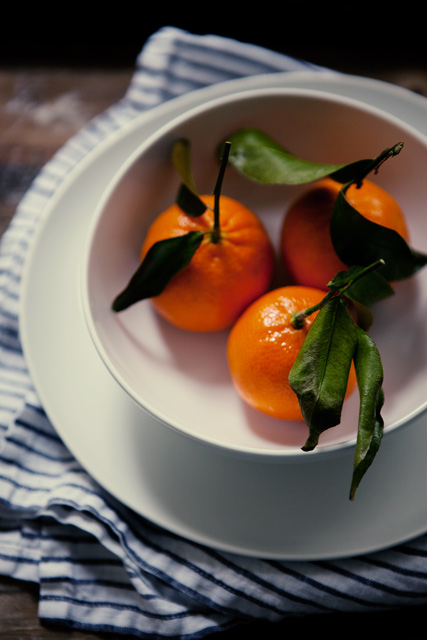
She was sobbing. It was otherwise quiet now that the yelling had stopped. I glanced up at her, but became distracted by the bowl of clementines set in front of me. I remember the nostalgia that used to overwhelm me at the sight or taste of clementines, but now they were just a bowl of clementines. I stood there staring and wondered how it had come to this.
           
I was aware my memory was flawed.  The first year was flawed by passion and its attendant haze typical in the first months of sex and shameless flirtations.  The banality of habit and ritual returned in the subsequent years, collapsing the months into what felt like a massless blur of days.  Yet, the summers always stood out vividly.

I, like generations of my family, was born and raised in Kings County.  I was a loyalist, and had never found occasion or desire to step outside the five boroughs.  My father was a shoe repairman or a cobbler, as he would have it, just like his father had been and his father before him and so on and so forth.  We would often have lengthy discourses about the propriety of using modern-day industrial glues on certain leathers and the lost art of cordwaining—these conversations were almost always soliloquies.  I began working part-time as a shoe salesman at an Allen Edmonds boutique store when I went off to college in the city, well aware that I had failed to escape the destiny of my predecessors.

She was the proverbial city girl, raised in a West Village brownstone by a Wall Street lawyer father and an art director mother.  Her family, and therefore she, was never wanting, which afforded them the luxury of sating a wanderlust she had caught early in her privileged life.  She was well-traveled by the time she went off to college, but ironically, she lacked the escapist urge characteristic of girls her age and settled with Columbia University.  She was a dancer and she was infinitely interesting.

She was the girl on my morning commute.  The girl I had admired at a distance and who had been a constant distraction from whatever book I happened to be reading at the time.  If she ever noticed me in those first few weeks, she gave no indication of it.  No, our love affair began as a solitary endeavor.  Reveries of our encounter played out in my mind, and my heart rate jumped at the thought.  My face would flush from embarrassment as I jostled from my daydreams.  Maybe it was the quiet romance of The Great Gatsby, which I was rereading, but I became convinced that we were fated to be together. 

The reality was far less literary, but only in hindsight.  We chatted that first time, about what I can’t recall, until the train pulled into her stop in Morningside Heights.  We had passed my stop twenty minutes prior, but it didn’t matter.  It went on like that for several weeks before I gathered the courage to ask her on a proper date.  She smiled broadly and nodded.  Even Fitzgerald couldn’t have written a narrative more beautiful. 

I was invited to her family’s ancestral home in Florida that first summer.  There were no beaches or theme parks, only a citrus grove.  The grove, which had been in the family since the turn of the twentieth century, was once famed for producing the sweetest clementines in Florida and was a wellspring for the family fortune.  That fortune, along with most of the property, was largely lost in the Great Depression.  But the vestiges of the citrus grove and the plantation-style home remained in the family as a source of financial strain until her father was able to save it with the early success of his law practice.  The burden of maintaining an unsustainable grove persisted, but her father refused to relinquish his childhood memories for the sake of stability.  It became their summer home where they would spend six weeks every year.  It was their annual trip to Florida that she would anticipate the most—not Italy or Fiji or India, but Florida.

The idyllic greens and oranges and yellows were a startling contrast to the gray of the only city I had ever known and loved.  The first days were disconcerting, but I soon became enthralled by the early morning walks through the grove, a fresh cup of coffee in one hand, her in the other.  There were late afternoon picnics with wine and a basket full of freshly-picked clementines, when she would reminisce about her childhood.  Though she had spent the majority of her life in the city, the setting of her stories was almost always Florida and I remember realizing that I knew very little about her childhood in any other context.  We made love, isolated among the trees and we would doze off in the shade, her face pressed against my chest with only a layer of sweat separating us.  Eventually, the prickling of the Florida heat would get the best of us, and we would meander back to the house and join her parents for dinner.  And so it went for six weeks every summer at that clichéd pace that often accompanies pastoral life.  Back in the city, we carried on our individual and sometimes joint existences.

She was yelling again.  I was still too distracted by the bowl of clementines to listen to the content of, what I presume was a verbal assault of anger, sorrow, and regret.  I deliberated on the appropriateness of eating a clementine at that moment.  I looked at her, then beyond her through the window I was facing and at the rooftop landing on the neighboring building.  A view of the skyline was visible and the early evening lights were flickering on and I was reminded why I loved the city so much.  Clementines would be my only reminder of Florida and those summers.  I wondered when I had stopped caring.


Photograph by: Whitney Ott
Written by: James Mo

irises

Posted on: January 7, 2013

Mallory stands with her arms folded over her chest, gazing out the window into the rain. Streaks of water blur the panes so that the lawn is just a rich green pond. She pulls both her lips between her teeth, biting them gently as her brow furrows and the fingers of her right hand stroke her chin. She is alone in the kitchen, her left hand resting on the back of a chair at the dining table. The only light shines from the copper oven hood, interrupting the blue-gray hue falling into the room through the windows. Raindrops on glass cast speckled shadows across the hardwood floors, her cable knit cardigan, and the table. Her breath is inaudible as well as infrequent, shallow and soft. When she releases her lips, they are swollen just slightly and she closes her eyes.

She has not been to church in two months. The questions posted on her wall prompted her to deactivate her Facebook account because she did not want to answer and did not know what to say. Mallory found it bitterly amusing that the only people asking questions were church members to whom she only smiled and said hello. The ones whose attention she actually wanted were silent, distant; this formed a disgusting film across her tongue. They were the ones to whom she poured out her soul, revealed her darkest secrets, and shared her doubting questions. Unfortunately, the devout turned out to be quite shallow, wishing only to receive the positive aspects of Jesus-following and wanting nothing to do with the deep challenges of discipleship.

The closer Mallory drew herself toward Christ, the more displaced she felt in the company of other people. Spiritual devotion was the root of her depression and made her feel utterly alone. Every morning she began with meditation and prayer, followed by a close reading of one of the gospels to analyze the attitude and actions of her savior. How did he treat the poor? Whom did he chastise most? What was the “good news” really? Whenever Mallory had the opportunity to interact with those affiliated with the Christian faith, she immediately blossomed and shared her most recent theological ponderings only to realize within moments how disinterested these Christians were. Why did she seem so strange to the only community in which she could possibly belong?
                                                                  
Mallory lies on the couch in the living room, her right hand resting across her face. Duchess, a shepherd mix, curls up across her master’s feet with her chin resting on the edge of the couch cushion and her face writ with what could be concern. Mallory begins to feel pathetic as the rain stops and sunlight filters into the room. “All right,” she says with a sigh and hops up, Duchess popping her head up and tilting her head to the side, wondering what’s to happen next. Mallory smiles, bends down to kiss Duchess atop her head, and makes her way for the front door.

After harness, leash, and rain boots are in place, Mallory and Duchess walk out onto the front porch. Everything is wet and shines with sun, prompting Mallory to take a deep breath as Duchess leads them down the steps and toward the sidewalk. It is a serene neighborhood with live oaks that create canopies over the streets, names engraved on mailboxes, and toys scattered across front yards. Mom did always say that depression is a luxury. Mallory recognizes how silly her grief must seem in light of the good that she does possess.

Duchess, fond of monkey grass, dips her head to let the strands caress her face as they walk by. Mallory pulls out her phone to check her horoscope. “Libra. Cosmic storms bring distress to the periphery of your life. But it soon will pass despite the heartache you’re currently experiencing.” Dead on, as usual. Mallory looks up and tightens her grip on the leash as Duchess tries to leap forward toward a cat sitting in a driveway, swishing its tail back and forth with annoyance. Mallory leads them on and Duchess groans, wanting to play with or murder the feline. Not clear which.

Mallory opens the mailbox and retrieves a few damp letters from within. A bill, a coupon for Bed, Bath and Beyond, and then some handwritten correspondences that upset her at first glance. Once inside, she removes the leash and Duchess trots away, leaving Mallory to stare at the first letter with apprehension. She tears it open, pulls out a card depicting an illustration of a blue bird sitting on a branch. Inside it reads:


Dear Mallory,

You are missed dearly at church. We hope that you are well and will return soon. Let us know if you require assistance or prayer.

Kind Regards,
Stacey Merit
Outreach Coordinator


Mallory blows through her nose and smirks with a slight shake of her head. Well good, my absence gave Stacey something to do. She drops the one, retrieves another. This time the card depicts an illustration of a floral arrangement reminiscent of Thomas Kinkade and unfortunately reminds Mallory of her father. THINKING OF YOU is typed inside followed by signatures of women in the church book club Mallory attended a couple of times. She can’t sneer at them, fond of those ladies that are mostly twenty years her senior.

The last letter turns out to be a tithe statement, indicating the amount of money she gave to the church over the past year. She folds it up and slides it into one of the pockets of her cardigan, stepping out of her boots and making her way to the master bedroom beyond the kitchen. Duchess gnaws happily on a bone at the foot of the bed, grinding her teeth against its nearly tattered surface. Mallory walks into the bathroom and recalls her errand prior to the rain, to arrange the line of irises lying across the vanity. Their yellow tongues make her laugh and her heart hurt.


Photograph by: Whitney Ott
Written by: Natasha Akery

baby, let's play house

Posted on: January 1, 2013

It’s fifth grade, the year my mother takes me back-to-school shopping at K-Mart because I’ve outgrown everything. Mom buys me Husky jeans, a jungle print polo, a chambray shirt that’s too tight to button, which I wear as a jacket. This is before “childhood obesity” enters anyone’s lexicon, when adults are pretending this is a phase I’ll outgrow, and kids are doling out punishment in their own way.

At lunch we sit boy-girl-boy-girl and are discouraged from talking. Across from me is the new kid, Billy Carrollton, with his stupid gopher teeth and his oily black hair that he slicks back and combs into place. Billy is mean as a snake. He mixes his food together on his lunch tray and purposefully bubbles his milk over by blowing into it.

Mrs. Cook, our teacher, hates everyone in the whole fifth grade, except me.

“Mrs. Cook,” I tattle at afternoon recess, “Billy was doing disgusting things with his food.”

She studies me. Mrs. Cook is older than most teachers. She wears orthopedic shoes. I stare at their laces while she considers my claim.

“Thank you, Dorothy, I’ll take care of it,” she says.

The next day in the cafeteria, Billy kicks my shins and calls me ugly. 

“What’s it like to be the fattest girl in America?” he hisses.

I'm burning, but I spit back, “Your hair’s so greasy, you look like Elvis.”

At home that night, my skinny sister’s eyes seem to linger on me a little too long while I’m changing into my nightgown. I finish dressing in the bathroom, the door locked.

The next morning, I shower with the lights out. The mirror is as dark as a solid wall. For breakfast, I eat oatmeal with the little dinosaur eggs in it and feel nothing.

At recess, the popular girls are back in the woods playing house, kicking apart little trails of pine straw to make hallways and rooms, bartering with acorns, cradling and crooning over pine cone children. I’m leaning against a tree near Carly Ruth’s house, hoping she’ll let me be the maid again. Billy jumps down off the top of the monkey bars.

He has green stuff stuck in his gopher teeth, but his hair doesn’t look as gelled as the day before.

“Hey Dorothy, I wanted to say—”

“Don’t talk to me.”

“I just wanted to say sorry. You know I didn’t mean it. My mom says I need to make friends, since I’m new and all.”

“Whatever.”

“There’s something in the woods back there I wanna show you—for your house.”

“I don’t have a house.”

“Well, you can take it to Brittany’s house or Carly Ruth’s. Come on.”

“Are you going?” Carly Ruth asks, her hand on the hip of her Mudd jeans. “’Cause I need where you’re standing for my new porch.”

We walk to the back of the woods, where the fence divides school property from Holly Hills, the dark little housing subdivision I pass through on the way to school each day.

“Are we even supposed to be back here?” I say. “If you get me in trouble—“

“It’s fine,” Billy says. “Me and Taylor go back here all the time and Cook doesn’t say anything.”

“Okay—”

“It’s right over here. Close your eyes for the surprise!”

He turns his back and starts searching for something in the leaves. I close my eyes, but peek out through my lashes.

When Billy turns around, I see his grin first, and then his hands. I see he means to terrify me; the evil dances in his eyes. In his hands is a bird, fresh from some unknown mishap. Its eyes are glassy like Billy’s. It’s rigid. Dead.

“It can be your baby!” he shouts, throwing it at me. I jump back. It lands on the ground belly up. Its legs, as delicate as dry pine needles, reach for the treetops. A tuft of yellow feathers on its belly flashes up at me.

“You’re sick,” I say, but Billy is running off to tell Carly Ruth and Brittany that I want a dead bird to be my baby, and I touched it and kissed it, and that I’m a freak.

I tell Mrs. Cook I have a stomachache, and she lets me go back in the classroom to read for the rest of recess.

By P.E., the word’s gotten around that I collect dead birds; that I’ve got a whole box of them under my bed at home; that I dug up a dead cat once too; that when the gifted class took that field trip in 3rd grade to the high school, I was the first one to ask to see the animals floating in their pickling jars.

“You know playing with dead animals is the first step to being a serial killer,” Brittany tells Tiffany in line at the water fountain.

Coach Sellers senses trouble, or maybe the universe smiles down, and we don’t play dodge ball. We play the game where you stand in line and try to shoot hoops, and if you miss, you’re out. I’m so, so ready to be out. When we go back to the locker rooms to change, my clothes are nowhere to be found. Carly Ruth and Hannah giggle as I search the stalls and through the cubbies. They turn up, miraculously, right after the bell rings.

The next day, Billy’s not in homeroom. Mrs. Cook and our other teacher, Mrs. Roberts, whisper in the hallway, and we start class late. Before morning break, Mrs. Cook announces that Billy will be absent for a while—that his mother has passed away and we should all keep him in our prayers.

At break, Tiffany, who has homeroom with Mrs. Roberts, shares the rest of the information—that his mother committed suicide. After lunch, Mrs. Cook passes around a card that reads “deepest sympathies,” on a muted image of the ocean.

I hold it for a moment. I pass it on unsigned.


Photograph by: Whitney Ott
Written by: Dot Dannenberg

Creative Commons License This work is licensed under a Creative Commons Attribution-NonCommercial-NoDerivs 3.0 Unported License
1:1000 The Design of this Blog is All rights reserved © Blog Milk Powered by Blogger