Until Next Time

Posted on: March 15, 2016


The ceiling fan whirred above him, cascading a wave of hot air upon his sweat-drenched forehead.The single bed he lay on filled nearly the entire square of the tiny room. Dirty clothes and torn blankets littered the remaining floorspace. In the corner, a small plastic plate held the remnants of a piece of bread, its stale surface coated in a layer of green foam. Three books lay by his bedside, their pages the only lifelines he knew. His ears probed the dust-coated air, listening for the footsteps that would signal the arrival of his daily routine.

He had dreamt, he thought, of the ocean. It was blue, just like he had seen in the pictures, with a green tint that exuded a sense of comfort to even the smallest of creatures. He had been swimming, feeling the vibration of the great body of waves that pulled him deeper into its intricate embrace. As soon as he started to surface, succumbing to the desire to see the crests of the ocean waves, a thick, tattooed arm inserted itself into water and grasped him in a chokehold, holding him in place as the water filled his lungs.

That was when he woke up. He didn’t get up – he knew what that would bring about; instead, he lay there, staring at his most constant companion whirring away as each of the five long blades maintained their insistent monotony. He was almost asleep again when the footsteps awoke him. His eyelids lifted reluctantly. He didn’t get scared; not anymore. After all, it seemed easier, almost pleasant, to maintain the appearance of supreme disinterest, even as his body shook with hatred.

As the footsteps neared, the lock clicked, the door grinding open to reveal the figure that had tormented him since he could remember. Only recently had the entrapment begun. He didn’t know why. He didn’t think to ask why. He just survived.

“Get up,” his ragged voice called. The boy was surprised, at first, hesitantly aware of walking into any traps. “You deaf, boy? Get the hell up! And put this on.” He tossed a shirt onto his bed.

                                                                                                  ***

It shouldn’t be much farther, he thought, checking his addresses as he sped through the puzzle that was the inner city. He drove fast, the impossibility of his to-do list an irritating itch that forced his foot to the pedal of the government-loaned vehicle. He had had ten visits scheduled already for that day; protocol advised that each visit take at least an hour, from entry to inspection to exit, and at least an hour and a half if any family was found in violation of health or safety codes. But, at ten visits in five hours, he hardly had the time or energy to pay attention to “protocol.”
    
As the always-one-step-behind voice of the rickety GPS system called out, he slowed to a stop, acknowledging the metal-barred staircase that led to the sixth home visit in what was turning out to be a longer day than usual. He approached the stairs, refreshing himself on the apartment number and the family name: Briggs, Briggs – 203B.

He checked his records: only one visit in the last two years had required a follow-up; this was going to be quick. His phone rang; he glanced at the number, ready to send it to voicemail before the name stopped him. It was his boss. The boss who, like everyone else, apparently, was swamped and yet still had time to assign him 47 cases in the span of a single quarter. He answered, feeling no urge to disguise the impatience in his voice. “Hello??”

“Kasey, I just got a call. I’m not sure how credible it is but I need you to check it out. A neighbor reports that she saw the Smith girl, you know, the one from the upper east side?”

“Uh yeah bu--”

“Anyways, she was apparently looking pretty beat up. If it’s abuse this would be their final violation. I want you to schedule an immediate visit. Tell them we’re doing surprise rounds or something, and let me know.”

“Okay, but I really don’t--”

“Thanks, Kasey. Keep me posted.” The click of the phone on the other end just about summed up the entire last quarter for him. Resisting the urge to break his clipboard and drive away, he continued making his way up the stairs. He knocked, waiting, as always, with pen in hand to give the same greeting he always did before making his way through the home.

A man answered. His gruff, unshaven face clashed with a suspiciously white shirt that tucked into a pair of torn jeans.

“Hi,” he grumbled, “we’ve been expecting you. I’ll grab Jackson. Come on in.”

Kasey stepped inside. No intro, I guess. He looked around. The dingy apartment reeked of stale food and what seemed to be smoke, though the eerie odor was masked by the overwhelming smell of cinnamon emanating from a candle in the foyer.

“This way, right in here. We know the drill.” He grumbled again. Kasey followed the gruff man’s voice, entering from the cramped foyer into the main living room. In the middle of the room stood the man, hand on the left shoulder of Jackson Briggs. He was 13, according to the records, though he looked about 11. He was short – maybe 5’2,” and, like his father, he wore a new-looking collared blue shirt tucked into blue jeans.

                                                                                                  ***

He kept his eyes straightforward, like he was told. The nails digging into his shoulder made certain that he gave nothing away. He was wearing his “new” shirt, after all, and for the first time since the last visit he had real denim jeans covering his bruised legs. The man with the clipboard stared at him, checking boxes as he turned his eyes towards the surprisingly clean kitchen. The hand on Jackson’s shoulder clenched harder, as if to squeeze every emotion right out of him. He flinched, withholding the scream that would tell the man with the clipboard to turn around; to look closely; to see the dark purple lines that his blue collar hid: the ferocious marks of the rugged attention he’d received since his mother left. He wanted to scream; to scream, and to leave. But he knew he couldn’t; he wouldn’t. He had nowhere and no one else.

“Okay, everything looks fine. I’ll send your report and be back next month.” The door slammed.

“Back to your room, boy.” The vice grip loosened. A single tear caressed Jackson’s cheek.

Until next time.


Written by: Tyler Wilborn
Photograph by: Daniel Vidal

Into the Dark

Posted on: December 24, 2015


My father and I exited the back of the house and headed out across the field to kill the only thing that I had ever loved.

That morning had been chilly and now with the sun covered up by clouds, the cold had turned bitter and biting. The sky was gray, shot through with streaks of pale green the way it got just before a big storm was about to hit. It hadn't started yet, but when it came it would drop the temperature even further, the wind howling and whipping the window shutters and lightning scorching the tops of the trees leaving them with shattered branches, the remnants scattered at their roots looking like amputees gaping down at their lost limbs.

I knew Milo was sick and needed an operation that we couldn't afford. I understood this, but couldn't bring myself to accept it. When I looked into his eyes all I saw there was love. That love should have made me want to end his suffering, but instead I held on tighter, because after he was gone it would just be me and my father alone in the house, the two of us silently skirting around each other like ghosts.

It wasn’t that my father didn’t care for me. He had never raised his hand in anger, and I had never gone to bed cold or hungry, but he kept a large part of himself locked away from me and from everyone else. I don’t know if he had always been this way or only became so after my mother died. Sometimes it felt as though he didn’t know quite what to make of me—instances where he seemed utterly at a loss, like the time as a small child when I had bawled for hours over the loss of a plastic, toy horse. He stared at me like I was some strange creature he couldn’t comprehend. Eventually he left me there to cry myself to sleep. Some might consider his actions cruel, but I think he was simply confused and unable to cope with situations that would have fallen to my mother had she not vanished from my life before I even knew I was in the world.

Milo had been my father’s solution to the problem. The day he brought the black and brown puppy home was the happiest of my life. I suppose most would argue that a dog, no matter how affectionate, was no substitute for a mother’s love, but to me Milo was the world. He would walk with me in the morning along the dirt path that lead out from the front of our property and met up with the paved road where I waited for the bus. In the afternoon he would be sitting on the front porch when I got home from school and would come bounding across the lawn to meet me. We grew up together, and in a lot of ways I thought of him more as my brother than my pet.

He was still bigger than me, even with all the weight he’d lost from the cancer, and I heard my father grunt several times while carrying Milo in his arms as we made our way to the tree-line that marked the beginning of the forest that bordered our property.

This had been our favorite spot to play. The field behind the house was for planting and therefore off limits, so Milo and I spent all our time wandering around the woods with me skulking through the trees pretending to be a ranger while he chased squirrels and rabbits and gophers and once a very agitated skunk that made him stink for weeks afterward.

We had seen so many things there.

A family of deer drinking from a pool, the parents flanking either side of their fawn that was barely half the size of Milo and still shaky on its new legs. A black bear trudging through the stream snatching fish out of the water like they were standing still. Wolves howling in the distance and Milo howling back like he wanted to join them.

There were also those simple, everyday occurrences. The sweet perfume of flowers in the springtime and the earthy aroma of dead leaves in the fall. The satisfying crunch of snow and ice underneath our feet in winter. The summer sun streaming in through the branches casting angular patterns of shadow on the ground.

These were moments that wouldn’t have been the same if Milo hadn’t been there at my side to witness them with me.

When we reached a small clearing circled by a ring of birch trees, my father stopped and set Milo on the ground.

“This is a good spot,” my father said. “You’ll have no trouble finding him here to visit after we put in a marker.”

I nodded, not sure of what to say. I knelt down and nestled my hand in Milo’s fur; he lifted his head a little and looked at me.

“He’s your dog. You ought to be the one to do it,” my father said as he unslung the .22 rifle from his shoulder and held it out to me.

This was the way of things for my father. Something he understood better than crying toddlers. It had been his daddy’s way, and his daddy’s daddy before that.

I shook my head at him. “I can’t.”

My father put a hand on my shoulder. “I’m sorry it has to be this way. I wish there was something more we could have done, but it isn’t right to let him suffer.”

“I know....” I said, choking back a sob that caused my whole chest to hitch forward.

“Say your goodbyes and give him some peace, son.”

I nodded again and took the rifle from him.

My father stood there for a moment like he was about to say something else, but instead turned and headed towards the house without looking back.

I laid the gun down next to me in the grass and stroked the top of Milo’s head. He was staring up at me again, gazing straight into my eyes with that love that made me want to hold onto him as tightly as I could and melt into the ground so that we would always be together.

The first drops of rain began to fall.

I put my arms around Milo and pointed my face towards the sky waiting for the storm to come...waiting for the rain to turn the earth to mud, and swallow us both up forever.


Written by: Peter Naughton
Photograph by: Garrett Carroll

Beginnings

Posted on: November 5, 2015


The colors of city lights bleed out into the blank sky, smoke rising to the atmosphere, and ashes falling back to the asphalt. In the back of his mind, he hears music—Beethoven’s Moonlight Sonata. For the boy, it has always been the song of the after.

Outside the thin windows of the apartment, Kai can hear the sound of falling rain and the low breeze, screeching cars and drivers spouting profanities. The streets are never quiet. He hears the beating of a moth's wings as it flutters around the street lamp, but not the urgent words that leave his mother's lips as tears streak her face. Her mouth keeps forming the same shapes, and it occurs to him that she's saying one thing over and over again.

"Everything is going to be alright, sweetie." The sound of her voice feels like the earth has dropped onto his chest when his mind returns to his body. He becomes aware that the side of his face is pressed into the cold, wooden floor of their living room. Sweat makes his dark hair stick to his forehead, and he can taste iron when he breathes. He feels like shit, personified.

"Do you need to go to the hospital?" she asks, knowing that after seventeen years, it has become a useless question.

"I'm fine," He manages to croak out a half-convincing response.

Kai struggles to pull himself up into a sitting position; there's a sharp pain flowing in the blue of his veins. The heavy soreness in his side makes him think he's broken a rib. The room is empty except for the two of them, and Kai is relieved to know they are alone, at least for now.
"Are you okay?" Kai asks. "He didn't hurt you, did he?"

His mother shakes her head, looking years older than she did the hour before.

"I'm alright," she says, leaning down to wrap her arms around his torso. The action is supposed to be comforting but she quakes in fear. His mother helps him off the floor and to the bathroom, which proves to be quite the task. Since starting high school he has grown a foot taller than her, and now his limbs still aren’t fully functioning.

He leans against the sink, and his eyes wander to his once-white shirt, advocating Sigur Ros, some indie rock group whose music he has never heard. It’s covered in blotches of dark red, the color of wine. The red seeps through the fabric. The stain will never come out.
"Just wash up, okay?" his mother coaxes. Kai pulls the shirt over his head, and she snatches it from his hands. Her eyes jump from the shirt to back up at her son.

"I'll take care of everything," she says, clutching the bloodied t-shirt to her chest and shutting the door behind her.

He takes off the rest of his clothes before stepping into the shower. He turns the faucets, and a stream of cold water hits his back. The red washes away, pooling on the white tiles at his feet, and the pain under his bruised, olive skin dulls. There’s a long, thin gash running diagonally across his chest. The cut is not deep enough to kill, but it will leave a scar.

He can try to forget, again. Try to remember all the good things, but the memories of those are fading. Besides, there is only so much you can wash away, and only so much that you can forget in the after.
Kai walks into his bedroom, looking for something constant in all the change. Instead, he finds that most of his stuff is dumped out into suitcases strewn across his bed. The shelves that once held pictures in frames are now bare. His mother stands in the center of the chaos, packing their lives away into trash bags. When she sees him she tries to smile, like this entire scenario is normal. It’s a slap to the face, a reminder of just how fucked-up their lives are.

“I have to go to the bank, Kai, sweetie. Finish packing up—I’ll be back soon.”

“Okay,” he says, because there is nothing more to say.

She reaches up and ruffles his hair, like she did when he was younger. Even though he is seventeen, he still finds comfort in it.

There’s still food in the fridge—mostly just takeout. Kai grabs a few relatively fresh-looking apples, but there’s not much to salvage among the rest. A bottle of wine catches his eye, cigarette butts floating in the dregs. He winces. The room smells like his father, like despair and fear. The burn on his arm feels vicious, singeing. He grabs the bottle, hurls it out the open kitchen window, and watches the glass shatter on the street. He laughs like it’s his last day on earth. It might as well be.

By the time his mother returns, Kai has packed everything. They pile the pieces of their lives into the back of the Impala, leaving the place they once called home barren and empty.

“Where are we going?” he asks as he shuts the trunk. His mother smiles warily before answering.

“Somewhere far away,” she tells him as he slides into the passenger side. The tiny green pine tree air freshener looks almost like an arrow pointing them away. The car’s engine sputters to life, and the sound is already so much better than any empty promise she could make.

The city is grey and flat, like a paper cutout, drawn with the tip of a needle. This city was the backdrop to his life, yet this is the first time Kai has ever thought of it as something other than his personal hell. Cars pass like water through an iron grate as they drive away. Everything looks perfect from afar, windows in buildings perfectly identical, symmetrical.

It was never so beautiful up close.


Written by: Jamie H
Photograph by: Skyler Smith

Biscuit Sings the Blues

Posted on: November 18, 2014


James ‘Biscuit’ Baker sat alone at a little table in his motel room, sipping on a bottle of Lone Star. The clock read ten til six. His curtains, like all motel curtains, would not quite close. Light seeped in from the red neon sign outside, bathing his room in a sanguine aura.

He felt like Goldilocks when he was out on the road these days, the bed two nights ago in Amarillo was too soft, this one too hard. With any luck, the one tomorrow night in San Antonio would be just right. He swallowed a Vicodin and waited for the pain in his lower back to subside. Once the opiate started to work its magic, Biscuit nodded off in the chair.

A knock on the door woke him from his slumber two hours later. He lurched his sixty-year old body out of the chair and lumbered towards the door.

There was more knocking, louder this time.

“Hold the fuck on. I’m coming.”

The hazy, morning sun blinded him when he opened the door, but he recognized his visitor as soon as she spoke.

“Morning, sunshine,” she said in an unmistakable tone.

Maxine, his ex-wife, had a huskiness to her voice that once reminded him of a young Lauren Bacall, but after a lifetime of cigarettes of whiskey, she now sounded more Johnny Cash.

“Fucking hell…what do you want?”

“Aren’t you glad to see me?”

“Oh yeah, you’re a sore sight for eyes.”

“Don’t you mean a sight for sore eyes.”

“Nope.”

“Well, you’re not looking so hot yourself, old man. I see that you got that dickey-do disease going on.”

“Dickey-do disease?”

“Your belly is sticking out farther than your dickey do.”

She chuckled at her own joke. Her laugh sent a chill down his spine.

“Not that it would take much of a belly for that to happen,” she added.

“You know Maxine, I’m sure we could just continue this love fest all day, but what the fuck do you want?”

“Can I come in?”

“No… I’ll come out there. Hold on,” he said, slamming the door.

Biscuit splashed some water on his face, put on a fresh shirt and grabbed the pack of Parliament Menthols that were lying on the table. He closed the door behind him and lit one up.

“How did you know I was here?”

“In Austin? Hell, Biscuit, I do live here, you know. And it’s not like I don’t go to the Continental anymore. If you don’t want me to find out, maybe you shouldn’t be playing at one of the most popular fucking clubs in town.”

They started walking towards the sidewalk.

“I meant, how did you know where I was staying?”

“Because you always stay here. You’re a creature of habit.”

Maxine gestured at the big Austin Motel sign, almost pink in the early morning light, that shot up into the sky.

“I figure it has something to do with that sign. A dick for a dick.”

“Huh…” Biscuit took a long drag of his cigarette. “I wonder what old Sigmund Freud would say about that. I always thought of that sign as a hand, with a big middle finger. Kind of a giant ‘fuck you’ to whole entire world… And you think of it as a dick. Maybe he was onto something with that penis envy thing.”

“Not that you would have anything to envy,” came her retort.

“TouchĂ©.”

“Seriously though, did you call Scotty and tell him you were going to be in town?”

“I tried last night when I got in, but he didn’t answer. I didn’t leave a message. I was going to try again today.”

“That’s convenient.”

“What’s that supposed to mean?”

“It means, that it’s convenient how you wait until the last minute to tell him, hoping that he has other plans.”

“That’s not true. I would love to see Scotty.”

“Bullshit. What are you afraid of Biscuit? Failing as father? You already did that.”

“Fuck Maxine, do you have to be so harsh?”

“What? Does the truth hurt, honey? You know what else probably hurts? When your father doesn’t make it to your high school graduation, or when he forgets to call you on your birthday. So if you’re looking for sympathy, you better find a dictionary, it’s somewhere between shit and syphilis.”

Biscuit stared down South Congress Street, searching his memory for anything other than hatred for this woman.

“He’s getting married.”

“Huh?” Biscuit turned to look at Maxine. “He’s what?”

“Getting married. She’s a real nice girl. I think he wants you to come to the wedding.”

“If I’m such a failure as a father, why would he want me there?”

“Because he still loves you Biscuit. I don’t know why, but he still does.”

Maxine put on her sunglasses and opened her car door.

“You know, despite all of our shortcomings, that is one hell of a good kid we have. And before you get all pissy, I’ll admit, it wasn’t just you. I was by no means mother of the year. But somehow he turned out real good. Give him a call, Biscuit. See you around.”

Maxine got into her car and disappeared into the Austin traffic.

                                                                                                        ***

Biscuit walked onto the stage to raucous applause. He sat down on the stool and picked up his trusty old Telecaster. Once the crowd quieted down he pulled the microphone close.

“Before I play tonight, I just want to say a few words. My son is here in the crowd, with his beautiful new fiancĂ©.”

A spotlight was turned on to a table near the back of the small room. A waitress was delivering a bottle of champagne to the young couple sitting there.

“So I just want to say to Scott and Sara, congratulations, and I know I was a shitty father…” Biscuit’s voiced cracked. “Hell, I still am a shitty father, but I love you.”

Scott smiled and wiped a quick tear from his eye.

“Now enough with all this feel good shit. If you want happy music, go to Nashville. My name is Biscuit and I sing the blues.”

“They say that time is money… well, I guess I’m broke as fuck…”

Written by: Ben Cook
Photograph by: Matt Crump

The Warden

Posted on: November 4, 2014

Sometimes your dad wakes you up way too early, and in that fumbling darkness as you put on your contacts, there is a moment of clarity. After you stick those weird little lenses onto your eyeball there is a second where the world shifts from dream to reality.

Then sometimes that moment ends and you realize that your contacts have been soaking in disinfectant -- not cleaning solution, but rather that old school, hazardous shit. Sometimes panic comes before pain. Sometimes you set your eyeballs on fire.

Your dad comes into the bathroom because he hears the yelling. He finds you in the fetal position, and because nothing could have possibly happened at this moment to warrant such a response from his oldest son, he begins to laugh.

“Son, you don’t have to go if you don’t want to.”

You want to tell him that the pain is real, but all you seem to manage is, “arrrrrgh, no, eeeeyyyyyyess.”

You hear him walk down the hall and yell back to you in that familiar drawl.

“Well, get the hell up. We’re burnin’ daylight.”

You end up sprawled in the back seat of a maroon suburban with your eyes squeezed shut, trying to think about what it would mean to literally burn daylight. It would probably feel like your eyes right about now.

This is how your trip begins. You’re going duck hunting with your old man.

To embark on this masculine pastime of bird-killing you must wake up very early. The weather will be very cold, and there may even be snow on the ground. You’ll need to wake up early enough to get to the partially frozen pond, don your camouflage waders that look like giant rubber overalls, and set up the decoys in a very particular pattern that changes based on the wind and maybe some other variables; all before the sun comes up. You’ll then hunker down in a camouflage blind, wearing your camouflage coat, hat, gloves, pants, and even long-underwear. You cannot wrap your head around the concept of camouflage underwear. You will then wait. And wait. And wait. You’ll begin to fall asleep from all the waiting and because your eyes hurt from the disinfectant. Your dad will blow a terrible honking noise out of a strange tube-like device that is also camouflaged called a duck call.

You asked your pops if you could bring your Walkman with you, so you could pass the time with the new Smashing Pumpkins cassette Siamese Dream, the one that has the song “Silverfuck” on it. The one that your mom took away because it has the song “Silverfuck” on it, but then you went and bought another copy and now you listen to it in secret and obviously this makes it better.

Ironically enough, the fact that your mom tried to pull a Tipper Gore on your music collection means that of all the cassettes you owned, and all the songs you listened to, the one you remember the most is a song with the amazing title of “Silverfuck.”

“Pops, can I bring my Walkman to listen to music?”

“Nope.”

“Pops, can I bring, like, a book or something? To pass the time?”

“Son, we’re going hunting. You’re not going to read a damn book.”

“Pops, can I bring…”

“Hunting!”

It’s really cold in the blind, and even with all the clothes you’re feeling pretty miserable. Your dad says to shut up, that you’re talking too loud. There are no birds anywhere. Even your dog, the black Labrador named Beauregard, he for whom this rodeo be not his first, even he looks up at you silently teasing, “Sucks, right?”

After more honking and your dad checking his watch, then looking up at the sun, grumbling something under his breath and checking his watch again, finally there is a bird.

You stand up and your dad immediately sits your ass back down.

“The bird!”

“Shhh!”

The bird does not appreciate your antics, spots the waiting ambush, flies away.

“Goddamnit,” mutters the old man.

Before long, another bird appears on the horizon, making a beeline to your trap. This time you stay put. Dad honks his duck call and the sounds escape the device in jagged, jumpy intervals. You’ve learned that you have to wait for the duck to cup its wings, wait until it slowly begins to drift toward the frozen pond, and then as it’s hanging in the air, as if by a string, you take the shot.

                                                                                               ***

The twelve-gauge recoils against your shoulder as you fire. The duck falls. Beau bounds out of the blind, ripping through the tall grass, his black tail curled up like a shark fin above the reeds.

Your dad is grinning at you, and his blue eyes shine in the sun. The barrel of his shotgun is smoking.

“You fired too?”

“I missed. That was all you.”

You don’t see another bird all morning, but the waiting is somehow now invigorated like its been struck by lightning. Even the silence is electric.

Around noon you begin to pack up your gear. On the way back to your grandparent’s house you sit up front with your dad, and ya’ll listen and sing along to Garth Brooks cassettes. Your dad tells you for the hundredth time how he really wanted to be a game warden, but he wanted a family more, and it was tough to raise a family on a game warden’s salary. You can hear in his voice dreams of a road not taken, one of hunting trailers and lonely, straight roads at dusk. But then he looks at you, and it’s as if the dream was only a passing thought. His voice changes and he tells you that it’s probably for the best that he’s not a game warden.

“If it was my job, if I did it all the time, it wouldn’t be special anymore. It wouldn’t be the same.”

You stop at a little roadside diner to get runny eggs and bacon. Black coffee for your pops. Other hunters dressed in camouflage uniforms populate the diner, and they speak to your dad in what seems like a foreign language.

“Set up near Ponca, out near Vance Riggins’ place.”

“Went out there once with Jim Caldwell.”

“From Enid?”

“Okarche. Didn’t see shit though.”

You get back to the house and the cousins are playing a football game in the front yard; a Christmas tradition. You play all-time quarterback for a bit, then head inside and lounge on the couch, prepping for a nap. The Spurs are on television and your uncle from San Antonio yells at the television as you drift off. Your mom walks by and ruffles your hair.

“Mom…”

“My butt itches.”

“Gross.”

“Did you have a good time with your father?”

“Yeah. It was cool.”

She smiles and kisses you on the cheek.

“Uh huh. So I guess that means you’ll be getting up and going again tomorrow. I’ll go tell your father.”

The meaning lags behind the words, a case of tape-delayed brain, and then it hits home and panic ensues for the first time since the contact incident.

“No! Jesus, Mom!”

Written by: Logan Theissen
Photograph by: Emily Blincoe

Go Deep

Posted on: July 24, 2014


“It was a perfect spiral,” Lenny said, reenacting the throw on his back from the chaise lounge. “It just landed in the wrong hands.”

Lenny let his plastered arm drop to the cushion with a thud that sounded like pig skin crashing into a receiver’s chest.

“And that’s why you drove your truck into a ditch?” asked Dr. Emanuel.

“No, that was the beer,” Lenny explained.

“The tests would beg to differ,” Dr. Emanuel countered.

“What tests?”

Dr. Emanuel pinched the screen of his iPad and turned it towards Lenny.

“The doctors tested your blood. Your BAC was .00,” Dr. Emanuel said, pointing to the results on the tablet.

“Well, I was in that ditch for awhile,” Lenny noted. “Maybe it worked itself out of my system?”

Dr. Emanuel made a few more finger swipes on his device and handed it to Lenny.

“According to the police report, a witness called 9-1-1 the moment you were ejected from your vehicle. You were emitted to the ER within 28 minutes.”

“So?” Lenny said, handing the tablet back to Dr. Emanuel.

“So, there’s no way your blood level could’ve dropped from DUI to nothing in less than thirty minutes.”

“Maybe it was one of the other drugs?”

“No other drugs were found in your system,” Dr. Emanuel stated, no longer bothering to pull up Lenny’s charts.

“Maybe I was roofied?” Lenny suggest.

“Although odorless and flavorless, Rohypnol can still be detected in your system. Which in your case, it was not.”

Lenny sat up and looked Dr. Emanuel in the eyes.

“What are you getting at, Doc?”

“The root of your problems.”

Lenny laid back down and stared at the textured ceiling that reminded him of painted turf in an end zone.

“My only problem is that goddamned throw that cost me a goddamned championship,” Lenny argued.

“That certainly is a problem,” said Dr. Emanuel, “but it’s not your only problem.”

“Well no-fucking-shit.” Lenny said, waving his cast arm towards the doctor.

“That’s two problems,” said Dr. Emanuel, “but I bet we can find more.”

“Heeere we go,” Lenny moaned. “Time to delve into my daddy issues.”

“Who said anything about your father?” Dr. Emanuel asked.

“Give me a break, Doc. You seem to have my entire life on that goddamned tablet.”

“Guilty,” Dr. Emanuel admitted, throwing up his hands. “But then again, so are you.”

“Of what?”

“Of lying to me.”

“About what?”

“About your real problems.”

“Fine, guilty,” Lenny said, throwing up his arms to mock Dr. Emanuel. “I guess growing up around a self-destructive sociopath sticks with you.”

“And in you,” said Dr. Emanuel.

“In you?”

“Don’t you see a little bit of your father in you?”

“Yeah, every time I look in a mirror.”

“You know that’s not what I mean.”

“I am NOTHING like my dad,” Lenny said, standing up from the chair and inflating his chest.

“Are you going to hit me, Lenny?” Dr. Emanuel asked, more intrigued than intimidated.

“No.”

“Then why are you standing over me like a territorial gorilla?”

Lenny turned away from Dr. Emanuel and began taking a lap around the office.

“I don’t know?” Lenny responded in stride.

“What makes you think your father was a self-destructive sociopath, Lenny?” Dr. Emanuel asked.

“My old therapist told me so.”

“Did he or she ever meet him?”

“No, she didn’t.”

“Then how could she diagnose him?”

“Well, the self-destructive part is kind of a no brainer.”

“How so?”

“Ask his liver.”

Dr. Emanuel’s eyes widened as he dragged his finger across the tablet.

“So your dad was a drinker?”

“That’s putting it mildly.”

“Is that why you don’t drink?”

“It certainly helps.”

Dr. Emanuel paused to take a quick note and continued.

“What about the sociopath thing, Lenny? Where did your therapist get that?”

“Where do I start?”

“Where did you start with her?”

“Probably his funeral,” Lenny said, retaking his seat on the chaise lounge.

“What was it about his funeral that stood out to you?

“No one came.”

“No one?”

“Nope, aside from a few family members.”

“Was your dad a secluded man?”

“Not at all. He was constantly trying to get other people’s attention, especially women.”

“When would he do this?

“Grocery stores. Restaurants. My peewee football games.”

Dr. Emanuel readied his iPad for a treasure trove of insights.

“What happened there?”

“Not my games, as far as he was concerned.”

“What do you mean?”

“I mean he was too busy flirting with all the moms to even know what number I was wearing.”

“Were your parents divorced?”

“NO! My mom would be sitting right next to him, and he’d still turn and talk to Ms. Calvin’s big fake tits.”

“Did your mom say anything?”

“Hell no. That man could do no wrong in her eyes.”

“Why’s that?”

“He used to be a dumb jock; she was his secret admirer; and it wasn’t until everyone else they knew went to college that they, ‘fell in love,’ as she tells it.”

“Ah ha,” Dr. Emanuel said, pressing his finger against the tablet so hard he almost cracked the screen. “Let me guess, your dad was a quarterback?”

“You’re brilliant, Doc,” Lenny answered.

“A high-school-championship quarterback?”

“Can’t get one past you.”

“And you’re angry that you’re not?”

“Are you a psychic?”

“And THAT is why you drove your truck into a ditch.”

“No.”

Dr. Emanuel’s grin vanished and his finger stopped moving.

“No?”

“No.”

“Are you lying to me again, Lenny?”

“No.”

“But you said you were disappointed about the loss?”

“Of course!”

“But not disappointed enough to harm yourself?”

“No.”

“Then why would you harm yourself?”

“My mom.”

“Your mom?”

“Yes.”

“What did she do?”

“It’s something she said.”

“When?”

“After the game.”

“What did she say?”

“You remind me of your father.”

Dr. Emanuel rested the tablet on his lap and looked at Lenny.

“And that’s why you drove your truck into a ditch.”

Lenny’s eyes welled up with tears as he lifted his arms above his head.

“Guilty.”

Written by: Mark Killian
Photograph by: Omar Sanders

Tending to What Matters

Posted on: July 1, 2014


My heart drops. The words coming out of my father’s mouth make sense, or rather, would make sense if they were coming from anyone else. But from him, they are blasphemy.

I glance over at him, digesting what he just said, trying to form a response and it hits me how much he has changed. Gone is the stoic, granite face I’ve always known, replaced by a gaunt, wrinkled old man.

“Xeriscape?” The word is sharp and prickly as it rolls off my tongue. I try to lace my voice with confusion, with disdain, anything to cover up the quiver that is trying to expose my fear. “You want to xeriscape the yard?”

We are sitting on his front step, sipping glasses of iced tea, watching as the heat rises off the street and blurs the distant Tucson skyline. I look around me at the well-coiffed grass. Lush and luxuriant and impossibly green, it is the type of lawn you only see on landscaping brochures. But there has been no photoshopping here; just hours of meticulous, painstaking labor.

“Yeah, I’ve been thinking about it for awhile. Change is good. It keeps you young.”

He turns away from me because he is lying. Worse yet, he knows that I know he is lying--but this is what we do, this is how we communicate. We talk without talking, beating around the bush, or I guess in this case, the entire yard.

“And it’s better for the environment, too, uses a lot less water.”

This is utter bullshit; my father’s environmental ideology skews hard right. In his lifelong quest for the perfect yard, nothing was sacred, certainly not the ecosystem. Fertilizers, pesticides, ignoring city-mandated water rationing; whatever it took to have the best lawn in town, he did it, consequences to Mother Nature be damned.

I nod my head and pat him on the back.

“I gotta go, Dad. I’ve got to mow my own yard today, too. I’ll see you later, okay?”

“Alright, Jack.” He hesitates, like he wants to say something else. Instead, he shuffles into the air conditioned house. “See you later.”

                                                                                                   ***

My wife is in the kitchen unpacking groceries when I get home. I grab a beer from the six-pack she just pulled from the shopping bag. Bitter and lukewarm, it does nothing to soothe my jangled nerves.

“Hi honey, how are your parents?” she asks.

“Mom seems good. Dad’s given up on life.” I take another long drink from my beer.

“What?”

“My dad wants to rip up his entire fucking yard and put in a bunch of fucking cacti.”

“And that means he has given up on life?”

“Don’t you realize how fucking crazy that is? He loves his lawn more than most people love their children.”

“Yeah, but now you have to help him take care of it. Maybe he doesn’t want to be a burden. He’s a proud man.”

“It’s not a problem. I don’t mind helping him.”

“Did you tell him that?”

“Well, no…” I drain the last of the tepid beer and reach for another. Before I can open it my wife takes it from my hand and replaces it with a cold one from the fridge.

“That’s what I figured.” She walks out of the kitchen. “Jesus, I wish you two would learn to talk about your feelings.”

                                                                                                   ***

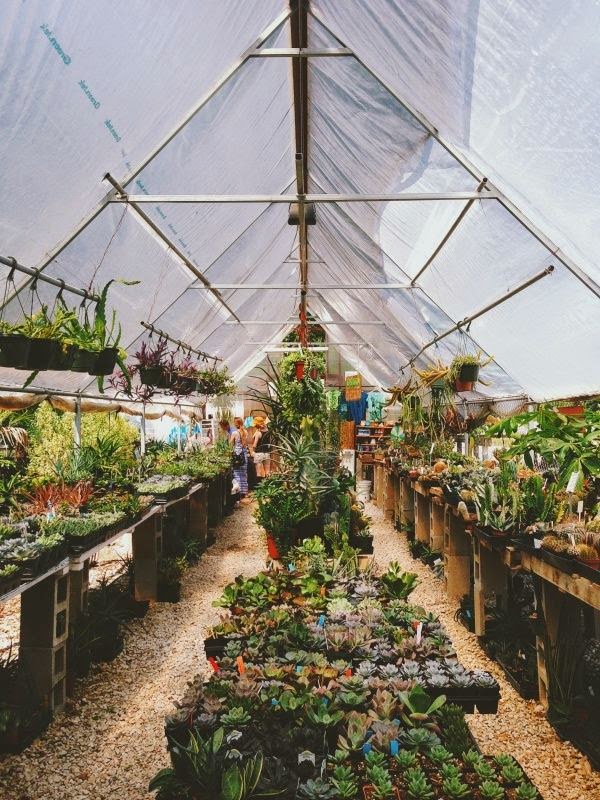
The gravel parking lot of the farmstand/greenhouse is populated mostly with Subaru Foresters and Toyota Priuses. I back my Dodge Ram into one of the last parking spots and we survey the scene. The people milling about are certainly not the big-box home improvement store demographic that we are used to.

“I didn’t know there were so many shades of khaki,” my father says, as he takes in the crowd.

He’s right. The place is crawling with aging hippie/yuppies, all clad in Birkenstocks and draped in various shades of light brown, happily carrying succulents of differing shapes and sizes back to their fuel-efficient cars.

We sit in silence and I glance in the side mirror and notice, really notice, that my dad is not the only one who has aged. My hair has become more salt, less pepper, and the lines around my eyes have deepened. I guess you can fuck over Mother Nature, but you can’t beat Father Time .

“You know Dad, you don’t have to do this. I don’t mind helping you with your yard at all.”

“Yeah, but you’re a busy man. You’ve got your own life, and your own lawn.”

“Dad,” my voice wavers as I put my hand on his arm, “I love helping you. It… it gives me a chance to hang out with you.”

He stares out the side window and clears his throat.

When he turns back to look at me, his eyes are moist. He takes a deep breath and gives my hand a squeeze. “That heart attack scared me. It made me realize that I might not have much time left.”

“Dad, don’t say that.” I can’t bring myself to look at him.

“It’s true, and sometimes you just have to face the truth. I don’t know when and I don’t know how, but I got old, Jack. I’m seventy-eight years old.” The number sinks in and he lets out a sigh. “Man, seventy-eight. Do you know how old Pop was when he died?”

“He was in his sixties wasn’t he?” I can barely speak.

“Sixty-three. And my mom was seventy-one.”

“People are living a lot longer these days Dad, and you’re in better shape than a lot of men half your age.”

“Yeah, but good shape or not, once your ticker starts to go...” he puts his hand on his chest, I see fear in his eyes.

We sit in silence, watching the people come and go. I fixate on a young father, walking with two kids, one holding each hand, a look of pure bliss on his face.

“I’ve never really contemplated life without you,” I whisper, both to him and myself.

He takes another deep breath.

“Well, I’m not gone yet, am I? And I’m not giving up. I’ve still got some living to do. I want to take your mom to Hawaii, go camping with you and Sara and the kids, hell, I might even give skydiving a whirl.”

He looks over at me and smiles.

“But I’ll tell you one thing, and it’s the truth, I’m pretty fucking sick of mowing the lawn. Come on, let’s go look at some cacti.”

Written by: Ben Cook
Photograph by: Daniel Vidal

You Only Live Once

Posted on: March 4, 2014


I’m standing in line for what my son and in his friends call the “YOLO-Coaster of Doom,” and my son's cutting me that slicing teenage glance that lets me know this is my one opportunity to prove myself. I've got my pup tent clearly parked on the border between Lame Dad and yo, Michael, your dad's all right. I am determined to end up in the preferable camp.

I’ve worked hard since Joanna and I split to cultivate a look that says I’m with it. Half-zip grey sweaters. Hair wax. NPR glasses, which Jamie, the optometrist's cute assistant, swore make me look thoughtful. I’m trying too hard, but at least I know I’m trying too hard. And shouldn't I?

When the woman you've mostly loved for seventeen years drags your name through a mixture of mud and sewage, you have to become the kind of dad your kid isn’t embarrassed to be with in public. But so far it's easier to get approval from the optometrist's assistant.

So here I am in line for the YOLO-Coaster of Doom. Michael's a respectable distance ahead, goofing off with his stoner buddies who I am trying hard not to judge, as they've got the power here. Dan, the taller one, doesn't say much, but laughs a fakey huh-huh at everything the other two say. The second half-bake, whom everyone calls Squirrel, is busy ogling a busty park employee escorting a Make-a-Wish group to the front of the line.

"They're like! They're like! Torpedoes!" Squirrel booms, and Michael makes that explosion sound with his mouth, the one he's been perfecting since he was six.

"Huh huh," Dan laughs.

Now Michael's cutting me another glance to see if I'm going to shut it down. To see if I'm going to pull a Joanna and remind them about the connectedness of the universe and the equality of humanity. To remind them karma's a total bitch.

Using only my eyebrow, I send Michael a look that says, "You make your own choices."

My son. My son, who is angry and has the right to be. My son, who has just transitioned from smoking pot at the end of the driveway to the bold test of smoking pot in his bathroom with the window open. Who has taken to sporting a ridiculous Rasta hat. Who complains when he comes over to my shitty rental, grumbling, “You should’ve fought Mom for the big TV.” He loads each action, each rolling eyeball, with a dare.

The line’s finally moving.

“You’re not gonna puke, are you?” Michael asks.

“I think I can hold it together,” I say.

“One time? I was here on Halloween? This lady was drunk?” Squirrel starts, his voice getting higher at the end of every phrase. “She puked EVERYWHERE.”

“Huh huh,” Dan laughs.

“Sick,” says Michael. “You better not puke, Dad. But just wait for the corkscrew. It is insane.”

“I’ve ridden a few coasters in my day,” I say, realizing this phrase has the opposite of the intended effect. In my day. Jesus.

The park employee with the boobs ushers us into the boarding area. Squirrel and Dan fist bump as they score seats in the front of the coaster. Michael looks vaguely sullen, but then elbows me.

“Buckle up,” he says.

The coaster cranks into motion. We start up the first hill and grind toward the top, each click and jolt of the machinery pushing us farther into the morning sky. I button my glasses into my shirt pocket.

“Your hat,” I say to Michael, but the coaster is toppling over the edge now, and Michael just grins and holds a hand to his head.

“Woooooo!” whoops Squirrel.

The YOLO-Coaster is everything. The first drop is perpendicular with the ground, and I’m suddenly relating to that warning about old-timey scuba suits—when you cut the air line and it depressurizes too fast, your internal organs force up into your helmet. But I don’t barf.

The corkscrew isn’t much better. The ground and sky become a giant loop. Squirrel is still Wooo-ing, and I look over at Michael, who is clenching his Rasta hat in one fist. He’s gritting his teeth. Is he—crying? Without my glasses I can’t tell. Maybe it’s sweat, but I swear it’s a tear, sliding from his eye and clinging to his cheek, despite the g-force wind pulling his skin against his bones so he looks like a corpse.

After I moved out, Joanna and I dividing our possessions like picking teams in gym class (Her: Give me the couch. Me: I pick the grill), Michael did what all the divorce websites said he would. He didn’t cry. He started acting out, failing tests and getting caught with pot on school property. Joanna would text me from work, and I’d go down to the high school and do the dad thing. I’d stand in the principal’s office and say, “We’re going through some stuff at home right now,” while Michael grabbed his crap from his locker to prepare for a two-day suspension.

Sometimes, before Joanna met Suraj at her yoga class and all the shit went down, we’d rent a convertible for a few hours, and I’d drive us, fast, out in the country. Her hair would whip in the wind like a commercial for youth and happiness, and I’d catch her crying, overwhelmed by the rush. She’d put her feet up on the dash, even though she knew it could kill her if we wrecked. But we would never wreck.

But that was before. Before Joanna met Suraj. Before I met Ashley Kletzinger, to get Joanna back for Suraj. Before even my friends took Joanna’s side, saying stuff like, “It’s really not for me to judge, but how old is Ashley?” Before I broke it off with Ashley and told Joanna that love was a choice I was committed to making. Convertible rides and happiness were before she said she was choosing to direct her love somewhere else, and I should probably come over and clean out my half of the closet.

The coaster jolts to a stop back at the boarding zone.

“Duuuuuude!” Squirrel bellows.

“Epic,” Dan grunts.

“You were right,” I say to Michael. “That was insane.”

Michael wipes his face with the back of his hand.

“I think I got a bug in my eye,” he says.

“Bummer,” I say.

“Hey Dad,” he says.

Thanks for bringing us here, I want him to say. Let’s ride it again, I want him to say. Then I’ll know he’s okay, that the half of him that’s Joanna was feeling free and alive, and he’s happy. Or what I really want to hear: I still love you.

“Yeah?” I answer.

“Can you give us money for the midway?”

“Sure,” I say. “Whatever you want.”

Written by: Dot Dannenberg
Photograph by: Matt Crump

Creative Commons License This work is licensed under a Creative Commons Attribution-NonCommercial-NoDerivs 3.0 Unported License
1:1000 The Design of this Blog is All rights reserved © Blog Milk Powered by Blogger