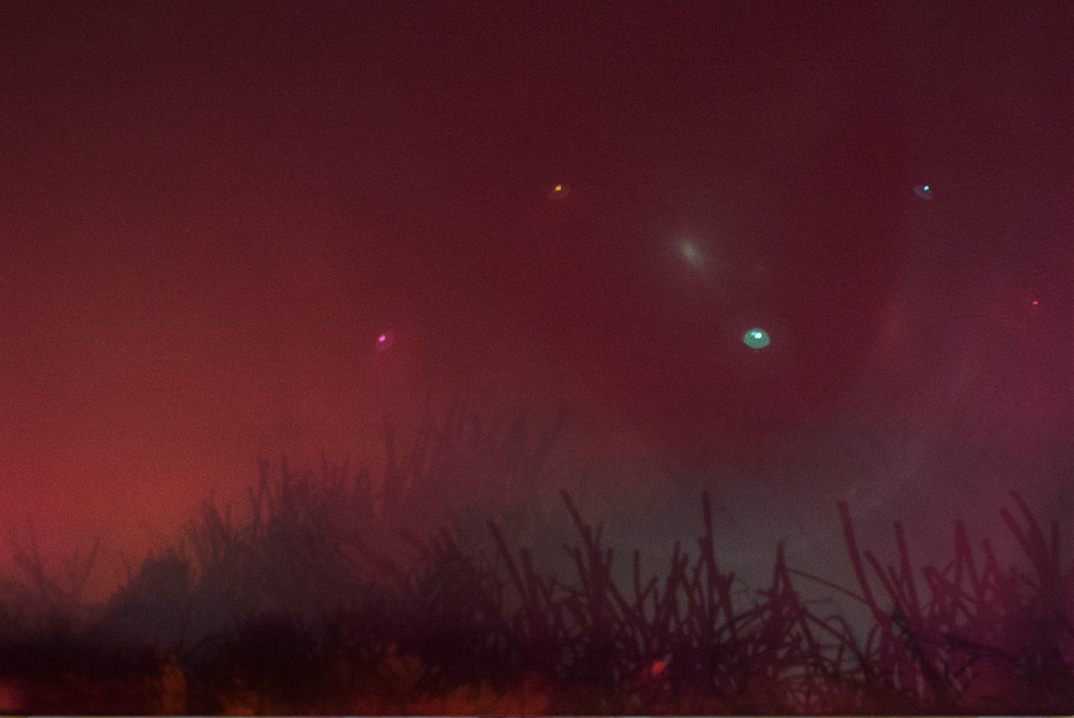
Uncle Pug
Posted on: July 16, 2015
When walking, Uncle Pug’s crutches went huff-plat, huff-plat, telling us he was coming. Two loud crutches made up for one dead leg. Tee cut and stapled all his pants at the right knee so his stub didn’t get cold, except in the summertime, when it stuck out the bottom of his shorts like a turtle head.
“What good?” he said, screen door sizzling shut.
“Ain’t nothing,” Tee answered from the kitchen. I didn’t say anything. I stayed out of grown-folks business.
I got off the couch so he could sit. Tee said he hollered when I didn’t get up from the couch because the crutches hurt his armpits like feet walked too long. But Pug fussed like an old lady, that’s just what he did. Whooped like one too -- stung, didn’t really hurt hurt, except when that crutch whapped your forehead.
Like I knew he would, he flipped the TV channels and stopped on the Golden Girls. He only walked up the path to our house to watch TV and eat. Otherwise he stayed in his house out back. But he’d walk that path every day to catch his woman. He loved him some Blanche.
“Ach,” he sucked his teeth. “Get it,” he said when she sashayed.
“Dorothy, sit yo ugly ass down,” he said when Dorothy came on the screen, dismissing her with a flinging of his wrist.
“Mind me of Sophia,” and then he’d say, “not that old Sophia. My Sophia.” And then he’d wait for the air to breathe the questions he teased up. By thirteen, I didn’t care any more. I’d played hide and go get it, let a white girl touch my thing, felt Keisha Frye’s titties at the movie theatre. What’d I care about some old wrinkly broads on the television and a man with no leg? He never talked about the nasty stuff anyway. Bet he never seen a coochie up close. But Raynard dumb tail goaded him every time, making me miss all the jokes.
“Who Sophia? Some white girl?” Raynard, Tee’s man, sipped wide from a Steel Reserve, eyes leaky red.
“Oh, can’t say.” Pug teased, waiting for someone to beg.
And Raynard gave Pug what he wanted. “Aw man, you don’t said something now.”
I sat on the floor leaning against the couch. Pug’s full leg stretched out no further than my thigh. He had the family look -- Tee called him “petite,” raisin-brown with cool Indian hair cut low, but long enough so you can tell it curled up. Pug was old and lived in a shack, but he never left the house without a crisp ironed shirt, one shined shoe, and his hair slicked back.
“Sophia’s legs -- creamy white like drumsticks covered in buttermilk, long and lean, my boy.” Pug smacked his thigh.
“What you say!”
“Don’t get him riled up, Raynard! I ain’t trying to take his old ass to the hospital cause he done caught wood up in here.” Tee yelled laughing.
“Aw Girl, hush up now. Let me tell this boy how a real man does it,” Pug said.
It was the episode where Blanche goes on the date with her gym instructor, a much younger man.
“Sophia was in France. French women love black men.”
Blanche sat at the dinner table, trying hard to connect to the hot young thing across from her.
“Saw me in my uni-form. Can’t no woman resist a Mitchie man in uni-form.”
Blanche laughed, desperate.
“Well, how you get with her Pug? Back then and all? She was white right?” Raynard asked, disbelieving the tall tale.
“This was France, young man. I was a soldier, young man. That’s the only excuse I need. But we hung out in secret clubs. Won’t nobody in there to bother us cause they were all doing the same thing.” Pug’s back straightened, taking a plate from Tee.
Blanche’s young man said she reminds him of his mama, and dignity flees her face. Pug dribbled green collard juice down his crisp plaid collar.
“She was a queen.” He stared at his hands, “We went together. Then I lost my leg. Then I came home,” he said.
“Well damn? Some French white woman…” Raynard looked like he wanted to say more, but Tee shook her head. Let it go.
Blanche rose from the table, purse in hand, chest high, head high, and marched back home to her girls. She wasn’t lonely, never lonely, she had her friends. Thank you for being a friend, she said.
Uncle Pug just had us. No kids, never married, no women except the ones on TV.
One time I went in Pug’s house. His piss-and-shit pot, one of them portable stands from the hospital with a white bucket underneath, had not been changed and Tee told me go down there and put it outside the house. Said when she walked by, she couldn’t breathe right from holding her breath, didn’t want the ghost of that smell getting in her. She made me put on a doctor’s mask because she didn’t want the ghost in me neither. I went in his house while he sat on our couch, watching his Blanche. I held the cold handles out, trying not to look down into the swishing brown mess, praying I didn’t trip on a pulled up sticker-board tile Raynard help put down when the plywood rotted. Made sure all four corners of that stand set solid in the grass behind the shack before footing out there fast. Ripped off my mask once up the path and breathed, breathed, breathed.
That was the stench he took in every day when he left our couch and huff-plat, huff-plat back home in the darkness. Sugar took his leg, you know, not some damn war. But, who was I to tell an old man about lies.
Written by: Tyrese L. Coleman
Photograph by: Garrett Carroll
Labels:
1:1000.
amputee.
delusion.
elderly.
family.
France.
Garrett Carroll.
Golden Girls.
house.
television.
Tyrese Coleman.
war
No Console for Old Men
Posted on: January 15, 2015
Cliff watched in horror as his grandson stepped out of the car and jump kicked a scantily-clad woman in the spine, laughing maniacally as she plummeted to the ground. Once she was sprawled out on the pavement, he pulled out a baseball bat and proceeded to bash her skull in until money spilled out of her purse like the blood streaming out of her head. he collected the wad of cash and returned to his vehicle, but not before throwing a grenade at the lifeless body, extinguishing the flames with a round of ammunition from an automatic rifle.
“Tiffany, I don’t want Jacob playing that game any more,” Cliff said entering the kitchen.
Tiffany sighed and continued peeling potatoes, her charm bracelet jingling as the curls of coarse skin rained down on the garbage disposal.
“Save it, Dad.”
“No, Tiffany. It’s your son who needs to be saved.”
“He’s just a normal fifteen-year-old boy.”
“A fifteen-year-old boy who brutally murders prostitutes!”
“In a video game.”
“Does that make it any better?”
“YES.”
Tiffany turned around to face her father, tightening her fingers around the partially shaved vegetable like a prison shiv.
“You’re right,” Cliff conceded. “It’s certainly better on the TV than in the streets, but it’d be best if he didn’t do it at all.”
“Well, maybe you shouldn’t have bought him that game for Christmas.”
“THAT is the game I got him?”
Tiffany smirked and returned to her duties.
“Yep.”
“Then I’m taking it away.”
“Good luck.”
Cliff returned to the living room to find Jacob’s eyes transfixed on the screen as a curvaceous woman wearing practically no clothing threw two blades into the torso of a man in a blue mask, sashayed across the room, grabbed his face, ripped off his head, and pulled down the thin purple veil covering her mouth to reveal a set of demonic teeth, which she then used to gnaw through his face like a competitive pie eater. Once her appetite was satisfied, she spiked what remained of his head into the ground and rubbed his blood all over her body, emitting moans of pleasure as her hands traveled below her navel.
“Jesus H. Christ,” Cliff uttered.
“GRANDDAD,” Jacob said, quickly covering the controller and his crotch with a throw pillow.
Cliff walked over to the gaming console and began searching for an off switch.
“Granddad, seriously, what are you doing?”
“How do you shut this damn thing off?”
“YOU don’t shut it off,” Jacob said, standing up from the couch.
Jacob grabbed hold of his granddad’s bicep, which maintained a surprising amount of the muscle he gained during three tours of duty and several decades of construction. Cliff ignored Jacob’s grasp and began unplugging the cords from the back of the machine.
“STOP,” Jacob yelled, tugging on Cliff’s arm with all of his might.
Cliff remained perfectly still, save for the hand he sent darting towards Jacob’s wrist. Jacob’s nostrils flared as Cliff’s fingers plucked his veins like guitar strings, forcing him to loosen his grip. Cliff began rotating his hand until Jacob was on his knees pleading for mercy.
“I SURRENDER,” Jacob yelled.
“You would,” Cliff responded, setting Jacob free to cower on the sofa.
Cliff finished unplugging the game console and tucked it beneath his arm.
“When you’re done crying, meet me in the car,” Cliff said as he marched out the door.
Tiffany poked her head out from the kitchen with a grin on her face.
“You heard him,” she said. “Get out there or I’ll tell all your friends you just got your butt kicked by a senior citizen.”
Her eyes followed Jacob to the door. He scowled back and shook the pain from his arm while reaching for the knob.
“I’m calling Social Services,” he threatened.
“So you can tell THEM a senior citizen kicked your ass?”
Jacob answered by slamming the door.
“Oh good,” Cliff shouted from behind the wheel. “I was afraid natural sunlight might kill you. You know, like a vampire.”
“I get it,” Jacob scoffed, climbing into the car.
“Oh, cheer up. Before you know it, I’ll be dead, and you can go back to beating up prostitutes and touching yourself to warrior women.”
“I WASN’T TOUCHING MYSELF.”
“Sure you weren’t.”
Cliff put the Oldsmobile in reverse and pulled out of the driveway. They rode in silence all the way to the park where grandparents and grandchildren regularly fly kites together.
“SURPRISE,” Cliff said after pulling into the parking lot.
“Kites?”
“Come on, give me an hour and you can kill all the hookers your heart desires.”
Jacob pulled his phone from his pocket and set a timer.
“Tick-tock,” he said, flashing his granddad the screen.
Cliff gathered the kites from the trunk and handed them to Jacob, along with the mission to find a patch of clean airspace while he takes a leak. Jacob walked towards the field with two kites beneath his left arm and a smartphone in his right hand.
Cliff exited the bathroom and scanned the sky for the Spongebob Squarepants kite he had given Jacob on his eighth birthday. To his surprise, he found the yellow and porous diamond fighting against the wind about fifty yards to his left.
He walked towards the spot and traced the string with his eyes, soon discovering that Jacob wasn’t manning the handle. He stopped and looked around the lawn until he saw another Spongebob kite facedown in the grass. Beside it was a scraggly-haired teenager with his head pointed straight down at a phone he was gripping with both of his hands.
When Cliff was close enough to see the screen he saw something he’d been trying to forget for the better part of his adult life. He saw an earth-toned helmet, he saw crosshairs, and then, he saw Jacob tap his thumb against the glass, making the helmet and its occupant vanish behind a puff of blood.
“I surrender,” Cliff murmured, gathering the kites and retreating to the car.
Cliff walked over to the gaming console and began searching for an off switch.
“Granddad, seriously, what are you doing?”
“How do you shut this damn thing off?”
“YOU don’t shut it off,” Jacob said, standing up from the couch.
Jacob grabbed hold of his granddad’s bicep, which maintained a surprising amount of the muscle he gained during three tours of duty and several decades of construction. Cliff ignored Jacob’s grasp and began unplugging the cords from the back of the machine.
“STOP,” Jacob yelled, tugging on Cliff’s arm with all of his might.
Cliff remained perfectly still, save for the hand he sent darting towards Jacob’s wrist. Jacob’s nostrils flared as Cliff’s fingers plucked his veins like guitar strings, forcing him to loosen his grip. Cliff began rotating his hand until Jacob was on his knees pleading for mercy.
“I SURRENDER,” Jacob yelled.
“You would,” Cliff responded, setting Jacob free to cower on the sofa.
Cliff finished unplugging the game console and tucked it beneath his arm.
“When you’re done crying, meet me in the car,” Cliff said as he marched out the door.
Tiffany poked her head out from the kitchen with a grin on her face.
“You heard him,” she said. “Get out there or I’ll tell all your friends you just got your butt kicked by a senior citizen.”
Her eyes followed Jacob to the door. He scowled back and shook the pain from his arm while reaching for the knob.
“I’m calling Social Services,” he threatened.
“So you can tell THEM a senior citizen kicked your ass?”
Jacob answered by slamming the door.
“Oh good,” Cliff shouted from behind the wheel. “I was afraid natural sunlight might kill you. You know, like a vampire.”
“I get it,” Jacob scoffed, climbing into the car.
“Oh, cheer up. Before you know it, I’ll be dead, and you can go back to beating up prostitutes and touching yourself to warrior women.”
“I WASN’T TOUCHING MYSELF.”
“Sure you weren’t.”
Cliff put the Oldsmobile in reverse and pulled out of the driveway. They rode in silence all the way to the park where grandparents and grandchildren regularly fly kites together.
“SURPRISE,” Cliff said after pulling into the parking lot.
“Kites?”
“Come on, give me an hour and you can kill all the hookers your heart desires.”
Jacob pulled his phone from his pocket and set a timer.
“Tick-tock,” he said, flashing his granddad the screen.
Cliff gathered the kites from the trunk and handed them to Jacob, along with the mission to find a patch of clean airspace while he takes a leak. Jacob walked towards the field with two kites beneath his left arm and a smartphone in his right hand.
Cliff exited the bathroom and scanned the sky for the Spongebob Squarepants kite he had given Jacob on his eighth birthday. To his surprise, he found the yellow and porous diamond fighting against the wind about fifty yards to his left.
He walked towards the spot and traced the string with his eyes, soon discovering that Jacob wasn’t manning the handle. He stopped and looked around the lawn until he saw another Spongebob kite facedown in the grass. Beside it was a scraggly-haired teenager with his head pointed straight down at a phone he was gripping with both of his hands.
When Cliff was close enough to see the screen he saw something he’d been trying to forget for the better part of his adult life. He saw an earth-toned helmet, he saw crosshairs, and then, he saw Jacob tap his thumb against the glass, making the helmet and its occupant vanish behind a puff of blood.
“I surrender,” Cliff murmured, gathering the kites and retreating to the car.
Labels:
1:1000.
grandparents.
kids these days.
mark killian.
sophie stuart.
teenagers.
video games.
violence.
war
Anatomy of the Inhuman Heart (Tales from the Academy)
Posted on: January 13, 2015
It started with the bright white light of her tablet, the notification a signal flare arcing against a starless sky.
Groaning, she tapped the blocky red letters and closed her eyes. He’s forgotten about the time difference again.
Ren settled back into the covers, the comforter warm and soft against her chin. She felt sleep embrace her, but the call light cleaved through the darkness.
He meant to call someone else.
She pressed the red letters and rolled onto her back. Anxiety gnawed at her, ground away her desire for sleep and Ren found herself grabbing the tablet and tapping away until her father’s face was there, washed with worry and fear.
“What’s wrong?” Ren asked, and a dozen possibilities turn over in her mind. Her mother, her siblings, his job. But Occam’s Razor has no place in war. There is no room for simplicity among hatred.
“An attack,” her father said. She slid her fingers against a slender glass tab and activates a wider, brighter screen across from the bed. Ren saw images her mind refused to reconcile.
Her country. The iconic snow-topped mountain. A mushroom cloud. Cherry blossoms fluttering in a radioactive breeze.
She slid her fingers again. Light left the room, save for her father’s face, small and weak with its own darkness.
“But you are not in Tokyo,” Ren choked, knowing what he would say.
“It is not just Tokyo.”
“Tell me,” she demanded. She listened as he explained what the news outlets will spend weeks covering in detail, with bold, colorful interactive maps and graphics: analysts standing in the middle of renderings of Kyoto Ground Zero and Tokyo Ground Zero, anchors charting the bombings across Kyushu and Shikoku. Damage dealt by China, all pretense of positive relations smoldering.
With her father, it was black and white. He stayed home, sick with flu, and he could not get in touch with her mother and sisters. He has tried to use the locator app, but — and he would not look at her as the words spilled out in a sob — no user connection.
“Leave,” Ren said.
“It’s too late.”
“They’ll come,” Ren insisted, though she isn’t sure who “they” are and when and how they will arrive. “Someone will come. International aid, survivors’ camps — ”
“Ren,” her father met her eyes. Across a war zone that did not exist yesterday, across an ocean, they saw each other for what they are: a father and his favorite daughter, a dying man and a survivor.
“No,” she said. Her jaw trembled, oscillating between rage and mourning.
“I called to say goodbye.”
They spoke for another half hour, until the signal ended — tragically? Mercifully? Ren can never decide.
Ren looked around the room, Spartan with its single large screen. She felt like a caged animal, breathing stale air and circling, ready to attack. When she unlatched the door she felt cool freedom, tears drying into streaks of salt on her cheeks like war paint.
Ren tallied her losses. She tallied the losses of those who could not.
The recruiting office buzzed with jingoistic rhetoric, electric currents of pride and racism pulsing around her. Ren wanted to shake the men, women, and children who glared at her.
She remembers learning about the internment camps during World War II and how magazines published ways to tell Chinese and Japanese people apart. There were buttons with big bold letters: I AM CHINESE.
Ren considered making one of her own, one that might light up with flashing neon letters, lowercase in the style of the microblogs and pop journo sites: i am japanese-american!
Or better: i hurt, too <appropriate emoji>!
But not what she felt, never the words she wanted to scream at them as they stared and hated and judged: I lost something, and you want only to gain.
When her turn came, she signed on the line and enlisted like the others.
***
The campus sprawls over forty acres, though Lieutenant Colonel Chisholm assures them additional funding has been approved to purchase more land, build more facilities, remodel staff quarters. Nervous chuckles ripple from the new recruits, men and women responsible for the success of the Academy and its progeny, like this place is a living organism.
They walk into the main building, a massive umbrella sculpture of fabric and seams welcoming them in shades of orange and vermillion.
The heart of the Academy, Ren thinks. It feels like her own: ripped open and inverted, rearranged into something macabre. It beats not to sustain life, but to avenge the dead. Vessels that once constricted and pumped blood have been fashioned into spikes pulsing poison.
Ren tastes bile and the room swims before her, the heart of the Academy throbbing, pounding in the atrium. She hears the blood rushing in her ears and it sounds like the drums of war. She breathes long and deep until she feels weightless, drained of the fever that boils her blood and makes her see red and hatred everywhere.
Temper your rage.
***
“I like your hair. Not many women going for the traditional crew cut.” Desh’s mouth spreads in a delicate grin. It’s different from the too-wide garish smiles the others have given her, the words of a compliment betrayed by the ticks of the disingenuous. Ren decides to trust this man, even though her CO warned otherwise.
“Thanks, but I think I went too extreme. It needs to grow out. And I kind of miss my bun.”
“Did they tell you why I was here?”
“Reporter for pop journo site New New Republic,” Ren says.
“I’m writing about the success of the Academy, getting perspectives from different people in the trenches. We’ll give everyone pseudonyms. Lieutenant Colonel’s orders,” Desh says. “Tell me some things about you. Give me a sense of Specialist Ren Mori.”
“I manufacture murder,” Ren says, “and I try to live with that choice.”
Ren looks at Desh, who has sad, dark eyes like her father did. She continues.
“Some days are easier than others.”
Written by: Erin Justice
Photograph by: Emily Blincoe
The True Test
Posted on: November 13, 2014
Max hesitates and looks up and down the antiseptic hallway, stark white and silent. Dozens of scanners glow next to dim portals, each leading to a bright exam room.
The watch vibrates an alarm. He’s going to be late. Max sighs and places his hand on the screen. The portal displays a series of numbers and biometrics, as well as the same terrible picture of a younger, pimply-faced Max. The portal spirals open and Max steps through.
A young woman with short, choppy hair is in his exam room.
“My name is Ren,” she smiles. “It was clear Dr. Rosen was not making any progress.”
“I wasn’t nice to Dr. Rosen. I didn’t know his name, though,” Max says, as though it makes a difference. Last week his test response was a thinly-veiled story about a clever boy imprisoned by a fat, evil king. Max has been paying for it all week with brutal drills in the SimRoom.
“I don’t expect you to be nice to me. Not when I look like the enemy.” Ren’s smile seems sharper, more pointed and ferocious.
“Don’t do that. You aren’t the enemy.” Max says. “You’re Japanese. Are you one of the survivors?”
“No,” Ren exhales and looks down at her notes. She drags her red pen across the paper, drawing sad loops.
They do not say the words they are both thinking, born from different memories of the same terrible day. Max does not ask her if she lost family during the Crimson Terror. Ren does not ask him if he joined the Academy because he was caught up in narrative driven by revenge.
Their expressions tell their stories: loss and hatred.
“I’m sorry,” Max says. “I didn’t mean — ”
“How did you know?” Ren asks. Her expression is a blend of sadness and curiosity. She wipes a stray tear away with an ink-stained finger, leaving a smear of violent red in its wake.
“My dad made me memorize the family tree back through the First Civil War,” Max says, “after World War II, my great-great-grandfather married a Japanese nurse named Ren.”
“Without that, would you have known?”
“Probably not,” Max admits. “But if you’re at the Academy, you have to be good, right?”
Ren does not respond. She taps on the table and dozens of blooms rise from its center. There are massive sunflowers and vibrant posies, curled fiddlehead ferns and drooping tulips in every shade Max can imagine. It is the most color he has seen in years.
“This is your thirty-seventh test, Max. Create a story,” Ren says.
“Wait,” Max says. He pulls a clean white screen cloth from one of the many pockets in his jumpsuit. He hands it to Ren, her wide brown eyes wet with uncried tears. She stares at it. Max gestures to her eye.
“You’ve got ink there,” he explains.
“Thank you,” Ren says, dabbing the stain until it disappears. When she gives the cloth back to Max, her fingers brush against his.
She pulls her hand away and taps on the table again. A wide ceramic bowl appears under the floating flowers. Max looks up and plucks different stems from the holographic network garden above him.
“He fell in love with the smartest woman he knew,” Max begins.
***
At the ninety-eighth test, Max requests a cipher.
“A cipher?” Ren’s voice is even, but her dark brown eyes light up. It is the only way they can laugh together.
“A key,” Max replies, his blue eyes wide and bright. He almost cracks a smile, but bites his bottom lip instead. Ren blushes and glances at her notes.
“Please, Ren. I’ve been telling the story all wrong! Flowers have different meanings, and if the man is in love with her, he can’t send her flowers that mean friendship or sympathy.”
“In your story, you assume the woman cares about the meanings of the flowers instead of the overwhelming affection behind the man’s efforts. Why does she care?” Ren asks.
“Because she’s smart and he isn’t, and if she knows this and he never did, she wouldn’t want him,” Max explains, his voice rough and deep.
“You have been telling the same story in every test I have given you. Some days you pick different flowers. Your flowers mean the same thing to the man. Why does a key matter?”
“I graduate soon. I just want to tell it right.”
“There are no right ways,” Ren laughs. “Now, tell me a story.”
***
The transport hovers over the East China Sea, its belly swollen with recent Academy graduates, high off propaganda and nationalism and eager for action. Max sees something spiraling up out of the water, a swarm of flashes and a low hum he could feel deep in his gut. He jams on his helmet and screams for autopilot to take over, and the last thing he sees is a shimmering black sludge that coats his visor. He feels his stomach drop as he falls.
***
“Your progress is good,” the doctor says, “and you’re integrating with the new tech nicely. You’ve gotten a few pings for visitor requests. Now that you’ve got full range of motion, I think it’ll be best for them to start coming by, get used to your new look.”
“They have to get used to me?” Max says.
“Soldiers who signed up as tech donor recipients have an easier adjustment to their new limbs or organs - except for the silver skulls, and nobody can get used to looking like a partial Terminator, though I’m told it’s terrifying in Occupied Shanghai.”
“Terminator?” Max asks.
The doctor shakes her head and leaves.
His parents come the following day. His father stares at his arm and shoulder, his mother cries, and his little sister keeps saying “Cool” and asking the doctor varying questions about the specs.
Ren comes the day after with a tray of flowers: real ones, wilted and sweet.
“Pick one,” Ren says.
Max curls his new slender, silver fingers around a blossom. He liberates one of the white roses from the tray and hands it to Ren.
“He fell in love with the smartest woman he knew,” Max says.
Ren smiles and nods.
Written by: Erin Justice
Photograph by: Emily Blincoe
Push Yourself
Posted on: November 6, 2014
Candace pushed the paint roller up and down the sanded surface that was previously covered in faded paisley wallpaper. Her matte-blue trail stretched from the living room entrance toward the picture window that overlooked the back of the property. It was in front of that same window her mother would sprawl out on a chaise lounge and read novels about war-torn lovers, using the end of each chapter an opportunity to check in on young Candace as she played on the swing her father built her before answering his call of duty.
Candace used to spend hours watching ants march beneath her feet, the rest of her body draped over the wooden plank like a dress hung out to dry. She would make up stories for each the six-legged soldiers, imagining where they were going, what they were doing, and how many children they left behind. She was comforted by the thought of a larger being looking out for her father in the same way she was watching over the platoon of insects.
Candace stopped painting and placed the roller in the pan, resting the handle against one of the cloudy panes of glass. She searched for a place to take a break from her duties, but with all of the furniture either in storage or sold, she had nowhere to sit but the untreated floorboards that were speckled with carpet fragments.
She knelt down until her hands reached the tacky surface beneath her, using her arms as kickstands for her upper body while she extended her legs toward the window. She tapped the platinum ring on her right hand against a stray carpet staple while assessing her progress. The pings of her jewelry were as uniform as the lines of paint along the wall.
After estimating how long it would take her to finish the room, she shifted her weight to her right arm and checked the watch on her left wrist. The beams of light coming through the window bounced off the diamond-accented hands, filling her pupils with explosions of color that were snuffed out once she rolled her eyes.
She stood up and trudged toward the window, each step echoing through the empty room like her shoes were lined with packaging tape. As she reached for the roller, she caught a softened glimpse of the swing dangling on the other side of the glass. The subtle swaying of the unoccupied seat taunted her from across the yard. She disregarded the time on her outstretched wrist and headed for the back door. She pushed opened the creaky screen and tiptoed down the steps, being careful not to disturb any creatures that may be lurking in the shadows beneath the concrete slabs.
Her silence was broken once her right foot crunched the brittle weeds surrounding the base of the steps. The decaying lawn reminded Candace of her mother’s current state of health, reaffirming her decision to move her into a retirement community and sell her childhood home.
Candace crunched across the prickly turf until she was reunited with her Rosebud. She placed her right hand on the plank of wood and pushed down to test its durability, taking the familiar squeak of the screws as permission to climb aboard. She grabbed one of the weathered ropes with each hand and walked forward until the wood rested flush across her flat stomach.
She gave the fraying cords a final tug and hopped upward, letting the forces of gravity take hold. The swing’s true age became apparent once the wood stripped from the nails, sending Candace face first into the trail of barren dirt that was formed by the repetitive dragging of tiny feet.
Candace laid still for a moment, waiting for pain to identify any injuries she sustained in the fall. The only sting she felt was coming from the circular indentation around her left ring finger. She lifted her hand to find a crimson insect crushed in the trench of flesh, its jaws clinging to her skin.
She picked up a twig with her right hand and made a tiny groove in the dirt. She then plucked the lifeless ant from her finger and placed it in the hole, covering it with the displaced earth. She patted down the mound with her thumb as a tear fell from her nose, strengthening the bond of the soil.
“You fought bravely, your family will be proud,” she said to the grave.
She sat on her knees, clapped the dirt off her hands, and reached for her phone. There were no signs of damage, but there were three voicemails.
“Hi, Ms. Shruggs. It’s Zach. I feel dumb calling you about this, and I know you have enough to worry about right now, but I’m having a hard time with the Garrison report. If you could give me a call I’d re …”
She deleted the first message.
“Hi again. Just wanted to see if you got my call. I’ve made a little headway on the report, but I could still use a som …”
She deleted the second message.
“Okay, disregard everything I’ve said up until now. I figured it out. The report is almost complete, and I will have it to you first thing tomorrow. Sorry again for disturbing you. Please don’t fire me.”
Candace laughed and saved the third message. Then she composed a text.
See what you’re capable of when you’re left to your own devices? P.S - you’re not fired … yet.
She hit send, put her phone back in her pocket, and got to her feet. She wiped the moisture from her eyes with the back of her sleeve and blinked until the house came into focus. She saw her reflection in the window, standing in the same spot where she waited for her father to return from the war, where she waved for her mother to come give her a push, where she learned what she was capable of when left to her own devices.
Buggies
Posted on: June 10, 2014
The word moves up and down the line of men, from one to the next. They might as well be playing the game Telephone.
“Gas,” they whisper.
At least, we believe it’s gas. We soldiers of the night, brave and not long for this world, look to the west and watch the gas bear down on us. It is thick and ominous. By now, we know not what we think, but this…this…thing; this thing is death. It has no smell, and it moves with the lethargic quality of a goddamn turtle. In this way, it is not at all like death. Death for us is not slow and deliberate. Death will sneak in the night, tiptoe behind you, hold It’s breath, and then slit your throat with a 12-inch bayonet blade.
Oh, those were the days. Simple hand-to-hand combat, is that too much to ask? Is it really too much to ask to look your murderer in the eyes?
As a boy I daydreamed of combat, of the historical battles of Napoleon and Normandy (For some reason my daydreams were tres French). I longed for the romantic wars of our elders. I desired masculinity, not in the homo-way, but in the Hemingway.
Pardon me, pardon me; it’s just a joke. A little play on words. Here, laughter is more valuable than water. More valuable than shit-pots or tissues you can stick up your nose to protect from the smell of decomposing flesh. Here, bodies are stacked on top of each other. We call them The Towers Of David. Or Freddy. Sammy. The Towers Of William. There are hundreds of them and we’re starting to run out of names.
“I think the wind is changing. It’s gonna…maybe it’ll blow over.”
Parsons barks when he talks. I thought it odd until I visited his family over leave last Christmas and his father barked, and his mother barked, and his sister, who must have been only twelve or thirteen, she barked. They had their Christmas card picture held to the refrigerator door by a magnet, so I stole it. It’s the four of them in matching sweaters looking rather dour, other than the sister who is all braces and freckles. It reminds me of home, any home, and since there aren’t many homes left I think we adopt the faces and families of others. Things disappear and we try to replace them. It’s only natural.
Anywho, I stole the magnet picture and in black marker wrote The Barking Parsons on it. Now, I keep it in my pocket and look at it when I’m feeling ill.
The gas continues to waft in our general direction. I don’t know where it’s coming from, as we haven’t seen hide nor hair of the Buggies for a few days. That’s what we call them, Buggies. It’s not very technical or anything, but it’s accurate. They are bug-like creatures from another planet. Fuck, from another solar system. I’m sure the big brass band up top has a more professional term for them, but for the guys on the ground, Buggies works just fine.
“Masks Up!”
There’s a shout from down the line and in unison we all dawn our demon masks. Really, they’re just gas masks, and they look pretty much the same as they’ve always looked, right on back to the days of WWI. I used to read stories about The Great War. Whoever termed that shit was way off, obviously, as there was another Greater War just down the pipeline and a handful of Not Great Wars not far off. Though, as someone once said, it’s no use crying over spilled milk.
Or blood. Whatever.
I read stories about the mustard gas used in that not first, and certainly not last of global conflicts, and how the whole goddamned war was this giant clusterfuck of old and new technology and strategy. The part that stuck with me the most, and why I’m rehashing this shit now, was the instances of gas mask-wearing cavalry units unleashing holy hell on anything and everything. Just imagine it. You’re sitting there, minding your own business, trying to survive and not vomit your guts up (because of the gas), when all of the sudden this heaving beast of a horse bursts out of the fog like a fucking Dodge Charger, all bleeding eyes and spit. Its rider is staring down at you from behind this fucking steampunk mask, a wall of fire and gas behind him. I don’t care who are you, you’re losing your lunch. That shit is scary. That shit is demon-scary.
There’s some whooping and hollering down the line. And then…
WHISTLE. Whistlewhistlewhistle. WHISTLE.
Two hundred years removed from The Second Battle of Ypres (Belgium, 1915) and still with the fucking whistle. Still with the fucking gas masks.
Some things never change.
We rise as a mass of demons. Over the ledge and out of the pit, to grandmother’s house we go. We do not know what is on the other side of the field. We do not know where the Buggies are. You could fill an ocean with the amount of shit that we do not know. I think to my long-dead comrades, those of that Great War ilk, and the word Solidarity appears, etched in the mud at my boots.
I step over it.
The fog or gas (or whatever) is thick, though nothing compared to the cacophony of screams and shouts coming from my fellow soldiers. It would appear that there were not enough demon masks to go around.
Someone jumps on my back and I’m down to my knees. Sausage fingers pry at my mask and face, trying to rip them both off. If they must pull my head off with it, they will. This is friendly fire. War is Darwinistic in its pragmatism.
My attacker/comrade is too strong. He rips the mask off my face and falls down somewhere behind me. I am on my knees and I lift my head to the sky. I see the lights.
Not one light. Not one shining, blinding, comforting light. No, I said lights. Plural.
They are what they appear to be. Thank god for that.
The Buggy ship rises on top of us, bigger than a building, masked in a cloud of fog and smoke and night. Only the lights on the bottom of the ship are clearly visible.
There they are.
So much noise it feels like the world isn’t big enough to hold it all; like we’re going to blow a fuse.
As I fall forward, face to mud, grasping at my burning throat, the alien ship continues its ascent into the night sky.
It’s beautiful.
Written by: Logan Theissen
Photograph by: Hannah Chertock
Hokey Pokey
Posted on: April 15, 2014
You put your right leg in,
you hear a shot ring out,
your eyes well up with tears,
and you scream a violent shout.
Your shin bone blows to pieces,
and you plummet to the ground,
here comes a-no-ther round.
***
They’re scowling. I must’ve been screaming again.
Yep. The piss in my lap confirms it. Another night, another night terror.
I’d ask for a little sympathy, but these poor bastards are no better off than I am. Homeless shelters weren’t made for people with pleasant pasts. They’re holding pens for society’s most forgettable members: the alcoholics, the drug addicts, the mentally disabled, the emotionally disturbed, the socially inept, or in my case, all the above.
I can’t find a clock, and I don’t even know why I bothered trying. My urine-soaked mattress and the adrenaline of memories made falling back to sleep about as likely for me as running a marathon.
I pull my soiled ass up into my wheelchair and connected the dots between the beams of moonlight leading to the bathroom. I strip down, rinse off and make a trail of water droplets from the showers to the communal closet. Behold, all the shit that even the Salvation Army couldn’t get rid of.
I wheel out of the room wearing a light-blue dress with roses embroidered from the neckline to my nubs. Why? Because it was within reach and why the fuck not? Shoving what’s left of my legs into a pair of pants makes about as much sense as volunteering for war in the first place. Proud of me now, Papa?
The kitchen table is littered with day-old baked goods; throwaway pastries for America’s outcasts. I grab as many stale bagels and croissants as I can shove up my skirt and coast towards the front door. My momentum is interrupted by Lucille, the fat bitch who enjoys her false sense of superiority more than the minimum wage she’s probably earning.
“Not so fast,” she said, wrapping her sausage fingers around the handles of my wheelchair.
“Get off.”
“Where do you think you’re going?”
“Wherever I WANT. It’s a free country, thanks to pawns like me.”
“You know I can’t let you out of here without a reason.”
“I’m job hunting.”
“In a dress?”
“Call me Tootsie.”
“I’m not letting you go out like that.”
“What am I, your daughter?”
“You’re the one in a dress.”
“And I’m gonna stay in a dress. It’s summertime, and my balls enjoy the breeze.”
“Fine, but you need bandages.”
“I don’t need bandages. You just need to hide my scars from all the squeamish SOBs outside that door.”
“You’re a real piece of work.”
“Yeah? Well you’re a real piece of shit!”
After wrapping each of my legs in an ACE bandage and stealing three of my bagels, Lucille finally lets me roll on.
“Don’t get arrested,” she yelled from the stoop.
“Don’t go into cardiac arrest,” I answered.
I stick a croissant in my mouth and wheel down the sidewalk like a squirrel carrying a nut up a tree. I alternate between bites and thrusts until I reach the Army recruitment offices about a mile from my temporary housing. Just in time for my first target.
“Excuse me, young man?”
“I’m sorry, Mister. I don’t have any money.”
“Of course you don’t. Why the fuck else would you be signing up for the Army?”
“I ... I ....”
“Let me guess, you want a free education? You want to make your daddy proud? You want to let freedom ring?”
“Yeah, all that.”
“Yeah? Well so did I.”
I lift my nubs to my chest and the prick is halfway to a hippie commune before the bandages hit my nipples.
“HEY!”
“Well if it isn’t Sgt. Cock Sucker.”
“What’d I tell you about talking to the cadets?”
“Don’t.”
“Then why are you still doing it?”
“Freedom of speech.”
“That’s it.”
The red-faced recruiter flings open the door and picks up the phone sitting on the front desk. Any minute now a cop will pull up and tell me there’s no loitering. I’ll tell him to lick me. He’ll tell me he’s going to arrest me. I’ll dare him. He’ll cuff me. I’ll hock a loogie in his face. He’ll throw me in jail. I’ll sing little ditties until they toss me back to the streets like an undersized fish to the sea. The world keeps spinning.
***
You throw your left hand up,
you put your weapon down,
you cry and beg for mercy,
till your pants start turning brown.
They drag you to their bunker,
and proclaim a victory,
wish I had legs to flee.
***
The guard summons a college student wearing a vomit-stained polo as I wheel into the holding cell. Society would probably consider this a favorable trade. Who am I to disagree?
The next jailbird to fly the coop is a middle-aged man in a well-tailored suit. His lawyer—and potential fashion consultant—loomed over the guard as he turned the lock. I wasn’t sure what the man was in for, but I could tell the arresting officer was about to get into some legal trouble of his own once the Brooks Brothers were done with him.
Before long, it was just me and the menagerie of minorities: skin tones ranging from deportable to charcoal. You name it, any jail in the country’s got it.
We sit quietly on steel benches like Life’s last-round picks. Well, they do. I’m off to the side in my sweat-soaked wheelchair, trying to remember what it felt like to be wanted. Uncle Sam wanted me when I was willing to take a bullet for Old Glory. The media wanted me for photo ops once they brought me home. And now, they just want me to disappear.
Mission accomplished.
***
You put your whole life in
to make your country proud,
you follow every order,
till your legs cannot be found.
You get a purple pendant,
and they tell you not to pout,
that’s what it’s all a-bout.
Photograph by: Pekka Nikrus
Labels:
1:1000.
amputee.
bitterness.
hokey pokey.
homeless.
mark killian.
pekka nikrus.
pride.
veteran.
war
This work is licensed under a Creative Commons Attribution-NonCommercial-NoDerivs 3.0 Unported License
1:1000
The Design of this Blog is All rights reserved © Blog Milk Powered by Blogger