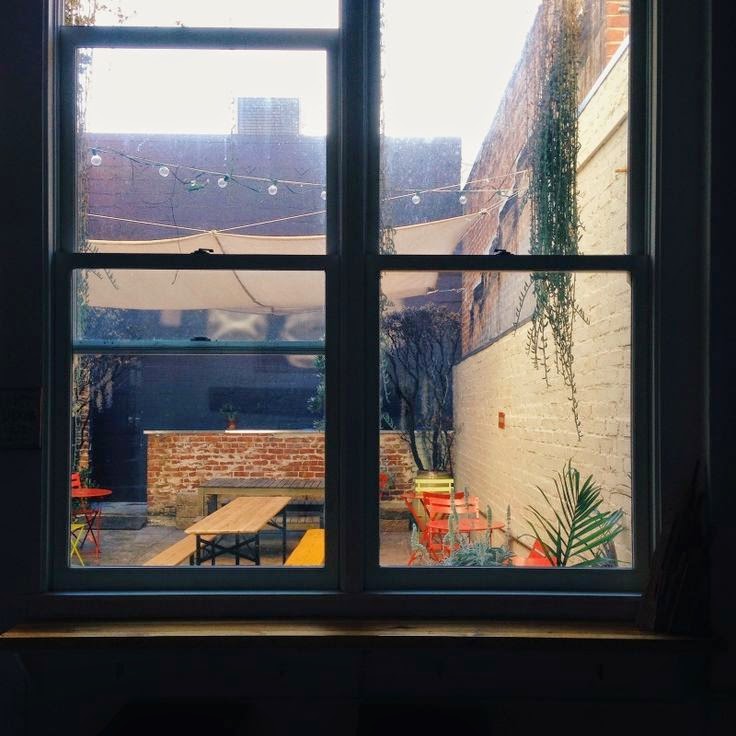
Too Far from the Water

Posted on: November 11, 2014


It makes it more difficult, Mica tells me, if you transition into a human family that's too far from the water.

"In a land family," she says, “you'll have turmoil."

"Like the waves?"

"No. Like a world with no waves."

I can't imagine a world with no waves. The pulse of them is all I've ever known. They set our days here. The waves rising and falling tell us when to swim beyond the ocean shelf and when to go closer to the shore to feed on smaller fish.

"You'll get lucky," says Mica. "I have a feeling you'll be born to fishermen."

I know it isn't good to spend too much time speculating, but I hope she's right. I swim behind her as we head towards the reef. The sun cuts through the water and flashes against her scales, which shine silver.

***

On the day Mica is caught, I swim to the sandy bottom and bury myself in silt, like I've seen the crabs do. Lin finds me and tells me I should celebrate. That Mica’s been eaten by now, and soon will be born as a human.

"How can they eat her, knowing they used to be animals themselves?"

"Why do you eat smaller fish?" Lin asks. "You help them continue on their path. Besides, humans lose all memory of their past once they're born in their final form."

I stay on the bottom awhile longer, then rejoin the others as they swim towards the shallows.

***

When the net dips down, I try to lock eyes with the fisherman. Remember who you were, I want to say, but my lips move in strange patterns in the air. My gills burn like the time I was tangled in a jellyfish tentacle.

As the fisherman moves the net into his boat, I can hear the muted sounds of my friends below, still in the water.

They wish me luck. Then, they are gone. All I hear are the waves.

***

The waves change. They usually woosh at a regular rate, but today, they're faster. I can feel a deep thrumming of noise. Until today, the noise has been soothing, sometimes seeming to speak directly to me--but now it's loud and angry. The walls of the chamber where I've been floating expand and press in around me.

When I emerge, my gills burn again, but in a new way. I try to protest in my old language, like in the fisherman's net. But now, the noise comes from me. I am wrapped in a new net, this one warm and soft. I am wiped clean. My scales are gone--in their place, brown skin.

I look up into human eyes for the first time since the fisherman's, and at once, I forget the waves. I am born.

***

“Don’t you go near that pool!”

I am four. It is hot. So hot, my feet burn on the concrete that surrounds the swimming pool. We’re on a roof deck, and Mom is talking to Jay and Shelby. No one is swimming in the perfect, turquoise water. Women and men lie on chairs all around us. Some reading, some drinking. Some sleeping. I don’t know why you’d want to nap when you could have a pool all to yourself.

Mom is helping Shelby get drinks out of the cooler. I sneak closer to the pool. I can just set my foot on the top of the water. Just enough to cool off the burn from the concrete. Ahhh.

I lose my balance.

I’m part of the water, now, bobbing up and down. Mom and Shelby and Jay are still by the cooler. I can see them as if through a sheer, sparkling curtain. No one is coming. I close my eyes, and when I open them, I see darkness creeping in.

And then, Mom’s in the pool, pulling me out, still wearing her long dress with the pink flowers on it. She’s crying. I’m crying.

On the pool deck, she spanks me, then squeezes me so tight I think I’ll black out again. She spanks me again, then kisses the top of my head.

“What did I tell you about the water? You are not a fish,” she wails.

***

“What’s your sign?” Michelle wants to know.

“What?”

“Your sign. Your astrological sign?”

She has a thick purple book on her desk. The pages are rimmed all the way around in silver, so when she closes the book, they shine.

I don’t want to admit I don’t know what she’s talking about. All morning, Michelle and her friends have huddled around that book. I didn’t expect to be included. Mom’s grand idea to move to the suburbs has left me the new kid in the middle of the school year. These kids ride horses and wear name brand clothes. The girls all have miniature leather backpacks that they’ve stuffed with glittery lip gloss and scented lotion. Mom bought me my backpack at Wal*Mart three years ago, and it’s falling apart. I don’t wear makeup. But now Michelle is talking to me. She wants to share the contents of her magical book with me.

“Helloooo? You in there, new kid? What’s your sign?”

“I can’t remember,” I say. “I knew one time, but now I forget.”

“When’s your birthday?”

“March 1st.”

“You’re a Pisces,” she says.

***

When Mom gets out of rehab for the second time, she takes me on a trip to the beach.

“You hate the ocean,” I say, when she calls me at college to propose the plan.

“I never did enough for you when you were little,” she said. “It can be a fresh start.”

I’m not sure I believe in fresh starts, especially from Mom. For her, it’s always more about disconnection from the old. “What’s past is past,” she’s fond of saying. And when the new is an escape rather than a decision, I can’t trust it to last.

“It’s nice here,” she says. The water is clear and calm. Bluer than I remember. But what memory do I have to go on?

“Did we come here when I was a kid?” I ask her.

“I don’t think so. You never liked the water.”

“That’s not true,” I say.

“Well, we just didn’t. We went to the mountains, though. Remember camping?”

“Uh huh.”

Mom’s taken her sandals off, and she cries out when she steps on something sharp.

“It’s just a shell,” I say, bending to pick it up. It’s shimmery, like mercury.

“Why does it look like that?”

“I think it’s called mica,” I say, unsure how I know this.

“Whatever,” she says.

I put the shell in my pocket, knowing I will have to make my own home.

Written by: Dot Dannenberg
Photograph by: Vrinda Agrawal


Push Yourself

Posted on: November 6, 2014


Candace pushed the paint roller up and down the sanded surface that was previously covered in faded paisley wallpaper. Her matte-blue trail stretched from the living room entrance toward the picture window that overlooked the back of the property. It was in front of that same window her mother would sprawl out on a chaise lounge and read novels about war-torn lovers, using the end of each chapter an opportunity to check in on young Candace as she played on the swing her father built her before answering his call of duty.

Candace used to spend hours watching ants march beneath her feet, the rest of her body draped over the wooden plank like a dress hung out to dry. She would make up stories for each the six-legged soldiers, imagining where they were going, what they were doing, and how many children they left behind. She was comforted by the thought of a larger being looking out for her father in the same way she was watching over the platoon of insects.

Candace stopped painting and placed the roller in the pan, resting the handle against one of the cloudy panes of glass. She searched for a place to take a break from her duties, but with all of the furniture either in storage or sold, she had nowhere to sit but the untreated floorboards that were speckled with carpet fragments.

She knelt down until her hands reached the tacky surface beneath her, using her arms as kickstands for her upper body while she extended her legs toward the window. She tapped the platinum ring on her right hand against a stray carpet staple while assessing her progress. The pings of her jewelry were as uniform as the lines of paint along the wall.

After estimating how long it would take her to finish the room, she shifted her weight to her right arm and checked the watch on her left wrist. The beams of light coming through the window bounced off the diamond-accented hands, filling her pupils with explosions of color that were snuffed out once she rolled her eyes.

She stood up and trudged toward the window, each step echoing through the empty room like her shoes were lined with packaging tape. As she reached for the roller, she caught a softened glimpse of the swing dangling on the other side of the glass. The subtle swaying of the unoccupied seat taunted her from across the yard. She disregarded the time on her outstretched wrist and headed for the back door. She pushed opened the creaky screen and tiptoed down the steps, being careful not to disturb any creatures that may be lurking in the shadows beneath the concrete slabs.

Her silence was broken once her right foot crunched the brittle weeds surrounding the base of the steps. The decaying lawn reminded Candace of her mother’s current state of health, reaffirming her decision to move her into a retirement community and sell her childhood home.

Candace crunched across the prickly turf until she was reunited with her Rosebud. She placed her right hand on the plank of wood and pushed down to test its durability, taking the familiar squeak of the screws as permission to climb aboard. She grabbed one of the weathered ropes with each hand and walked forward until the wood rested flush across her flat stomach.

She gave the fraying cords a final tug and hopped upward, letting the forces of gravity take hold. The swing’s true age became apparent once the wood stripped from the nails, sending Candace face first into the trail of barren dirt that was formed by the repetitive dragging of tiny feet.

Candace laid still for a moment, waiting for pain to identify any injuries she sustained in the fall. The only sting she felt was coming from the circular indentation around her left ring finger. She lifted her hand to find a crimson insect crushed in the trench of flesh, its jaws clinging to her skin.

She picked up a twig with her right hand and made a tiny groove in the dirt. She then plucked the lifeless ant from her finger and placed it in the hole, covering it with the displaced earth. She patted down the mound with her thumb as a tear fell from her nose, strengthening the bond of the soil.

“You fought bravely, your family will be proud,” she said to the grave.

She sat on her knees, clapped the dirt off her hands, and reached for her phone. There were no signs of damage, but there were three voicemails.

“Hi, Ms. Shruggs. It’s Zach. I feel dumb calling you about this, and I know you have enough to worry about right now, but I’m having a hard time with the Garrison report. If you could give me a call I’d re …”

She deleted the first message.

“Hi again. Just wanted to see if you got my call. I’ve made a little headway on the report, but I could still use a som …”

She deleted the second message.

“Okay, disregard everything I’ve said up until now. I figured it out. The report is almost complete, and I will have it to you first thing tomorrow. Sorry again for disturbing you. Please don’t fire me.”

Candace laughed and saved the third message. Then she composed a text.

See what you’re capable of when you’re left to your own devices? P.S - you’re not fired … yet.

She hit send, put her phone back in her pocket, and got to her feet. She wiped the moisture from her eyes with the back of her sleeve and blinked until the house came into focus. She saw her reflection in the window, standing in the same spot where she waited for her father to return from the war, where she waved for her mother to come give her a push, where she learned what she was capable of when left to her own devices.

Written by: Mark Killian
Photograph by: Anna Westbury

The Warden

Posted on: November 4, 2014

Sometimes your dad wakes you up way too early, and in that fumbling darkness as you put on your contacts, there is a moment of clarity. After you stick those weird little lenses onto your eyeball there is a second where the world shifts from dream to reality.

Then sometimes that moment ends and you realize that your contacts have been soaking in disinfectant -- not cleaning solution, but rather that old school, hazardous shit. Sometimes panic comes before pain. Sometimes you set your eyeballs on fire.

Your dad comes into the bathroom because he hears the yelling. He finds you in the fetal position, and because nothing could have possibly happened at this moment to warrant such a response from his oldest son, he begins to laugh.

“Son, you don’t have to go if you don’t want to.”

You want to tell him that the pain is real, but all you seem to manage is, “arrrrrgh, no, eeeeyyyyyyess.”

You hear him walk down the hall and yell back to you in that familiar drawl.

“Well, get the hell up. We’re burnin’ daylight.”

You end up sprawled in the back seat of a maroon suburban with your eyes squeezed shut, trying to think about what it would mean to literally burn daylight. It would probably feel like your eyes right about now.

This is how your trip begins. You’re going duck hunting with your old man.

To embark on this masculine pastime of bird-killing you must wake up very early. The weather will be very cold, and there may even be snow on the ground. You’ll need to wake up early enough to get to the partially frozen pond, don your camouflage waders that look like giant rubber overalls, and set up the decoys in a very particular pattern that changes based on the wind and maybe some other variables; all before the sun comes up. You’ll then hunker down in a camouflage blind, wearing your camouflage coat, hat, gloves, pants, and even long-underwear. You cannot wrap your head around the concept of camouflage underwear. You will then wait. And wait. And wait. You’ll begin to fall asleep from all the waiting and because your eyes hurt from the disinfectant. Your dad will blow a terrible honking noise out of a strange tube-like device that is also camouflaged called a duck call.

You asked your pops if you could bring your Walkman with you, so you could pass the time with the new Smashing Pumpkins cassette Siamese Dream, the one that has the song “Silverfuck” on it. The one that your mom took away because it has the song “Silverfuck” on it, but then you went and bought another copy and now you listen to it in secret and obviously this makes it better.

Ironically enough, the fact that your mom tried to pull a Tipper Gore on your music collection means that of all the cassettes you owned, and all the songs you listened to, the one you remember the most is a song with the amazing title of “Silverfuck.”

“Pops, can I bring my Walkman to listen to music?”

“Nope.”

“Pops, can I bring, like, a book or something? To pass the time?”

“Son, we’re going hunting. You’re not going to read a damn book.”

“Pops, can I bring…”

“Hunting!”

It’s really cold in the blind, and even with all the clothes you’re feeling pretty miserable. Your dad says to shut up, that you’re talking too loud. There are no birds anywhere. Even your dog, the black Labrador named Beauregard, he for whom this rodeo be not his first, even he looks up at you silently teasing, “Sucks, right?”

After more honking and your dad checking his watch, then looking up at the sun, grumbling something under his breath and checking his watch again, finally there is a bird.

You stand up and your dad immediately sits your ass back down.

“The bird!”

“Shhh!”

The bird does not appreciate your antics, spots the waiting ambush, flies away.

“Goddamnit,” mutters the old man.

Before long, another bird appears on the horizon, making a beeline to your trap. This time you stay put. Dad honks his duck call and the sounds escape the device in jagged, jumpy intervals. You’ve learned that you have to wait for the duck to cup its wings, wait until it slowly begins to drift toward the frozen pond, and then as it’s hanging in the air, as if by a string, you take the shot.

                                                                                               ***

The twelve-gauge recoils against your shoulder as you fire. The duck falls. Beau bounds out of the blind, ripping through the tall grass, his black tail curled up like a shark fin above the reeds.

Your dad is grinning at you, and his blue eyes shine in the sun. The barrel of his shotgun is smoking.

“You fired too?”

“I missed. That was all you.”

You don’t see another bird all morning, but the waiting is somehow now invigorated like its been struck by lightning. Even the silence is electric.

Around noon you begin to pack up your gear. On the way back to your grandparent’s house you sit up front with your dad, and ya’ll listen and sing along to Garth Brooks cassettes. Your dad tells you for the hundredth time how he really wanted to be a game warden, but he wanted a family more, and it was tough to raise a family on a game warden’s salary. You can hear in his voice dreams of a road not taken, one of hunting trailers and lonely, straight roads at dusk. But then he looks at you, and it’s as if the dream was only a passing thought. His voice changes and he tells you that it’s probably for the best that he’s not a game warden.

“If it was my job, if I did it all the time, it wouldn’t be special anymore. It wouldn’t be the same.”

You stop at a little roadside diner to get runny eggs and bacon. Black coffee for your pops. Other hunters dressed in camouflage uniforms populate the diner, and they speak to your dad in what seems like a foreign language.

“Set up near Ponca, out near Vance Riggins’ place.”

“Went out there once with Jim Caldwell.”

“From Enid?”

“Okarche. Didn’t see shit though.”

You get back to the house and the cousins are playing a football game in the front yard; a Christmas tradition. You play all-time quarterback for a bit, then head inside and lounge on the couch, prepping for a nap. The Spurs are on television and your uncle from San Antonio yells at the television as you drift off. Your mom walks by and ruffles your hair.

“Mom…”

“My butt itches.”

“Gross.”

“Did you have a good time with your father?”

“Yeah. It was cool.”

She smiles and kisses you on the cheek.

“Uh huh. So I guess that means you’ll be getting up and going again tomorrow. I’ll go tell your father.”

The meaning lags behind the words, a case of tape-delayed brain, and then it hits home and panic ensues for the first time since the contact incident.

“No! Jesus, Mom!”

Written by: Logan Theissen
Photograph by: Emily Blincoe

Kingdom Come

Posted on: October 29, 2014


I’m way too early, waiting for a group of hipsters I met at church to meet for brunch. And I’m feeling sick to my stomach, like I shouldn’t be here. This restaurant used to be an auto shop. You should have seen the beauties that would be parked out front, the size and shine of the rims, the incredible paint jobs. But then the owner couldn’t afford to stay in the area. He had to close up shop because someone made an offer on the building, someone who wanted to sell expensive tacos. Here I am, about to drink the koolaid and sit with a bunch of assholes who are gonna just take Instagrams of their food after they’ve staged the plate, mimosa, and their vegan clutch just right.

It’s called gentrification. Makes the whole damn thing sound sophisticated. Just a handful of years ago, this part of town was “the hood.” People - white people - didn’t live up here because it was too dangerous, too dark. But then white people started running out of places to live. They had to start moving into the run down houses on the east side. They had to start shopping at the ghetto grocery stores and stopping in the corner stores run by immigrants. It went from dangerous to cool real quick, from dark to light - dark to white.

What happens is the kinda-broke white kids start moving in and they get to know the neighbors. They start to realize that there’s a code, like don’t park in front of someone else’s house even if it’s a public street. Say hello when folks are sitting on their porches lest you be shunned. Don’t pay the transgender prostitutes any mind. They’ve got work to do and you hanging around with your jaw dropped is costing them money. Eventually, the kinda-broke white kids make friends with their black neighbors. And despite themselves, the black neighbors drop their guard and invite them to the block parties.

But eventually, the rich white kids catch on.

They move their tech start-ups to cheaper commercial spaces in what was once the dangerous part of town. They open up their bougie coffee shops and gourmet sandwich dives, and finally the kinda-broke white kids can get a job closer to where they live. But the rent’s going up every year. Organic is showing up at the grocery store, and stay-at-home moms are requesting the baby food they usually buy from Whole Foods. The micro-brewed IPAs are taking up the shelf space once reserved for Icehouse. The six pack of ramen noodles for a dollar are sitting next to some cinnamon-sprinkled pita chips that cost more than a pound of ground beef.

Those kinda-broke white kids start to resent the crokie-wearing, Sperry-footed, Land Rover-driving entrepreneurs, just like the black neighbors used to resent them. And all of a sudden, city government gives a damn about the playground getting a facelift. There’s festivals at the park, and more cops are patrolling the blocks. It’s finally starting to look good around here, but only because white people with more money are showing up. When it was people with less money - and before that, black people with less money - nothing got done. Cops turned a blind eye, unless a kid was busting a sag too low and hustling across the street. Then they had something to keep them entertained.

I’m feeling sick because gentrification isn’t just affecting the neighborhood where I live. It’s infiltrating my faith. There are apps for Jesus, guys. I’ve heard the preachers say that we have to make Christ relevant to the times. We have to use today’s technology to reach the lost. And when I put that check in the offering plate - or rather, make my tithe via PayPal - I can’t help but cringe when I realize it’s going toward a new sound system. I can’t help but imagine my Lord and Savior face-palming himself because he didn’t have a place to lay his head. He didn’t have a place to call home.

But as soon as the crew walks in, I’m all smiles and easing into conversation. I’m recommending the kimchi beef taco and fawning over the trailer a girl shows me of a Christian women’s conference she’s attending. She tells me I should come and shoots me the link via iMessage. The sweat erupts in my armpits when I read the pricetag and realize the cost is over half my rent. I’m trying my hardest to blend in, but I can’t afford their manicures or their perpetual Stitch Fixes. I don’t say enough can’t even’s to keep up. I don’t have an Etsy shop and I’m not internet famous. And I don’t think they care, but just being around them makes me care.

Because I’m the kinda-broke white kid.

The bill almost breaks my bank because someone decided we’ll just all split the bill equally, and three girls felt like each of their mimosas should also come with a bloody mary and some more tapas to share. After brunch, everybody wants to keep hanging out, keep drinking and talking about life and bringing Jesus glory, keep spending money I don’t have. And I have to politely decline for the hundredth time. And they’re starting to catch on. They’ll probably stop asking to hang. And I’ll probably stop asking them to come over.

When I get home, I plop down at my desk and look down at my open Bible. I’ve highlighted so many verses, written so many notes in the margins. I’ve copied so many of the words that Jesus is supposed to have spoken, the words in red, the words that bring life. But I can’t stand to look at it. I can’t stand that I’m being pushed out of my faith’s territory, and that my poor, brown, homeless savior is being replaced by someone whiter, someone richer, someone cooler than a man who died for a kingdom that didn’t come.

Written by: Natasha Akery
Photograph by: Daniel Vidal

She Whistled in the Night

Posted on: October 16, 2014

I had been working the overnight shift at the Windsong Assisted Living Home for just shy of two months. Once I adjusted to the hours and the smell, a smell of atrophy that was somehow also antiseptic, I had grown to really enjoy it. By no means was I thinking of it for a new career, but it was the best in the long string of bad jobs I had since I left the Army.

The residents all varied in age and ability, and in their propensity for conversation. Most of the ladies were genial and would gossip and flirt. The men treated me with a polite indifference, until they found out I was a vet. And there were a few, I quickly learned which ones, who were so lonely after being unceremoniously dumped by their families that would latch on until I feigned an emergency just to escape their room.

And then there was Manon Pelletier. Never once had she uttered a peep. Until now.

“Could you leave the curtains open tonight please?” she asked, her voice a hoarse, cracked whisper.

She was a tiny speck of a woman, just wrinkles and bone, really. Every night when I came in to her room, she would be hunched in her chair, bundled under her tattered, old blanket, staring as images flashed across her television. And every night my “How are you tonight, Ms. Pelletier?” fell on deaf ears. Or so I thought.

“Sure thing, Ms. Pelletier,” I said, shocked at her request. “You want to see the lights?”

Due to a spate of recent solar storms, the news was reporting that the Aurora Borealis would be visible as far south as the Mid-Atlantic, and up here in the northeast kingdom of Vermont, they were forecasting quite a spectacular show.

“Have you ever seen them before?” I asked, trying to coax a little more conversation out of her.

She gave no response. I went on doling out her meds in silence, and then, just before I was about to leave, she spoke, her voice growing stronger and taking on the French Canadian lilt that is common this close to border.

“When I was a girl they would call us half-breeds, my sister and I. Our father was Québécois, and our mother was Inuit. We lived with her people when I was small. Every night we would watch in silence as the lights danced across the sky. They were beautiful, but we were afraid.”

“Afraid? Why?” I asked.

“There is a saying the Inuit have. The great peril of our existence lies in the fact that our diet consists entirely of souls. You see, we don’t believe in God, but we believe that everything; man, walrus, caribou, whale, seal, everything--has a soul. And when they die, that soul is released. That is what you see at night. The lights are the souls of the fallen, of the dead. And it is said if you whistle at them, they will come down and take you away forever.”

“Whoa. That’s crazy.”

For the first time her gaze deviated from the TV and over to me. Her eyes held a fierceness, a spark that belied the deteriorated state of the rest of her body.

“You don’t believe me.”

“I’m sorry, I’m not calling you crazy, but…”

“It’s ok. I understand. But I am going to tell you something, something I have never told anyone, not my husband, not even my parents. When I was a girl, things were simple. Simple, but not always good. There was a man, my mother’s uncle. He was a bad man. He did bad things to my sister. She was twelve, two years older than me. I would pretend to be asleep, wishing he would leave her alone, but in a way, thankful it wasn’t me.”

“I’m so sorry,” I whispered.

“One night after he left our room, I saw her sneaking out. I followed. The lights were brilliant that night, swirling on the horizon. When she began to whistle I got scared and ran to her. She was crying. When she saw me she yelled at me to go back home.”

Tears started to well in her eyes, and she stared ahead blankly, searching her memory for details about that long-forgotten night.

“She said she couldn’t take it anymore… I wanted to stop her… She made me promise that I would go back home…”

I took her fragile hand in mine just before the dam burst, unleashing a lifetime of tears.

After a few minutes, she regained her composure.

“As I ran back home, I heard my sister start to whistle again. A harsh, frigid wind kicked up. I could hear something behind me, like the sound a train makes as it splits the cold, still air. I threw the blankets over my head and cried myself to sleep. In the morning, when they discovered she was gone, I told my parents not about the lights, but about my mother’s uncle. We left for Montreal soon after that.”

“I’m so sorry,” I repeated, not knowing what else to say.

“I’m very tired now, could you help me to bed?”

“Of course.” I hesitated. “Ms. Pelletier, do you still want me to leave the curtains open?”

She smiled at me.

“Yes, please. And thank you for listening to my story.”

“Anytime.”

I closed her door and walked back down the hall towards the front desk. Out the dining room window I caught a glimpse of shimmering green light. I turned out the lights and stood at the window, transfixed, as the Aurora, ethereal and electric, swayed in the night sky like whispers of smoke off some unseen, supernatural campfire.

I don’t know how long I was watching or what made me go check on her, but as I approached her suite, I heard a high-pitched whistle. I struggled with my keys, searching for the one that would unlock her room. The temperature dropped as a cold draft rushed out from the beneath the door. The whistling was joined by another noise, a hushed murmur that rose up into a throbbing, unsettling hum.

“Ms. Pelletier? Are you alright?” I screamed as I pounded on the door.

And then, just like that, it was gone. All of it. The whistling, the hum, the cold.

When I finally got the door open, Manon Pelletier was nowhere to be found. Her bed was a jumble of diaphanous sheets, soaked through with sweat. Her window, closed and locked when I left, was open. And out in the distance the lights danced on.

Written by: Ben Cook
Photograph by: Erin Notarthomas

Coven

Posted on: October 14, 2014


Snap.

Their bare feet have hardened like leather from seasons of traversing the forest. Another dry twig breaks underneath a carpet of burnt citrus leaves.

“Quiet!”

The muffled crunch of their walk continues, with more attention paid to buried tree limbs. They are unavoidable, almost undetectable. Periodically a snap or crack will elicit the same harsh shushing from their leader.

When she thinks they have gone far enough, the leader signals the other three to stop.

Fingers of moonlight probe the forest floor. Their bouncing shadows stretch, mingling with those of tall, spindly trees. A breeze whispers the promise of dense fog in the morning, and they shiver. The red, chilled tips of their toes peek out from under the robes, thick and dark and warm.

They have arrived.

Each member of the coven takes her seat on her own flat stone. The four of them form a tight diamond against the wide circular fire pit. Burnt metal, almost buried by the detritus of autumn, winks in the luminescence. They clear the pit with care and consideration, piling the leaves and twigs next to them on the stone.

The leader’s hands move with a confident cadence. In the still of the evening, she coaxes a fire to life. Each woman nurtures it with an offering from the pile they gathered: bundles of twigs, or armfuls of crumbling leaves that catch fire and scatter ash and embers.

Throughout the evening, the leader will pull larger branches from behind her stone seat and feed them to the fire. None of the members of the coven will remember seeing the branches before, and will forget to ask her if it was foresight or magic.

When their faces grow warm from the fire, they begin the ritual.

“You got it, right?” The leader turns to the one with dark skin and eyes like glacial ice, blue and cold and piercing. She nods and pulls the worn canvas bag out from underneath her robe. She sets out the ingredients with painstaking precision.

“And you brought the rest?” The leader turns to the one with pale skin and a layer of freckles so thick it could be armor. Her small hand pulls the sticks out from a disproportionately large pocket. She passes them around and they each take one.

“Now?” asks the smallest one, the quiet one, with wide, muddy brown eyes and an upturned nose.

“Now,” the leader agrees. They each hold an object, once soft, that has grown rigid in the cool night air. Above them, a storm of wings erupts, and they cannot tell if they hear bats or owls, or something darker.

“Eye of newt,” the leader says. They pass around the plastic bag and skewer a white, pillowy proxy for their spell ingredient. It transforms in the flames, bubbling and charring.

“Dragon’s scale and willow root!” They chant together as they pass around Hershey bars and demolish them piece by piece. Golden graham crackers snap in half, and their imaginary spell produces something real and wonderful.

The taste is warm and sweet and decadent. It bursts with the first bite, and marshmallow sinew cuts sticky trails against their chins and robes. Mixed with the smoke and ash, they will have to scrub away residue the next morning before dutiful, prim appearances at church.

They continue the process as their supply dwindles. Laughter turns to cackles. Spells become songs. They grow frenzied and mad, consumed by their lust for sweet, dark power. Their energy spills into the night and they dance around the fire, cavorting among friends, sisters, and smoke.

Skewers are abandoned when the ingredients deplete. Offerings made have reaped their reward: euphoria on a dark weekend night, when the forest fulfills its promise as a safe haven for those with the desire to cast incantations and witness the spark of magic.

It leaves as quickly as it came. They slump against the cold stones as the fire becomes a pitiful collection of embers. In the excitement, the leader forgot to feed it more wood. It is cold, achingly so.

“Time to come back inside.”

The man comes to them when they are too exhausted to make note of it. The members of the coven protest in mumbling half-yawns, and he relents. He wraps them in plaid wool blankets and brushes the dust off their terry cloth robes. He places black pointed polyester hats on the stone surfaces. The hats wiggle from a mediocre breeze.

The man stokes the fire. He shivers and stamps his feet, his breath a warm cloud suspended over them. An owl hoots in the distance as he huddles on the stone next his daughters, the leader and the smallest member of the coven. They share pitted dimples, widow’s peaks, and the thickest blanket.

He watches them with tenderness and builds the fire back up to its glory, log by log.

                                                                                                       ***

“It’s sacrilegious,” Sarah stands on the deck, gazing to the edge of the leaf-strewn lawn where the girls still doze on the stone benches. “We shouldn’t have taught them that word. ‘Sleepover’ is one thing, but ‘coven’ entirely another.”

“It’s literally child’s play,” John says.

Sarah glances over at him, her mouth turning up in a smile. He puts his arm around her and gives her a kiss on the head. Her hair is shot with strands of gray that gleam in the soft orange of the sunrise.

“I can make them breakfast,” Sarah says into his chest, “you’ve been up all night.”

“Nonsense,” John argues, “I’ll make them oatmeal pancakes and heat up some of your apple cider. A perfect fall breakfast.”

“They’d rather have hot chocolate with chocolate chip pancakes,” Sarah says, cocking her head in the way he finds irresistible.

“Maybe you should inventory the pantry,” John chuckles, “because I think our daughters and their friends ate their weight in s'mores last night.”

“To be young,” Sarah murmurs.

“Younger,” John corrects, “and metabolically gifted.”

They clink their coffee mugs together and wait for the girls to wake.


Written by: Erin Justice
Photograph by: Angela DeRay

1:1 - Erin Notarthomas

Posted on: October 9, 2014

Interviewed by Dot Dannenberg
Today on 1:1, Dot Dannenberg chats with Erin Notarthomas, the multitalented photographer behind “Brothers” and “Hands.” In addition to photography, Erin performs as Wrenn, her musical alter-ego. Her first album, “HI,” comes out this November.

1:1000: What's your favorite photo you've ever taken?

ERIN NOTARTHOMAS: Oh man… I am always the worst when it comes to picking favorites. I feel like my favorite photograph that I have ever taken is constantly changing. I don't even have a favorite color. I suppose it is a toss up between three of my more current photographs: the portrait of Chris & Ella Pitzgerald in their kitchen, the portrait of my friend Jordana with a large piece of fabric wrapped around her head, or the picture of my sister Maddie under a glossy shroud with the wind blowing and two tiny clouds in a dark sky serving as the background. When I think of all the pictures I have ever taken (which is probably up in the thousands), these three stand out the most to me.

1:1000: Your photography, to me, seems to capture these sometimes ghostly, small moments of stillness: sheets in a heap, a dog perched at the top of a staircase. In contrast, the music I've heard of yours feels a lot faster--quicker. You've got beatboxing in there! Do you think you have two different artistic personas with your photos and music? Or is there a connection?

EN: I don't feel like I have two different artistic personas… but then again, maybe I do. Who knows. All I know is that everything I make is a part of me and a part of how I am feeling. If you took bits of my photography and bits of my songs and put them together, it would become pretty easy to figure out the type of person I am and the things I am constantly thinking about. There are so many layers to a person. Each work of art, each song… they just reveal another one of the many layers that make me who I am.

1:1000: Know thyself, they say. How, exactly, does one get into beatboxing, by the way?

EN: Not too long ago I was in an a cappella group called Noteworthy. There were the "go to" girls that did the beat boxing for most of the songs, so I never really bothered giving it a shot until we had this gig around Christmas time. Both of our beat boxers were not able to make the gig, so we were just going to do it without the VP (vocal percussion). Beatboxing didn't seem like a difficult thing to me, so I just decided to do it during one of our songs at this Christmas gig. Turns out I was pretty good at it. And that was that.

1:1000: What's your favorite song you've written, and what's it about?

EN: Haha, another favorite question. This is constantly changing as well. But today I am very fond of my song "Sunrise". It's about a suicide note sung by the person who has written said note and who has already committed suicide. I wanted to write a song that could maybe explain the reasoning behind suicide in a beautiful way. It seems morbid, but when I listen back to this song I don't feel like it is depressing or scary. It has something sad, yet beautiful in it. After the death of Robin Williams and of a family friend's brother, this song means even more to me today than it did when I was writing it. I wanted the words to bring some sort of comfort to anyone who has suffered from this kind of loss. Suicide is a difficult thing to swallow.

1:1000: It really is--and it’s great that you don’t shy away from the tough stuff. I think we need more of that and fewer albums full of breakup songs (sorry, T. Swift). But from the tracks of yours I’ve heard, your work is anything but conventional. Especially in songs like "Wild Card," I'm reminded of Ani Difranco on her Educated Guess album--who would you claim as your musical influences?

EN: The only person that I am consciously aware of being influenced by is Paul McCartney. I am sure that there are hundreds of artists that have subconsciously inspired me or crept into my songs… it's inevitable. We are influenced by everything around us every day. But I try my best not to focus on being like anyone else. I just want to be me.

1:1000: You mentioned in a conversation with Pastel that your songwriting process is pretty organic and "sometimes a song just happens and you go with it"--how does that compare with your artistic process for photography?

EN: It's pretty much the same… any time I have ever tried to plan out a picture, it doesn't turn out the way I wanted it to. My best photographs are the ones that just happened. The lighting and the subject and the moment just come together perfectly, and it happens. Inspiration hits you out of the blue, and you just have to follow your instincts and go with it.

1:1000: At 1:1000, we're obviously very interested in collaboration--what's it been like collaborating with your boyfriend Chris Padgett on your album?

EN: Chris and I have had some struggles trying to work together, but there is absolutely no way I would be doing what I am doing now without him. Chris and I play two different styles of music and have different ways of working on music. This has caused us to bump heads now and then. But when it works, it is extremely rewarding. Chris is one of the most talented guitarists I have ever had the pleasure of knowing, and I am so blessed to have his experiences to help guide me through this process. We haven't written any songs together yet, but I am hopeful that one day we will be able to. I am pretty shy with my writing process. I usually go into hiding until I have a song. I play it for him. He tries out some stuff on guitar, and I tell him which riffs I like and which ones I don't, and that's how we work currently.

1:1000: You turned to Kickstarter to fund your first album, HI--what was that experience like?

EN: To be honest, the idea of it really made me uncomfortable at first, but it ended up being great. I just finished school… there was no way I was going to make enough money to get an album out at the rate I wanted to do it on my own. So my good friend suggested Kickstarter (something I had never heard of before). I was shocked when we reached the 5,000 dollar goal… I was even more shocked when we went 3,000 dollars over that goal with a few donations outside of the Kickstarter website. The best part about it was that people weren't just donating to my project, but they were also reaching out to me. My Facebook inbox exploded with encouraging messages from close friends as well as from people I hadn't spoken to in years. Kickstarter was and still is a humbling experience. These people didn't have to give me money, but they chose to support my dream. I will never be able to thank them enough.

1:1000: What has the recording process been like so far?

EN: This is my first time in a real studio. It almost feels like I am on a movie set or something. All the buttons and knobs and colored lights and instruments… it's a dream. I am soaking up all that I can from this experience. Recording is so much fun, but it's also a full time job. We go into the studio around 9:30 in the morning. Sometimes we take a 30 minute break to grab food, and we usually don't get home till past midnight. But I wouldn't have it any other way. I love working this hard. Every now and then, we have a couple of bad hours where it feels like nothing is getting accomplished and we keep doing the same take over and over again. But then there are days where we can cross so much off the list. The album has violins, cello, piano, trombone, trumpets, drums, guitar, etc… so just getting the instrumental tracks laid down has been a huge task. Now we are at a point where the only thing left to do is lay down the master vocals. I couldn't have asked for a better first-time experience. I love the people I am working with. I love the atmosphere. I love everything about it. I really am living a dream right now.

1:1000: Well, I for one couldn’t be more excited to hear what this dream produces. To close us out, give us a little dream-life philosophy. What mantras are you living by lately?

EN: Be limitless.

Wrenn’s album “HI” comes out November 7. Hear more songs and follow all the latest on her website. To see more of her photographs, view her portfolio here.

Hands

Posted on: October 7, 2014

“I have already lost touch with a couple of people I used to be.” - Joan Didion

I. Hands
You sit in church with your mother, examining her hands. The preacher talks about Christ nailed to the cross, and you run your fingers over the lines in your mother’s palms, wondering which one is the lifeline. You hope it stretches forever. Eternal life. You take the rings off her fingers, try them all on. This is how you’ll look when you’re married. This is how you’ll look when a man buys you jewelry. When you’re old enough to be trusted not to lose it, your grandmother buys you your own gold ring with your birthstone clenched in microscopic prongs. During the sermon, you push your ring down over your mother’s pinky finger, where it jams against the first knuckle. You lace your fingers in hers. She never tells you to let go. She never tells you to be careful with her jewelry. She never says, “Give me my hand back” so she can turn the pages of the hymnal, thin and translucent as insect wings. Your mother is both outside your body and still part of it. You own this hand as much as you once owned her milk, as much as you once owned the blood that pulsed through the rope connecting her body to the floating, vulnerable mass that would become yours.

II. Second Hand
Your neighbors come over with two black trash bags of old clothes. They’ve been shopping in Atlanta and have all new things for school this year. Your little sisters attack the bags like wolves to wounded prey. It’s a name-brand explosion. Overalls from GAP Kids. Leggings from Limited Too. Ribbed turtlenecks from Lands’ End. At four-foot-something and well over a hundred pounds, none of it fits you. You’re at the beginning of what will be two decades spent bulging. Your sisters spin into the living room, twirling ruffle-trimmed denim jumpers and cheerleader skirts from the private school spirit shop. You sit on the couch with your mother, who squeals over her own good fortune at money saved. You tell yourself you’re too good for second hand. That this is the perk of being the oldest. You keep telling yourself that.

III. Handiwork
Your mother takes up cross-stitching. She makes a beautiful sampler for each of her children—your long, full names, your dates of birth, the cities in which you first appeared. She frames another: Home is Where the Heart Is. Charmed by jewel-toned embroidery floss, you beg for your own kit. You mangle your first project and resort to using the thread to make friendship bracelets. Your mother makes a new sampler and hangs it in the den: Insanity is Hereditary. You Get it From Your Children.

IV. Let’s give a big hand for…
Self-esteem culture! You are the proud new owner of a marble pedestal topped with a gold, plastic softball girl! You have participated, if not achieved! Appreciate yourself and move on.

V. Handsome
He is the boy in your class who brings squid for lunch. His father collects Porsches and his mother was a state beauty queen, but he’s considered that-weird-boy by all of your socially-adjusted classmates. For show and tell, he brings his pet tarantula. You’re a little freaked out, but totally intrigued. You say nothing, harboring your secret crush. A few years later, you hope he will ask you to prom. You end up going with girlfriends. Then, finally, he transfers to your college. You’ve spent the last year abroad, and it’s left you thin and cultured. He’s spent the last year lifting weights. He’s given up spiders in favor of snakes, and this time, you reach into the aquarium unafraid and let the boa constrictor wind itself around your wrists. You carry it, the live version of an expensive handbag, as you follow him out a window onto the roof, where you talk and smoke. He’s tall. He’s still weird, but the socially-adjusted girls from school are living out their drug habits and tech-school dreams elsewhere, and you two are here, in this moment, just as you’ve always been, yet transformed. You wait for him to kiss you. He never does.

VI. Hand Job
You know you were thinking it, perv.

VII. Handle Your Shit
Improve your time management. Set alarms. Wake up when alarms go off. Make plans and think backwards from the time you’re set to arrive to the time you should leave. Pay your bills. Keep your cellphone connected. Keep your lights on. Don’t let your landlord stack your belongings in a gutter. Don’t engage with harmful people. This includes relatives who stress you out, the boyfriend who cheats on you with that sorority girl in your poetry class, and the friend who eggs you into making bad hair dye and alcohol decisions. Speaking of substances: clean out your body. If you’ve got a habit, make sure it’s not noticeable.

VIII. Handshake
On your first day of work, your boss takes you around to everyone’s cubes. On the walls, you pass photos of these strangers’ children, motivational quotes, lists of deadlines. You remember that in prison, an inmate will refer to his cell as “my house.” Your boss introduces you, and you shake hands, repeating name after name that you won’t remember. When you meet Rebecca (or was it Sharon?), she tells you your hands are ice cold. You apologize. “Whatever,” she says. “I have hot flashes, so it’s fine.”

IX. A Warm Handoff
Translation: passing the buck.

X. Panhandler
You’ve learned to appreciate the hustle. Especially the panhandlers with hungry dogs. A man with a shepherd mutt holds the door to McDonald’s open for you, then says, “If you get any change, I could sure use it.” You buy him an Egg McMuffin, then spend the rest of the day oscillating between questioning your resolve and questioning your motives. You use everything you’ve learned from the internet and lean into the discomfort: you are privileged, you are basic, you are too old for Forever 21, but not old enough to be taken seriously. You decide there is nothing self-righteous about making a commitment to feed homeless people, even the sly ones. Near work, you pass a man rattling a cup of coins, and you go into 7-Eleven to buy him a slice of pizza. You splurge: pepperoni. When you offer it to him, he grimaces. “No thanks.” You sit on a park bench and eat the greasy, cheesy bites, blowing your daily calorie target. You wipe the film from your fingertips onto your silk blouse. Hands down, this is what you deserve. 

Written by: Dot Dannenberg
Photograph by: Erin Notarthomas


Where Are You Going?

Posted on: October 2, 2014


“Hey.”

Marshall’s right eye opens to see if the voice came from his bedside or his dreams.

“Hey.”

His ear leads his eye to the privacy curtain on his right.

“Hey.”

“Hello?” Marshall answers.

“There ya are!”

“Are you sure?”

“Am I sure, what?”

“That I’m the person you’re looking for?”

“Are you the man attached to that beeping box on the other side of the curtain?”

“Yes.”

“Then you’re exactly who I’m looking for!”

Marshall’s eyebrows dive towards his nose, both eyes wide open.

“May I ask why?”

“Course ya can! As a matter of fact, I’ll see your question and raise you one of my own.”

“Which is?”

“Where are you goin’?”

“What?”

“WHERE are you goin’?”

Marshall would pinch himself, if he could move anything beneath his collarbone.

“I am afraid you are mistaken, sir. I am bound to this bed until the moment that beep becomes a prolonged shriek.”

“Then I REALLY hope you know where you’re goin’.”

Marshall’s eyes roll towards the top of their sockets, his brows unfurling like caterpillars climbing his forehead.

“Is this an afterlife conversation?”

“Yeah buddy.”

“Then leave me out of it.”

Marshall doesn’t bother to close his eyes, perfectly aware his request will go ungranted.

“Well who else am I gonna talk to about this?” the stranger asks.

“The night nurse.”

“Come on, now. You know she ain’t ready for this talk. She’s not a day over twenty-five, and fitter than a fiddler on a treadmill.”

“She’s still probably more interested in this conversation than I am?”

“How you figure?”

“That cross that’s always bouncing off her breasts.”

The stranger laughs through his nostrils like he’s stifling a cough.

“You think I’m tryin’ to evangelize you or somethin’, don’t you?”

“Would I be wrong?”

“About as wrong as it is to judge people.”

Marshall squints his eyes and purses his lips, preparing to return fire on this unwelcomed inquisition.

“So, is that a no, because what you just said sounded like scripture?”

“Yes, Mr. Beeps. Your salvation is restin’ squarely on your own two shoulders.”

“Then why did you ask me that question?”

“Curiosity, I guess. Haven’t you ever been in a airport bar, sippin’ a overpriced beer, wonderin’ where the person sittin’ next to you is headin’?

“No.”

“Then what do you do to pass time at an airport?”

“Read.”

“About what?”

“Science.”

“Like Ender’s Game?”

“No.”

“Then what?”

“Text books. Research papers. NON-fiction.”

“Oh.”

Marshall contemplates giving sleep another try.

“Well hell, now I find you even more interestin’,” the stranger confesses.

Marshall exhales until his lungs are as thin as his necrotic limbs.

“Are you being serious right now?”

“As serious as whatever ailment’s got you laid up on the other side of this curtain.”

“Just my luck.”

“Guess so. Anyway, I’ll ask you again; where are you going?”

Marshall grunts, the jets of air from his nostrils tickling his chin before crashing into the lifeless terrain of his upper chest.

“NOWHERE,” he spat. “I am going nowhere; just like you, just like your ancestors, just like the dinosaurs, and just like every living organism that came before them.”

“Well now that’s just not true, Mr. Beeps.”

“Cite your source.”

“Pardon?”

“Where are you getting your information?”

“My own two eyes.”

“Are you being facetious?”

“I don’t think so?”

“Then what do you mean, your own two eyes?”

“Well, I don’t see no t-rexes walkin around.”

“All right, I apologize. I will be going somewhere. I will be going six feet below the surface of the Earth, three feet to the right of my grandfather, and several hundred feet above a bunch of dinosaurs that died thousands of years before me, just–like–you.”

Marshall counts each second of the stranger’s silence like a boxing referee determining a knockout.

“Nah,” the stranger responds.

“Yes.”

“Nah. That’s not where I’m going.”

“I hate to burst your ignorant bubble, sir, but yes it is.”

“Nah.”

“You can’t just say, nah."

“Sure I can! Just like you can say all that scientific stuff you just said.”

“It’s not the same.”

“How not?”

“Because you’re being a stubborn child. You’re just saying nah because you don’t like the answer. There’s no evidence to support it.”

“You’re right about the not liking your answer stuff, but I can tell you’re smart enough to recognize a grown man’s voice when you hear it.”

“And I can tell you are dumb enough to turn your back on the facts.”

“Now why you gotta get all mean about it? We’re just talkin’.”

“EXACTLY, and I’d rather be sleeping.”

“That’s what that hole next to your grandpappy is for. Humor me for a little longer.”

“Why don’t you humor me for once?”

“How do you suppose I do that?

“Tell me where YOU are going.”

Marshall mentally crosses his arms in total self-assurance.

“Well, to be honest, I don’t know what’ll happen to me once I die anymore than those wigglin’, screamin, and pissin’ little things in the nursery know what’s comin’ to them once they pop out of their mamas’ vaginas, but I like to hear other people’s opinions about it.”

“Well, you’ve heard mine.”

“I sure have.”

“And how do you like it?”

“I don’t.”

“Then I’m sorry for wasting your bar stool.”

“Bar stool?”

Marshall wishes he could throw his hands up in frustration.

“The airport bar metaphor.”

“Oh, right. No way, José Cuervo. You’ve been excellent company.”

“I doubt it.”

“Seems like you do that a lot.”

“Such is science.”

“I suppose so. Anyway, it looks like your plane is fixin to take off.”

Marshall notices the increasing speed of the beeps coming from his heart monitor.

“Fly safe,” says the stranger.

Marshall ignores his well wishes and focuses fully on the rhythm of his heart.

“And remember, every flight lands somewhere,”

The beeps meld into a constant squeal. Marshall squeezes his eyes shut like he’s plunging into a swimming pool. His breathing stops, the sound fades, and he wonders where he’s going.


Written by: Mark Killian
Photograph by: Jaemin Riley

Southern Framed Joy

Posted on: September 30, 2014


In the summer it gets hot. So hot that the temperature holds as the sun goes down, and even the moon makes us sweat.

This is where I live. It is not where I have always lived, though that place is not so far away either. That place, so full up of wheat fields and family; so full up of God. Filled to the brim and runneth over with churches that were once small and white and chapelesque, but are now behemoths, megachurches; congregations with mic’d up pastors and acoustic guitars, home to not only worship, but high school graduations, Starbucks, and daycares. You’ll find Catholics where I’m from, and Methodists, Lutherans, and dancing Baptists. You’ll also find angry billboards crowding interstates, their messages forged by hate groups masquerading as ones of hope.

Alas, I live there no longer. I left not because of God, not because of billboards or the Baptists. I left because that is what some people do. They leave where they are because they are curious and hopeful for the unknown future. They are not beat down by being human and raising family and following their dreams. They are not beat down by traffic and mass killings and car wrecks and breakups and heartaches, or whatever else. They are not tired. Not yet.

So they leave like I left and like thousands and probably millions of people leave the place of their birth, and maybe some of them go back to that birthplace, and perhaps it is something in the water that drags them there like the north star dragged gifters of frankincense. I learned to spell the name of the spice on a black chalkboard as a child. In the summer we decamped from our video game postures, from our aimless wanderings, from baseball fields and pool parties. We left those things behind for something called “Vacation Bible Study,” which was no sort of vacation I was interested in. They did, however, excel at spelling long-winded Bible names, and in retrospect perhaps there is some camaraderie to be gained from that time before I left; Wednesday night youth group, arms raised, free pizza. As if there really is a club. As if there really is support if you go to enough meetings.

I am not the only one who left, some of us choosing to make a home rather than being made by one. And of course, we never forget that we left. We might compare our places of past to that of our foreseeable future. In this practice we are looking backwards and forwards, always leaving out the present.

But enough about where I was and where I will be. I’ll have plenty of time to sit in the well of my past when I’m older, looking to the light above, smoking my pipe in a splintered rocking chair made of wisdom and wood, creaking along with the chorus of crickets in the evening.

Where I live it is so hot, but it is wonderful. And is that not a true southern sentence? To both criticise and cherish? Recognizing the imperfections of where you are from with a celebration and analysis that slip into romanticism. If you are from the south then you are born with this romanticism that runs like a red ribbon from your gut out of your mouth. I have dreams of someone pulling this red ribbon out of me, and pulling and pulling and finally when it is done, and I am on my knees panting like a thirsty dog, then it makes sense that I am southern. I am ecstatic and perturbed. Happy to be rid of it but always in longing for it. To be southern is to be addicted to this sentimentality.

Clarification may be necessary in even my term “southern.” I am not southern with accents, though ours is there as well. I am not southern with antebellum white pillars that are Greek in birth but sometimes still prejudice in practice. Blanche Dubois is as foreign to me as she is to Stanley Kowalski. I am not that kind of southern. I am not from there.

I am from cowboy boots and country music and mesquite trees and the fondling of B-B-Q, which can be spelled no other way but to look delinquent. I am from coyote howls at night and smoky casino floors in the morning, when the remnants of double-wide fortunes leave charred patches of red shame on the soul.

I am from a place of oil derricks that look beautiful and science fiction at the dawn or dusk of the day. A place that runs desert to the west and forest to the east, as you sink into the Gulf of Mexico, as you pay tribute to your southern neighbor, where Spanish is an absolutely breathtaking and beautiful language full up of breathtaking and beautiful people.

I am from line dancing where the term “honky-tonk” inspires nothing but agreeable nods. I am from campfires and peeing blindly into the woods and fucking blindly into the woods with girls named Mary Lou and sometimes girls named Kathy. I am from football and Friday night lights, where pickup trucks circle bonfires like summer Junebugs to a naked porch light, and country music mixes gleefully with booty dancing white girls and black girls and those aforementioned Spanish lovelies.

Where I’m from, people smile at one another and this is important for the sanctity of positive, glowing energy that moves with the wind through the trees and down past our tongues into the souls that the preacher has saved. Everything happens for a reason, they say, and that smile must surely be the reason.

And when you look back, when you ask why you left, it’s so that you can carry some of it along with you, in your briefcase, in your knapsack, in your fingertips and touch, and spread it around where all of us can have a drink, all of us can smile, and maybe when you’re done riding the trains, criss-crossing our home like the trappings and strings of a net, perhaps then we’ll have some purpose. Perhaps then we’ll catch a gleam of happiness, far out there, rising from the line of the horizon, silhouetted by the sun, riding a fucking horse.

Written by: Logan Theissen
Photograph by: Daniel Vidal

Paloma

Posted on: September 25, 2014


Continued from "Tequila Sunrise" and "Salt on the Rim."

“Can I play on the monkey bars today?” Paloma asks.

The playground stretches in front of them: an ancient thing, untouched by safety concerns. Vibrant paint peels to reveal shiny metal. It feels familiar to Lori, and that’s why she insists on coming here, even though there are four other parks closer to their apartment. Familiarity is a luxury.

“If you can reach ‘em today, then sure,” Lori replies. “If you fall, just spit on it.”

“Gross,” Paloma says, then nods. She tugs at the hem of her favorite sweater, mustard yellow with a big teal dove embroidered on the front. It’s starting to pull, and soon she won’t be able to wear it at all. Maybe Lori can make it into a cute pillow. Better yet, maybe Lori can hire someone to do it for her. It’s something Beth would’ve done.

“Hey, is there anyone here you like?” Lori knows from Paloma’s expression that she hasn’t phrased the question right, so she tries again. “I mean, do you have any friends here you might want to invite over? Like for a play date?”

“I like everyone,” Paloma says, and runs off to join an in-progress game whose purpose is only understood by children.

Lori realizes that without Paloma, she is alone. A dozen mothers mill around the perimeter of the playground, their pristine New Balance sneakers crunching over the bark. Most of them wear tasteful pea coats in shades of coal, pewter, and cocoa. There are a couple of outliers — a jade and eggplant — but they still feel restrained compared to the bright pink blazer Lori wears over her favorite gray sweater.

Lori stands off to the side, afraid to break into one of the established groups. How would that conversation even go? ‘Hey, have you ever thought about who your kids’ godparents are, and what that means? My sister didn’t. How about one of your kids comes over for a play date? Draw straws. I’ll wait.’

Her cell phone cuts through the silence of the morning. She has to get a new bag, one that won’t swallow everything she owns. Everything about her feels loud and obnoxious.

“I think it’s in your pocket,” the mother with the eggplant coat gives her a helpful smile. Lori groans and retrieves her iPhone from her blazer.

“Got an email from one of our little lovebirds. Whitney wanted to make sure you were doing okay. What should I tell her?” Nicole doesn’t bother with pleasantries.

“That I’m fine, of course.”

“Really?” Nicole asks.

“I can’t stop thinking about how Paloma will never know how great her mom was. She’ll never taste Beth’s triple chocolate brownies, or listen to her read the Harry Potter books, or make snow angels at Christmas. I have to do all of those things, except I almost put Kahlua in my last batch of brownies, and I can’t get Hagrid’s voice right, and my last snow angel looked disturbingly phallic.”

“You won’t let anyone forget Beth, but don’t suffocate yourself with the weight of her memory. Plus, I’m pretty sure Kahlua bakes out, but maybe Google it just in case? No one can ever get Hagrid’s voice right except Robbie Coltrane. Make snowmen instead.”

The two women make small talk until Paloma falls. It happens in slow motion: tripping over herself and splaying out in the bark. Lori hangs up on Nicole mid-sentence, watching her delicate niece right herself, inspect the skinning knee, and spit on it. Paloma looks up and waves at Lori.

“I think it worked!”

Unfazed, Paloma skips over, dark hair a tangled mess. She has Beth’s button nose, but her dad’s light blue eyes. Her smile is entirely her own.

“Look what I found!” Paloma chirps, cupping her hands around a small wooden heart.

“Cool,” Lori takes it from her. “Uh, you didn’t put this in your mouth, did you?”

Paloma shakes her head.

“Good, ‘cause you’re not supposed to do that.”

“Can we get hot chocolate?” Paloma asks.

“Sure,” Lori says. Paloma grabs her hand and Lori doesn’t flinch this time. It feels like a tiny victory.

She looks back at the wooden heart and a long-buried memory surfaces. It is a happy memory, one with Beth. They buried treasure together, when Lori was a kid and did everything Beth told her to without a second thought. Why did they bury it when they could have gone looking for it?

Grief has taken root in her, a dull throbbing ache that resides under the surface of her skin. Its only benefit is that it offers her perspective, gives her new acuity with which to view past events. At the funeral, Lori experienced an odd revelation about why Beth stopped lending her clothes. Beth’s were too adult, too sophisticated for a high school kid, and then too professional for a college kid. They grew apart in yards of fabric and heel height.

They buried the treasure because others might need it more than they did.

“I don’t think we should take it home,” Paloma says, pointing to the heart. “It belongs to the park.”

They find a small patch of dirt near the pond. The earth is damp, and their hands get dirty from digging. Lori tucks Paloma’s hair behind her small, perfect ear, and leaves a smear of dirt behind.

When the hole is large enough, Paloma places it in with the stoic reverence of a child mimicking adult behavior.

“When you plant a garden, you start with earth and seeds,” Lori says. “We’re lucky, because we live somewhere with good soil and good weather. We’ll plant it here and love will grow.”

“What kind of love?”

“Does it matter?” Lori smiles.

“Can it be like the way I love Mom and Dad and you?”

Lori can’t look at her. Paloma has seen too many tears. She has watched Lori’s grief beach itself, an immobile leviathan. Instead, she takes the child in her arms and hugs her.

“Of course it can,” Lori whispers.


Written by: Erin Justice
Photograph by: Pekka Nikrus

Common Denominators

Posted on: September 23, 2014


When we last saw Anna, she was battling a particularly difficult ghost who attacked her in a parking garage. The ghost came to Anna's attention through her client Suri, whom the ghost haunted for fourteen years, inhabiting a series of different men. With Suri recovering from the ghost's latest attempt on her life, Anna plans her next move.  
Read the whole Anna the Extractor Series--"The Extractor," "Bury Their Own," "Beloved," "A Tremor in Your Name," and "Stress in the Workplace," and "Calling" (an introduction)--to learn more about Anna and her supernatural adventures.

Anna leans against the cement wall at the edge of Allen Park with one foot propped up and her hands stuffed in her jacket pockets. Detective Michael Cohen called her yesterday evening to set up an appointment to discuss some of the facts regarding her previous client, Suri. The police found Anna’s profession amusing to say the least; it’s not everyday you meet a chick exorcist. After a few questions and making sure she wasn’t an accomplice for Suri’s attempted murder, they let her go.

A man with light brown hair and glasses approaches her from the sidewalk, an obsessive shine to his dress shoes and a too-crisp look to his windbreaker.

“Miss Hirsch? I’m Detective…”

“Cohen. Yeah, I know. It’s not like all my best friends are cops,” Anna says.

They shake hands and make their way over to a wrought-iron bench, which felt freezing through Anna’s skinny jeans.

“I wanted to ask you a few questions about Suri Mathis, just to make sure we didn’t miss anything.”

Anna does not make eye contact, but looks out at the river, breathing in the chill of an early morning. Detective Cohen clears his throat.

“Miss Mathis was your client, correct?”

“Listen, man. If you’re just going to ask me a bunch of questions that you already know the answer to…”

“Hey, I come in peace,” Cohen says, hands lifted in surrender.

Anna meets his gaze and folds her arms over her chest as she says, “She’s been haunted by the same ghost for fourteen years. She hired me to extract it.”

“And were you able to?”

“Not entirely.”

“Did Miss Mathis happen to mention any characteristics about her assailant? His lifestyle, habits, hobbies?”

“No.”

“What about her previous assailants? There have been at least thirteen others, I’m assuming.”

Anna shakes her head. “She only described her dad. She said he drank. A lot.”

Detective Cohen nods, pulling out a large envelope from inside his jacket. He reveals a handful of photographs depicting dead women, all having suffered from different forms of violence.

“These women died within the last two weeks. There isn’t a common denominator that makes them targets. We’ve detained five of the six assailants involved in their murders. And you know what, Miss Hirsch? They’re the ones with stuff in common.”

Anna frowns, brow furrowed.

“Each one suffered from temporary amnesia when they committed the crime.”

“I didn’t realize that was a thing…”

“At first, we thought they’d all been drinking, blacked out, and then killed their girlfriends, wives, daughters. It was especially compelling when alcoholism came up in some of their histories. But when the blood alcohol concentration wasn’t matching up, it made things a little strange. We couldn’t just call it domestic violence under the influence.”

Detective Cohen puts away the photographs and leans back, draping one arm over the back of the bench.

“Suri’s boyfriend didn’t remember trying to kill her,” Cohen continues. “Neither did any of the others with restraining orders. I checked.”

“So, you’re telling me that the police department is willing to follow a lead suggesting possession by ghosts?” Anna asks through a scoff.

“Well, not the department. Just me.”

Anna scratches the back of her head and sighs, leaning forward and resting her elbows on her knees. Detective Cohen folds his arms over his chest and sighs.

“My dad beat my mom once when I was in high school. He’d never hurt her before. And he’d never been a drinker, but all of a sudden he couldn’t keep enough Icehouse in the fridge. One night, he just started wailing on her. I got between them and punched my dad square in the eye. My mom screamed his name and then...it was the strangest thing. It was like a light turning on. He didn’t know what he’d just done, only that it was horrible.”

“What’s his name?” Anna asks.

“Huh?” Cohen murmurs, wading through the memory.

“You said he came to when your mom screamed his name.”

“Oh. Yeah. Lucas. His name’s Lucas.”

“Fucking hell,” Anna breathes, standing up and pulling out her cigarettes.

“What’s wrong with Lucas?” the detective asks, startled by her reaction.

She turns on him with a cigarette dangling from her lips and says, “That’s the goddamn ghost’s name, Cohen. The one who’s been haunting Suri. Your dad snapped out of it because your mom said the ghost’s name. That’s the power. She cast him out.”

“Jesus. This is unbelievable.”

“Listen, man. You better start believing real quick if you want this shit to stop.”

Anna finally gets her cigarette lit and sucks in, closing her eyes like it’s saving her life. It’s supposed to be so simple. Get the ghost’s name. Ask what he wants. Give him what he wants. Collect the money. But Lucas is playing a game. He’s making men kill the women they love most in their lives, and they end up alone.

“Just like me,” Anna whispers, remembering what Lucas said when she encountered him last.

Detective Cohen watches her, a question forming on his lips.

“That’s what he said. ‘All alone, just like me.’ He’s reliving something,” she says. “He’s reliving what he did.”

“How do we make him stop?” Cohen asks.

“He’s raging. We’ve gotta calm him down. I’ve gotta talk to him, but I need him to trust me. If I can get him to show himself to me - to haunt me - then I can help him.”

“Anna, he’s a murderer. He doesn’t deserve help,” Cohen states.

Anna grabs the collar of his windbreaker and yanks Cohen toward her with her fists. She looks him in the eye, noses touching.

“Look, asshole. No one deserves anything. We don’t deserve mercy. We don’t deserve justice. But if you want women to stop dying, then I need to help him.”

“And what happens if you help him?”

“He’ll cross over,” Anna says, letting go and stepping back. “And then whatever god you believe in will deal with him.”

Written by: Natasha Akery
Photograph by: Nathan Mansakahn

Comeuppance

Posted on: September 18, 2014


“When life hands you lemons…” the old man says, offering me a smile as sweet and sugary as the pale yellow liquid he poured into two glasses. He slides one across the table and I notice his eyes crawl across my body, savoring every angle and curve.

Lemons indeed, you sick old perv.

While he mentally undresses me, I glance around the house, taking stock. Obviously a bachelor pad, the place hasn’t seen a woman’s touch in years, if ever. The kitchen is tidy, though outdated. A battered and stained plaid couch dominates the small living room. The only decorative touches are a few pieces of rudimentary taxidermy that hang upon the wood paneled walls. A dim hallway leads to the back of the house. High up in the Hollywood hills, sitting on a piece of land worth millions, it is not what I expected.

“Ahem.” My little cough grabs his attention. Red-faced, his gaze jumps from my tits back to my face.

“Thank you again, for saving me,” I say.

“You’re welcome. It’s a lucky thing I came along when I did. You could have been stuck out there all night. You really should have a spare tire.”

He may be talking about my car, but I can tell that he’s thinking about my ass. These pigs are all the same, let me save this little damsel in distress and I’ll get some.

Well trust me pal, no one is getting lucky here tonight.

I take a sip of the lemonade and put my hand in the pocket of my jacket, feeling reassured by the cool touch of the Walther 9mm that I had retrieved from the glove box before getting into his car.

“You don’t happen to have anything a little harder, would you?” I ask.

My question touches a nerve. His face bunches up and for a moment it looks as if he is going to cry. We stare at each other, the silence as uncomfortable as the plastic chairs we sit in. Finally, he shakes his head.

“I’m sorry dear, but no.” He manages a little smile. “Those days are long past for me.”

He gets up and pours himself another glass of lemonade, gesturing out the window to the sprawling mass of lights that is Los Angeles at night.

“I used to be kind of a big deal down there, producing movies and TV shows and whatnot. I had it all. The money. The fame. The fortune. Surrounded by young, beautiful women like yourself. But I drank it all away.”

He stares down at the lights of the city below.

“I tried the whole sobriety thing down there, but I couldn’t take it. Pardon my language, but that’s a pretty fucked up town. It’s amazing what people will do to each other to get ahead.”

You are preaching to the choir my friend.

“Once I wasn’t living inside a bottle I found out that my skin wasn’t thick enough to deal with it. So now, I just want to be left alone up here, living the simple life and communing with nature.”

Communing with nature?

A shudder passes through my body and my eyes are drawn back to the taxidermy that adorns the room. I fixate on the owl that is sitting on a shelf above the TV. His eyes are bright, fierce; not the usual muddied, opaque marbles.

Los Angeles is not the only thing fucked up around here.

“It’s getting late. You can sleep in my bedroom, I’ll take the couch. Don’t worry--we’ll get you fixed up in the morning.”

                                                                                              ***

I almost feel a twinge of guilt as I stand over him, his nostrils flaring with each soft snore. It’s so much easier to dispatch them when they’ve been pawing at me with their lecherous hands. But, decent man or not, he made it too easy, and too worthwhile.

Once I was sure my host had fallen asleep, I had done my recon. The top of his dresser was littered with bank statements, and the plethora of commas and zeros on them was enough to make any girl swoon. I found his wallet and the keys to the Cadillac on the table. Only one thing remained.

Sorry bud, it’s nothing personal, but a girl’s gotta eat.

My finger starts to tighten, taking up what little slack there is in the trigger. I take a deep breath and prepare for the recoil of the silenced handgun.

A piercing shriek cuts through the air behind me. I spin around and the gun jumps in my hand, lodging a bullet in the couch next to the man’s head. He screams and kicks at me and I tumble over the coffee table, ducking just under the owl as it swoops down on me. The pistol flies from my hand and slides across the living room floor. The enraged raptor redirects its attack and lands on my back, beak and talons tearing into my flesh.

I manage to get to my feet and make a break for the door and, owl still in tow, we burst into the cool, quiet California night. I race to the Cadillac, fight free from my tormenter, and slide in, slamming the door on one of the bird’s wings. It thrashes about, struggling to free itself, a writhing, screeching mass of blood and feathers.

I fumble with the key, trying to slip it into the ignition. Out of the corner of my eye I see the man lurch through the door of the house. The car finally starts and I speed up the steep incline of the driveway. Just as I am about to turn onto the road, a hulking black shadow appears in front of me. I slam on the brakes and skid to a stop just as the bear rears up and brings its crushing weight down on the front of the car.

I sit there frozen and watch as more animals: deer, coyote, fox, skunk, raccoon, opossum-- emerge from the shadows and ring the car, their preternatural eyes aglow in the beam of the headlights.

What the fuck?

The car door opens. The owl flaps away and lands on the hood, glaring at me and nursing its injured appendage.The old man raises the gun, my gun. I stare down the barrel, and wait for the light at the end of the tunnel.

Written by: Ben Cook
Photograph by: Anna Westbury

The Original

Posted on: September 16, 2014


Alfredo is one hell of a big guy. He’s at least 6’5” and has a body like an upside-down triangle—all beef at the top and nothing in the hips. To be honest, he kind of looks like a Street Shark, if you remember that show.

I say all this because Alfredo is the boss of the window washers, and I cannot for the life of me imagine a dude his size up fifteen stories balancing on a swing-stage.

“You ever clean windows?” he asks me, crossing his arms over his barrel chest.

“Si, yes, but from the inside. I did janitorial at ChronoCorp?”

“So you cleaned windows with two feet on the ground,” he humphs, unimpressed.

“I get the job done. And I’m not scared of heights.”

“Washing windows takes upper body strength, balance—“ he says, looking me up and down. “Trial basis.”

I’ll take it. I heard you can earn up to twenty-five bucks an hour if you made it to skyscrapers. That’s almost three times what I was making at ChronoCorp, and with fewer—complications.

“Complicaciones.”

That’s what I tell Dusty, my new coworker, when he asks me why I left my last job. He’s fitting me for a safety harness—“OSHA compliant,” he says.

“You got to interview me, too?”

“Nah, man, just curious. You got to watch people who want to get into this line of work, you know? Some people—kind of like reality shows—in it for the wrong reasons.”

“How do you mean?” I ask him.

“Well, take this one guy we had last year. Thrill seeker. Tried to drop down the building too fast, just to see if he could. Fredo fired him quick. And then, there’s the funny guys.” Dusty shakes his head.

“Not ha-ha funny?”

“You know,” he says. “Funny in the head. They think if something happens up there, everybody’ll guess it’s an accident. Let your family off easy, you know? So they don’t think you’re in hell for killing yourself.”

“Mi dios—"

“Si, partner. Your dios. Or somebody’s. So I take it that’s not what you’re after—but why leave the time machine? That’s some high tech shit they got over there.”

I shrug and give the straps on my new harness an experimental tug. I consider griping to Dusty about The Man, but decide not to. He watches reality shows, after all. He wouldn’t get it—pushing a broom is bad enough, but it’s worse when you’re cleaning up after ChronoCorp’s customers: perfectly normal-looking middle-aged people hemorrhaging money to get their skin tightened and their fat blasted. And I’m eating off the dollar menu for dinner. Again.

All the commercials call it “the Time Machine.” Take you back to the you of your youth. But every day in that place, I could feel myself getting older and older. And then I stumbled down a restricted hallway one night, looking for the good floor buffer. Some things, once you see them, you can’t un-see them.

“Bills, man,” I say.

                                                                                                  ***

Life dangling from a rope turns out to be chill, once you get past the terror. I think maybe this is why people like surfing. The balance. The rocking. The wind in your face. And the view, if you’re into that.

Alfredo chews out one of the younger guys for taking selfies on the scaffold.

“You screw around, you get killed! You get killed, I’m out of business!”

“But man, did you see that sunset?”

Alfredo is not amused. Alfredo is not a man impressed by nature blushing all over itself or some shit. Alfredo puts Mr. Instagram on bucket duty for three whole days.

I’m a quick learner. Dusty only has to show me a few times before I get the rhythm of things. I swipe the mop and squeegee at the windows, down and across, across and down.

“Okay,” Alfredo says. “I guess you’ll do.”

We do office buildings, mostly. Sometimes hotels. One day we do a building at a college, and all the students gawk at us like we’re magical acrobats.

“You see that video of that Spiderman window washer?” Dusty says. “They think we’re Spiderman!”

I saw the video. It was at a hospital for sick kids. I think Dusty kind of missed the point. But I don’t care if the people on the inside stare. I’d rather be on the outside than trapped in a fishbowl. It’s alright out here. Best of all, even with the blinds open to the inside, there’s nothing happening. Nothing to un-see.

                                                                                                  ***

What I’m dreading finally happens: we’re doing the windows at the Time Machine.

“I’ve got that thing—I think it’s called vertigo,” I tell Alfredo.

“And I’ve got that thing—I think it’s called we’re understaffed and have a job to do. Don’t give me this crap, Ramos.”

We take the elevator to the fifteenth floor, then climb the stairs to the roof, where Dusty and I secure the ropes. We’re using the two-man swing-stage today.

The blinds are closed and shut in the fifteenth-floor windows. Dusty’s singing the jingle for some car title loan place—“Get cash fast with Zippy Cash!”

“It should be ‘Get hash fast with Zippy Cash,’” I say.

“What do you mean?”

“Why else do you need a title loan?”

Dusty looks a little confused, but laughs, faking understanding.

The fourteenth floor is corporate office space. Through the few uncovered windows, I can see a meeting in progress and a fancy waiting area.

Then there’s the thirteenth floor. The blinds, as I feared, are wide open. Even though the windows are tinted, you can see inside—row after row of metal doors.

When we reach the last window, I see a man—the head janitor—opening one of the doors. He presses a few buttons on a panel on the wall. And then a man steps into the room.

“Look at that! Dude in there could be your twin,” Dusty laughs.

“Huh,” I say, hoping that’s all he notices. We’re about to finish this floor, and then we’re onto twelve and eleven, where all the rich people have their evaluations for experimental rejuvenation treatments.

“Wait a second—do you see that? There’s people in there. Lots of them—Ramos, what the hell?”

And I know then that Dusty, dim as he is, will never un-see. To ChronoCorp, to the rest of the world, it’s an endless supply of uncomplaining laborers. They could be programmed to have any number of fake memories—or maybe no memories at all. But to me, all I see is my face, Maria’s face, the face of the teenage kid who did the bathrooms—over and over and over again. What they told us was a simple test for drugs was really a free genetic sample to clone for their secret inventory. Their experiments.

But I am not them. I am the original, and I got out. And nothing is going to mess that up.

“I’m sorry, man,” I tell Dusty. I pull the knife from my belt and slash his rope. I give him a shove.

Written by: Dot Dannenberg
Photograph by: Daniel Vidal

Creative Commons License This work is licensed under a Creative Commons Attribution-NonCommercial-NoDerivs 3.0 Unported License
1:1000 The Design of this Blog is All rights reserved © Blog Milk Powered by Blogger